Category Archives: Pride

A Shameful Gesture in Pride Month

I’ll be honest—I’m angry.

This week, Defense Secretary Pete Hegseth announced that the Navy will be renaming the USNS Harvey Milk. Let that sink in. During Pride Month—a time when we reflect on the courage and contributions of LGBTQ+ individuals—he chose to strip Harvey Milk’s name from a Navy ship. It’s hard to see this as anything but a deliberate and deeply cynical move.
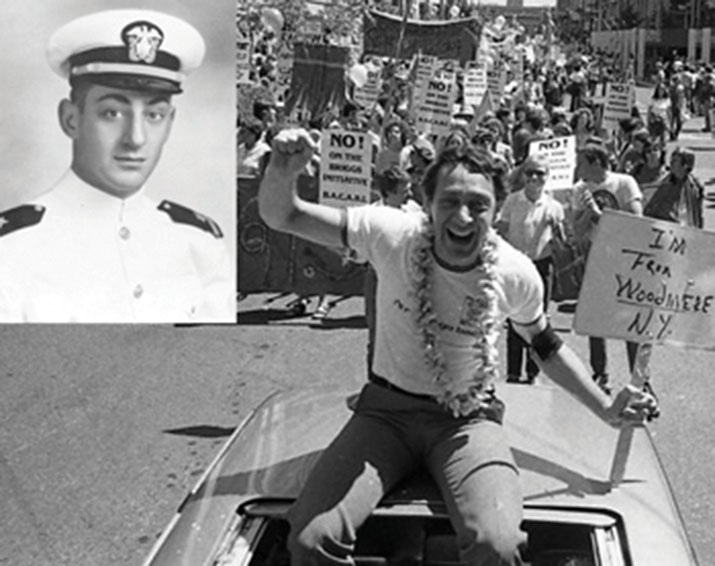
For those who don’t know, Harvey Milk wasn’t just a gay icon—he was a Navy veteran. He served this country. He wore the uniform. And after being discharged during an era when being openly gay meant exile or worse, he went on to become the first openly gay elected official in California. He fought for equality with both passion and integrity, and ultimately gave his life for the cause of justice and representation.

When the USNS Harvey Milk was christened, it felt like a small but meaningful step toward acknowledging that queer Americans have always served—often in silence, often in danger, always with dignity. That ship’s name stood for something more than just metal and machinery. It honored visibility, service, and sacrifice.

To remove that name—during Pride Month, no less—isn’t just tone-deaf. It’s cruel. It’s shameful. It’s part of a larger effort we’re seeing to roll back the clock on diversity, inclusion, and basic decency. This isn’t about strengthening the military. It’s about erasing queer people from the story of America. It’s about rewriting history in a way that suits a narrow, regressive agenda.

We’re told this has something to do with restoring “warrior ethos” and “core values.” But here’s what I know: real strength includes empathy. Real warriors fight for all people, not just the ones who look or love like them. Real leadership doesn’t cower behind performative patriotism—it uplifts the truth, even when that truth makes some people uncomfortable.

Secretary Hegseth’s record already includes a DUI arrest and a long list of questionable decisions. But this one? This feels personal. This feels targeted. This feels like a slap in the face to every queer person who has ever served this country and to everyone who continues to fight for equality and recognition today.

Harvey Milk once said, “Hope will never be silent.” And neither should we.

So no, we’re not going to sit quietly while our heroes are erased. We’re not going to accept Pride Month as a time for symbolic gestures and empty rainbows while the actual legacy of LGBTQ+ people is being dismantled. We’re going to keep remembering. We’re going to keep speaking. And we’re going to make damn sure that the name Harvey Milk is never forgotten.


🌈 Pride in the Image of God

“I praise you, for I am fearfully and wonderfully made. Wonderful are your works; that I know very well.” 

— Psalm 139:14

“There is no longer Jew or Greek, there is no longer slave or free, there is no longer male and female; for all of you are one in Christ Jesus.” 

— Galatians 3:28

“For the Spirit God gave us does not make us timid, but gives us power, love and self-discipline.” 

— 2 Timothy 1:7

Pride Month is often seen as a celebration—of identity, visibility, survival, and love. But for LGBTQ+ Christians, it is also a sacred invitation to reclaim our place in the story of God’s people. To be LGBTQ+ and Christian is not a contradiction. It is a divine calling to live authentically, in the truth of who we are, as beloved children created in God’s own image.

Pride is not about arrogance or rebellion; it is about dignity. It is about standing tall in a world that has too often tried to make us small. It is about refusing shame. And it is about remembering that the same God who knit us together in the womb did so with care, intention, and joy.

Too many of us have heard the message that God’s love must be earned by becoming someone else. But the gospel tells a different story—a story of radical welcome, unearned grace, and a Savior who broke down barriers and sought out the marginalized. Jesus didn’t conform to religious expectations. He loved expansively, healed indiscriminately, and told us not to be afraid.

This Pride Month, hear this truth clearly: You are not a mistake. You are not outside the reach of grace. You are part of the Body of Christ. Your love, your life, your truth—they matter deeply to God.

Take pride in the Spirit’s power within you. Take pride in your survival and in your joy. Take pride in your faith, not despite who you are, but because of who you are.

We should thank God for creating us wonderfully and wholly. In a world that sometimes denies us dignity, He remind us that we are His. Let Pride Month be a season of healing, joy, and holy resistance. We should walk in the confidence of God’s love, stand in the truth of His grace, and shine with the light He placed within us. We must always remember to love others with that same wild, welcoming love.

So, this Pride Month let’s go forth in love and boldness, knowing we are a living reflection of God’s creativity. Our lives are a testimony of truth, resilience, and grace. This Pride Month—and always—walk proudly in the name of the One who made you exactly as you are: deeply loved, beautifully queer, and wholly divine.

🌈🏳️‍🌈🏳️‍⚧️


Presidents’ Day

Presidents’ Day is often seen as a celebration of leadership, democracy, and the vision of those who have shaped the United States. But for the LGBTQ+ community, this day can carry a more complex meaning. It is both a reminder of how far we have come in the fight for equality and a call to action against the rising tide of fascism threatening our freedoms.  

In recent years, far-right politicians have worked aggressively to roll back LGBTQ+ rights, attack transgender individuals, and undermine democracy itself. This Presidents’ Day, we must ask ourselves: What kind of leadership do we truly honor? Do we celebrate those who uphold justice, or do we resist those who seek to oppress? 

American history has been shaped by leaders who both upheld and denied justice. While presidents like Abraham Lincoln fought to expand freedom, others have enforced policies that marginalized communities. The LGBTQ+ community has had to fight for every inch of progress—from the Stonewall riots to marriage equality—often against leaders who sought to erase us.  

Today, we face new threats. Across the country, lawmakers are banning gender-affirming healthcare, censoring LGBTQ+ history, and criminalizing queer existence. These actions are not just about policy; they are about power, control, and the systematic erasure of marginalized people.  

We cannot afford to pretend that what is happening in the U.S. is politics as usual. The rise of authoritarian leaders pushing anti-LGBTQ+ policies is part of a broader attack on democracy itself. Fascism thrives on scapegoating vulnerable groups, restricting freedoms, and silencing dissent. If we do not resist now, the consequences will be catastrophic—not just for LGBTQ+ people but for everyone. 

How to Fight Back:

  1. Vote and Mobilize – The LGBTQ+ community and allies must organize, vote in every election, and push for leaders who uphold human rights. 
  2. Support LGBTQ+ Organizations – Groups like the Trevor Project, Lambda Legal, and the ACLU are on the front lines, fighting for our rights. 
  3. Challenge Hate in Our Communities – Whether in churches, schools, or workplaces, we must speak out against anti-LGBTQ+ rhetoric and policies.
  4. Engage in Peaceful Protest – From Pride marches to demonstrations, public action remains a powerful tool against oppression. 
  5. Uplift and Protect One Another – In times of rising hate, mutual aid and community care are essential. No one should have to fight alone. 

Presidents’ Day should not just be about honoring the past—it should be about shaping the future. We must demand leaders who fight for justice, not those who spread fear and division. The presidency should be a position of service, not oppression. If those in power refuse to uphold human dignity, then it is our duty to resist them with everything we have.  

The LGBTQ+ community has always been resilient. We have survived persecution, discrimination, and violence. And we will continue to fight. Presidents’ Day can be a reminder that leadership is not just about those in office—it’s about all of us, standing together, building a future where love, justice, and equality prevail. This year, let Presidents’ Day be a call to action. The fight is far from over, but we are not alone. Together, we will resist. Together, we will win. 


MLK Day

On this very cold January 20th (It’s currently 6º F and it will drop to -4º by midnight tonight.), we celebrate Martin Luther King Jr. Day, honoring the legacy of a man whose fight for justice, equality, and love transformed the world. While Dr. King’s work focused on the Civil Rights Movement and dismantling systemic racism, his message of universal dignity resonates deeply within the LGBTQ+ community.

Dr. King believed in the interconnectedness of all struggles for equality, famously stating, “Injustice anywhere is a threat to justice everywhere.” His words remind us that the fight for LGBTQ+ rights is part of a broader movement for human rights and liberation.

Throughout history, LGBTQ+ activists have drawn inspiration from Dr. King’s nonviolent approach and his unwavering hope for a more just society. Bayard Rustin, one of King’s closest advisors and the chief architect of the 1963 March on Washington, was a gay man who lived his truth despite societal discrimination. Rustin’s vital contributions to the Civil Rights Movement show the shared stakes between racial and LGBTQ+ justice.

On this day, we reflect on how Dr. King’s dream challenges us to continue the work of building a world where everyone is free to love, live, and be their authentic selves. His legacy urges us to fight against hate and discrimination in all its forms and to envision a future rooted in compassion and equality.

As LGBTQ+ individuals and allies, celebrating Martin Luther King Jr. Day is a reminder of the power of solidarity, courage, and the belief that love truly conquers all. Together, we honor his dream by continuing to create a world where everyone can thrive.


Moment of Zen: Pride


Pride

Pride goeth before destruction, and an haughty spirit before a fall. Better it is to be of an humble spirit with the lowly, than to divide the spoil with the proud.

—Proverbs 16:18-19 (KJV)

Should we celebrate LGBTQ+ Pride when it is considered one of the Seven Deadly Sins? The answer is yes because LGBTQ+ Pride is not a sinful pride as described in scripture. It is a celebration of who we are, and the person God created us to be. Pride in the Bible is the antonym of humility. The Britannica Dictionary offers four definitions for Pride:

  1. a feeling that you respect yourself and deserve to be respected by other people, i.e., self-respect
  2. a feeling that you are more important or better than other people
  3. a feeling of happiness that you get when you or someone you know does something good, difficult, etc.
  4. a person or thing that makes you feel proud

It is the second definition that the Bible says God abhors and is a sin. LGBTQ+ Pride is an example of the first and third definitions. LGBTQ+ Pride is about self-respect, not superiority. The Bible offers two basic types of pride: legitimate pride and sinful pride.

The word “pride” is mentioned in the Bible multiple times, but the exact count varies depending on the translation. The New King James Version mentions the word “pride” 51 times, but there are many more instances of pride that do not use the word itself. None of those instances encourage pride. Pride, in a biblical context, refers to an excessive sense of self-worth, arrogance, and superiority often leading to rebellion against God. In the Bible, pride is frequently associated with disobedience, rebellion, and an elevation of self above God and others. It is regarded as a sin that hinders humility and disrupts one’s relationship with God.

To give a biblical example, in Revelation 18, an angel announces the judgment of Babylon and describes what provokes God’s wrath on the world. Revelation 18:7 says: “In the measure that she glorified herself and lived luxuriously, in the same measure give her torment and sorrow; for she says in her heart, ‘I sit as queen, and am no widow, and will not see sorrow.’” Here we see pride is what Revelation describes as the antichrist. (The Epistle of James speaks of many antichrists, not just one as some Christians believe. An antichrist is someone who is the opposite of Christ though they will often claim to be Christ-like.) Pride is an attitude that we can trust in wealth and independence and have no need for God in our lives. As Believers, we are called to rely on the Lord for all that we need. 

Matthew Poole, an English Puritan who lived from 1624–1679, summarized in his commentaries the situation this way, “Pride goeth before destruction; it is commonly a forerunner and cause of men’s ruin because it highly provokes both God and men.” There is a tension between the will of man and the will of God. For things to go well for us, we must be willing to surrender our lives to God and follow the example set forth by Christ. We are called to trust God with our hearts and believe God when He promises that He will take care of us. Proverbs 3:5-6 tells us, “Trust in the Lord with all your heart, and lean not on your own understanding; in all your ways acknowledge Him, and He shall direct your paths.”

In contrast to sinful pride, LGBTQ+ pride is not meant to celebrate arrogance or superiority. LGBTQ+ pride is the promotion of the self-affirmation, dignity, equality, and increased visibility of lesbian, gay, bisexual, transgender, and queer people as a social group. Pride, as opposed to shame and social stigma, is the predominant outlook that bolsters most LGBTQ+ rights movements. Pride is a celebration of who we are and the rights we have fought to be acknowledged and protected. It is about equality, not superiority. We have parades, parties, and rainbows everywhere to celebrate Pride, and it may look like a sinful pride from the outside looking in, but it is actually a humble pride. We do not seek superiority over others; we seek equality and recognition.

In his annual proclamation for Pride month, President Biden wrote, “To the entire LGBTQI+ community — and especially transgender children — please know that your President and my entire Administration have your back. We see you for who you are: made in the image of God and deserving of dignity, respect, and support.” I can’t reiterate enough that we are made in the image of God and deserving of dignity, respect, and support. This is what Pride should be for LGBTQ+ Christians.

P.S. I could have done a whole post about Donald Trump and the sins of pride. He is one of the most sinful examples of pride in the public eye today, but with his conviction on Thursday and his and other Republicans subsequent reactions, I can only be reminded of Proverbs 16:18, “Pride goeth before destruction, and an haughty spirit before a fall.


Moment of Zen: Waterfalls

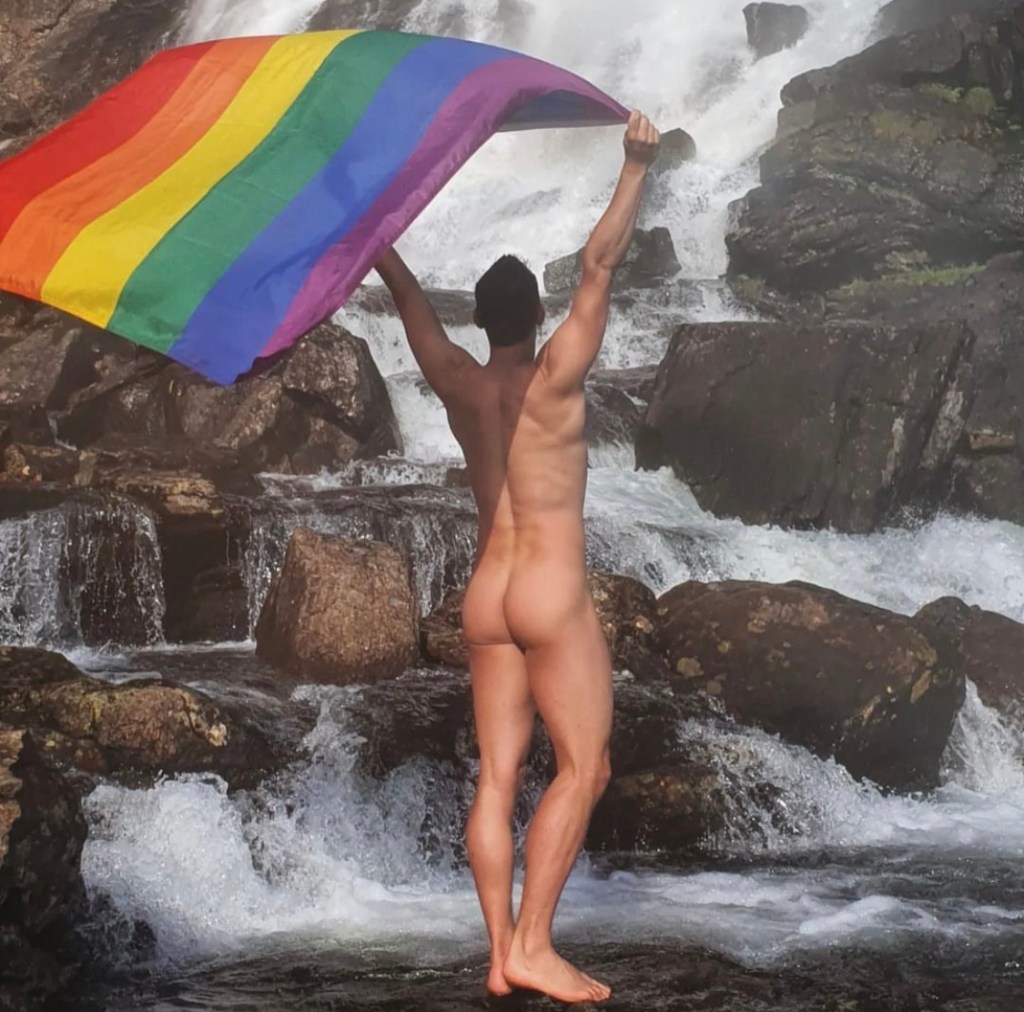
I love the sound of rushing water whether it’s a mountain stream or a waterfall. The sound is infinitely soothing. With that said, today also marks the beginning of Pride Month, and the above picture seems to be the perfect one to kick off the month.


Prescott Townsend

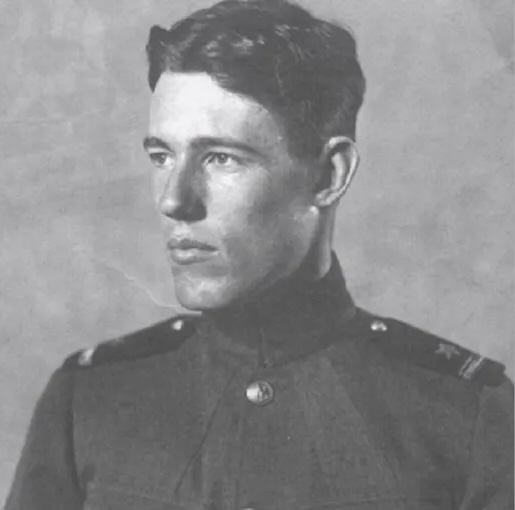
Prescott Townsend (1894-1973) was born into an old, wealthy Boston family. His mother was both a descendant of Myles Standish through her grandmother Susannah Perkins Staples (the sister of Yale Law School founder Seth Perkins Staples) and other Mayflower passengers, and the great-granddaughter of the American founding father Roger Sherman and his wife Rebecca Minot Prescott, through their son Roger Sherman, Jr. Townsend came out as a teenager, and his parents were accepting but told him to be cautious.

He attended the Volkman School, graduated in 1918 from Harvard University, and attended Harvard Law Schoolfor one year. He spent the summer of 1914 in logging camps in Montana and Idaho, and traveled to North Africa and the Soviet Union. After serving in World War I, Prescott lived in Paris for a time, becoming immersed in the bohemian culture of the era. He then “sought to establish an outpost of that culture” in his hometown of Boston and returned to Boston’s Beacon Hill neighborhood, where he began a relationship with theater producer Elliot Paul, with whom he founded the experimental Barn Theatre in 1922.

Paul introduced Townsend to numerous avant-garde creatives, including openly gay writer André Gide. Townsend operated speakeasies, restaurants, and theaters, cultivating a bohemian neighborhood on Beacon Hill’s Joy Street. He also spent time in Provincetown, where he became friendly with playwright Eugene O’Neill and other theater artists. He pioneered the popularity of A-frame houses, building several in Provincetown. He was later a founder of the Provincetown Playhouse, where the works of Eugene O’Neill were first performed.

Prescott was very happy to be a patron of the arts, and artists were very happy to take his money, However, the Great Depression ended all that.

By the 1930s, Prescott Townsend repeatedly addressed the Massachusetts legislature as an acknowledged homosexual man advocating for the repeal of sodomy legislation, urging the lawmakers “to legalize love.” He was indulged due to his family’s wealth and Boston Brahmin status, but he was ignored by lawmakers. While working at the shipyard during World War II, Townsend was arrested in 1943, for participating in an “unnatural and lascivious act.” He did not deny it, and was sentenced to eighteen months in the Massachusetts House of Corrections.

Shortly after, Prescott was officially stricken from both the New York and Boston Social Registers. In the 1950s, he held meetings at his home/bookstore, which he described as “the first social discussion of homosexuality in Boston.” In talks in Boston and Provincetown he promoted his “Snowflake Theory” of human personality and sexuality, stating that the human mind is like a snowflake in that no two are alike, and each has six opposing sides: I/You, He/She, Hit/Submit. He embraced a more in-your-face generation of activists in the late 1960s, marked by the uprising at New York City’s Stonewall Inn in 1969 and at age 76, he attended the first Pride parade in New York on the one-year anniversary of the Stonewall riots.

Toward the end of his life, his two remaining properties on the Hill were on its North Slope, traditionally the side where servants of patrician South Slope residents lived. He accommodated a motley collection of tenants, mostly young gay men, in an eight-unit building at 75 Phillips St. He always advocated for the outsider, the hippies, vagabonds, and runaway homeless queer youth his was a legacy of love, money and uplift.

Townsend died at age 78. He had, for years, been suffering from failing health brought on by Parkinson’s disease, and on May 23, 1973, his body was found in the Beacon Hill apartment of John Murray, who had been caring for him during the final years of his life. The police reported that “when we came in to take charge of the body, Mr. Townsend was found in a kneeling prayer position at his bedside.” Of his entire family, only one sister, a nephew and a great-nephew attended his memorial service at the Arlington Street Church.


Vermont Pride Parade 🏳️‍🌈

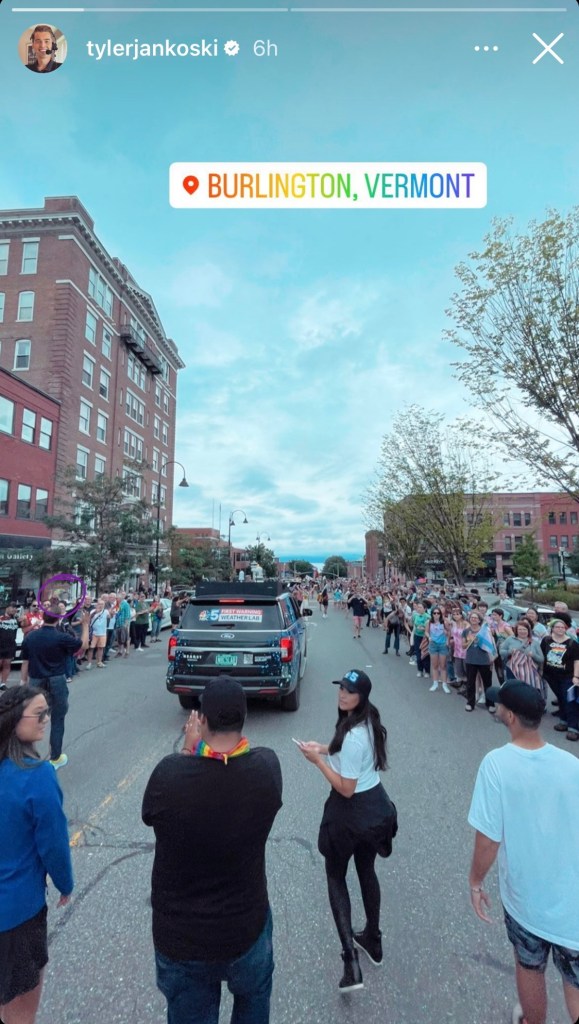
The Vermont Pride Parade was yesterday. Luckily, it only rained a small amount, not enough really for an umbrella unlike last year. There was the usual mix of oddness that has become a hallmark of Vermont. The Flynn Center (a Burlington theater) had a performance of their “Playing Field” horse. It would be difficult to explain, but you can go to this link to get an idea of what I’m talking about. A friend of mine said, “ It was totally weird but fitting!” I replied, “ If it’s weird, it’s always fitting in Vermont.” This is the same friend who when talking about the dating pool in Vermont said, “The odds are good, but the goods are odd.” It’s a perfect description for Vermont.

I always love seeing the various groups marching. There are politicians, drag queens, contingents from various colleges (the local Catholic college always has the most students), and various affirming religious congregations. Then there are the furries, Wiccans, medieval reenactors, etc. There was also a float with a stripper pole with different girls pole dancing for the crowd. As I said, the usual Vermont weirdness.

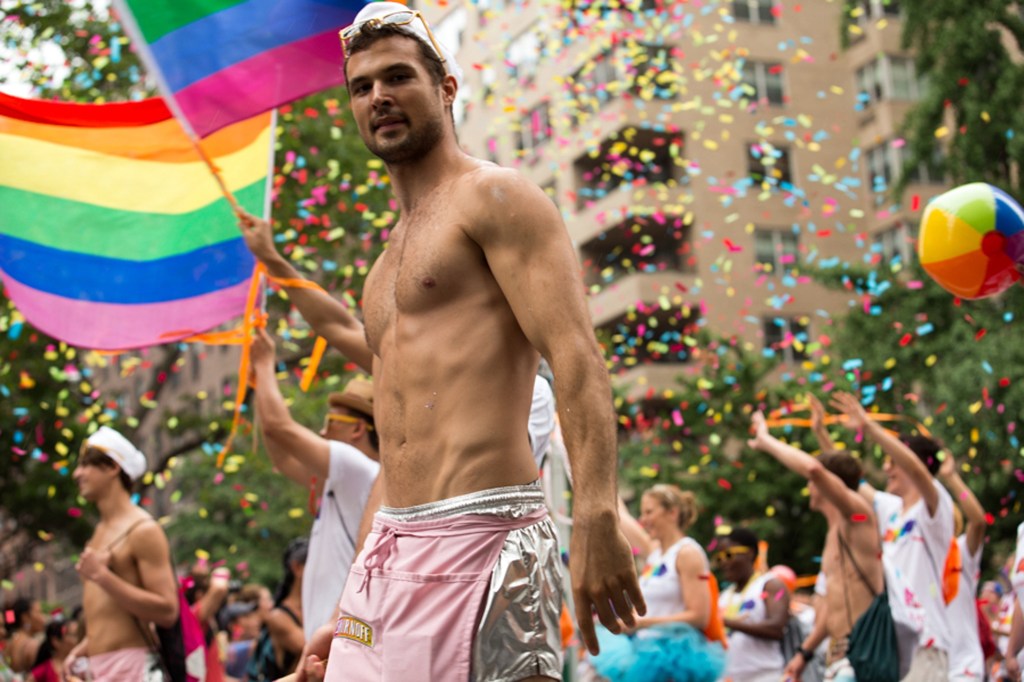
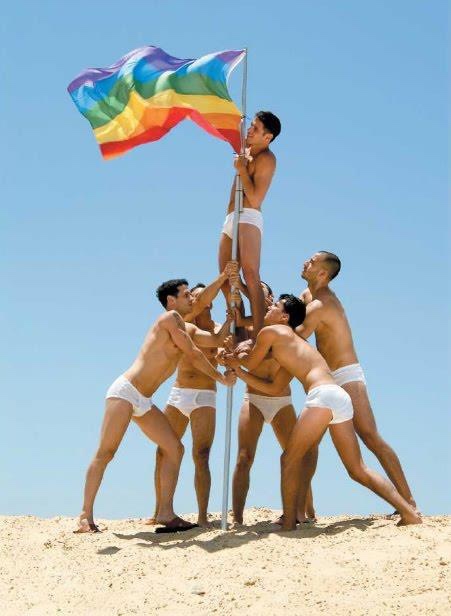
The local television stations also always march in the parade. One of the local meteorologists added a picture of the parade and it’s crowd for his Instagram story. I mention this because my friend and I are in the picture, though we are really small and blurry. If you’re able to zoom in, I circled us in purple. We are on the right side of the crowd. (The picture above is not part of the Vermont Parade, but the one below is.)


Be Proud 🏳️‍🌈✝️🏳️‍🌈

I am acting with great boldness toward you; I have great pride in you; I am filled with comfort. In all our affliction, I am overflowing with joy.

—2 Corinthians 7:4

For those of us who were raised in a strict Christian environment, we had to learn not to hate ourselves and to accept who we are and our sexuality. Some Christians are opposed to the concept of LGBTQ+ pride. They feel LGBTQ+ people should be ashamed of who we are and any public celebration of LGBTQ+ sexuality is wrong. Those who reject us are those who are straying from the teachings of Jesus. I still believe in the teachings of Christ and believe that God created me just the way I am. I learned to accept myself and be proud of who I am. I am proud to be both gay and Christian.

Christians who know church history can identify with persecution. During the early years of the Christian church, Christians were put in prison and killed for their faith. The civil authorities in the Roman Empire were persecuting people for being Christian. Both Christianity and the LGBTQ+ community share a history of discrimination and persecution. Unfortunately, discrimination and persecution of LGBTQ+ people continue today, largely led by people claiming to be Christian. Some Christians do not understand how much they have in common with the LGBTQ+ community. Instead of working closely together to ensure their mutual human rights are respected, many Christians actively work to keep LGBTQ+ people from having the same rights other members of society enjoy.

LGBTQ+ pride promotes the self-affirmation, dignity, equality, and increased visibility of LGBTQ+ people. Pride, as opposed to shame and social stigma, is the predominant outlook that bolsters most LGBTQ+ rights movements. Ranging from solemn to carnivalesque, pride events are typically held during the month of June (or September if you are in Vermont). Some pride events include LGBTQ+ pride parades and marches, rallies, commemorations, community days, dance parties, and festivals. Pride may be considered one of the seven deadly sins, but there is nothing wrong with LGBTQ+ people having self-affirmation, dignity, equality, and increased visibility. In fact, God expects us to have pride, a pride that is justifiable and reasonable because it is based on what God has done for humanity. 1 Thessalonians 5:11 tells us to “comfort each other and build one another up.”

Hebrews 10:24-25 commands us, “And let us consider one another in order to stir up love and good works, not forsaking the assembling of ourselves together, as is the manner of some, but exhorting one another, and so much the more as you see the Day approaching.” Some LGBTQ+ people find pride to be one time of the year when they do not feel alone, isolated, cut off, rejected, hated, and despised. Pride helps LGBTQ+ people feel they are not a tiny, powerless minority group. Through pride, many LGBTQ+ people find a sense of belonging, a sense of being worthwhile. Society has long taught LGBTQ+ people to hate themselves. By celebrating pride, the LGBTQ+ community can start the long process of overcoming self-hate. Standing side-by-side with God, LGBTQ+ Christians are accepted, loved, connected, and made powerful by God. 

LGBTQ+ Christians can find meaning in pride. God wants LGBTQ+ people to stop hating and fearing themselves because those who live secret lives of pain are not able to fully celebrate their identity in Christ. We are told in 1 Corinthians 12:26, “And if one member suffers, all the members suffer with it; or if one member is honored, all the members rejoice with it.” Through LGBTQ+ pride, God calls LGBTQ+ Christians to help those in our community who suffer because when one of us suffers, we all suffer. Transgender people are suffering under new state laws across the country, and when there is even one unjust law against the LGBTQ+ community, it is a law against all of us. Pride helps bring us together as a community, so let’s take pride in the love and acceptance we provide for one another.