

Pride was a lot of fun. Three days of festivities, and I am exhausted. I didn’t have the energy last night to write up about Pride, but look for the full details Wednesday. I hope everyone had a great weekend.
Pride was a lot of fun. Three days of festivities, and I am exhausted. I didn’t have the energy last night to write up about Pride, but look for the full details Wednesday. I hope everyone had a great weekend.

Celebrating and supporting Vermont’s lesbian, gay, bisexual, transgender, and queer community of all ages, as well as educating and serving as a bridge to create alliances with each other and with the greater community as a whole.
The Pride Parade kicks off at 12:30pm and is a beloved institution here in Vermont and throughout the world. It began as an anniversary celebration of the Stonewall Riots but has evolved over time to encompass the many LGBTQ heroes, struggles, and victories since. The parade begins at the south end of Church Street and ends at Battery Park where the festival is held.
The Pride Festival is one big party in Battery Park following the parade. It’s a place for the entire community – LGBTQ+ and ally – of all ages, races, and backgrounds to come together. Colorful, showstopping performers (Drag! Dance! Comedy! Poetry! Burlesque!) will be sure to entertain on stage while the park is filled with fabulous vendors with info and activities (and food!) for all.
Visit Pridevt.org for more info.
Since 1983, thousands have come together to celebrate the rich diversity that is the LGBTQ community of Vermont. Pride Center anticipates an even larger gathering this year.
I’ll be there with my pride shirt on.

Even though roughly half of the LGBT community identifies as bisexual, they’re seldom represented in the media. Nevertheless, more and more millennials are beginning to view themselves as bisexual and sexually fluid. A recent YouGov study discovered that a third of 18-24 year olds in the U.S. and Israel put themselves along a continuum of sexuality, rather than at either end. In the UK, roughly 50% don’t view themselves as 100% gay or straight.
Even though there are a huge number of bisexuals, and the number of bisexual-identifying people is growing, they often feel invisible. They often feel alone.
This feeling of isolation contributes to a slew of mental health issues that highly correlate with bisexuality. Bisexuals have high rates of depression, suicidality, self-harm, smoking and alcohol abuse, and intimate-partner violence. Recent data from a Human Rights Campaign study revealed that bisexual youth are less likely than lesbian and gay youth to feel there’s a supportive adult they can talk to.
These feelings of isolation also keep bisexuals closeted because they don’t feel as if they have a bi community. They don’t think people will accept us. It’s estimated that only 28% of bisexuals come out. Research from Dr. Eric Schrimshaw of Columbia University Mailman School of Public Health revealed that most bisexual men know their sexuality. Their reasons for not disclosing it don’t arise from confusion, but rather they don’t come out because they fear rejection from their partners and ostracization from their families and communities.
Bisexuals face additional hardships that monosexuals (either gay or straight) don’t experience. The only way to change this is through visibility. This is why this week—Bisexual Awareness Week—is so important. This is why bi-visibility matters. This is why it’s crucial that bisexuals come out as often and to as many people as we can. Not only will your decision to come out create more visibility for others, you will also start to meet other bi folks, and can become an integral member of the bisexual community. So please, come out and share you story. Let’s make it easier for the next, growing generation of bisexuals to be out, comfortable, and proud of who they are.
By the way, Celebrate Bisexuality Day is observed tomorrow on September 23 by members of the bisexual community and their supporters. This day is a call for the bisexual community, their friends and supporters to recognize and celebrate bisexuality, bisexual history, bisexual community and culture, and all the bisexual people in their lives. First observed in 1999, Celebrate Bisexuality Day is the brainchild of three United States bisexual rights activists: Wendy Curry of Maine, Michael Page of Florida, and Gigi Raven Wilbur of Texas.
Adapted from an Out Magazine article.
 Yesterday, I went to Vermont Pride in Burlington. There wasn’t much to it. The parade itself lasted about 20 minutes. There were a fair number of booths at the festival but not much to them either. “Northern Decadence,” which was $5 to get into, was merely a few breweries and cideries giving tastes of their wares and then Ben & Jerry’s was giving away ice cream. I had expected food to be part of it as well. I did get carded though to get in, but then these two much older ladies behind me got carded too, so I’m guessing they carded everyone to get in to Northern Decadence.
It was nice that a lot of the political candidates were in the parade, not something that anyone would dream of doing in Alabama. I had a good time overall, even if it seemed to be mostly lesbians and dogs at the parade and festival. There were a few cute guys, just a small percent of the people there. I think kids outnumbered the gay guys there.

Rainbow Christ, you embody all the colors of the world. Rainbows serve as bridges between different realms: heaven and earth, east and west, queer and non-queer. Inspire us to remember the values expressed in the rainbow flag of the lesbian, gay, bisexual, transgender and queer community.Red is for life, the root of spirit. Living and Self-Loving Christ, you are our Root. Free us from shame and grant us the grace of healthy pride so we can follow our own inner light. With the red stripe in the rainbow, we give thanks that God created us just the way we are.Orange is for sexuality, the fire of spirit. Erotic Christ, you are our Fire, the Word made flesh. Free us from exploitation and grant us the grace of mutual relationships. With the orange stripe in the rainbow, kindle a fire of passion in us.Yellow is for self-esteem, the core of spirit. Out Christ, you are our Core. Free us from closets of secrecy and give us the guts and grace to come out. With the yellow stripe in the rainbow, build our confidence.Green is for love, the heart of spirit. Transgressive Outlaw Christ, you are our Heart, breaking rules out of love. In a world obsessed with purity, you touch the sick and eat with outcasts. Free us from conformity and grant us the grace of deviance. With the green stripe in the rainbow, fill our hearts with untamed compassion for all beings.Blue is for self-expression, the voice of spirit. Liberator Christ, you are our Voice, speaking out against all forms of oppression. Free us from apathy and grant us the grace of activism. With the blue stripe in the rainbow, motivate us to call for justice.Violet is for vision, the wisdom of spirit. Interconnected Christ, you are our Wisdom, creating and sustaining the universe. Free us from isolation and grant us the grace of interdependence. With the violet stripe in the rainbow, connect us with others and with the whole creation.Rainbow colors come together to make one light, the crown of universal consciousness. Hybrid and All-Encompassing Christ, you are our Crown, both human and divine. Free us from rigid categories and grant us the grace of interwoven identities. With the rainbow, lead us beyond black-and-white thinking to experience the whole spectrum of life.Rainbow Christ, you light up the world. You make rainbows as a promise to support all life on earth. In the rainbow space, we can see all the hidden connections between sexualities, genders and races. Like the rainbow, may we embody all the colors of the world! Amen.
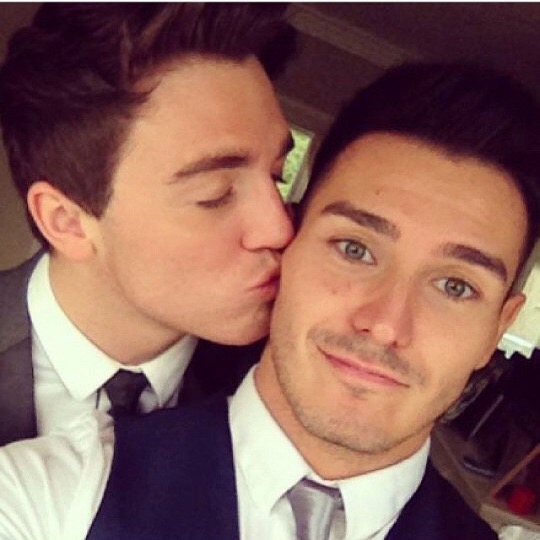
I’m looking forward to having a good time tonight. The Pride Center of Vermont is hosting their 18th Annual LGBTQA Community Celebration to honor those who have made exceptional contributions to the LGBTQA community of Vermont. Along with two friends of mine, I will be going tonight. They will have Inspired food stations with tantalizing culinary delights by Vermont’s best chefs. Amazing auction items so you can bid on an experience. I plan to have a fabulous evening surrounded by LGBTQA community. The celebration is being held at the Echo Aquarium in Burlington and should be pretty fun. If it’s not, then we will just go out drinking instead, lol.
I’ve never been to an event like this before, and I have only ever been to one Pride event and that was a pride parade in Paris ten or so years ago. Pride in Paris is great because if you’ve ever seen French men, they have the best asses I’ve ever seen. Italy has the biggest dicks; France as the best asses. Just my personal observations anyway. I got a little off subject there. While this will be nothing like Paris Pride, I do expect to have fun and at least meet some new people.
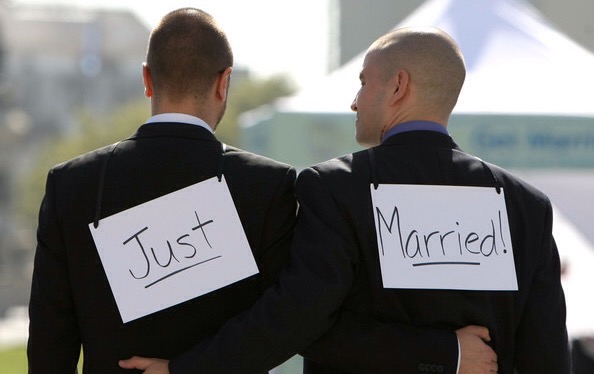
The news just came down from the Supreme Court: Marriage equality is officially the law of the land!
Today is a historic day, first for everyone who can now marry the person they love no matter where they live, but also for all of us who are invested in the advancement of equality. Thanks to today’s decision, same-sex couples will have their marriages recognized in every state and can no longer be discriminated against for wanting to adopt a child — just like any other married couple in this country.
The U.S. Supreme Court ruled 5-4 on Friday that it is legal for all Americans, no matter their gender or sexual orientation, to marry the people they love. The justices found that under the 14th Amendment, states must issue marriage licenses to same-sex couples and recognize same-sex unions that were legally performed in other states. Justice Anthony Kennedy delivered the majority opinion and was joined by Justices Ruth Bader Ginsburg, Elena Kagan, Stephen Breyer and Sonia Sotomayor.
The decision is a historic victory for gay rights activists who have fought for years in the lower courts. Thirty-seven states and the District of Columbia already recognize marriage equality. The remaining 13 states ban these unions, even as public support has reached record levels nationwide. As gay Americans we have waited with bated breath and wondered why the Supreme Court has waited until the final days of the term to issue this seemingly obvious decision. Every major LGBT equality (or, inequality) decision from the Supreme Court–including, Bowers v. Hardwick (it is ok to criminalize sodomy), Romer v. Evans (the you-can’t-discriminate-against-gays-just-because-you-hate-them case), Lawrence v. Texas (it is not ok to criminalize sodomy), Hollingsworth v. Perry (marriage freedom in California), and United States v. Windsor (the Defense of Marriage Act is unconstitutional)–were handed down toward the end (in the case of Romer) or on the very last day of the Court’s term. Lawrence and Hollingsworth were both argued on the same day one decade apart and decided on the same day a decade apart (March 26 and June 26, in 2003 and 2013, respectively). The other cases were decided at around the same time: Windsor was argued the day after Perry and decided the same day. Romer was argued on October 10, 1995 and decided on May 20, 1996, the earliest of the bunch.
In the majority opinion, the justices outlined several reasons marriage rights should be extended to same-sex couples. They wrote that the right to marriage is an inherent aspect of individual autonomy, since “decisions about marriage are among the most intimate that an individual can make.” They also said gay Americans have a right to “intimate association” beyond merely freedom from laws that ban homosexuality. Kennedy consistently used the arguments by the opponents of same-sex marriage against them. He said that same-sex marriages would not diminish the dignity of marriage but increase it. Kennedy said that those who wanted to be married are upholding the dignity of marriage because they want the same respect that opposite-sex marriages have. In answering the traditions of marriage, Kennedy said that there is not an overall traditional definition of marriage because marriage has consistently changed over the centuries. Arranged marriages are no longer the norm, interracial marriages are no longer illegal, and gay equality has become accepted by the majority of Americans. Marriage equality has followed political and social change.
The majority determined that extending the right to marry protects families and “without the recognition, stability, and predictability marriage offers, children suffer the stigma of knowing their families are somehow lesser.” The majority concluded that the right for same-sex couples to marry is protected under the 14th Amendment, citing the clauses that guarantee equal protection and due process. Kennedy said that marriage is a fundamental right of the constitution, which the Fourteenth Amendment’s a Due Process and Equal Protection clauses guarantee.
I am sure that opponents will voice arguments against following the Court and many have already said that they will use civil disobedience to resist the ruling. However, let’s be clear, they Supreme Court did not make the same mistake as in Brown v Board of Education and call for the implementation to be done “with all deliberate speed.” Not is this the 1830s when Andrew Jackson ignored the Supreme Court ruling in Worcester v. Georgia when he said, “John Marshall has made his decision; now let him enforce it!”. I have no doubt that lower courts will be busy as people will be forced to file cases forcing local officials to issue marriage licenses. I have little doubt that this will be the case in Alabama. There are some politicians who will use their hatred of equality to attempt to fight, but they will ultimately fail. LOVE WON!
 You may have noticed that my header and profile picture are now tinted red. On April 28, the U.S. Supreme Court will hear oral arguments in Obergefell v Hodges, a case originating in Ohio. In January, the Supreme Court announced that it would hear Obergefell along with three other cases from Michigan, Kentucky, and Tennessee. The arguments have been consolidated and the case has formally been named Obergefell.
The HRC is hoping to make lightning strike twice and to do so, they need our help. As we await the Supreme Court‘s decisions on two historic marriage equality cases, we have a great opportunity to turn the web red once again in the name of equality and love.
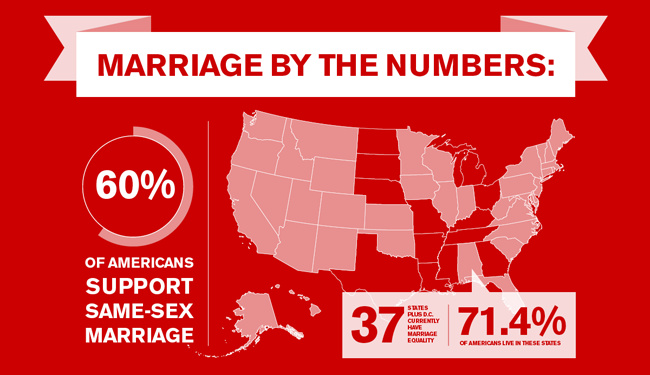
To demonstrate the incredible support for marriage equality, we’re asking everyone to make the red equal sign their social media profile picture once again — NOW through decision day, whenever that is.

If you participated in our campaign to turn the Internet red for marriage equality back in March, you know how meaningful it was. Missed the March marriage madness? Now is your chance to show your support.
Update your profile picture with a red logo so your entire social network knows that you’re standing on the right side of history. Go to http://www.hrc.org/red to easily convert your Facebook or Twitter profile picture to a blended picture of your profile and the red marriage equality sign. And then ask your friends and family to join you! And if you’re sharing on Instagram, use the hashtag #time4marriage to participate in our marriage equality photo collage, Picturing Equality.
For the latest and breaking news from the Supreme Court, be sure to stay tuned to www.hrc.org/supremecourt.
The HRC will be launching brand new, innovative engagement tools throughout the month to help us show our support and connect with an expansive community of fair-minded Americans.
Two of my favorite movies about the U.S. Presidency are Dave and a movie that Ethan mentioned in his comment yesterday, The American President. (I’m also a little partial to My Fellow Americans, because how can you not love a movie with Jack Lemmon and James Garner.) But I’m off topic. I wanted to use the quote from The American President that Ethan used because I think it makes an excellent point:
America isn’t easy. America is advanced citizenship. You gotta want it bad, ’cause it’s gonna put up a fight. It’s gonna say “You want free speech? Let’s see you acknowledge a man whose words make your blood boil, who’s standing center stage and advocating at the top of his lungs that which you would spend a lifetime opposing at the top of yours. You want to claim this land as the land of the free? Then the symbol of your country can’t just be a flag; the symbol also has to be one of its citizens exercising his right to burn that flag in protest. Show me that, defend that, celebrate that in your classrooms. Then, you can stand up and sing about the “land of the free”.
I’ve always loved that quote and I’m glad that Ethan brought it up. The American President came out at a time when flag burning was the hot topic of conservatives to rant against. They even proposed a constitutional amendment to make it illegal. Now the hot button topic is gay rights, particularly gay marriage and conservatives again are calling for a constitutional amendment to prohibit it. The reasons amendments like these would never pass is because all of the 27 amendments to the constitution guarantee rights and protect them, none take away rights and legalize discrimination. Again, I’m a bit off topic, so bear with me.
The point I’m making is that LGBT issues are in the spotlight right now. We are finally becoming more accepted by American society, especially outside a few pockets of staunch conservatism. In order to continue gaining ground, we need to make more allies ryan enemies. We need them not only as friends who can offer love and support but as critical community members to further our cause. As much as we wish to fight our own battles, it is often our allies in the majority who have chosen to fight for the minority cause who can have the greatest impact. They can serve as intermediaries, given the time and space to say and be heard saying the same things that the minority group has been preaching for years. And it is only through changing hearts and minds in the majority that we can reshape the dominant views that we spend hours debating in LGBT circles.
In “Is the gay community scaring away our straight allies?” by Mason Hsieh as featured in the Huffington Post and brought to my attention by a friend who received it in a diversity email from his employer Walmart, Hsieh suggest five ways to be better to our allies, particularly the new ones.
And I want to take a closer look at these five suggestions, because I think Hsieh makes very valid points.
1. View alliances as a continuum.
Often allyship is painted as all-or-nothing: If you don’t support all our beliefs, you’re not an ally. We must remember that, like any self-identity, allyship is an ongoing process, made up of small, gradual steps. It is a “becoming” process that grows and develops over time, and not always following a linear trajectory. I have friends who if I had to agree with everything they believe or they agree with all of my beliefs, I’d have no friends at all. You will not see eye to eye with everyone. Even countries who are allies don’t always agree on each other’s policies. So why should we think that our allies must support ALL of our beliefs? Maybe this would be the case in a perfect world, but we all know that this world is far from perfect.
2. Leave room for political incorrectness.
While checking our privilege and engaging in conscientious discourse are great ways to practice thoughtful and inclusive speech and action, we must leave room for political incorrectness. We have to give people, particularly newcomers to the cause, the benefit of the doubt whenever possible and consider making room for political incorrectness in everyday life. There is a difference between fighting homophobia and scrutinizing everything a person says or believes. While the two are not mutually exclusive, the latter can be tiring and lead you further from what you are actually fighting for. People who are newcomers to our cause can be ignorant to some of the things we find offensive, so we need to be understanding and educate them in a way that doesn’t drive them away.
3. Remember the big picture.
Pick your battles and keep the bigger picture in mind. I find this true of so much in life. Some battles just aren’t worth fighting and can be handled with a different tactic. When discussing difficult or touchy topics, give people room to voice their opinions. Let them say their piece, and rather than formulating a retort for every problematic assertion, step back and listen for the bigger picture. What is the most important part of this discussion? Quite honestly, we do this everyday. We don’t need a Pyrrhic victory, we need new allies. Pick your battles and know when to use more subtle approaches. True southerners are known for our way of knowing when to be subtle and when to be blunt. It’s an art that more people should learn. Besides, both done correctly just makes us more charming, and some activists (and it doesn’t matter the cause) need to learn how to be charming and not caustic.
4. Take pride in small victories.
Minds are not typically changed overnight or through one impassioned debate. Remember that everyone is on his or her own learning curve, and that small steps in the right direction are still steps. For all the teachers out there, you know how true this is. We don’t get many victories, but the small ones are worth our weight in gold. I’m not an out and proud gay activist, mainly because I’m a closeted teacher in a small private school, but I also don’t tolerate derogatory speech in my presence. It’s a small way that I am helping. I do my best to teach tolerance, often I use religious lessons (because I can and its something these kids have been taught to respect) to get my point about tolerance across. It’s a small victory, but it’s a victory.
5. Be an ally to your allies.
Standing up for a community that you are not inherently a part of can be scary and leave a potential ally feeling vulnerable. Welcome newcomers, make room for them in your circles, and remember that alliances go both ways. Support your supporters.

When I think of gay-friendly businesses, Walmart does not immediately come to mind. In fact for many years, I’ve often thought of them as a great evil for gaining a near monopoly on retail stores in small towns (which is still kind of true, but we do live in a capitalist society). However, my overall opinion of Walmart has changed in the last six months. A friend of mine went to work in their corporate office. He is openly gay, and at first, I was a little worried about him moving from a gay Midwestern haven to Bentonville, Arkansas, smack dab in the Bible Belt. So before he even moved, I did a little research, and I was quite surprised at what I found out. In 2014, the HRC’s Equality Index gave Walmart a score of 90 (the same as the very gay-friendly Starbucks). When one looks at the HRC report, you see that they offer the same benefits to same-sex partners as they do the opposite sex partners. Furthermore, sexual orientation has been included in their non-discrimination policy available in the employee handbook (since 2003, and they include gender identity. All employees are required to attend LGBT diversity training and even has written guidelines concerning employees who transition genders on the job. They market and advertise to LGBT consumers and support LGBT organizations. They also have a PRIDE Resource Group to help LGBT employees. With all of that, why did Walmart get a 90/100? It’s because they do not cover transgender benefits in their health coverage.
Since my friend began working for Walmart, I have increasingly became more impressed by them. When Arkansas tried a Religious Freedoms Restoration Act like Indiana, Walmart pressured the governor to not sign it. Instead, the governor sent the bill back and said he’d only sign it if it had the same language as the federal law already in place. I’m glad Walmart stood up, because as much money as the Walton family has, as many employees as Walmart has, and the impact Walmart has on the Arkansas economy, I doubt any candidate could be elected if Walmart put its might behind opposing them.
With all that I have already mentioned, I have to tell you what impressed me the most. Each Monday, Walmart send its employees a corporate diversity email covering topics about women, African-American, and LGBT issues. My friend has shared with me several of these emails, but this week’s email really caught my eye. Included in the email was a link to a Huffington Post article, “Is the gay community scaring away our straight allies?” by Mason Hsieh. In the article, which I plan to discuss in more depth tomorrow, it begins with this story:
Hearing straight men identify as allies to the LGBT community always makes my heart melt a little. So when one of my new straight-male friends asked if he could sit in on a QSA meeting, I immediately said yes and took him to a panel on LGBT dating, hoping to show him how cool the queer community is. The discussion was mostly civil, until my fledgling ally worked up the courage to ask one simple question on a topic he was genuinely interested in: “In gay dating, who’s the girl?” This question did not go over well.
Within milliseconds the P.C. police had descended on him, vehemently demanding that he check his straight-cis-male privilege as well as his narrow-minded assumptions about dating and gender roles. He should be ashamed, they said.
Hsieh notes that he understands that his friend did not phrase the question in the most politically correct way, but, honestly, how many of our straight friends have asked us that same question in one form or another? Straight people always wonder that, just as they often wonder “what do lesbians do in bed?” (Not a question I want to ponder too much, but most of our straight male friends can answer from watching porn.). Hsieh’s point is that why should we get offended by a question that was not meant to be mean spirited. Just like with my students when they make an insensitive or ignorant remark, I explain to them what was wrong with what they said. It amazes me the number of people who do not understand that some of the things they say are offensive, so it’s our job to educate them and try to make this a better world.
So I want to ask you two questions. Does knowing that Walmart makes an effort to be supportive of the LGBT community and to foster a comfortable working environment for LGBT employees, change your preconceived notions of Walmart? And, I’d like to know your opinions (before I wrote more about Hsieh’s article) about how to handle our LGBT allies who want to help but aren’t always politically correct?


 | noisilycool3bc985058… on A Meeting |
| noisilycool3bc985058… on Pic of the Day |
| noisilycool3bc985058… on The Strength of Love |
 | Steve Davis on Not Quite the Weekend |
 | Bryan Spellman on I Should Have Written It … |



 Joe
Joe

