Category Archives: Pride

Do I Sound Gay?

20140430-232834.jpg

Confession: I’ve always been self-conscious about “sounding gay.” It’s one of the main things that “gives me away” as gay. I knew that my anxiety came from my internalized homophobia telling me: Gay = bad, so sounding gay = bad. A compelling new documentary is bringing together some of the biggest lesbian, gay, bisexual and transgender (LGBT) celebrities to discuss a question that probably crosses the mind of every gay man at some point in his life: Do I sound gay?

From director David Thorpe, “Do I Sound Gay?” aims to present an intelligent and and provocative cultural analysis of the “gay voice.” Throughout this process, Thorpe talks to linguists, celebrities, historians, voice coaches and total strangers to share their own thoughts and experiences surrounding the idea of ‘sounding gay.’

In the tradition of funny-but-serious first-person movies like Supersize Me, Roger and Me and Good Hair, Thorpe encounters a colorful cast of linguists, historians, voice coaches, speech therapists, friends, family, and total strangers on the street, gay and non-gay, who share their wisdom and touching, funny stories about the “gay voice.” There are also intimate confessions and hilarious anecdotes from LGBT icons – Margaret Cho, Tim Gunn, Don Lemon, Dan Savage, David Sedaris and George Takei – as they open up about the “gay voice.” Over the course of three years, Thorpe did 165 interviews in four countries.

Here are five reasons. David Thorpe gives for making this film and a few comments from me:

Reason No. 1:

Some gay men are self-conscious about “sounding gay,” even famous ones like David Sedaris. Let’s start hashing out this whole “sounding gay” thing, so we can all be OURSELVES in this small but crucial way. It’s something about me that I’ve come to own and make it my own.

Reason No. 2:

“Sounding gay” is still a trigger for mockery, bullying and violence. LGBT kids are far more likely to commit suicide or drop out of school because they feel unsafe. Zach King, one of our brave young subjects, was viciously assaulted at school. I was always made fun of for my “gay voice,” sometimes I still am, and it has always, even to this day, raises my hackles.

Reason No. 3:

Hard to believe, but nobody has comprehensively explored the phenomenon of “sounding gay.” Voice and sexuality – two fundamental features of human existence, and yet most people don’t have a clue how they’re related. Instead, we have stupid stereotypes. Let’s toss ‘em in the trash. Knowledge is power.

Reason No. 4:

A lot of people think it’s okay to be gay as long as you don’t act – or sound – that way. The daily pressure to cover, hide or “pass” affects many minorities. Let’s relieve the pressure.

Reason No. 5:

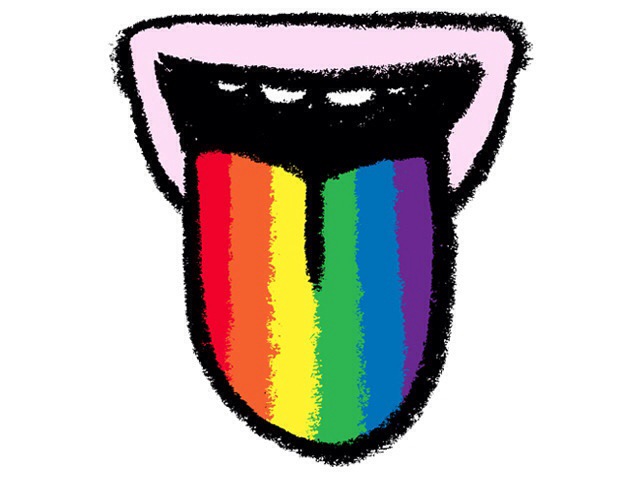
Our title isn’t just a title. Combined with our rainbow tongue logo, it’s an empowerment icon, a sneaky, fun, viral way to say it’s OK to sound – and be – gay. When the movie gets made, you’ll see rainbow tongues everywhere, asking, “Do I Sound Gay?”

The film is currently engaged in a Kickstarter campaign in order to fund post-production. Visit the project’s Kickstarter for more information.


In their own words: Why students, educators support LGBT youth and #SpiritDay

Spirit Day, this October 17th, is about uniting in solidarity with LGBT youth everywhere by standing against bullying. A few of the students and educators participating this year are making their voices heard, explaining why it’s important to support the youngest members of the LGBT community through grassroots initiatives.

GLSEN has found that of the many students who reported not having supportive staff members at their school, more than three-fourths of them feel unsafe in their school. GLSEN further reported that in the past year, 81.9% of LGBT students were verbally harassed because of their sexual orientation and 63.9% were verbally harassed because of their gender expression. GLAAD recently brought you the stories of the tragic results of bullying for teen girls in Florida and Nevada.

High schools, colleges, and graduate schools throughout the country have signed on as Spirit Day partners. A few of them have spoken with GLAAD about their interests in going purple and raising awareness about anti-LGBT bullying.

DOLMSU_0.pngJennifer Carruth, a student at Mississippi State University, is a member of her school’s Safe Zone Advisory Board and president of the LGBTQ and Ally Service Sorority Delta Omega Lambda. Speaking to the importance of ending anti-LGBT bullying, she told GLAAD, “There are so many tragic endings that can be prevented if allies would raise their voices and protest bullying, educate others on LGBTQ issues, and advocate for LGBTQ youth… No one should have to live a life of fear and isolation because they are afraid to be who they are. Everyone deserves the right to shine, enjoy life, and be their true self.”

Spirit Day is an opportunity for a diverse range of communities to come together in their support for LGBT youth. Stonehill College, a Massachusetts school rooted in Catholicism, is one such example.

stonehill%20edited_0.pngMary Charlotte Buck, Student Government Associations’ Executive Board Vice President and an ally to the LGBT community, played an integral role in partnering Stonehill with GLAAD for Spirit Day. Mary Charlotte, who has an extensive background in working with teenagers, sees an important link between her school’s traditions and allying with the LGBT community. She said, “I think respecting, honoring, and loving the inherent dignity of all people is one of the most important aspects of our Catholic Identity, and I’m psyched we’ve chosen to recognize such a great day and cause! I’m proud to say we’ll be joining the schools supporting this day.” Faith based organizations from a variety of religions and denominations are going purple this year.

i%20am%20an%20educator%20edited.pngFaculty and students at Connecticut College, which recently ranked as one of the top 25 LGBT-friendly schools in the country, are going purple this year, too. Carol Akai is an Assistant Professor with the school’s Human Development department who specializes in children’s developmental psychology. She provided GLAAD with her professional opinion on supporting LGBT youth.

“One of the most compelling aspects of human development is our enormous capacity for change,” said Professor Akai. “As a society, we are at the beginning of what I hope is a paradigm shift toward the insistence of just treatment for individuals with LGBTQ identities under every circumstance.”

Spirit Day is about creating a safe and supportive environment in which all kids, teens, and young adults are given the opportunity to flourish. Educating people on the daily struggles of our community’s vulnerable members is the key to ultimately strengthening our at-risk members as well as the cause at large.

Spirit Day initially launched four years ago when Brittany McMillan, then a high school student in Canada, took to Tumblr to promote remembrance of the young lives lost as a result of bullying. Now, Spirit Day has grown into an international movement and is a testament to young people’s transformative powers as agents of change.

Professor Akai added, “As today’s college students become scholars, I hope they will combine their academic knowledge with their generational influence to affect widespread change that replaces intolerance and ignorance with kindness and complex understanding.”

There’s still time for you and your school to get into the spirit by:

  • Turning your Facebook, Twitter and other profile photos purple atwww.glaad.org/spiritday and spreading the word by using hashtag #SpiritDay
  • Wearing purple on October 17th and encouraging classmates or coworkers to do the same
  • Uploading photos of you wearing purple to Facebook, Twitter, Instagram and Tumblr using hashtag #SpiritDay and Spirit Day graphics
  • Downloading the Spirit Day App
  • Educating your friends and family about bullying and the LGBT community
  • Getting your school, GSA, organization, etc. to become a Spirit Day partner

Time is running out to go purple on Spirit Day as a participant and partner, and to join the Facebook event! Sign up today and spread the word.


Spirit Day: Go Purple on October 17, 2013 for #SpiritDay

20131015-222640.jpg

I could not decide if I should post this tomorrow or today, but then I decided that if you are like me, you might plan your wardrobe at least a day in advance, so I decided to give you a head start.

Millions wear purple on Spirit Day as a sign of support for lesbian, gay, bisexual and transgender (LGBT) youth and to speak out against bullying. Spirit Day was started in 2010 by high school student Brittany McMillan as a response to the young people who had taken their own lives. Observed annually, individuals, schools, organizations, corporations, media professionals and celebrities wear purple, which symbolizes spirit on the rainbow flag. Getting involved is easy — participants are asked to simply “go purple” on October 17th as we work to create a world in which LGBT teens are celebrated and accepted for who they are. Learn more & go purple at www.glaad.org/spiritday.

Since I began teaching, whether as a professor’s teaching assistant, a substitute teacher, college instructor, or currently, as a high school teacher, I have always had LGBT students who feel more comfortable around me than their peers or other teachers. Most of those students have never known whether I am gay or not, but there is an intuition that allows us to find each other (most call it gaydar). Some have come to me and confided in me; others are just more relaxed around me. I always do my best to make sure that I have a welcoming atmosphere for all of my students, and I fight bullying at every turn.

When I was a student in high school, I had no one with whom to discuss issues such as sexuality or feelings of same sex attraction. Though by college, I was pretty sure I understood those feelings and in my early grad school years I came out, I wish I had been able to go to someone with whom I could discuss these issues. Being alone with my internal struggles, I began in my teenage years battling depression, which I still battle today. As I have said before on this blog, my depression got to the point that at 16 I took a handful of prescription medicine to end the suffering. I thank God each day that my stomach rejected those pills and over several hours I vomited them out of my system. I was incredibly lucky and stupid. Too many LGBT youth are not as lucky as I was, and we lose them to suicide each year.

By wearing purple tomorrow, you will be showing your support for the LGBT youth in your area. Most people won’t even realize why you are wearing purple, but as tech savvy as youth are today, the LGBT youth you come in contact with will most likely be aware of Spirit Day, so the subtlety of wearing purple will not go unnoticed by them. Sometimes that little bit of encouragement is all it takes for a kid to know that everything is going to be okay and that it does get better. Because of the politics of my school, I can’t be out, but I can be supportive in more subtle ways and make their school experience, at least in my classroom, a little better.

Getting involved is easy: Wear purple or go purple online on October 17th and help create a world in which LGBT youth are celebrated and accepted for who they are.


Arin and Katie: A Cute Couple With a Bit of a Twist

20130723-223644.jpg

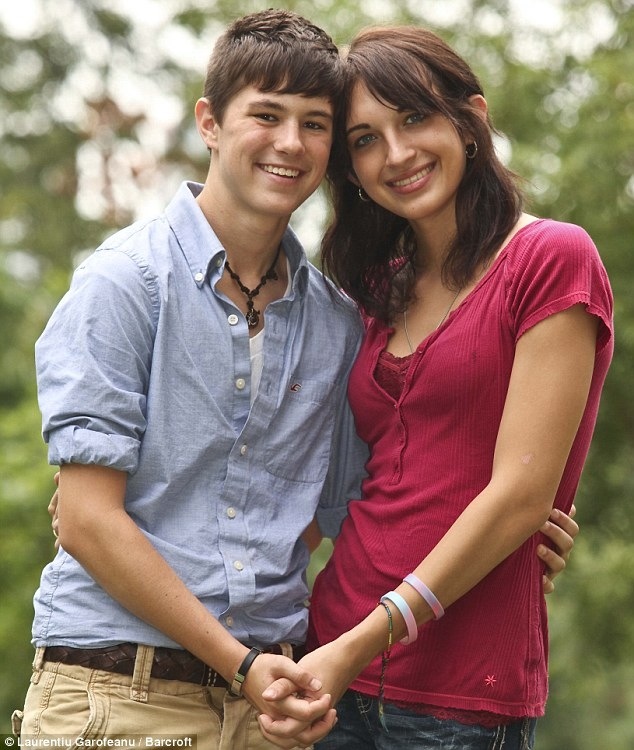
A pair of teenagers from Oklahoma might seem like your typical young couple, but their love story is unlike many others. The transgender couple actually transitioned together.
Just two years ago, Arin Andrews and Katie Hill hadn’t transitioned yet. The two had struggled with their identities throughout childhood; Hill had struggled with bullying. Then one day they met at a trans support group, after each had begun the transitioning process, and they fell in love. Today, Andrews, 17, and Hill, 19, are content.
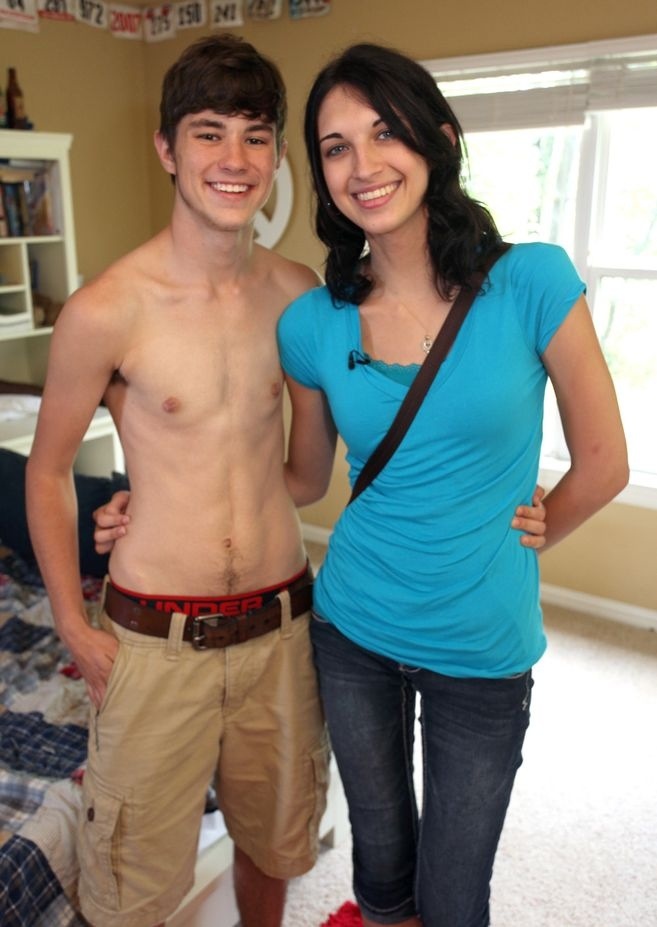
“I hated my breasts, I always felt like they didn’t belong. Now I finally feel comfortable in my own body,” Andrews explained to British tabloid The Sun about surgically removing his breasts last month. “Now when I’m out in a public pool or lifting weights, no one raises an eyebrow. They just think I’m a guy. … I can wear a tank top, which I couldn’t before, and I can go swimming shirtless. I can just be a regular guy. And I’m so lucky to have my family and Katie to rely on.”

20130723-223733.jpg

 
“Being transgender myself, I understand Arin better than anybody else — how good he feels and how complete he feels,” Hill added, per The Sun.
The brunette teen from Bixby did not always feel so complete. In a segment for “Inside Edition” last year, she said that as a young child she was “[b]ullied and abused. Ridiculed. Ashamed and embarrassed.”
She was depressed for several years before she realized she was transgender, Tulsa World previously reported. Around her 15th birthday she told her mother and asked for help becoming Katie.
“Knowing what Katie went through for eight-plus years — there’s nothing worse than watching your child suffer,” Hill’s mom, Jazzlyn, told Tulsa World. “It’s still my baby — male or female, she’s still my child. And I don’t have to kneel at her grave.”
Andrews’ mom feels the same.
“Seeing Katie go through her surgery was helpful to Arin,” she said, according to British tabloid The Mirror. “It was being around it and seeing her getting to transform. And being a couple at the time was I think just the cherry on the cake. Every transgender person would love to have the transformation physically because it just completes them as a person.”

Sparring erupts over military personnel in San Diego gay parade

Organizers of the military contingent in Saturday’s LGBT Pride parade in San Diego have accused congressional critics of trying to “bully the Pentagon into moving backwards” on the issue of gays in the military.
Sen. James Inhofe (R-Okla.) and U.S. Rep. Randy Forbes (R-Va.) criticized the Pentagon’s decision to let service members wear their uniforms while marching in the parade — the first time military personnel have been permitted to wear uniforms in a gay parade.
Forbes said the decision by a deputy assistant secretary of defense “was an outrageous and blatantly political determination issued solely to advance this administration’s social agenda.”
Inhofe demanded an explanation from Defense Secretary Leon Panetta. Inhofe, a member of the Senate Armed Services Committee, said the decision to allow personnel to wear their uniforms in the parade violates a Department of Defense policy banning personnel from involvement “in a partisan political parade.”
In a letter to Panetta, Inhofe requested “a detailed explanation of the rationale you used to grant this ‘one time waiver’ of DOD policy, who requested the waiver, why this waiver was considered justified over other requests and whether you are considering other exceptions to current policy.”
Former sailor Sean Sala, a member of Servicemembers United Leadership Council and the organizer of the military contingent for the parade, issued a statement Wednesday reading, in part:
“Sen. Inhofe and his like-minded colleagues should spend some time actually meeting and talking with some of these gay troops and veterans instead of using their platform to try to bully the Pentagon into moving backwards.”
The San Diego parade and festival, Sala said, “are in the same category of non-partisan and non-political community events as are many other events and parades in which servicemembers are also allowed to participate in uniform.”
Upward of four dozen military personnel wore uniforms in the parade through the heavily gay neighborhood of Hillcrest. Other military members marched with them, many wearing T-shirts identifying their branch of service.
–Tony Perry in San Diego
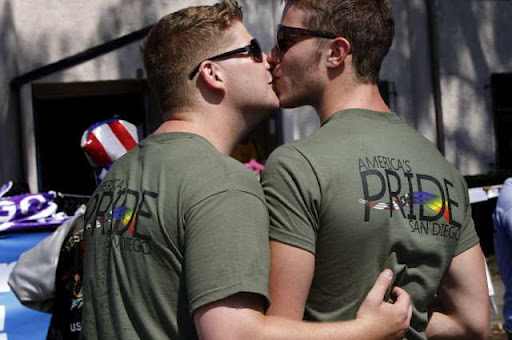
Photo: A Marine reservist and his civilian partner at Saturday’s LGBT Pride parade in San Diego.
Credit: Don Bartletti / Los Angeles Times

Military members to march in uniform at San Diego Gay Pride Parade

CAMP PENDLETON, Calif. — The Department of Defense is allowing service members to march in uniform in a gay pride parade for the first time in U.S. history.

The Pentagon on Thursday issued a military-wide directive saying it was making an exception to its policy that generally bars troops from marching in uniform in parades.

The exception is being made for San Diego’s Gay Pride Parade that will take place Saturday.

The Defense Department says it is making the exception because parade organizers had invited service members to march in uniform and the matter was getting national attention.

The Pentagon says the exception is only for this year’s parade in San Diego and does not extend beyond that.


New Orleans Pride

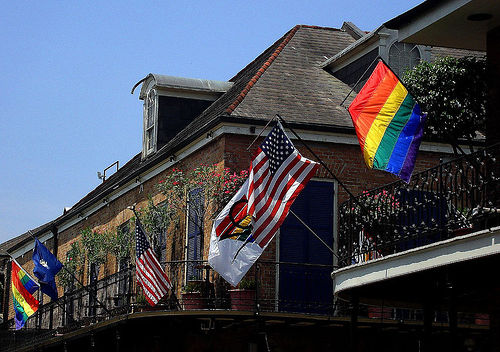
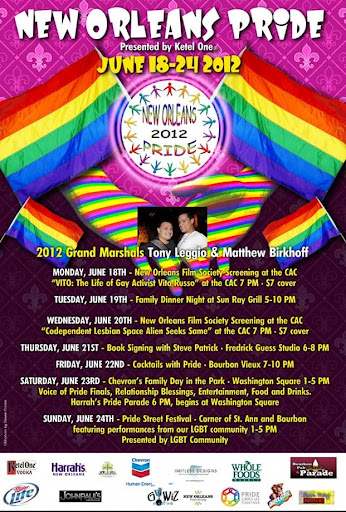
New Orleans Gay Pride is sometimes overlooked by the out of town masses for more well-known annual events like Southern Decadence and Gay Mardi Gras. But, The Crescent City has a rich Gay Pride history dating back to 1971 when the newly-formed Gay Liberation Front of New Orleans presented a “Gay In” picnic in February in City Park.  That was the very first such event in the entire state of Louisiana.  Several other gatherings were held throughout the city that year, and intermittently thereafter until it became an annual event in 1978.  The 1978 event, held in Jackson Square, was the first to be identified as “gay pride.”  Later that year, a larger event called “Gay Fest” was presented in Washington Square, just outside of the French Quarter.  

The first street parade was held in 1980.  In 1981, the event moved to Armstrong Park, and was emceed by New Orleans native Ellen DeGeneres.  An event of some nature has been held almost every year since.  In 1995, the celebration was rescheduled from June to Fall.  In 1998, the festival was moved back to Armstrong Park, and in 2002 the parade was rescheduled from Saturday afternoon to Sunday night.

For 2005, the organizing Board voted to move Pridefest back to June.  At the same meeting, it was decided to schedule only a street parade during the weekend, putting the other daytime events on hiatus during a year of restructuring.  There was no parade for 2006 or 2007, with only an organized festival being held.  A parade was once again held during the 2008 celebration, with a gathering in Washington Square.

New Orleans Pride embraces the message in our mission to celebrate and promote the history, diversity, and future prosperity of not only the New Orleans LGBT community, but the New Orleans community as a whole. We are using public awareness of and education about the LGBT community as a way to combat “phobias” and discrimination. This year we are creating ways to increase the interactions between the LGBT and the Heterosexual communities. These new annual programs leading up to and during Pride weekend are meant to include individuals from every walk of life. We are very pleased to be working with area schools gay/straight alliances, both on the high school and the college level, as well as several family related organizations. 


Pride Houston

For more than 33 years, Pride Houston has been a central part of the local LGBT community in Houston. It core mission is to strengthen equality and increase awareness around issues important to our community such as health, safety and marriage equality. Pride Houston celebrates the individuality and diversity of every person as we all strive for acceptance from parents, friends and society-at-large.
From annual charity events to aiding LGBT-support and -counseling networks, its activities continue to promote social awareness and enrich the diversity that helps the Houston community thrive.

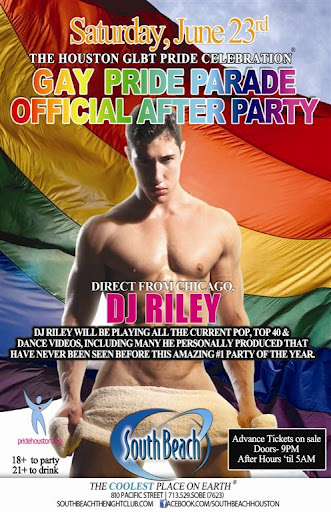
Nearly a decade after the Stonewall Riots in New York, the Gay Rights Movement for equality made its way to Houston. The Celebration is typically held the last Saturday in June to commemorate Stonewall, and the parade, which is held in the evening after sunset. This tradition began in 1997, arranged by then-Houston City Councilmember Annise Parker, where a parade ordinance was revised to allow for the nation’s only nighttime Pride Parade.

Pride Houston is a registered 501(c)3 organization incorporated in the state of Texas, and is 100 percent volunteer-run. Its annual June Celebration takes more than 10,000 volunteer hours to produce, along side its other initiatives, which require more volunteers than ever.

MISSION

Pride Houston shall work to bring lesbians, gay men, bisexuals, transgendered individuals and allies together to educate the world on issues important to the LGBT community, commemorate our history and heritage, celebrate our culture and strive for equality.

VISION

To honor the Stonewall Riots in New York City by having the largest and most accessible Pride Celebration in the Southern United States where all may attend, be themselves and find like-minded people.

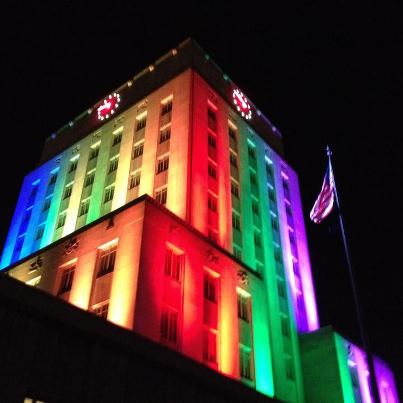
Houston has a lot to be proud of.  I’ve only visited Houston once, but I had a great time in its gay district, Montrose.  The City of Houston supports its LGBT community. Take a look at Houston’s City Hall lit up like a rainbow for Pride Week.  Even deep in the heart of east Texas, Houston is a city of wonderful culture, and from what I saw, a very accepting atmosphere.  Annise Parker has served as the mayor of Houston since January 2, 2010. Parker is Houston’s second female mayor, and one of the first openly gay mayors of a major U.S. city.


10 Colleges With a History of Gay Pride

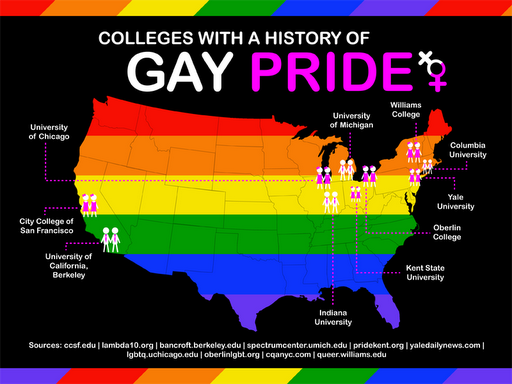
Every June, Americans recognize Gay Pride Month via famous parades and other advocacy events promoting marriage equality, adoption, health, teen bullying and suicide prevention, and other social and political issues related to LGBT rights, which directly impact an estimated 10% of the population (and indirectly impact a far higher percentage of loved ones). Because the country is still slowly growing to accept sexual and gender identity minorities, this means many college students head off to their higher education careers isolated, lonely, depressed — or worse. Most campuses these days offer some semblance of a support structure to ensure a safe experience for all LGBT students, and queer studies courses, minors, and majors have started popping up in catalogs across the country. And it’s all thanks to some of the following pioneers, who took a chance on equality when such things still stood as highly taboo.
CITY COLLEGE OF SAN FRANCISCO:  In 1989, City College of San Francisco revolutionized LGBT and queer studies when Jack Collins established America’s very first department promoting the inchoate field. Founded upon Dan Allen’s pioneering 1972 gay literature course taught in the English department, the Lesbian, Gay, Bisexual, Transgender Studies Department really wowed students, teachers, and administrators when it launched, attracting hundreds of enrollees for some of its courses. Because the school sits in one of the world’s most LGBT-friendly cities, the classes beneath the organization’s umbrella often benefit from the surrounding communities’ participation and input.
INDIANA UNIVERSITY:  More famous for Alfred Kinsey’s in-depth studies of American sexual habits at a time when such things popped monocles and inspired pearl-clutchings, Indiana University also happens to exist as a largely LGBT-friendly campus. Activist Shane Windmeyer of Campus Pride fame also established the Lambda 10 project here alongside the school’s Greek leaders in 1995. Today, it exists as the only nonprofit fully dedicated to making fraternity and sorority houses safe spaces for LGBT students. Notable, because neither institution enjoys the healthiest reputation for inclusiveness, tolerance, and equitability.

UNIVERSITY OF CALIFORNIA, BERKELEY:  Spring 1970 saw this historically progressive college offering up the nation’s very first undergraduate course in queer theory. Other schools in Illinois, New York, and even Nebraska quickly followed suit, paving the way for an entire academic field. The Gay Bears Collection pulls from Berkeley’s extensive archives — as well as its own inquiries — to provide students, faculty, staff, and visitors with detailed information about both hidden and not-so-hidden names, dates, and faces involved in the campus’ LGBT history.
UNIVERSITY OF MICHIGAN:  Many — if not most — colleges and universities these days sport some form of official LGBT outreach, usually through an organization or dedicated student services department. University of Michigan launched the very first back in 1971, inspiring more and more to follow suit and provide comfort and safety to an unfairly marginalized segment of the community. Known as the Spectrum Center, it has spent the past four decades ensuring an equal place for LGBT students, faculty, and staff.
KENT STATE UNIVERSITY:  One of the oldest, most inspiring LGBT student organizations in the nation started at Kent State University in 1971, following the precedent set by Berkeley’s groundbreaking undergraduate courses. It started out as the Kent Gay Liberation Front and set about organizing talks, rallies, and even classes on the cause of equality. More than 70 people showed up to the very first meeting scheduled by sociology student Bill Hoover and English professor Dolores Knoll, and the school’s administrators largely supported their banding together and coming out.
YALE UNIVERSITY:  When it comes to the more staunchly traditional Ivy League schools, one probably doesn’t think them bastions of LGBT tolerance and equality, though Yale has historically held a more progressive stance on the matter than its associates. It became the first of its type to organize a Gay Rights Week, rally, and dance celebrating sexual and gender diversity in 1977. Three years later, the school established a Gay and Lesbian Co-Op, which continued promoting LGBT rights, hosting lectures, promoting poetry and film, and other events furthering the cause.
UNIVERSITY OF CHICAGO:  Thanks to LGBT Phoenixes, America’s third-largest city enjoyed its very first gay rights organization, which quickly branched out into groups and events not affiliated with an academic establishment. The University of Chicago Gay Liberation Front banded together in 1969, and OutLaw — dedicated to LGBT law students — followed suit in 1984. By 1992, it was offering the very same domestic partnership benefits to lesbian and gay couples as it did heterosexuals. 
OBERLIN COLLEGE:  Oberlin College frequently lands on lists of the most LGBT-accepting institutes of higher learning in the United States. While its older nature meant at some point it did, in fact, reflect the overarching climate’s prejudices, by the 1960s some semblance of sociopolitical revolution began burbling to the surface at the Conservatory. The 1970s saw more organizations, rallies, dances, and other events bringing the fight to campus, with the Oberlin Gay Liberation Front establishing itself in 1971. More contemporary scholars enjoy the Oberlin College LGBT Community History Project, which offers up first- and second-person accounts of LGBT community history both at the school and the broader social climate.
COLUMBIA UNIVERSITY:  Yale may be one of the most notable Ivy League schools when it comes to sexual and gender identity equality, but it certainly doesn’t fly solo. Since 1967, the Columbia Queer Alliance has served as a safe haven and political rallying point for its LGBT student community — the very first of its kind in the world. Originally known as the Student Homophile League, organizers had to fight, fight, fight, and bite, bite, bite for years before Columbia officials finally green-lighted their group. It stood as one of the cornerstones of the equality movement before the Stonewall Riots two years later inspired others to action.
WILLIAMS COLLEGE:  Thanks to the efforts of Daniel R. Pinello and his 1971 Williams Advocate article “The Homosexual at Williams: Coming Out,” students felt inspired to embrace their sexuality and group together in 1976 as the Williams Gay Support Organization. Reaction to its establishment and subsequent events, which included frank discussions about AIDS, coming out, and even a support hotline, showing love and support to a marginalized minority proved extremely mixed, if not outright hostile. In fact, much of the administration actively shot down attempts to celebrate diversity and promote equality. It wasn’t until 1985, when instances of bullying whipped up a crowd of 300 supporters, that the campus started turning around.


Pride or Prejudice: A Look at Gay Pride Parades

As Gay Pride season arrives, we often look back at the legendary uprising at Greenwich Village’s now-historic Stonewall Inn. It was there that brave men and women raised up their hands and fists and said, “No more!” People were tired of being harassed, tired of being corralled and led away in shame and dishonor, tired of being treated like second-class citizens.

When the Stonewall was raided shortly after midnight on June 28, 1969, a group of gay men, lesbians, drag queens, street youth, hustlers and more fought back against the police. They used coins, bricks, garbage, bottles and their voices to tell the “authorities” to step the fuck back.

Two years later, the first Gay Pride parades took place in Los Angeles and New York and have spread to cities large and small the world over. But after 40 years, do we still need to gather in the streets in our capitals and small towns to tell the world, “We’re here. We’re queer…”? Ah, you know the rest.

It’s an interesting concept, the “pride parade.” Whether it’s to show Puerto Rican pride, Irish pride, American pride or Gay Pride, people want to gather in the streets each year to say, “Hell yeah, this is who I am and I love it!” But do annual Gay Pride parades still have the same objectives and reach the same goals today as they did 20 —or even 10—years ago? The gay community has made major strides in the last decade. We have representatives in politics, entertainment, sports, science and adademics, and we are allowed to get married or have a civil union in dozens of countries and a number of U.S. states. Yet we still have a ways to go before we truly have equality.

When you think about Pride in your town or city, what first comes to mind? Is it the riots that started our gay liberation? Is it the political factions who helped us get where we are? Perhaps it’s the companies that supported our rights to work alongside straight people and get the same benefits. Or do you just think about how messed up you’re going to get while watching hot, buff, gyrating go-go boys toss beads your way?

In turn, how does society look upon gay pride parades?  Many right-wing conservatives see pride parades as a shameless display of hedonism.  I’ve heard friends of mine who I’ve talke to about pride parades, who are also pro gay rights, but still see the displays of flesh and costumes as a bit too much.  So what can we do to enhance the image of gay pride parades.  We will never get everyone to support the parades, but it does often shed a bad light on the LGBT community.  I read one comment on a website that stated “They may be gay or in support of Gay [rights] but they are clearly exhibitionists! Gay parades are like Halloween parades, and some of the costumes are offensive, But if that is the message they want to send, they will never be taken seriously.” Is it the message we want to send? I don’t think it is, but some people will never like what we do regardless.  I will say this, the times that I have been to gay pride parades, I had a blast.  It was a lot of fun and it was a place for LGBT people to celebrate our lives and love for one another.

However you view your Pride, you can’t deny we got to this place today by the support and help of a lot of people. Whether you were in the trenches fighting or benefited from those actions, each summer we come together to remember how we got here.

But why can’t we do this everyday? There is plenty of dissension within our community—gay men who hate lesbians (and vice versa), homos who hate drag queens, gay people who think the trans “T” people should be removed from the LGBT, racism among gays, and more. Indeed, these kinds of feelings should make us all take pause and ask what it is we’re proud of. If each of us takes a step back and thinks about it, we can remember something in each of our lives that makes us proud to be gay. But is it because of some political victory, a civil rights issue, a politician or company, or a big fat party?

Yes, there are many ways to show Gay Pride. Just make sure you do something on one of the other 364 days of the year as well.