To everything there is a season, a time for every purpose under heaven.—Ecclesiastes 3:1
Snow is melting. Temperatures are rising. Bright colors are replacing browns and grays. There’s only one explanation: It must be spring! Spring is a reminder that God is all about making things new. In Revelation 21:5, Jesus promised to make everything new one day, “Then He who sat on the throne said, ‘Behold, I make all things new.’” In the meantime, He gives us glimpses of the coming attractions through spring. To help you celebrate the shift from one season to another, here are some verses that hit on the best themes of spring.
“He shall be like a tree planted by the rivers of water, that brings forth its fruit in its season, whose leaf also shall not wither; and whatever he does shall prosper.” Psalm 1:3
Spring is a time for growth. In nature, that comes from the right combination of sunlight and water. For our spiritual lives, it comes from the right combination of time with God in His word and time with other Christians in fellowship. The alternative is to be chaff that blows away and comes to nothing.
“Then I will give you the rain for your land in its season, the early rain and the latter rain, that you may gather in your grain, your new wine, and your oil.” Deuteronomy 11:14
Life is a balancing act between working like everything depends on you and trusting like everything depends on God. He will send the rains you need, but you’ve also got to do your part by working the harvest.
“Let my teaching drop as the rain, my speech distill as the dew, as raindrops on the tender herb, and as showers on the grass.” Deuteronomy 32:2
You’re never too old to learn, especially when it comes to learning more about God’s love and His goodness. Just like rain provides nourishment to the plants, His word reaches into our hearts and shows us things we never would have imagined.
“So why do you worry about clothing? Consider the lilies of the field, how they grow: they neither toil nor spin; and yet I say to you that even Solomon in all his glory was not arrayed like one of these.”Matthew 6:28–29
Take a look at the flowers and plants blooming around you. They didn’t worry their way to awesomeness. And you can’t either. God cares about you, so let Him carry your worries and fears. First Peter 5:7 says, “Casting all your care upon Him, for He cares for you.”
Whether it’s a long walk on a sunny day or splashing through puddles during an unexpected shower, soak up the blessings of spring. Let the sights, sounds and smells of a new season bring to life something new within you.
But the fruit of the Spirit is love, joy, peace, long-suffering, kindness, goodness, faithfulness, gentleness, self-control. Against such there is no law.
—Galatians 5:22-23
The Greek word translated “fruit” refers to the natural product of a living thing. Paul used “fruit” to help us understand the product produced, not by us, but by the Holy Spirit within us. The Greek word is singular, showing that “fruit” is a unified whole, not independent characteristics. As we grow, all the characteristics of Christ will be manifested in our lives.
The fruits of the Spirit need to be allowed to grow within us and become a part of who we are. When we plant seeds in our flower beds, we have to watch out and remove any weeds, which is a constant threat. Weeds will choke what we’ve planted. If weeds are allowed to grow, then what we planted will never have the opportunity to reach its full maturity and beauty. Just as we don’t want weeds in our garden, we must constantly work to rid our lives of the “weeds” of our temptations that want to choke out the work of the Spirit.
The Holy Spirit gives us the power we need to reject those old sinful desires. We can say “no” to temptation and accept the “way out” God provides through the Holy Spirit. First Corinthians 10:13 says, “No temptation has overtaken you except such as is common to man; but God is faithful, who will not allow you to be tempted beyond what you are able, but with the temptation will also make the way of escape, that you may be able to bear it.” As we give the Spirit more control of our lives, God will shape us and grow us to look like Jesus. Second Corinthians 3:17-18 tells us, “Now the Lord is the Spirit; and where the Spirit of the Lord is, there is liberty. But we all, with unveiled face, beholding as in a mirror the glory of the Lord, are being transformed into the same image from glory to glory, just as by the Spirit of the Lord.”
Paul uses nine characteristics to describe the fruit of the Spirit in the book of Galatians: love, joy, peace, long-suffering, kindness, goodness, faithfulness, gentleness, self-control. The first characteristic is love (Greek: agape, Latin: caritas). Agape (love) seeks the highest good for others, no matter their behavior. It is a love that gives freely without asking anything in return and does not consider the worth of its object. Agape is more a love by choice than Philos, which is love by chance; and it refers to the will rather than the emotion. Agape describes the unconditional love God has for the world. Paul describes love in 1 Corinthians 13:4–8:
Love suffers long and is kind; love does not envy; love does not parade itself, is not puffed up; does not behave rudely, does not seek its own, is not provoked, thinks no evil; does not rejoice in iniquity, but rejoices in the truth; bears all things, believes all things, hopes all things, endures all things. Love never fails. But whether there are prophecies, they will fail; whether there are tongues, they will cease; whether there is knowledge, it will vanish away.
The second characteristic is joy (Greek: chara, Latin: gaudium) The joy referred to here is deeper than mere happiness; it is rooted in God and comes from Him. Since it comes from God, it is more serene and stable than worldly happiness, which is merely emotional and lasts only for a time. Without peace, there would be no joy. Peace is the third characteristic. Jesus is described as the Prince of Peace, who brings peace to the hearts of those who desire it. He says in John 14:27: ” Peace I leave with you, My peace I give to you; not as the world gives do I give to you. Let not your heart be troubled, neither let it be afraid.” In the Beatitudes Jesus says in Matthew 5:9, “Blessed are the peacemakers, for they shall be called sons of God.”
The fourth characteristic is long-suffering and sometimes referred to as patience. Generally the Greek world applied this word to a man who could avenge himself but did not. This word is often used in the Greek Scriptures in reference to God and God’s attitude to humans. Exodus 34:6 says, “And the Lord passed before him and proclaimed, ‘The Lord, the Lord God, merciful and gracious, long-suffering, and abounding in goodness and truth.’” The Lord is described as “slow to anger and rich in kindness and fidelity.”
Some English Bibles translate the single Greek word chrestotes into two English words: kindness and goodness, which are the fifth and six characteristics. In Greek, old wine was called “chrestos” which meant that it was mellow or smooth. Christ used this word in Matthew 11:30, ” For My yoke is easy and My burden is light.” Kindness is acting for the good of people regardless of what they do. Goodness can be defined in a number of ways: the state or quality of being good; Moral excellence; virtue; kindly feeling, kindness, generosity, joy in being good; or a general character recognized in quality or conduct.
The seventh characteristic is faithfulness (Greek: pistis, Latin: fides). The root of pistis (“faith”) is peithô, that is to persuade or be persuaded, which supplies the core-meaning of faith as being “divine persuasion”, received from God, and never generated by man. It is defined as the following: objectively, trustworthy; subjectively, trustful:—believing, faithfulness, surety, truth. The eighth, gentleness is “a divinely-balanced virtue that can only operate through faith.” Gentleness which is prautes in Greek, is commonly known as meekness.
The ninth and final characteristic is self-control. The Greek word used in Galatians 5:23 is “enkrateia”, meaning “strong, having mastery, able to control one’s thoughts and actions.” Second Peter 1:5-7 discusses fruitful growth in the faith, saying, “But also for this very reason, giving all diligence, add to your faith virtue, to virtue knowledge, to knowledge self-control, to self-control perseverance, to perseverance godliness, to godliness brotherly kindness, and to brotherly kindness love.
Therefore humble yourselves under the mighty hand of God, that He may exalt you in due time, casting all your care upon Him, for He cares for you.
— 1 Peter 5:6-7
Do you ever have days where you feel like you don’t know who you are anymore? Especially, as members of the LGBTQ+ community, I think we have all had that day when we questioned who we are. Those of us who were raised in a conservative church probably questioned out identity even more. When you are raised believing that it is not possible that you could be attracted to those of the same sex or have a gender other than the one determined by your sexual organs, it can be a long terrifying process to know who we really are. Some days and for even years people, life, and events get in the way of our “knowing” and we find ourselves wondering, “Who am I?”
I am a firm believer that if we are taught acceptance from the beginning of our lives, then the struggle we go through to accept ourselves will not be as difficult. We sometimes say, “I need to find myself!” If we learn unconditional acceptance, then we will not be lost and will not need to find ourselves. Greater acceptance would change the world, but it will take a lot of work. Colossians 3:9-10 says, “Do not lie to one another, since you have put off the old man with his deeds, and have put on the new man who is renewed in knowledge according to the image of Him who created him, where there is neither Greek nor Jew, circumcised nor uncircumcised, barbarian, Scythian, slave nor free, but Christ is all and in all.” God tells us that, “Christ is all and in all.” If we don’t have acceptance of our fellow humans for their differences, then we also do not accept Christ.
We also often wonder, “Why am I here? What is my purpose?” Those are the days we need reminding, that we are part of something bigger. We are connected to something with a bigger purpose. I know the model prayer in the Bible (Matthew 6:5-15), and I find prayer to be a very personal experience, Matthew 6:6-7 says, “When you pray, go into your room, and when you have shut your door, pray to your Father who is in the secret place; and your Father who sees in secret will reward you openly. And when you pray, do not use vain repetitions as the heathen do. For they think that they will be heard for their many words.”
When I pray, I have a conversation with God. While I don’t hear Him talking back to me, I do see his actions. One of the things I always pray for is that God will show me the path that is right for me in this life. We need guidance and to feel God’s love and acceptance. I think we are all on a path and God is there with us guiding us. This always reminds me of the poem, “Footprints in the Sand”:
One night I had a dream…
I dreamed I was walking along the beach with the Lord, and Across the sky flashed scenes from my life. For each scene, I noticed two sets of footprints in the sand; One belonged to me, and the other to the Lord. When the last scene of my life flashed before us, I looked back at the footprints in the sand. I noticed that many times along the path of my life, There was only one set of footprints.
I also noticed that it happened at the very lowest and saddest times in my life This really bothered me, and I questioned the Lord about it. “Lord, you said that once I decided to follow you, You would walk with me all the way; But I have noticed that during the most troublesome times in my life, There is only one set of footprints. I don’t understand why in times when I needed you the most, you should leave me.
The Lord replied, “My precious, precious child. I love you, and I would never, never leave you during your times of trial and suffering. When you saw only one set of footprints, It was then that I carried you.
Therefore do not cast away your confidence, which has great reward.
—Hebrews 10:35
I have always lacked confidence in myself. Even when I knew I had the correct answer in class or a meeting, I’ve never been able to convince myself to have the confidence that I would give the correct answer. Most of my friends know that I can be a walking trivial pursuit; however, I often don’t have a lot of confidence in myself. I fear that if I let my head full of trivial trivia fly with all the minutia of facts swimming around in my head, people will think that I am boring, which I think most people I know probably secretly think I am. I don’t worry as much about this on my blog (that’s not to say that I don’t, because I do), but I know that my readers will either read it or just look at the pretty pics of hot guys.
A friend of mine described someone as “boring and sensitive,” which I said was how I think most guys would describe me, and I think they lose interest. I can have a conversation with a guy or go on a date with him, and once I get comfortable, I end up talking way too much and am seen as a bore. My friend said that I was not “boring and sensitive.” Yes, some people do find me interesting or at least intelligent, but it seems like most guys really aren’t looking for intelligence. They are looking for more brawn than brains.
My friend told me that I need to be more self-confident. It’s something with which I have always struggled to be. In 2 Timothy 1:7, Paul wrote to Timothy saying, “For God has not given us a spirit of fear, but of power and of love and of a sound mind.” Paul tells Timothy that he should not have fear but be confident in himself. In Joshua 1:9, God reveals to Joshua his purpose, “Have I not commanded you? Be strong and of good courage; do not be afraid, nor be dismayed, for the Lord your God is with you wherever you go.” Hebrews 13:5-6 says, “Let your conduct be without covetousness; be content with such things as you have. For He Himself has said, ‘I will never leave you nor forsake you.’ So we may boldly say: ‘The Lord is my helper; I will not fear. What can man do to me?’” We are who we are, and while not everyone will like us for who we are, we still have to be true to ourselves and stop fearing what others will think of us.
If you are like me and often fear how others perceive you and lack confidence in yourself, we need to remember that God is there for us. If we allow Him to guide us, we will have all the confidence we need. Isaiah 41:10 tells us, “Fear not, for I am with you; be not dismayed, for I am your God. I will strengthen you, Yes, I will help you, I will uphold you with My righteous right hand.” God is there for us to make our lives better and easier to deal with love and attraction, among many other things in life. We should remember that He wants what is right for us. When it comes to love, the song from Snow White voices our hope that “Someday my prince will come,” and I hope that one day he will. Proverbs 29:25 says, “The fear of man brings a snare, but whoever trusts in the Lord shall be safe.”
God is there to guide us; we only have to let Him. We have to trust in Him to know what is best for us, but we also must ask God for that guidance toward confidence. John writes in 1 John 5:14-15, “Now this is the confidence that we have in Him, that if we ask anything according to His will, He hears us. And if we know that He hears us, whatever we ask, we know that we have the petitions that we have asked of Him.” Jesus said in Matthew 19:26, “With men this is impossible, but with God all things are possible.”
I hope to one day find love. It has mostly eluded me so far in life, but I still hold out hope. In 1 John 4:18, John wrote, “There is no fear in love; but perfect love casts out fear because fear involves torment. But he who fears has not been made perfect in love.” I have always gotten nervous talking to men. I’ve almost always been easily able to talk to women, but because I am not attracted to them in the same way I am in men, it doesn’t make me nervous like it does when I try to talk to men. It’s all about the fear and lack of confidence I have. There have been some men in my life that I could easily talk to. Some of those men I realized I never had a chance with, and thus the nervousness disappeared, but if I hope that I will have a chance of getting to know them better and that maybe it will become more, I shut down. I just can’t get comfortable. I think that fear has kept me from finding a lasting relationship. Deuteronomy 31:6 tells us, “Be strong and of good courage, do not fear nor be afraid of them; for the Lord your God, He is the One who goes with you. He will not leave you nor forsake you.”
And let us not grow weary while doing good, for in due season we shall reap if we do not lose heart.
—Galatians 6:9
Perseverance is vital to growing in our faith, and God wants us to persevere no matter what happens, so we have to learn how to overcome obstacles, difficulties, trials, and tribulation to triumph over adversity. We have two choices when faced with hardship – trust in God or quit and abandon hope. We all have our fair share of adversity, as gay men, we often not only question our own faith because we were told it was a sin to be gay, but we also face others questioning our faith because we are gay. We must persevere and be servants of God. It is through service that we can be stronger in our faith. We can’t grow weary of our doing good, because the reward is greater when you consistently do your best for others.
The parable of the soils illustrates the difference between those who seem, for a short time, to have faith and those who have received true saving faith which produces a changed life. Matthew 13:18–23 says, “Therefore hear the parable of the sower: When anyone hears the word of the kingdom, and does not understand it, then the wicked one comes and snatches away what was sown in his heart. This is he who received seed by the wayside. But he who received the seed on stony places, this is he who hears the word and immediately receives it with joy; yet he has no root in himself, but endures only for a while. For when tribulation or persecution arises because of the word, immediately he stumbles. Now he who received seed among the thorns is he who hears the word, and the cares of this world and the deceitfulness of riches choke the word, and he becomes unfruitful. But he who received seed on the good ground is he who hears the word and understands it, who indeed bears fruit and produces: some a hundredfold, some sixty, some thirty.” This parable does not imply that a true believer’s faith will never falter or fail, but that a person who possesses true saving faith will never fully or finally fall away because God will sustain their faith.
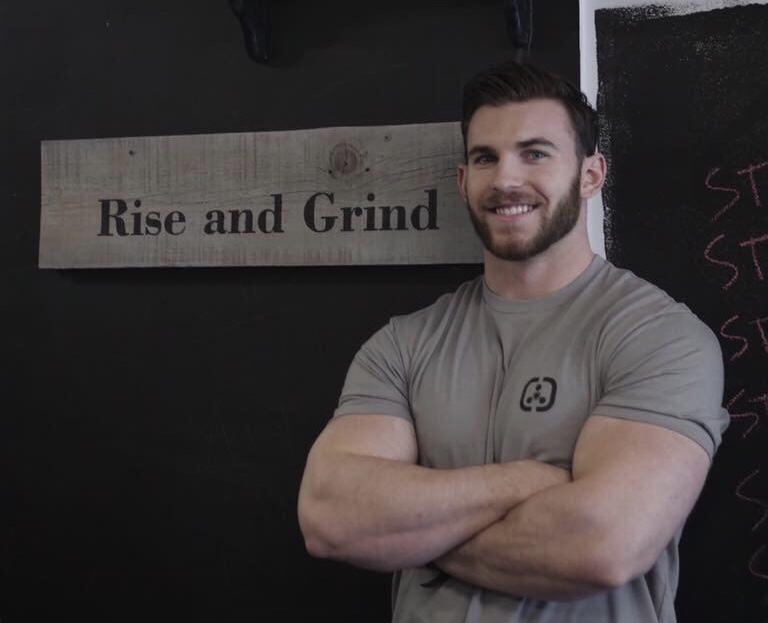
Some days it’s difficult to rise and shine. It may not be in us to shine that day, but it won’t be every day. Good will come along, especially if we have faith. So, on those days when we can’t bring ourselves to shine, we just need to rise and grind our way through so that we can make it to another day no matter how difficult it may seem. In times of adversity, big or small, remember to have faith in God, and that faith will allow us to persevere.
Beloved, if God so loved us, we also ought to love one another. No one has seen God at any time. If we love one another, God abides in us, and His love has been perfected in us.
—1 John 4:11-12
John 3:16 says, “For God so loved the world that He gave His only begotten Son, that whoever believes in Him should not perish but have everlasting life.” The New Testament of the Bible has several recurring themes: faith, hope, charity, and love. Chapter 13 of 1 Corinthians, known as “The Greatest Gift,” says:
Though I speak with the tongues of men and of angels, but have not love, I have become sounding brass or a clanging cymbal. And though I have the gift of prophecy, and understand all mysteries and all knowledge, and though I have all faith, so that I could remove mountains, but have not love, I am nothing. And though I bestow all my goods to feed the poor, and though I give my body to be burned, but have not love, it profits me nothing.
Love suffers long and is kind; love does not envy; love does not parade itself, is not puffed up; does not behave rudely, does not seek its own, is not provoked, thinks no evil; does not rejoice in iniquity, but rejoices in the truth; bears all things, believes all things, hopes all things, endures all things.
Love never fails. But whether there are prophecies, they will fail; whether there are tongues, they will cease; whether there is knowledge, it will vanish away. For we know in part and we prophesy in part. But when that which is perfect has come, then that which is in part will be done away.
When I was a child, I spoke as a child, I understood as a child, I thought as a child; but when I became a man, I put away childish things. For now we see in a mirror, dimly, but then face to face. Now I know in part, but then I shall know just as I also am known.
And now abide faith, hope, love, these three; but the greatest of these is love.
I think these verses speak for themselves. In Matthew 22:37-40, Jesus gave us the Greatest Commandment: “‘You shall love the Lord your God with all your heart, with all your soul, and with all your mind.’ This is the first and great commandment. And the second is like it: ‘You shall love your neighbor as yourself.’ On these two commandments hang all the Law and the Prophets.”
And so we know and rely on the love God has for us. God is love. Whoever lives in love lives in God, and God in them.
—1 John 4:16
The Bible teaches that God created human beings in His image. This means that He enables us to have some understanding of Him and of His vast and complex design. Our human nature reflects some of God’s attributes, although in a limited way. We love because we are made in the image of the God who is love (1 John 4:16). Because we are created in His image, we can be compassionate, faithful, truthful, kind, patient, and just. In us, these attributes are distorted by sin, which also resides in our nature. First Corinthians 13: 6-7 says, “Love does not delight in evil but rejoices with the truth. It always protects, always trusts, always hopes, always perseveres.”
As LGBTQ+ Christians we have a further step, a further test, than most Christians. We can follow the steps of salvation, but we must also have faith that God created us in his image. Faith also teaches us that God created us to be attracted to and love those of the same sex. No matter what the flaws s man may have, or the sin that mankind tempts us with its doubts, we must be strong in our faith and believe that God made us who we are and know that He is love.
Love is God’s greatest gift to us. John 3:16 tells us, “For God so loved the world that he gave his one and only Son, that whoever believes in him shall not perish but have eternal life.” He has offered us eternal life if we follow his guidance. Always remember, God loves us, and He is Love!
For the word of the Lord is right, and all His work is done in truth. He loves righteousness and justice; the earth is full of the goodness of the Lord.
—Psalms 33:4-5
The above verse made me stop and think. Psalms 33:4 is correct, “For the word of the Lord is right, and all His work is done in truth,” but what about Psalms 33:5, “He loves righteousness and justice; the earth is full of the goodness of the Lord”? I have no doubt that God loves the righteous and justice, but when I look around me today, whether it’s the hateful trumpist factions in American politics, the possible invasion of Ukraine by the autocratic Putin, or one of the most repressive regimes in history hosting the Olympic Games, which is supposed to be about unity, sportsmanship, and peace, I find it hard to see that “the earth is full of the goodness of the Lord.” Instead, I see a world in which hatefulness is becoming more common than goodness.
Jesus describes his purpose, at the start of his ministry in Luke 4:18-19, “The Spirit of the Lord is upon Me, because He has anointed Me to preach the gospel to the poor; He has sent Me to heal the brokenhearted, to proclaim liberty to the captives and recovery of sight to the blind, to set at liberty those who are oppressed; to proclaim the acceptable year of the Lord.” The world today, and many Christians in it, are greedy, selfish, and hateful. We need to get back to the ministry that Jesus started: one that helps the poor, heals the brokenhearted, and heals the sick. We need to stand up to our captors and oppressors. We need to follow Jesus’s example and “proclaim liberty to the captives” and “set at liberty those who are oppressed.”
To defeat the oppressors in the United States, we have to go to vote and make sure the trumpists lose at the polls. We need to stand up to international bullies like Vladimir Putin, and loudly call out the Chinese for the oppression and genocide of its citizens. We need to elect leaders who will try to make sure “the earth is full of the goodness of the Lord.” We have to do more for the poor and oppressed in this world. We need to make healthcare a right, not a privilege of the wealthy.
Martin Luther King, Jr. said it best in his “I Have a Dream” speech:
And so even though we face the difficulties of today and tomorrow, I still have a dream. It is a dream deeply rooted in the American dream. I have a dream that one day this nation will rise up and live out the true meaning of its creed: “We hold these truths to be self-evident, that all men are created equal.” … I have a dream that my four little children will one day live in a nation where they will not be judged by the color of their skin but by the content of their character. I have a dream today! … With this faith, we will be able to hew out of the mountain of despair a stone of hope. With this faith, we will be able to transform the jangling discords of our nation into a beautiful symphony of brotherhood. With this faith, we will be able to work together, to pray together, to struggle together, to go to jail together, to stand up for freedom together, knowing that we will be free one day.
For our light affliction, which is but for a moment, is working for us a far more exceeding and eternal weight of glory, 18 while we do not look at the things which are seen, but at the things which are not seen. For the things which are seen are temporary, but the things which are not seen are eternal.
—2 Corinthians 4:17-18
The Indian writer and painter Rabindranath Tagore said, “The one who plants trees, knowing that he will never sit in their shade, has at least started to understand the meaning of life.” Tagore was a persuasive advocate for Indian independence, though he did not live to see the 1947 milestone achieved. He devoted his years to benefiting future generations. As his quote implies, no legacy is more worthwhile than bettering the world for others.
Paul told the Corinthians the same thing in his second epistle to them. Paul tells them, “For the things which are seen are temporary, but the things which are not seen are eternal.” There are many things that we do that we will never realize the lasting effect they have on others. Maybe you provide an example for a young LGBTQ+ individual who sees you as a role model, and without knowing it, you provide them with a positive example of acceptance. You might give someone encouragement and tell them how much you appreciate the good job they did or how helpful they were. That can give someone a confidence that you may never see. All of you have probably planted a seed in someone’s mind that changed their life for the better, whether that was through showing someone acceptance or giving them confidence. That seed may grow into a mighty tree, but you may never see it or realize it.
The opposite can also be true. We also have to be careful with the legacy we leave behind. You may never know when you have said something to another person that it might effect them in a negative way. You may not have meant to, and if that’s the case, you may never know you did it. When I was a teenager, I worked hard to have perfect grades, to be involved in as many things academically as possible, and I was proud of my accomplishments. A lady once told my mother that I “sure was full of myself.” Meaning that I thought a lot of myself and implying that I was a braggart and conceited. When my mother told me that, I was devastated. I had only answered what the woman had asked me. It destroyed my confidence for a long time. If I “tooted my own horn” would others think badly of me. I felt as if I needed to downplay a lot about myself, and that led to me not being confident in my accomplishments. It took a long time for me to be confident again, and I’m still not always as confident as maybe I should be.
Under present social conditions, with the continuous increment in hate speech, be it targeted on grounds of race, ethnicity, gender, sexual orientation or religion, we need to consider what we say before we say it. How will what we say effect others? People often speak very comfortably and impulsively without realizing if certain words or the way we use them have an inherent negative meaning attached to them. If such a case causes a miscommunication then it may lead to disastrous consequences. so, thinking before speaking is a necessity for people to be a better person.
Fran Lebowitz, known for her sardonic social commentary on American life, is quoted as saying, “Think before you speak…read before you speak.” The continuous negativity in speech has ended up subjecting humankind to a vicious toxic circle, one that cannot be done away with until we speak consciously and think before we speak. The writer William Arthur Ward said, “Before you speak, listen. Before you write, think. Before you spend, earn…before you criticize, wait.” While words have the miraculous power to heal, they also have the power to topple the world. Voltaire said, “Everything you say should be true, but not everything true should be said.” We live and breathe in words. Sometimes words make us smile, sometimes they make us cry, sometimes they pierce through us to an extent that we never forget the hurt they caused. The Irish missionary and writer Amy Carmichael, gave this advice, “Let nothing be said about anyone unless it passes through the three sieves: Is it true? Is it kind? Is it necessary?”
“Enter by the narrow gate; for wide is the gate and broad is the way that leads to destruction, and there are many who go in by it. Because narrow is the gate and difficult is the way which leads to life, and there are few who find it.
—Matthew 7:13-14
When I was coming to terms with my sexuality, I thought about the above verses a lot. For LGBTQ+ individuals, accepting our sexuality is the narrow gate; going through the wide gate often leads to our destruction. The discrimination and bullying LGBTQ+ individuals often face in life often can lead to suicidal behavior Policies and interventions that effectively reduce stigma and discrimination while strengthening support networks and community connectedness could help reduce the risk of suicide for LGBTQ+ adults and youth.
Although sharply divided, public attitudes toward gays and lesbians are rapidly changing to reflect greater acceptance, with younger generations leading the way. Acceptance of homosexuality in general also reflects the generational difference in opinion. In 2010, 26 percent of the people surveyed who were under 30 said they felt same-sex behavior is “always wrong,” while 63 percent of the people aged 70 and older held that opinion.
Those in the LGBTQ+ community know that the attitude towards our community is changing. The change toward acceptance of homosexuality began in the late 1980s after years of remaining relatively constant. In 1973, 70 percent of people felt same-sex relations are “always wrong,” and in 1987, 75 percent held that view. By 2000, however, that number dropped to 54 percent and by 2010 was down to 43.5 percent. People of my generation and older, and even today, people in more conservative areas of the country, know that lack of acceptance made many people deny their sexuality, which is harmful. Lack of acceptance and fear of the way we’d be treated if we came out, led many of us to stay in the closet for too many years.
Research shows that anti-LGBTQ+ discrimination and victimization contribute to an increase in the risk of suicide, and LGBTQ+ people are at disproportionate risk of suicidal thoughts, planning, and attempts. A 2016 review of research found 17 percent of lesbian, gay, and bisexual adults had attempted suicide during their lifetime, compared with 2.4 percent of the general U.S. population. LGBQ people were 92 percent more likely to think about suicide, 75 percent more likely to plan suicide, and 88 percent more likely to actually attempt suicide that resulted in no or minor injury. The statistics for transgender individuals is even worse. For transgender individuals, 82 percent have seriously thought about suicide in their lifetimes, while 48 percent had done so in the past year. Even more devastating is that 40 percent of transgender individuals have attempted suicide at some point in their lifetimes, and 7 percent had attempted it in the past year.
Acceptance can go a long way in changing these statistics. That doesn’t mean just acceptance from non-LGBTQ+ people, but also accepting ourselves and our sexuality. LGBTQ+ people are a minority. At best, we make up about 10 percent of the population, though in surveys that number is usually lower. Our small section of the population that accept our sexuality put us automatically on the “narrow path.” But acceptance and journeying down that narrow path leads to much difficulty , but it also “leads to life.” Mark Twain once said, “Whenever you find yourself on the side of the majority, it is time to pause and reflect.”
In life, we are constantly faced with the narrow path and the wide path, it is up to us to chose which one we take. However, just remember that “narrow is the gate and difficult is the way which leads to life,” Today, I want to leave you with one of y favorite poems which gives advice we should all heed.
The Road Not Taken
By Robert Frost
Two roads diverged in a yellow wood, And sorry I could not travel both And be one traveler, long I stood And looked down one as far as I could To where it bent in the undergrowth;
Then took the other, as just as fair, And having perhaps the better claim, Because it was grassy and wanted wear; Though as for that the passing there Had worn them really about the same,
And both that morning equally lay In leaves no step had trodden black. Oh, I kept the first for another day! Yet knowing how way leads on to way, I doubted if I should ever come back.
I shall be telling this with a sigh Somewhere ages and ages hence: Two roads diverged in a wood, and I— I took the one less traveled by,












 Joe
Joe





 The Closet Professor