Category Archives: Religion

Sixteen Years Ago…

It shall be as a sign to you on your hand and as a memorial between your eyes, that the Lord’s law may be in your mouth; for with a strong hand the Lord has brought you out of Egypt.

— Exodus 13:9

The verse above is one of the many memorials in the Bible. This one marks Passover when the Angel of Death struck Egypt but spared the Hebrews. We have a lot of memorials in our lives. Today is one of those days I will never forget. Sixteen years ago, I was living in southern Mississippi. On this day in 2005, tragedy struck the Gulf Coast of Mississippi and the area in and around New Orleans, Louisiana. It was the day a devastating hurricane named Katrina hit. Nearly 2000 people died, and the numbers are still questionable because 135 people remain categorized as missing in Louisiana.

It is a day that lives vividly in my mind. At the time, I was living with a friend of mine. I had moved in with her about a year before because her husband was moving to Florida and did not want her living there alone as she finished graduate school. The rent was much more affordable than the apartment I was living in before, so I moved. What I did not know at the time was that just as I was moving my stuff, her husband decided he wanted a divorce along with moving away. After that, several other tragedies struck my friend, and she began to spiral into alcoholism. I was sort of caught up in all of it, trying to keep her from self-destructing. I was unsuccessful, and the events of this day sixteen years ago tipped her over the edge.

When I woke up on August 29, 2005, my friend decided we were going to brunch. At the time, we did not realize just how bad the hurricane brewing in the Gulf of Mexico would be. In the years I lived in the South, I lived through numerous hurricanes, and never once had I been forced to evacuate. So, we went to brunch, where she proceeded to drink way too much. I drove her home, where she subsequently passed out in her bedroom, and I began to watch the Weather Channel with greater apprehension as it became more apparent just how devastating this hurricane was expected to be. I tried to wake her but to no avail.

Finally, she woke from her drunken stupor, realized just how much jeopardy we were in, and we made the decision to evacuate. Not many people in our town were evacuating because we were about an hour from the Gulf Coast. However, it was a good thing we did. I wanted to go east into Alabama to stay with my parents, where I believed we would be safest (and I would have been correct), but she wanted to drive west to try to get out of the way of the storm. Most hurricanes do turn to the east as a matter of course once they make landfall. So, we got in my car and drove west. The first hotel we found was in Tyler, Texas, which was roughly six hours and 400 miles away. We checked into the hotel and watched the news. 

Sadly, it was Fox News because it was the only news channel on the cable system in Tyler. We watched as the levees broke in New Orleans. The major news channels mostly covered New Orleans and did not tell us much about what was going on in Mississippi. While fewer people died in Mississippi than in New Orleans, two entire towns in Mississippi, Bay St. Louis and Waveland, were destroyed. All of the other Mississippi Gulf Coast towns suffered significant damage as well. We stayed in Tyler for nearly a week before it was deemed safe to return to Mississippi.

When we reached Vicksburg, Mississippi, we ran into someone from Oak Grove, the town we lived in, and asked how things were there. We found out that it was pretty devastated. While some areas were spared significant damage, others faced major damage, and electricity, cell service, and water had still not yet been restored to major parts of Mississippi south of Interstate-20. The woman we talked to did have news of the street where we lived. She said that the house at the 90-degree curve in the street was covered in trees. We lived in that house. We prayed she was wrong, but when we arrived back at the house, we found that nearly every tree in our yard and the neighbor’s yard had fallen on our house. More than a dozen pine trees lay on top of the house, and a few the wind had picked up, and they looked like Katrina threw them into the house like a javelin. Water soaked the house, and everything was damp. 

The house was essentially unlivable. My parents drove from Alabama the next day with some of my dad’s friends, a few trailers, chainsaws, and gallons of gasoline to get my stuff out of the house. We had to cut away our way through the trees to be able to move things out. Luckily, I did not have a lot of stuff in the house. What I did have was my furniture and a lot of books and clothing. The books and clothing were largely destroyed by damp and mildew by then. The heat was unbearable. We got back home in Alabama and rented a storage room to store all my possessions. The storage facility owners refused to charge us because they knew I was a refugee from Katrina. In the next week or so, I was able to get a room in the dorms at my college, so I had a place to stay. A lot of people fled to our town. The population where I lived tripled in size overnight. At twenty-seven years old, I had little choice but to move into the dorms. I had not lived in a dorm since I’d been a sophomore in undergrad.

I largely recovered and found a new apartment for the next semester. My friend, however, continued to spiral out of control. Her drinking got worse, and she became self-destructive. She was able to repair the house and sell it, but her mental health continued to suffer greatly. She ended up moving back to Florida with her parents. I lost contact with her because she became somewhat abusive to her friends as she began drinking more and more. It was an unfortunate situation, and she could not understand that she needed help. While Katrina turned my world upside down for a few months, I was able to turn things back around and get on with my life. She was unable to do so. A few years ago, I think I saw her in the Atlanta airport as I was traveling back to Alabama from Vermont. She did not see me, and I was in a hurry to catch my plane. I was unable to ask how she was doing, but she did not look good.

I can’t help but think about the turmoil caused by Katrina for me and the thousands of others because of the devastation of Hurricane Katrina sixteen years ago. I realize this is not my usual Sunday post, but I wrote this to say that we can make it through, even though things can sometimes look bleak and insurmountable. I have had some great sadness in my life, but I have survived. I have had chronic pain, but I am surviving. No matter what we are going through, we need to remember that God is with us. God will take care of us if we just let Him.



Positivity

Finally, brethren, whatsoever things are true, whatsoever things are honest, whatsoever things are just, whatsoever things are pure, whatsoever things are lovely, whatsoever things are of good report; if there be any virtue, and if there be any praise, think on these things. 

Philippians 4:8

Ever heard of the saying “You are what you eat?” Well, the same is true with our thoughts; we become what we think. It’s the power of positive thinking. Fixing our thoughts on the positive allows our outlook to be positive, even if we are surrounded by negativity.  Paul is trying to show us that we can rise above behaviors we detest. It all starts with thoughts, which lead to actions, and eventually become habits.

If we let the negativity int his world, especially the negativity that is often aimed at the LGBTQ+ community, then we will become consumed by it. We can’t let other’s negative attitudes bring us down. If we stay positive then the negative naysayers cannot have a hold on us. We have to live by example and that means having an attitude that is positive and encouraging.

The easiest thing we can do is to smile at another person. I know it’s not always easy to smile, but we can still try to make an effort. Smiles and positivity can be contagious, and in the present, we need something that contagious that is positive. Too much suffering is occurring because of hate, fear, and negativity. The best thing we can do is to live and lead by example.


Come to Me

Come to Me, all you who labor and are heavy laden, and I will give you rest.

— Matthew 11:28

It’s been a rough week. For anyone who’s been having a rough time lately, this post is for you.

The Ragamuffin Gospel is a book about the essence of Christianity by former Franciscan priest Brennan Manning. Manning argues that Jesus’ gospel was one of grace, and that efforts to earn salvation are impossibly misguided. He states that the true meaning of God’s grace has been lost in society amidst a constant search to merely please God, as though the Almighty is only a “small-minded bookkeeper,” who tallies sins and uses them against humanity. Citing numerous biblical references and utilizing colleagues’ stories, Manning illustrates the simple need for humanity to accept the freedom of God’s grace, and its power to change lives. In the book, Manning discusses how we should handle distress. He says, that “For those who feel their lives are a grave disappointment to God, it requires enormous trust and reckless, raging confidence to accept the love of Christ knows no shadows of alteration or change.”  

Manning wrote that when Jesus said in Matthew 11:28, “Come to Me, all you who labor and are heavy laden, and I will give you rest,” He assumed we would grow weary, discouraged, and disheartened along the way.  These words show the genuine humanness of Jesus. He had no romantic notion of the cost of discipleship, and it would be costly, all but one of the original apostles were executed for spreading His gospel. Jesus knew that following Him was as unsentimental as duty, as demanding as love. It is the same today. Those of us who follow Jesus know that there are times when the world looks so bleak. We see the hatred for diversity that consumes so many Christians today. The Reformation and the Catholic Counter Reformation occurred because of corruption in the Catholic Church, and once Protestants split from the Catholic Church, Christianity has continued to split in because of theological disagreements. The one thing that most of the near-infinite versions of Christianity have in common is that they have gotten away from the true message of Jesus. Many Christians want to hate or exclude those who do not conform to their version of Christianity, but Jesus preached inclusion and love. 

We often hear the phrase, “Hate the sin, love the sinner.” Christians repeat it as fast as they can recite John 3:16 (For God so loved the world that He gave His only begotten Son, that whoever believes in Him should not perish but have everlasting life) or Romans 3:23 (For all have sinned and fall short of the glory of God). The problem is, Jesus never said, “Hate the sin, love the sinner.” The Apostle Paul did not write it in any of his letters. Moses did not carve it into the tablets. King David did not sing it while playing his lyre. “Hate the sin, love the sinner” is not a Bible verse. Some have suggested that an early form of the phrase can be found with St. Augustine of Hippo, well over 300 years after the time of Jesus. Some believe the phrase is about God’s wrath in response to sin or about Jesus’ love for people. Over the course of the history of Christianity, the phrase evolved into a neatly packaged quip ready for quick and easy use. It is like opening a package of instant oatmeal or preparing a cup of instant coffee; here, though, we have instant judgment.

Yes, of course, I love you, but.… And off we go to judge others. We even consider the saying more authoritative than what Jesus does say in the Bible, such as Matthew 7:1 which says, “Judge not, that you be not judged.” The trouble with “hate the sin, love the sinner” is that the first part always gets in the way of the second part. The first part grants the license to judge others, to hold something against someone else. When a Christian says it, they are saying something about “the sinner” that blocks their ability to love them as God loves them. The mortal judge is saying there is something about the person that marks them as less than, as undeserving, as not being good enough for unconditional love. It is a short-sighted love. They are unwilling to see “the sinner” as anything more than what they do not like about the person.

Like Matthew 7:1, Jesus says in Luke 6:37-38, “Judge not, and you shall not be judged. Condemn not, and you shall not be condemned. Forgive, and you will be forgiven. Give, and it will be given to you: good measure, pressed down, shaken together, and running over will be put into your bosom. For with the same measure that you use, it will be measured back to you.” In the Gospels according to Matthew and Luke, Jesus says we should pay attention to the big oak tree growing in our own eyes and distorting our vision. When we judge we get worked up about something that looks like a speck in someone else’s eye, but, truthfully, we can’t see much of anything with all that timber sticking out over our noses and blocking our view. If we could see perfectly and without any obstruction, if we could remove the log in our own eyes, we might discover that what we thought was a horrible speck of dirt in another’s eye in need of removal was just a benign eye freckle.

We all have physical and mental pain. Some more than others. Sometimes, we don’t see that pain in others, and we only see the pain in ourselves. Jesus knew that physical pain, the loss of loved ones, failure, loneliness, rejection, abandonment, and betrayal would drain our spirits. The day would come when faith would no longer offer any drive, reassurance, or comfort. Prayer would lack any sense of reality or progress. We would echo the cry of Teresa of Avila: “Lord, if this is the way you treat your friends, no wonder you have so few!” However, when we are at our lowest point, we shouldn’t consider how we compare to others or dwell on our own problems. Instead, we should remember that Jesus tells us, “Come to Me, all you who labor and are heavy laden, and I will give you rest.” In the darkest days of my life when I lost a dear friend or when I was constantly bullied as a teenager, I often thought about, “How can I end this misery?” The handful of pills I took as a teenager wasn’t the answer. The answer was believing that Jesus would understand my issues and “give me rest.”

That rest may come in many forms. As a teenager struggling to understand my sexuality, it turned out to be throwing myself wholeheartedly into my studies, graduating valedictorian, and moving away to college. When I lost my friend and found myself alone 1,200 miles away from any support system I had ever known, it was the people who read this blog and especially my friend Susan who helped me through it. The antidepressants helped as well. The truth is, I never got out of those deep dark holes on my own. Jesus sent me what I needed to pull myself up. Whether that was redirecting my mind, the love of a dear friend, or medication, it was God’s loving hand that got me through those dark days. He made sure that the handful of pills was not the answer, and he helped me work through my grief. It was not a quick and easy process and working through problems rarely is, but today, I am a happier man. This last week, I had some major depressive moments, but God gave me the strength to soldier on and look at other solutions. He “give me rest” when I needed it the most.


It Only Takes A Smile

The righteous considers the cause of the poor, but the wicked does not understand such knowledge.

—Proverbs 29:7


Righteous means to be morally right or justifiable. God’s view of what is “morally right” includes being concerned for the rights of the poor in our communities. He judges us by how we treat the most down and out in our society. In the Sermon on the Mount, Jesus said “Blessed are the poor in spirit, For theirs is the kingdom of heaven.” (Matthew 5:3) Scholars agree that “poor in spirit” does not mean lacking in spirit, be it courage, the Holy Spirit, or religious awareness. Rather it is that poverty is not only a physical condition, but also a spiritual one. In fact, the more self aware a person is of his or her spiritual poverty caused by the innate human condition of the sinful nature, the more one is humbly aware that they are “poor in spirit” left to his or her own ways without Jesus Christ as Savior. Without Jesus having in one’s heart, it remains in a completely impoverished spiritual state; once a person declares Jesus as Lord and Savior of his or her life, Jesus sustains them through a daily renewing of their poor spirit: ” And Jesus said to them, ‘I am the bread of life. He who comes to Me shall never hunger, and he who believes in Me shall never thirst.’” (John 6:35).

In American Christianity we hear a lot about righteous living that is inwardly focused. The focus is on virtues such as honesty, hard work, or faithfulness; which all are characteristics the Bible promotes, but too many Christians don’t spend as much time talking about how they or systems in our society are treating the poor, the needy, the downtrodden, or the marginalized. Proverbs highlights the importance of our engagement rather than ignorance on these issues. God wants us to treat everyone with dignity and respect. The greatest example of Christians not following God’s word is how many Christians treat those of the LGBTQ+ community. Instead of welcoming us and loving us unconditionally, the shun us or put conditions on their love. The truly righteous considers the the poor, the needy, the downtrodden, or the marginalized. It is those that need love and acceptance the most that are often pushed aside by Christians. 

In America, we often hear about the “Protestant Work Ethic.” The phrase was initially coined in 1904–1905 by Max Weber in his book The Protestant Ethic and the Spirit of Capitalism. Weber asserted that Protestant ethics and values along with the Calvinist doctrine of asceticism and predestination gave birth to capitalism. In Puritan society, those who were most prosperous were seen as the most worthy of God. Whereas Catholicism teaches that good works are required of Catholics as a necessary manifestation of the faith they received, and that faith apart from works is dead and barren, the Calvinist theologians taught that only those who were predestined to be saved would be saved. Since it was impossible to know who was predestined, the notion developed that it might be possible to discern that a person was elect (predestined) by observing their way of life. Hard work and frugality were thought to be two important consequences of being one of the elect. Protestants were thus attracted to these qualities and supposed to strive for reaching them. Therefore, the more prosperous a person was, the more likely he or she was predestined for Heaven.

From American colonial days, prosperity and frugality were seen as virtuous characters. In turn, that meant that the poor were unworthy of God. They did not work hard enough for their faith. Eventually, the Christian Right used this as their justification to fight against any type of public assistance. The poor were seen as not worth the effort because it was their fault they were poor. Poverty was caused by laziness, and never poor circumstances. This philosophy led to greed becoming a virtue, but it was never phrased that way. You would never hear the wealthy say greed was a virtue, but they would claim that frugality was a virtue. For many frugality really only means not sharing their wealth. The prosperous Puritans lived lavished lives in fine houses and better clothing. The same is true of many of the most greedy of the Christian Right. They further thief belief in their righteousness y condemning anyone who does not conform to their ideal, which includes all those who are marginalized, such as the LGBTQ+ community.

Proverbs 11:25 says, “The generous soul will be made rich, and he who waters will also be watered himself.” We must work to make a difference today and be generous towards others. One of the best ways to be generous is by giving words of encouragement and to show our love.  Encourage people around you, and you’ll see that you yourself will be refreshed and rejuvenated. There’s nothing like the feeling you get from bringing a genuine smile to someone’s face.  Try thoughtfully encouraging and you will receive enrichment from your generous words and deeds, we must work to up fit each other. It can be done in a myriad of ways, but greed and discrimination will never be a tool of generosity and love. There are numerous ways to show generosity that don’t mean monetarily. Sometimes a kind word or a smile is all that is needed. Respect for one another will bring self-respect because you can be proud of being a good person.

As the saying goes, “Smile and the world smiles with you.”


But of God

But as many as received Him, to them He gave the right to become children of God, to those who believe in His name: who were born, not of blood, nor of the will of the flesh, nor of the will of man, but of God.

— John 1:12-13

This week, the 11th Circuit struck down a Florida evangelical Christian ministry’s claim that it was discriminated against and defamed after the Southern Poverty Law Center (SPLC) labeled it a hate group, causing Amazon to deny its application to fundraise through the online retailing giant’s charitable website. A unanimous three-judge panel of the Atlanta-based appeals court upheld an Alabama federal judge’s September 2019 decision to dismiss the lawsuit brought by Fort Lauderdale-based Coral Ridge Ministries Media (also known as D. James Kennedy Ministries) against Amazon, the AmazonSmile Foundation and the SPLC.

D. James Kennedy Ministries, formerly Coral Ridge Ministries, has actively campaigned against same-sex marriage and has a history of maligning the entire LGBTQ+ community. Over the years, Kennedy emphasized anti-gay rhetoric, particularly in his TV ministry. In an especially nasty 1989 edition of a newsletter, Kennedy ran photographs of children along with the tagline, ‘Sex With Children? Homosexuals Say Yes!’

Groups like D. James Kennedy Ministries have advocated that lawmakers across the country to propose or have passed a record number of bills this year that would impact the rights of transgender people. Groups like D. James Kennedy Ministries actively seek to demonize LGBTQ+ individuals, drive them back into the closet, and spread hate. They cherry-pick the Bible and take verses out of context to spread their messages of hate.

For many LGBTQ+ individuals we are treated like Jesus is described as being treated in the Gospel of John. In John 1:10, it says of Jesus, “He was in the world, and the world was made through Him, and the world did not know Him. He came to His own, and His own did not receive Him.” The Jews saw all that Jesus did and heard all that He said. They witnessed His many miracles and followed Him wherever He went. They became His disciples and were astonished by the gracious things He said and all that He did – but most did not believe the Truth, and Jesus was crucified. Similarly, LGBTQ+ Christians are part of the wider Christian community, but many non-LGBTQ+ Christians do now want to know us. They shun us from the Christian community and tell us we are going to hell. But that is not what God says.

The next two verses tells us that God does not see the world that way. John 1:12-13 says, “But as many as received Him, to them He gave the right to become children of God, to those who believe in His name: who were born, not of blood, nor of the will of the flesh, nor of the will of man, but of God.” These verses tell us that if we take Jesus in our hearts and believe in Jesus as our Lord and Savior, then we are born of God. We are the children of God. We all have an earthly mother and father, but when we choose to follow the teachings of Jesus, then we are children of God. We are not bound to the hatred espoused by men who claim they speak of Jesus. We are not of hatred little men, but of God.

John 1:17 even tells us, “For the law was given through Moses, but grace and truth came through Jesus Christ.” The truth of God’s love and his acceptance doesn’t come from earthly authorities, but God’s grace and truth comes through Jesus Christ. John 14:6 says, “Jesus said to him, ‘I am the way, the truth, and the life. No one comes to the Father except through Me.’” Jesus doesn’t say, “No one comes to the Father except through leaders of megachurches or of hate-filled ministries.” Jesus says, “No one comes to the Father except through Me.” It is only those who love that are truly following Jesus’s teachings. First John 4:8 says, “Anyone who does not love does not know God, because God is love.” It is as simple as that: Anyone who spreads love know God; anyone who spreads hate does not know God.

We are here on this Earth to know God and to love God. We cannot do that if we spread hate. God is very clear on the subject. Jesus spelled this out clearly in Matthew 22:37-40, “’You shall love the Lord your God with all your heart, with all your soul, and with all your mind.’ This is the first and great commandment. And the second is like it: ‘You shall love your neighbor as yourself.’ On these two commandments hang all the Law and the Prophets.”


Wisdom

But the wisdom that is from above is first pure, then peaceable, gentle, and easy to be intreated, full of mercy and good fruits, without partiality, and without hypocrisy.

 James 3:17


God’s wisdom is not the same as what we see in our world. Our world is loud, it pushes to be seen, it fights to be right, and believes it knows best. God’s wisdom looks like an open mind, empathy, merciful, pure, and full of peace. Pray that God would fill you with His wisdom that you can rely on as you navigate a chaos-filled world. 

___________

Short and sweet today because I did not get home from my date until 1 am. We met at a museum then went to his place, where he cooked me dinner. It was delicious, and we spent the rest of the evening talking. Basically from 2 pm until I left around midnight, we talked almost nonstop. I had a great time, and I hope this isn’t the last time I see him. I think he’d make a great friend.


Love Unconditionally

A new commandment I give unto you, That ye love one another; as I have loved you, that ye also love one another. By this all will know that you are My disciples, if you have love for one another.

John 13:34-35

Believers are to be the embodiment of God’s love here on Earth. God desires we extend love to every person, no matter their background. We are to love each others because God loves us. We must show unconditional love today and every day.

All too often people only love conditionally. Some people are stingy with their love and they only claim to love us if we follow their rules. The problem is that their rules are not always God’s rules. By putting demands on others before giving your love is not following God’s rules. God wants us to love unconditionally. If conditions are put on love, then it is not love. If someone tell you they can’t love you if you’re gay, then they will never love you and never have.

The Greatest Commandment is found in the New Testament to describe the first of two commandments cited by Jesus in Matthew 22:37-40:

‘You shall love the Lord your God with all your heart, with all your soul, and with all your mind.’ This is the first and great commandment. And the second is like it: ‘You shall love your neighbor as yourself.’ On these two commandments hang all the Law and the Prophets.”

and in Mark 12:28-34:

Then one of the scribes came, and having heard them reasoning together, perceiving that He had answered them well, asked Him, “Which is the first commandment of all?”

Jesus answered him, “The first of all the commandments is: ‘Hear, O Israel, the Lord our God, the Lord is one. 30 And you shall love the Lord your God with all your heart, with all your soul, with all your mind, and with all your strength.’ This is the first commandment. And the second, like it, is this: ‘You shall love your neighbor as yourself.’ There is no other commandment greater than these.”

So the scribe said to Him, “Well said, Teacher. You have spoken the truth, for there is one God, and there is no other but He. And to love Him with all the heart, with all the understanding, with all the soul, and with all the strength, and to love one’s neighbor as oneself, is more than all the whole burnt offerings and sacrifices.”

Now when Jesus saw that he answered wisely, He said to him, “You are not far from the kingdom of God.”

But after that no one dared question Him.

Most Christian denominations consider these two commandments to be the core of correct Christian lifestyle. However, many of those denominations put conditions on their love. Some churches don’t allow gay people to be members of their congregation and other preach hatred for those who do not conform to their narrow twisted beliefs. Matthew 23 addresses this issue when Jesus calls out the scribes and the Pharisees, which is summed up in verse 14 of that chapter:

But woe to you, scribes and Pharisees, hypocrites! For you shut up the kingdom of heaven against men; for you neither go in yourselves, nor do you allow those who are entering to go in.

The Great Commandment that Jesus quoted is derived from Deuteronomy 6:4-5, “Hear, O Israel: The Lord our God, the Lord is one! You shall love the Lord your God with all your heart, with all your soul, and with all your strength.” It is also in Leviticus 19:18, “You shall not take vengeance, nor bear any grudge against the children of your people, but you shall love your neighbor as yourself: I am the Lord.”

I’ve always had a hard time understanding how people who call themselves Christians can put conditions on love and even claim that They are doing so because God commands them to put conditions on love, when the opposite is true. God forbids us from putting conditions on love. He commands for us to love unconditionally. There are no exceptions; there are no caveats. God commands us simply to “love one another.”


Spreading the Word

And the things that thou hast heard of me among many witnesses, the same commit thou to faithful men, who shall be able to teach others also.

—2 Timothy 2:2

Jesus taught that false Christs, false prophets, and ravenous wolves in sheep’s clothing would arise and mislead many. We see this today in evangelical Christians who teach hatred instead of love. The same was true while Paul was alive. Many false teachers had already infiltrated the church, with the explicit intent to destroy Christianity and Church-age doctrine. They wanted to create a version of Christianity that suited their wants and needs and not God’s. We still have people who manipulate believers to see that their teachings and their political views are the only valid ones, even when their teachings go against everything Christ taught.

Christianity is under siege from within. The relentless attacks on Christ-driven teachings, against which Paul and others taught so earnestly, continues to flourish to this day, but has fractured into a multiplicity false and unbiblical teachings. It was for this reason that Paul spent so much time writing his epistles and correcting the many false doctrines and corrupt teachings that were seen in the early church. Sadly , it’s often mistranslation of Paul’s epistles that are used to condemn the LGBTQ+ community.

The way to counter any false doctrine is to know the truth, which is recorded in the word of God. This is why Paul and the other apostles laboured to share the truth of the glorious gospel of Christ, to share the whole council of God, to teach sound doctrine, and encourage the daily study of Scripture – so that we may be perfect and mature in the faith, wanting nothing.

In his last known epistle, Paul writes to encourage Timothy to be strong in the grace that is in Christ Jesus, and to serve Him faithfully. Paul not only wrote to strengthen and encourage young Timothy, but to spiritually hearten and motivate many others believers to hold fast to the truth of the gospel of grace, and to faithfully preach the unchangeable Word of God, in season and out of season.

Paul’s message never altered, but his love for the Lord and his passion to share the good news of the gospel of God gathered momentum and intensity throughout his ministry. He knew his life was shortly to end, when he wrote this letter to Timothy. Paul, who laboured more abundantly than anyone to bring us the gospel message, was left alone near the end of his life. Towards the end, everyone had deserted him.

Nevertheless, he wrote to Timothy: And the things that thou hast heard of me among many witnesses, the same commit thou to faithful men, who shall be able to teach others also. We are blessed to be children of God because Paul, Timothy, many witness, faithful men and women, and others have shared the Good News.

Despite the many false Christs, false prophets, ravenous wolves, and relentless attacks by the enemy on the Christian Church, the pure gospel of grace has reached our ears – for faith comes by hearing and hearing by the Word of God. We heard the Good News, because the gospel was passed on from Paul through many witness, faithful men and women, and others – and is recorded for our learning in the holy Scriptures.

Mentoring and discipling doesn’t mean we have to have our life together in order to take part in tsp reading the Message. It’s coming alongside someone and sharing a wee bit of our wisdom gained over the years. Quite possibly, just our presence alone of consistent connection builds up another and keeps our spirits high through the difficult times. Is there someone in your life that you are consistently pouring into and passing along these truths?


Call to Liberty

For you, brethren, have been called to liberty; only do not use liberty as an opportunity for the flesh, but through love serve one another.

—Galatians 5:13

Today is the 245th anniversary of the Declaration of Independence. Churches across America will likely sing “God Bless America,” “America the Beautiful,” and “The Battle Hymn of the Republic.” The songbook from my church did not have the “patriotic songs” section found in the Baptists, Methodist, or Presbyterian hymnals of my youth, so we never sang these songs in my church. We only sang very traditional hymns, like “Rock of Ages,” “Amazing Grace,” etc. Nothing adorned the knotty pine walls of the small church I grew up in. The only decoration in the church was a side table with a large Bible on a lower shelf and a vase of flowers on top. Two very plain simple cane bottomed deacon chairs sat behind the pulpit. It was the only church I knew with such simple décor. The Southern Baptist church where I was forced to attend vacation Bible school every summer was far more elaborate. Behind the pulpit stood the Christian flag and the American flag. The same was true of the Presbyterian church where I had piano recitals and the Pentecostal church my best friend attended. 

Politics or patriotism rarely made an appearance in my church, but it did in many other churches across the country. In many churches, patriotism and religion have been interwoven into their theology. These churches believe in a Christian faithfulness where God desires America to do great, to be great, has ordained America to be at the top, and that America has been baptized by the Church. While this is not something I was taught or ever believed, it’s unrealistic for us not to realize that in the United States, Christianity and patriotism are seemingly inextricably woven together. As the world changes and equality and acceptance grows, the United States will no longer be able to claim (whether it was ever true or not) that America is a beacon of freedom, “the land of the free and the home of the brave.” If we do not either follow the ethical tenets of most religions, including the teachings of Christ or throw off the chains of the uniquely American version of Christianity, then America will fall further and further behind the quest for human rights for all.

Even though the First Amendment of the U.S. Constitution says, “Congress shall make no law respecting an establishment of religion, or prohibiting the free exercise thereof,” religion has been intricately laced in with American history. In 1630, the first ships of the Great Puritan Migration sailed to the New World, led by John Winthrop. During the crossing, Winthrop preached a sermon entitled “A Model of Christian Charity.” He told his followers that they had entered a covenant with God according to which he would cause them to prosper if they maintained their commitment to God. In doing so, their new colony would become a “City upon a Hill,” meaning that they would be a model to all the nations of Europe as to what a properly reformed Christian commonwealth should look like. Since then, politicians have used the “city upon a hill” analogy for political purposes to push for American exceptionalism.

“A Model of Christian Charity” serves as an important text in United States history, conveying the optimistic, confident, community-focused mindset in which the New England colonies were founded. Perry Miller, a historian considered one of the founders of American Studies, wrote that the sermon “stands at the beginning of [the] consciousness” of the American mind. Several figures in U.S. politics—beginning as early as John Adams—have referenced this text in public speeches when trying to convey themes of unity and idealism, most often citing the symbol of “a city upon a hill.” In his 1980 Election Eve speech, Ronald Reagan asserted his belief that “Americans…are every bit as committed to that vision of a shining city on a hill, as were those long-ago settlers.” More recently, public figures have utilized the sermon to argue how far the United States has strayed from its values. In his blistering critique of the then-presidential candidate and future twice impeached and disgraced former president, 2012 Republican presidential nominee Mitt Romney posited that “[Hair Führer’s] personal qualities would mean that America would cease to be a shining city on a hill.” The disgraced former president tried his hardest to destroy the United States, ironically, with the help of American evangelicals.

However, most politicians do not pay attention to the rest of Winthrop’s sermon. They focus on the “city upon a hill,” but not on the rest of the message. Winthrop used logical reasoning combined with a sympathetic nature to make his point to the new Puritan settlers. To remove this work’s central arguments about love and relationships is to lose the sense of the whole completely. The Governor laid out his argument for charity and decent human behavior in the community. While exceptionalism was one of the sermon’s themes, Winthrop explained how God chose the few people on the boats to go to America to carry out their mission. He also mentioned how the rest of the world would watch them. This is the part that politicians have always latched onto, but they often ignore the other main points of the sermon. Winthrop believed that charity, giving to others who need help—not only the poor but also the community—would make the new lands the “city upon a hill” in his view of exceptionalism. Winthrop also believed that communalism reflected the Puritan ideals of “love, unity, and charity.” He mentioned that people have different things to offer each other, and this induced a need for each other, helping the community. He also said that different types of people were on the ship during the sermon but had the same goal of serving God. This was also represented by people being different parts of one body. Through his use of language connected to women’s work, such as “knit,” Winthrop suggests the importance of women in holding the community together. It’s amazing how much is forgotten by the politicians who use a small part of the sermon for their purposes.

Many patriotic evangelical Christians use the Bible to defend their ideas that God is pro-government (or, more specifically, He favors their preferred brand of government). They often use Matthew 22:21, in which Jesus says, “Render therefore to Caesar the things that are Caesar’s, and to God the things that are God’s.” It’s a radical statement publicly declaring that Caesar and Rome weren’t God. Most Roman emperors advocated the belief that they were gods and should be worshiped. In this passage, Jesus is warning us to avoid such thinking.

Romans 13:1 is also often used by people to defend their political allegiances: Let every soul be subject to the governing authorities. For there is no authority except from God, and the authorities that exist are appointed by God. But these texts have a significant caveat, where the authors presuppose that this “submitting” is coinciding—and never contradicting—the supreme call to love God and love others. This becomes obvious when looking at other passages that explicitly say so, such as Matthew 22: 36-40:

“Teacher, which is the great commandment in the law?” Jesus said to him, “‘You shall love the Lord your God with all your heart, with all your soul, and with all your mind.’ This is the first and great commandment. And the second is like it: ‘You shall love your neighbor as yourself.’ On these two commandments hang all the Law and the Prophets.”

Christians using Romans 13 as a defense to support various political viewpoints at the expense of loving others are also ignoring the words of Peter in Acts 5:29 when he tells the apostles, “We must obey God rather than men” and the teachings of Jesus himself when he proclaimed in Matthew 6:24, “no one can serve two masters.” Separating patriotism and Christianity is difficult for many modern American Christians to comprehend because they often incorporate nationalism and patriotism into much of their religious expression and even their faith. Churches celebrating the Fourth of July by adorning their sanctuaries with American flags and incorporating America and American nationalism into songs of worship would have been alarming and even considered blasphemous for the very first followers of Jesus.

The challenge for Christians is to simultaneously honor the virtues of sacrifice, service, and freedom without idolizing American exceptionalism and Christian nationalism, celebrating bravery without romanticizing violence, and realizing that our salvation comes from the sacrifices of Jesus and not the wars of men. For those raised in churches that interwove Christianity with patriotism, it may not seem a big deal that our country’s flag stands alongside a pastor onstage but try to imagine the apostle Paul and the earliest churches pledging their allegiance to Caesar and the conquering legions who were slaughtering anybody who stood in their way. As citizens of the United States, we’re trying to follow Christ within a similar context as the earliest Christians—living within a powerful empire and susceptible to state-sponsored religion, where it’s socially, politically, and economically advantageous to adhere to certain political beliefs and leaders—even to the point of becoming a pseudo-theocracy.

Unfortunately, Christians have been historically gullible to nationalistic “Christianity.” They often treat our faith as a civic religion to establish a voting bloc and create enough influence to legislate laws, gain wealth, and consolidate power rather than sacrificially serve and love others. The American version of Christianity often perverts the life and mission of Jesus because instead of forgiving enemies, the state spends billions of dollars to kill them, instead of caring for the poor, we villainize them, instead of accepting the foreigner we ban them, and instead of helping the oppressed we further alienate them. While it’s clearly possible to be both an American and a Christian, we must realize that the goals of our country’s government and those of Christ are rarely the same and often directly contradict each other, especially under Republican administrations.

Many right-wing politicians and evangelicals Christians are terrified of the phrase “separation of church and state.” The problem with the comingling of church and state is that only one brand of religion gets instituted for all people in the country. In America, it is often the perverted version of American Christianity that tries to legislate our morals and bodies. Suppose American Christianity had latched onto the charity, communalism, and unity in Winthrop’s “A Model of Christian Charity” instead of American exceptionalism. In that case, the link between religion and politics might not be so bad, and that’s why the First Amendment of the U.S. Constitution says, “Congress shall make no law respecting an establishment of religion, or prohibiting the free exercise thereof.” The Founding Fathers knew that when it came to church and state if you gave an inch, religious leaders would take a mile. There had to be a clear separation of church and state.

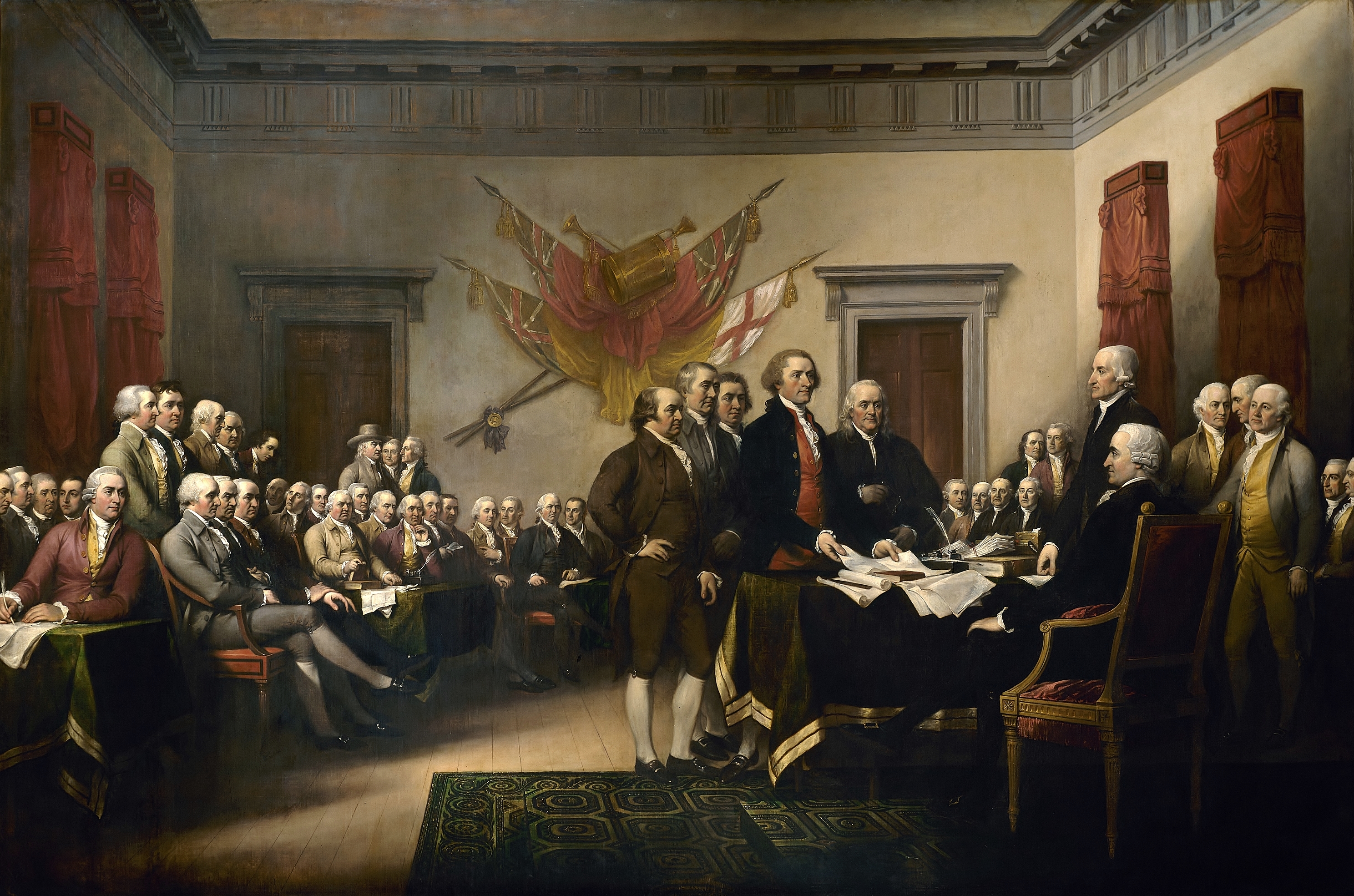
Two hundred forty-five years ago today, fifty-six delegates to the Second Continental Congress put their signature to the following words:

When in the Course of human events, it becomes necessary for one people to dissolve the political bands which have connected them with another, and to assume among the powers of the earth, the separate and equal station to which the Laws of Nature and of Nature’s God entitle them, a decent respect to the opinions of mankind requires that they should declare the causes which impel them to the separation.

We hold these truths to be self-evident, that all men are created equal, that they are endowed by their Creator with certain unalienable Rights, that among these are Life, Liberty and the pursuit of Happiness.–That to secure these rights, Governments are instituted among Men, deriving their just powers from the consent of the governed, –That whenever any Form of Government becomes destructive of these ends, it is the Right of the People to alter or to abolish it, and to institute new Government, laying its foundation on such principles and organizing its powers in such form, as to them shall seem most likely to effect their Safety and Happiness. Prudence, indeed, will dictate that Governments long established should not be changed for light and transient causes; and accordingly all experience hath shewn, that mankind are more disposed to suffer, while evils are sufferable, than to right themselves by abolishing the forms to which they are accustomed. But when a long train of abuses and usurpations, pursuing invariably the same Object evinces a design to reduce them under absolute Despotism, it is their right, it is their duty, to throw off such Government, and to provide new Guards for their future security.–Such has been the patient sufferance of these Colonies; and such is now the necessity which constrains them to alter their former Systems of Government. The history of the present King of Great Britain is a history of repeated injuries and usurpations, all having in direct object the establishment of an absolute Tyranny over these States. To prove this, let Facts be submitted to a candid world.

Declaration of Independence by John Trumbull

Legalized Religious Discrimination

There is neither Jew nor Greek, there is neither slave nor free, there is neither male nor female; for you are all one in Christ Jesus.

— Galatians 3:28

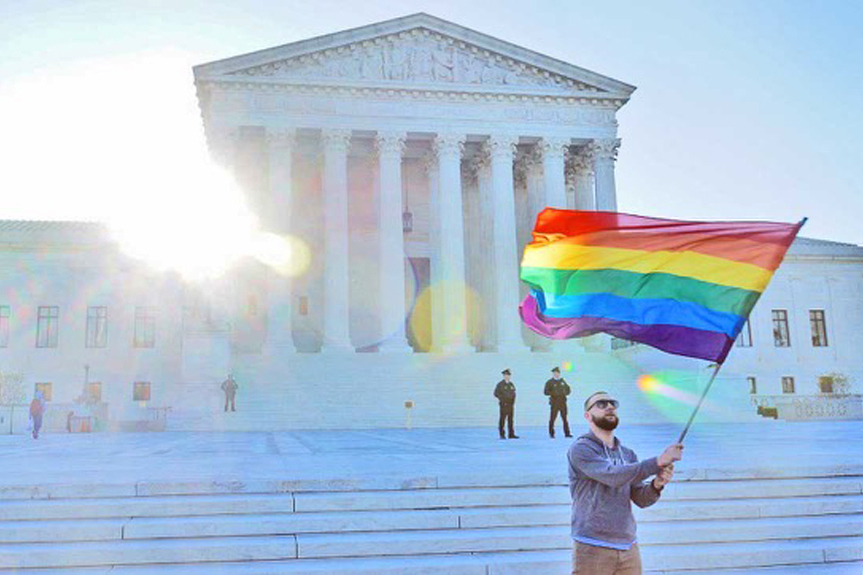
On Thursday, the Supreme Court decided unanimously that religion supersedes the law, at least regarding LGBTQ+ rights. In Fulton v. City of Philadelphia, the justices voted nine to zero to allow a Catholic adoption agency, Catholic Social Services (CSS), to discriminate against LGBTQ+ people. The adoption agency sued after the city refused to refer cases to the agency due to its refusal to consider LGBTQ+ foster parents. The city argued that the agency’s willful violation of local nondiscrimination law meant the agency wasn’t qualified to get city business.

“The refusal of Philadelphia to contract with CSS for the provision of foster care services unless CSS agrees to certify same-sex couples as foster parents violates the Free Exercise Clause of the First Amendment,” the Court ruled. “Under the circumstances here, the City does not have a compelling interest in refusing to contract with CSS. CSS seeks only an accommodation that will allow it to continue serving the children of Philadelphia in a manner consistent with its religious beliefs; it does not seek to impose those beliefs on anyone else.”

The decision, written by Chief Justice John Roberts, was signed by Justices Stephen Breyer, Sonia Sotomayor, Elena Kagan, Brett Kavanaugh, and Amy Coney Barrett. Justices Clarence Thomas, Samuel Alito, and Neil Gorsuch didn’t sign the majority decision, and three concurring opinions were filed. In essence, the decision creates an exemption for existing protections for LGBTQ+ people. Combined with the Masterpiece Cakeshop v. Colorado Civil Rights Commissiondecision of 2018, which sided with a baker who refused to bake a cake for a same-sex wedding, the conservative justices have made it clear that the rights of LGBTQ+ people are subject to exemptions.

The decision should hardly be a surprise. For one thing, the Court is packed with a particular kind of Catholic. Six of the justices are Catholic—Roberts, Barrett, Kavanaugh, Alito, Thomas, and Sotomayor. The first five are conservative Catholics; only Sotomayor represents the views of the majority of Catholics, who tend to be Democrats. While we have some racial diversity on the Supreme Court, there is little religious diversity. Breyer and Kagan are Jewish. Gorsuch is the first member of a mainline Protestant denomination to sit on the Supreme Court since the retirement of John Paul Stevens in 2010; he was raised Catholic, but married an Anglican and now attends an Episcopal Church. After marrying in a non-Catholic ceremony and joining an Episcopal church, Gorsuch has not publicly stated if he considers himself a Catholic who is also a Protestant or simply a Protestant.

I cannot fathom how claiming to be a religious organization or claiming to be religious allows you to break/ignore laws against harming others. How many children have been in foster homes or orphanages over the years who have suffered abuse at the hands of those who are supposed to be protecting them? How many of those were under the tutelage of a religious organization? Let’s face it, the Catholic Church does not have a great track record with children. The child sex abuse scandals of the Catholic Church have plagued them for decades (they’ve plagued the church for centuries, but only in recent decades has the problem been made public). Just one of many examples of this is in my own backyard as former residents of St. Joseph’s Orphanage have recounted horrific abuse at the hands of “religious” individuals.

The tension between religious freedom and civil rights stretches far back in American history. In battles over slavery and racial segregation, proponents of discrimination and opponents of progress have often cited religion and scripture to justify maintaining inequality. Until the civil rights era, refusals to serve African Americans were often cloaked under the guise of religious freedom. As social norms changed, the religious justifications for this bigotry became legally untenable. Religious freedom has been weaponized so frequently in civil liberties debates because of the cultural and constitutional weight it carries. Such appeals have the potential to reshape cultural and religious worlds: to make a group’s political convictions and cultural practices appear more “religious,” or more central to their religion than they otherwise might have been. For this reason, the scope and meaning of religious freedom have been constantly contested throughout American, which is why religious freedom must always be balanced against other American ideals, lest we allow it to trample on other deeply held values.

In the 1982 case Bob Jones University v. United States, the Supreme Court ruled that the First Amendment guarantee of religious freedom did not give Bob Jones the right to claim tax-exempt status while practicing racial discrimination. So why are these organizations allowed to discriminate against LGBTQ+ Americans and retain their tax-exempt status? The constitutional right to religious freedom protects the sanctity of personal belief; however, that freedom ends when the exercise of one’s faith harms the rights or well-being of another. Religious freedom and nondiscrimination protections are complementary values rooted in the fundamental principle that every person should be treated equally under the law. Taxpayer dollars should never pay for programs that exclude or discriminate against participants.

Galatians 3:28 tells us, “There is neither Jew nor Greek, there is neither slave nor free, there is neither male nor female; for you are all one in Christ Jesus.” Churches have ignored this passage throughout history, much like they ignore many verses of the Bible that are inconvenient for them. When will LGBTQ+ Americans be given the same rights as all other Americans? Religion should be a tool to lift people, not knock them down. It should never be used as a weapon of hate, fear, or discrimination. 

I am all for the First Amendment, which states, “Congress shall make no law respecting an establishment of religion, or prohibiting the free exercise thereof; or abridging the freedom of speech, or of the press; or the right of the people peaceably to assemble, and to petition the Government for a redress of grievances.” Speech, press, and assembly all have limits, so why does religion also not have limits. When the government starts allowing religious organizations to dictate how our laws are implemented or what laws should be enacted, then this is an “establishment of religion.” If religious organizations are going to provide a charitable service, they should not be allowed to discriminate against anyone. Religious organizations can no longer discriminate based on race, so why should they be able to discriminate based on sexuality? 

In the decisions of Fulton v. City of Philadelphia and Masterpiece Cakeshop v. Colorado Civil Rights Commission, the Supreme Court has done the opposite of what they claim they are doing. They have forced others to bow to the religious dictates of another person’s beliefs. They have essentially established a religion by claiming that religions are exempt from following the law. They infringe on Americans’ rights to practice a belief that is in disagreement with a more powerful entity (By that, I mean large, wealthy religious organizations, not God). The Bible tells us that we “are all one in Christ Jesus.” If we are all one, why is CSS allowed to discriminate against LGBTQ+ people? They are not following their own religious beliefs, but they are following the prejudices of man.

Shame on the Supreme Court for forcing the City of Philadelphia to follow the beliefs of CSS when they are contrary to what God commands CSS to do. Besides, why should Philadelphia be forced to send adoption cases through CSS when they have a track record like St. Joseph’s in Burlington, Vermont, or any number of Catholic organizations. And this goes far beyond the Catholic Church. It is part of all organized religions. Why should we protect a church’s religious freedoms when they disrespect and disregard the religious liberties of others? We should be protecting individuals’ right to practice religion not organizations. And no one, not even under the guise of religious freedom, should a person or organization be able to hide behind religious freedoms and the First Amendment to discriminate legally.