Category Archives: Religion

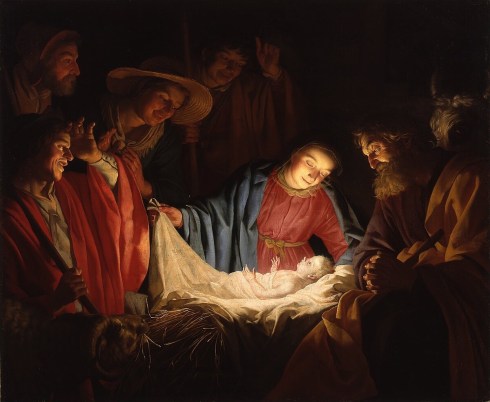
The Meaning of Christmas

Luke 2

And it came to pass in those days, that there went out a decree from Caesar Augustus that all the world should be taxed.

(And this taxing was first made when Cyrenius was governor of Syria.)

And all went to be taxed, every one into his own city.

And Joseph also went up from Galilee, out of the city of Nazareth, into Judaea, unto the city of David, which is called Bethlehem; (because he was of the house and lineage of David:)

To be taxed with Mary his espoused wife, being great with child.

And so it was, that, while they were there, the days were accomplished that she should be delivered.

And she brought forth her firstborn son, and wrapped him in swaddling clothes, and laid him in a manger; because there was no room for them in the inn.

And there were in the same country shepherds abiding in the field, keeping watch over their flock by night.

And, lo, the angel of the Lord came upon them, and the glory of the Lord shone round about them: and they were sore afraid.

10 And the angel said unto them, Fear not: for, behold, I bring you good tidings of great joy, which shall be to all people.

11 For unto you is born this day in the city of David a Saviour, which is Christ the Lord.

12 And this shall be a sign unto you; Ye shall find the babe wrapped in swaddling clothes, lying in a manger.

13 And suddenly there was with the angel a multitude of the heavenly host praising God, and saying,

14 Glory to God in the highest, and on earth peace, good will toward men.

15 And it came to pass, as the angels were gone away from them into heaven, the shepherds said one to another, Let us now go even unto Bethlehem, and see this thing which is come to pass, which the Lord hath made known unto us.

16 And they came with haste, and found Mary, and Joseph, and the babe lying in a manger.

17 And when they had seen it, they made known abroad the saying which was told them concerning this child.

18 And all they that heard it wondered at those things which were told them by the shepherds.

19 But Mary kept all these things, and pondered them in her heart.

20 And the shepherds returned, glorifying and praising God for all the things that they had heard and seen, as it was told unto them.

21 And when eight days were accomplished for the circumcising of the child, his name was called Jesus, which was so named of the angel before he was conceived in the womb.



The Birth of Jesus Foretold

In the sixth month the angel Gabriel was sent from God to a city of Galilee named Nazareth, to a virgin betrothed to a man whose name was Joseph, of the house of David. And the virgin’s name was Mary. And he came to her and said, “Greetings, O favored one, the Lord is with you!” But she was greatly troubled at the saying, and tried to discern what sort of greeting this might be. And the angel said to her, “Do not be afraid, Mary, for you have found favor with God. And behold, you will conceive in your womb and bear a son, and you shall call his name Jesus. He will be great and will be called the Son of the Most High. And the Lord God will give to him the throne of his father David, and he will reign over the house of Jacob forever, and of his kingdom there will be no end.”

And Mary said to the angel, “How will this be, since I am a virgin?”

And the angel answered her, “The Holy Spirit will come upon you, and the power of the Most High will overshadow you; therefore the child to be born will be called holy-the Son of God. And behold, your relative Elizabeth in her old age has also conceived a son, and this is the sixth month with her who was called barren. For nothing will be impossible with God.” And Mary said, “Behold, I am the servant of the Lord; let it be to me according to your word.” And the angel departed from her.

– Luke 1:26-38


If the Lord Wills

Instead you ought to say, “If the Lord wills, we will live and do this or that.”James 4:15

I talked about this a few weeks ago, but I thought it needed reiteration and elaboration considering I am going on my final interview for the Chicago job this week. “If the Lord wills.” “If the Lord wills.” There are times when we really want something in our lives, but we wonder if it is the right move, if we even get what we want. In those circumstances, we must pray. We must pray that God’s will be done. We have to have faith. Faith in that whatever happens, happens because God wills it.

God has a plan for every one of us. Many people go through life without ever thinking about it, but that doesn’t change the fact that God put us here for a purpose. We aren’t here by accident; we’re here because God put us here. And He put us here for a reason–so we could come to know Him in a personal way, and then live the way He wants us to live.

That’s why you can pray and seek God’s will when you face decisions, and it is why you can know God is with you every moment of the day. The Bible says, “Teach me your way, O Lord; lead me in a straight path” (Psalm 27:11).

When he says, “If God wills we will . . . do this or that,” he teaches us that the activities and accomplishments of our lives are in God’s hands. God governs what we accomplish. Not only are our lives in his hands, our success is in his hands. “Instead, you ought to say, ‘If the Lord wills, we will live and also do this or that.” “If the Lord wills . . . we will do this or that.” And if the Lord does not will, we will not do this or that.

If the Lord wills, I will get this job in Chicago. It doesnt mean that I won’t be praying that I get the job, it just means that if it is in God’s plan for me, then it will happen. Maybe its not the right job for me or God doesnt want me to bite off more than I can chew. I will do my best to get the job, but I know it is ultimately in God’s hands.


The Great I Am

And God said to Moses, I AM THAT I AM: and he said, Thus shall you say to the children of Israel, I AM has sent me to you.Exodus 3:14

If I say “I am,” I say what is not true of me. I must say “I am something — I am a man, I am bad, or I am good, or I am an Englishman, I am a soldier, I am a sailor, I am a clergyman.” — and then I shall say what is true of me. But God alone can say “I AM” without saying anything more. And why? Because God alone is. Everybody and everything else in the world becomes: but God is. We are all becoming something from our birth to our death — changing continually and becoming something different from what we were a minute before; first of all we were created and made, and so became men; and since that we have been every moment changing, becoming older, becoming wiser, or alas! foolisher; becoming stronger or weaker; becoming better or worse. Even our bodies arc changing and becoming different day by day. But God never changes or becomes anything different from what He is now. What He is, that He was, and ever will be. Many heathen men have known that there was one eternal God, and that God is. But they did not know that God Himself had said so; and that made them anxious, puzzled, almost desperate, so that the wiser they were, the unhappier they were. For what use is it merely knowing that God is? The question for poor human creatures is, “But what sort of a being is God?’ Is He far off? Does He care nothing about us? Does He let the world go its own way, right or wrong? Is He proud and careless? A Self-glorifying Deity whose mercy is not over all His works, or even over any of them? And the glory of the Bible, the power of God revealed in the Bible, is, that it answers the question, and says, “God does care for men, God does see men, God is not far off from any one of us. Ay, God speaks to men — God spoke to Moses and said, not “God is,” but “I AM.” God in sundry times and divers, manners spoke to our fathers by the prophets and said, “I AM.” But more Moses said, “I AM hath sent me.” God does not merely love us, and yet leave us to ourselves. He sends after us. He sends to us. But again: “I AM hath sent me unto you.” Unto whom? Who was Moses sent to? To the Children of Israel in Egypt. And what sort of people were they? Were they wise and learned? On the contrary, they were stupid, ignorant, and brutish. Were they pious and godly? On the contrary, they were worshipping the foolish idols of the Egyptians — so fond of idolatry that they must needs make a golden calf and worship it. Then why did God take such trouble for them? Why did God care for them, and help them, and work wonders for them? Why? Exactly because they were so bad. Just because they were so bad, His goodness yearned over them all the more, and longed to make them good. Just because they were so unclean and brutish, His holiness longed all the more to cleanse them. Because they were so stupid and ignorant, His wisdom longed to make them wise. Because they were so miserable, His pity yearned over them, as a father over a child fallen into danger. Because they were sick, they had all the more need of a physician. Because they were lost, there was all the more reason for seeking and saving them. Because they were utterly weak, God desired all the more to put His strength into them, that His strength might be made perfect in weakness.

(C. Kingsley, M. A.)


Patience

Rejoice in hope, be patient in tribulation, be constant in prayer.Romans 12:12

Do not be anxious about anything, but in everything by prayer and supplication with thanksgiving let your requests be made known to God. – Philippians 4:6

I am generally a patient person. When in a restaurant, I never get impatient with the wait staff when it takes a while to get my food. I might get hungrier, but not impatient. When waiting at a doctor’s office, I’m patient and know that I will be seen as soon as possible. When everyday things happen, I am patient. It’s when the extraordinary happens that I become impatient. It’s been two weeks since the lady in Chicago told me she’d make the arrangements for me to come to Chicago. She said she’d get to it “soon.” After a week, I emailed her and was told she was working on it. This is one of those extraordinary things that make me impatient. It could be life changing. I just don’t know what will happen.

I do have hope and the Lord says to rejoice in hope. My need to be patient is a mere tribulation. Prayer will soothe my worrying mind. Philippians. 4:6 says, “Do not be anxious about anything.” For someone who suffers from anxiety disorder, this is hard, but prayer and supplication can help. At this time of thanksgiving, I will just have to let my requests be known by God.

We can all learn from these two passages. Patience is a virtue. When we feel impatience growing, we need to turn to God in prayer. Only he can soothe our minds and help us to truly be patient.


Shall We Gather At The River?

Then the angel showed me the river of the water of life, bright as crystal, flowing from the throne of God and of the Lamb through the middle of the street of the city; also, on either side of the river, the tree of life with its twelve kinds of fruit, yielding its fruit each month. The leaves of the tree were for the healing of the nations. – Revelation 22:1-2

Shall We Gather at the River?
By Robert Lowry

Shall we gather at the river,
Where bright angel feet have trod,
With its crystal tide forever
Flowing by the throne of God?

Yes, we’ll gather at the river,
The beautiful, the beautiful river;
Gather with the saints at the river
That flows by the throne of God.

On the margin of the river,
Washing up its silver spray,
We will talk and worship ever,
All the happy golden day.

Yes, we’ll gather at the river,
The beautiful, the beautiful river;
Gather with the saints at the river
That flows by the throne of God.

Ere we reach the shining river,
Lay we every burden down;
Grace our spirits will deliver,
And provide a robe and crown.

Yes, we’ll gather at the river,
The beautiful, the beautiful river;
Gather with the saints at the river
That flows by the throne of God

At the smiling of the river,
Mirror of the Savior’s face,
Saints, whom death will never sever,
Lift their songs of saving grace.

Yes, we’ll gather at the river,
The beautiful, the beautiful river;
Gather with the saints at the river
That flows by the throne of God.

Soon we’ll reach the silver river,
Soon our pilgrimage will cease;
Soon our happy hearts will quiver
With the melody of peace.

Yes, we’ll gather at the river,
The beautiful, the beautiful river;
Gather with the saints at the river
That flows by the throne of God.

If you know his song, you most likely know it’s title as “Shall We Gather at the River?” or simply “At the River.” These titles are the popular names for the traditional Christian hymn that is actually titled “Hanson Place,” written by American poet and gospel music composer Robert Lowry (1826–1899). Robert Lowry (1826-1899) was a professor of literature, a Baptist pastor of several large churches and a music editor at Biglow Publishing Company. He wrote close to 500 hymns, including “I Need Thee Every Hour” and “Low in the Grave He Lay.” “Shall We Gather at the River?” was written in 1864. The title “Hanson Place” is a reference to the original Hanson Place Baptist Church in Brooklyn, where Lowry, as a Baptist minister, sometimes served.

The song’s lyrics refer to the Christian concept of the anticipation of restoration and reward, and reference the motifs found at Revelation 22:1-2 – a crystal clear river with water of life, issuing from the throne of heaven, all presented by an angel of God. One hot afternoon in July 1864, as Lowry was resting on his sofa, visions of heaven pervaded his senses. He saw the bright golden throne room and a multitude of saints gathered around the beautiful, cool, crystal, river of life. He was filled with a sense of great joy. He began to wonder why there seemed to be many hymns that referenced the river of death, but very few that mentioned the river of life. As he mused, the words and music to “Shall We Gather at the River” came to his heart and mind.


Pascal’s Wager

Pascal’s Wager is an argument in philosophy devised by the seventeenth-century French philosopher, mathematician and physicist Blaise Pascal (1623–62). It posits that humans bet with their lives that God either exists or does not.

Pascal argues that a rational person should live as though God exists and seek to believe in God. If God does not actually exist, such a person will have only a finite loss (some pleasures, luxury, etc.), whereas they stand to receive infinite gains (as represented by eternity in Heaven) and avoid infinite losses (eternity in Hell).

Pascal’s Wager was based on the idea of the Christian God, though similar arguments have occurred in other religious traditions. The original wager was set out in section 233 of Pascal’s posthumously published Pensées (“Thoughts”). These previously unpublished notes were assembled to form an incomplete treatise on Christian apologetics.

Historically, Pascal’s Wager was groundbreaking because it charted new territory in probability theory, marked the first formal use of decision theory, and anticipated future philosophies such as existentialism, pragmatism and voluntarism.

Source: Wikipedia


Que Sera, Sera


Instead you ought to say, “If the Lord wills, we will live and do this or that.” – James 4:15

“If the Lord wills.” There are times when we really want something in our lives, but we wonder if it is the right move, if we even get what we want. In those circumstances, we must pray. We must pray that God’s will be done. We have to have faith. Faith in that whatever happens, happens because God wills it.

God has a plan for every one of us. Many people go through life without ever thinking about it, but that doesn’t change the fact that God put us here for a purpose. We aren’t here by accident; we’re here because God put us here. And He put us here for a reason–so we could come to know Him in a personal way, and then live the way He wants us to live.

That’s why you can pray and seek God’s will when you face decisions, and it is why you can know God is with you every moment of the day. The Bible says, “Teach me your way, O Lord; lead me in a straight path” (Psalm 27:11).


10 Reasons

Here are 10 reasons why God accepts gay Christians.

1. The term “homosexual” didn’t exist until 1892. Some modern Bible translations say that “homosexuals” will not inherit the kingdom of God, but neither the concept nor the word for people with exclusive same-sex attraction existed before the late 19th century. While the Bible rejects lustful same-sex behavior, that’s very different from a condemnation of all gay people and relationships.

2. Sexual orientation is a new concept–one that the Christian tradition hasn’t addressed. Many Christians draw on their faith’s traditions to shape their beliefs, but the concept of sexual orientation is new. Until recent decades, same-sex behavior was placed in the same category with gluttony or drunkenness — as a vice of excess anyone might be prone to — not as the expression of a sexual orientation. The Christian tradition has never spoken to the modern issue of LGBT people and their relationships.

3. Celibacy is a gift, not a mandate. The Bible honors celibacy as a good way of living — Jesus was celibate, after all — but it also makes clear that celibacy must be a voluntary choice. Requiring that all gay people remain celibate is at odds with the Bible’s teachings on celibacy, which are grounded Scripture’s core affirmation that God’s physical creation is good.

4. Condemning same-sex relationships is harmful to the LGBT community. Jesus taught in the Sermon on the Mount that good trees bear good fruit, while bad trees bear bad fruit. The church’s rejection of same-sex relationships has caused tremendous, needless suffering to the LGBT community–bad fruit. Those harmful consequences should make Christians open to reconsidering the church’s traditional teaching.

5. Sodom and Gomorrah involved an attempted gang rape, not a loving relationship. It’s commonly assumed that God destroyed Sodom and Gomorrah out of his wrath against same-sex relations, but the only form of same-sex behavior described in the story is an attempted gang rape — nothing like a loving, committed relationship. The Bible explicitly condemns Sodom for its arrogance, inhospitality and apathy toward the poor — not for same-sex behavior.

6. The prohibitions in Leviticus don’t apply to Christians. Leviticus condemns male same-sex intercourse, but the entire Old Testament law code has never applied to Christians in light of Christ’s death. Leviticus also condemns eating pork, rabbit, or shellfish, cutting hair at the sides of one’s head, and having sex during a woman’s menstrual period — none of which Christians continue to observe.

7. Paul condemns same-sex lust, not love. Like other ancient writers, Paul described same-sex behavior as the result of excessive sexual desire on the part of people who could be content with opposite-sex relationships. He didn’t have long-term, loving same-sex relationships in view. And while he described same-sex behavior as “unnatural,” he also said men having long hair goes against nature, and most Christians read that as a reference to cultural conventions.

8. Marriage is about commitment. Marriage often involves procreation, but according to the New Testament, it’s based on something deeper: a lifelong commitment to a partner. Marriage is even compared to the relationship between Christ and the church, and while the language used is opposite-sex, the core principles apply just as well to same-sex couples.

9. Human beings are relational. From the beginning of Genesis, human beings are described as having a need for relationship, just as God himself is relational. Sexuality is a core part of what it means to be a relational person, and to condemn LGBT people’s sexuality outright damages their ability to be in relationship with all people — and with God.

10. Faithful Christians are already embracing LGBT brothers and sisters. Mainstream denominations like Presbyterians and Episcopalians now ordain openly gay clergy, and there are seeds of change in evangelical churches as well. This November, the Reformation Project will host a training conference for up to 900 LGBT-affirming Christians in Washington, D.C.–and the movement for change in conservative churches is just getting started.

Matthew Vines is the author of God and the Gay Christian and is the founder of The Reformation Project, a Bible-based non-profit organization that seeks to reform church teaching on sexual orientation and gender identity. Matthew lives in Wichita, Kansas.


Proverbs

Proverbs 3:5
Trust in the LORD with all your heart and lean not on your own understanding.

Proverbs 1:7
The fear of the LORD is the beginning of knowledge, but fools despise wisdom and instruction.

Proverbs 4:23
Above all else, guard your heart, for everything you do flows from it.

Proverbs 1:3
For receiving instruction in prudent behavior, doing what is right and just and fair.

Proverbs 17:22
A cheerful heart is good medicine, but a crushed spirit dries up the bones.

Proverbs 16:18
Pride goes before destruction, a haughty spirit before a fall.