Category Archives: Religion

Hearing and Doing the Word

Know this, my beloved brothers: let every person be quick to hear, slow to speak, slow to anger; for the anger of man does not produce the righteousness of God.  Therefore put away all filthiness and rampant wickedness and receive with meekness the implanted word, which is able to save your souls.
But be doers of the word, and not hearers only, deceiving yourselves.  For if anyone is a hearer of the word and not a doer, he is like a man who looks intently at his natural face in a mirror.  For he looks at himself and goes away and at once forgets what he was like.  But the one who looks into the perfect law, the law of liberty, and perseveres, being no hearer who forgets but a doer who acts, he will be blessed in his doing.
If anyone thinks he is religious and does not bridle his tongue but deceives his heart, this person’s religion is worthless.  Religion that is pure and undefiled before God, the Father, is this: to visit orphans and widows in their affliction, and to keep oneself unstained from the world.

James 1:19-27
Continuing our look at James, the above passage is one of the most poignant.  When you come before God’s Word, how do you prepare your heart for reading and doing? James instructs us to receive the Word with quietness, calmness, a pure heart, and with humility. When you read the the Bible at home, when you hear it on Sunday morning, or when a brother or sister in Christ brings the Bible to you in teaching, correction, exhortation, or rebuke, receive the Word with meekness. Pray for a teachable spirit that is willing to discipline itself towards godliness.
Be doers of the Word! James has a strong call (really the thesis statement of the book of James) in the close of chapter one. He warns of false religion, a Christianity filled with marked up Bibles, but not lives marked by doing what the Bible actually teaches. Which one more describes you? Do enjoy memorizing gossipy facts more than you do memorizing the Scripture? Is it easier to discipline yourself to weekly care for your wardrobe than it is to daily spend time in Bible study and prayerful action? All true religion should lead to a deeper relationship with Christ. As we exercise our faith through the book of James, it ought to lead to a closer walk with Jesus, a closer guarding of our tongues, and a greater care for those who can’t care for themselves.
As GLBT Christians, our faith is often brought into question.  Those who question whether we can be true Christians and live a life of homosexuality or bisexuality are deceiving themselves about the Word of God.  Christ brought us a message of peace and love, not of antagonism and anger.  In Matthew 7:21-23, Jesus says:

“Not everyone who says to me, ‘Lord, Lord,’ will enter the kingdom of heaven, but the one who does the will of my Father who is in heaven.  On that day many will say to me, ‘Lord, Lord, did we not prophesy in your name, and cast out demons in your name, and do many mighty works in your name?’ And then will I declare to them, ‘I never knew you; depart from me, you workers of lawlessness.”

If we both hear the Word and do the Word, we are following the teachings of Jesus, and on the Judgement Day, Jesus will say to us, “We’ll done, my good and faithful servant.”  However, if we listen to the false teachings of Christ that have been defiled by the hearers and not the doers, then we will fall away from God’s grace.  We must persevere, we must hear the word, do the word, and resist the false teachings.  If we do these things and accept the word of God with meekness, then we can be doers of the Word. 
When we hear our detractors, we must be quick to hear the true word of God, slow to speak so that we are not taken by our passions, and slow to anger so that we may prove our heavenly spirit.  When I see news stories like the one this week in which Westboro Baptist Church and their ilk blaming the Oklahoma tornadoes on God’s wrath over the support of GLBT equality, it angers me partly because I know they are wrong and partly because they are merely adding to the suffering of those who have already suffered so much.  I think it should anger most people who believe in the true word of God and the teachings of Christ.  I then calm down and think of what Christ tells us to do and as James tells us, “be quick to hear, slow to speak, slow to anger; for the anger of man does not produce the righteousness of God.”  For people like Westboro Baptist Church, I can only pray that one day they will see the error of their ways.  It may only come in the afterlife when they are punished for their hatred, but one day, they will realize what they have done wrong.  They have been false teachers the ones that James warns of as followers of a false religion, a Christianity filled with marked up Bibles which only focus on a few incorrectly interpreted passages, but not lives marked by doing what the Bible actually teaches.  
I probably sound judgmental here about WBC, but I don’t mean to sound that way.  I am using them as an extreme example.  I believe strongly in “Judge not, lest ye be judged.” However, I did want to use an example of what I believe James is speaking of in the passage above.  Jesus was a champion of the meek, and I believe that if he walked the earth as a man today, as he did 2,000 years ago, then he would welcome GLBT Christians with open arms.  After all, we are Christians who believe in His core teachings of peace and love.

Testing Your Faith

My preacher often tells the story that each time he asks his wife what he should preach on this week, she always answers, “The Book of James.”  I’ve yet to hear him preach on the book of James, but there are some wonderful passages in James that I would like to share with you over the next few weeks.  The first passage is known as “Testing Your Faith.”
Count it all joy, my brothers, when you meet trials of various kinds, for you know that the testing of your faith produces steadfastness.  And let steadfastness have its full effect, that you may be perfect and complete, lacking in nothing.

If any of you lacks wisdom, let him ask God, who gives generously to all without reproach, and it will be given him.  But let him ask in faith, with no doubting, for the one who doubts is like a wave of the sea that is driven and tossed by the wind.  For that person must not suppose that he will receive anything from the Lord; he is a double-minded man, unstable in all his ways.

Let the lowly brother boast in his exaltation, and the rich in his humiliation, because like a flower of the grass he will pass away.  For the sun rises with its scorching heat and withers the grass; its flower falls, and its beauty perishes. So also will the rich man fade away in the midst of his pursuits.

Blessed is the man who remains steadfast under trial, for when he has stood the test he will receive the crown of life, which God has promised to those who love him.  Let no one say when he is tempted, “I am being tempted by God,” for God cannot be tempted with evil, and he himself tempts no one.  But each person is tempted when he is lured and enticed by his own desire.  Then desire when it has conceived gives birth to sin, and sin when it is fully grown brings forth death.

Do not be deceived, my beloved brothers.  Every good gift and every perfect gift is from above, coming down from the Father of lights with whom there is no variation or shadow due to change.  Of his own will he brought us forth by the word of truth, that we should be a kind of firstfruits of his creatures.
James 1: 5-18
James regards trials of life as inevitable. He says when, not if you fall into various trials. At the same time, trials are occasions for joy, not discouraged resignation.  I know that sounds like a difficult task, but if we believe that God has a plan for each of us, then we know that the trials will lead to something greater.  We can have joy in the midst of trials, because trials are used to produce patience.
Patience is the ancient Greek word hupomone. This word does not describe a passive waiting, but an active endurance. It isn’t so much the quality that helps you sit quietly in the doctor’s waiting room as it is the quality that helps you finish a marathon.  The ancient Greek word hupomone comes from hupo (under) and meno (to stay, abide, remain). At its root, it means to remain under. It has the picture of someone under a heavy load and resolutely staying there instead of trying to escape. The philosopher Philo called hupomone “the queen of virtues.”
Faith is tested through trials, not produced by trials. Trials reveal what faith we do have, not because God doesn’t know how much faith we have, but to make our faith evident to ourselves and those around us.  If trials do not produce faith, what does? Romans 10:17 tells us: “So then faith comes by hearing, and hearing by the word of God.” Faith is built in us as we hear and understand and trust in God’s word.
Trials don’t produce faith, but when trials are received with faith, it produces patience. But patience is not inevitably produced in times of trial. If difficulties are received in unbelief and grumbling, trials can produce bitterness and discouragement.  The work of patient endurance comes slowly, and must be allowed to have full bloom. Patient endurance is a mark of the person who is perfect and complete, lacking nothing.
The act of faith and patience is given to us through God’s infinite wisdom.  If we have faith in God, then we can ask his for his guidance.  In my nightly prayers, I always begin with “Lord, please forgive me of my sins.  Help me to be a better person and to follow the path that you have chosen for me.”  God knows that path, and he calls us to follow it. Matthew 7:13-14 says:  “Enter by the narrow gate. For the gate is wide and the way is easy that leads to destruction, and those who enter by it are many.  For the gate is narrow and the way is hard that leads to life, and those who find it are few.”
Life is filled with trials and temptations but our faith can guide us through that narrow gate.  We must remain steadfast and patient, for God says we must stand the test to receive the crown of eternal life.  We will be tempted and lured and enticed to follow our own desires, but if that desire is given birth through sins, or if desire gives birth to sin, then we must have the patience to resist.  If we resist, the rewards will be great.
We must remember that, “Every good gift and every perfect gift is from above” which comes down to us from our God in Heaven.  So the next time that you are feeling like there is no hope, that the world is against you, or the trials seem too burdensome, rejoice in God and he will lead you through the troubled times.  Have faith and patience and you will receive joys and eternal rewards.


Precious Memories

Precious memories, unseen angels
Sent from somewhere to my soul

How they linger, ever near me

And the sacred past unfold.


Precious memories, how they linger
How they ever flood my soul

In the stillness of the midnight

Precious, sacred scenes unfold.

In the stillness of the midnight
Echoes from the past I hear

Old-time singing, gladness bringing

From that lovely land somewhere.


Precious memories, how they linger
How they ever flood my soul

In the stillness of the midnight

Precious, sacred scenes unfold.

I remember mother praying
Father, too, on bended knee

Sun is sinking, shadows falling

But their prayers still follow me.


Precious memories, how they linger
How they ever flood my soul

In the stillness of the midnight

Precious, sacred scenes unfold.

As I travel on life’s pathway
Know not what the years may hold

As I ponder, hope grows fonder

Precious memories flood my soul.


Precious memories, how they linger
How they ever flood my soul

In the stillness of the midnight

Precious, sacred scenes unfold.


Yesterday at church, we sang the hymn “Precious Memories” in honor of mothers.  This is my first Mother’s Day without Grandmama, who passed away in July.  As I stood singing this hymn, all I could do was cry.  I thank God though for those “precious memories” that I have of my Grandmama.


It’s Okay To Be Gay And Christian

As for the one who is weak in faith, welcome him, but not to quarrel over opinions. One person believes he may eat anything, while the weak person eats only vegetables. Let not the one who eats despise the one who abstains, and let not the one who abstains pass judgment on the one who eats, for God has welcomed him. Who are you to pass judgment on the servant of another? It is before his own master that he stands or falls. And he will be upheld, for the Lord is able to make him stand.
Romans 14:1-4 ESV

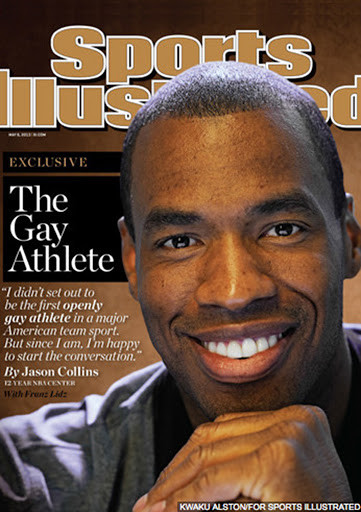
This week, Jason Collins came out as a black, gay, professional basketball player in Sports Illustrated. His bold and courageous move was met with encouragement and support from a wide cross-section of America. Many notable figures, including Magic Johnson, Father James Martin, Kobe Bryant, Nancy Pelosi, Rev. Al Sharpton, and both the Clinton and Obama families offered words of support and encouragement.


This outpouring of support was not shared, however, by Chris Broussard, a commentator on ESPN’s “Outside the Lines” who was asked for his personal opinion about Collins’ coming out. Broussard stated that he was a Christian, and as such, he was compelled to say that being gay was “open rebellion” against God. When asked about the fact that Jason Collins was also a Christian, Broussard stated that one cannot be gay and Christian at the same time.

The following clergy and religious leaders in America responded to Broussard:
Rev. Gil Caldwell, TruthinProgress.com, National Board of PFLAG, Asbury Park, NJ
Bishop Yvette Flunder, Fellowship of Affirming Ministries, San Francisco, CA
Rev. Darlene Garner, Metropolitan Community Church, Prince George’s County, MD
The Very Rev. Gary Hall, Dean, Washington National Cathedral, Washington, DC
Rev. Cedric Harmon, Many Voices, Washington, DC
Rev. Candy Holmes, Metropolitan Community Church, Prince George’s County, MD
The Reverend Luis Leon, St. John’s Church – Lafayette Square, Washington, DC
The Reverend Dr. Jacqueline J. Lewis, Middle Collegiate Church, New York, NY
The Rev. Dr. Pamela R. Lightsey, Boston University, Boston, MA
Rev. Irene Monroe, Harvard University, Cambridge, MA
Gene Robinson, IX Episcopal Bishop of New Hampshire
Pastor Joseph Tolton, Fellowship of Affirming Ministries, New York, NY

 Here is what they said in a jointly written Washington Post editorial:

As Christian leaders in America, we know that Christians hold a wide variety of viewpoints on human sexuality. It is not necessary, nor is it right, to reject lesbian, gay, bisexual, and transgender (LGBT) people out of hand due to the Christian faith. To do so, misrepresents the ever widening nature of the gospel of Christ, who engaged with those on the margins, and placed in leadership people who were not powerful by worldly standards.

We are pastors and leaders who have discovered that LGBT people are often the most faithful members of our congregations and denominations. We have received blessings upon blessings when we free them to be the people God made them to be and use the gifts that God gave them. In the same way, we are thankful that Jason Collins has been able to use his God-given gifts for athletics, and now has the freedom to be faithfully and authentically himself with the world. That is a cause for rejoicing, not of condemnation.

When Broussard uttered his words of condemnation, LGBT-supportive people of faith sprang into action. Faithful America has already gathered over 24,000 signatures, asking that the Bible not be used to bash gay athletes on EPSN. GLAAD is helping faith leaders like us formulate a challenge to the false claim that Christians must uniformly reject LGBT people and LGBT athletes. And thousands of people of faith are offering a prayer for thanksgiving for Jason Collins and the role model he is for thousands of LGBT athletic young people, including people of color.

As Christian leaders, we also encourage the media to report the reality that an increasing number of people of faith, including many Christians, are embracing and supporting their LGBT friends and family. They do so, not despite their faith, but because of it. As GLAAD demonstrated in last year’s ‘Missing Voices’ report, too often, stories like that of Jason Collins becomes one of “gay v. Christian,” when the reality is that Collins is a man of strong Christian faith, as are many who support him.

We pray that God will open the eyes of Chris Broussard and help him mature in his faith. May Broussard see that Christianity is not a faith that is closed off to those who are different from him, but one that continually expands, reaching out to the neighbor and the stranger, sharing the good news. We encourage Broussard to listen with humility to LGBT Christians, their lives and stories. It is through listening that we learn.

We are among those who give thanks for the life and witness of Jason Collins. May he always know that God has created him and loves him just as he is. May he exemplify the courage and grace that he has displayed in the last two days. And may God use him to send that message of love and inclusion to others, telling everyone of the ever widening love of God.
Those who read my blog, and especially those who read my Sunday posts, know that I am gay and Christian.  I can’t understand those people who reject someone merely because they are judging that person for some perceived wrong.  Matthew 7:1 clearly states, “Judge not, that you be not judged.”  God is our ultimate judge, and Jesus, who welcomed all people, especially those on the margins of society, is our advocate before God.  There will always be those dissenting voices who spew spurious lies and hatred toward LGBT people, but we must remember that God loves us unconditionally.

Temptation

Then Jesus was led up by the Spirit into the wilderness to be tempted by the devil.  And after fasting forty days and forty nights, he was hungry.  And the tempter came and said to him, “If you are the Son of God, command these stones to become loaves of bread.”
But he answered, “It is written, 

“‘Man shall not live by bread alone, but by every word that comes from the mouth of God.'” 

Then the devil took him to the holy city and set him on the pinnacle of the temple and said to him, “If you are the Son of God, throw yourself down, for it is written, 

“‘He will command his angels concerning you,’ 

and 

“‘On their hands they will bear you up, lest you strike your foot against a stone.'” 

Jesus said to him, “Again it is written, 

‘You shall not put the Lord your God to the test.'”

Again, the devil took him to a very high mountain and showed him all the kingdoms of the world and their glory.  And he said to him, “All these I will give you, if you will fall down and worship me.”. Then Jesus said to him, “Be gone, Satan! For it is written, 

“‘You shall worship the Lord your God and him only shall you serve.'” 

Then the devil left him, and behold, angels came and were ministering to him.
Matthew 4:1-11
As the passage above shows, Christ faced temptation, though because he was God in flesh, he only faced temptation by Satan, but was not tempted. Temptation is something we all face as Christians, no matter how long we have been following Christ.  There are a few practical things, however, that we can do to grow stronger and smarter in our struggle against sin. We can learn how to avoid temptation by practicing these five steps.

Recognize your tendency toward sin.
James 1:14 explains that we are tempted when we become enticed by our own natural desires. The first step toward avoiding temptation, is recognizing our human tendency to be tempted by our own fleshly desires. Temptation is a given, so don’t be surprised by it. Rather, expect to be tempted. Be prepared for it.

Run away from the temptation.
1 Corinthians 10:13 says, “No temptation has overtaken you that is not common to man. God is faithful, and he will not let you be tempted beyond your ability, but with the temptation he will also provide the way of escape, that you may be able to endure it.”  When you are face to face with temptation, look for the way out that God has promised and then run as fast as you can.

Resist with the Word of truth.
Hebrews 4:12 says God’s Word is living and active. Did you know you can carry a weapon that will make your thoughts obey Jesus Christ? If you don’t believe me, read 2 Corinthians 10:4-5 One of these weapons is the Word of God.

Though it can be helpful to read God’s Word when you’re being tempted, sometimes that’s not practical. Even better is to practice reading the Word daily, so that eventually you have so much of it inside, you are ready whenever temptation comes. If you are reading through the Bible regularly, you will have the full counsel of God at your disposal.

Refocus with praise.
How often have you been tempted to sin when your heart and mind were fully concentrated on worship to the Lord? Praising God takes your focus off of yourself and puts it on God. You may not be strong enough to resist temptation on your own, but as you focus on God, he will inhabit your praise. He will give you the strength to resist and walk away from the temptation. May I suggest Psalm 147 as a good place to start.

Repent quickly when you fail.
In several places the Bible tells us the best way to resist temptation is to flee from it (1 Corinthians 6:18; 1 Corinthians 10:14; 1 Timothy 6:11; 2 Timothy 2:22). Yet still we all fail from time to time. We fail to flee. Notice I didn’t say, repent quickly if you fail. Having a more realistic view—knowing that at times you will fail—should help you to repent quickly when you do. It is not the end of the world when you fail, but it is very dangerous to persist in your sin. Going back to James 1, verse 15 explains that sin “when it is full-grown, gives birth to death.”

The following prayer may also bring some solace when we face temptation:
Dear Lord, 
You know the temptations that I am facing today. But your Word promises that I will not be tempted beyond what I can bear. I ask for your strength to stand up under the temptation whenever I encounter it. Your Word also tells me you will provide a way out of the temptation. Please, Lord, give me the wisdom to walk away when I am tempted, and the clarity to see the way out that you will provide. Thank you, God, that you are a faithful deliverer and that I can count on your help in my time of need. 
Amen

Marriage Equality Is a Christian Concern by David McFarlane

I came across this piece by David McFarlane, who writes a blog called Anxious Gay Christian,  and thought it would make a wonderful Sunday post.  David McFarlane is a twenty-something writer living in Portland, Oregon. He’s gay, Christian, and less confused by it than most of the people around him. Some days he wishes he wasn’t either one. Usually he spends those days writing.  Here is what David wrote for the Huffington Post and his blog.
I probably err too much on the side of grace in most of my writing, but I believe some things necessitate taking a firm stand. Marriage equality is important for any number of civil reasons. I think it’s critical for preserving the essence of Christianity. Many have told the Church, on this issue, it’s standing on the wrong side of history. I believe it’s standing on the wrong side of theology. I say this more as a person of faith than as a gay man: I don’t believe one can truly claim to be a Christian and oppose marriage equality.
Faith is a cosmological framework to interpret everything from conflict to purpose. It guides me in such a fundamental way that offering others a glimpse of mine requires more emotional energy than I usually have. Describing faith requires, too, a vocabulary I often don’t possess, which makes sense in the context of what I believe God to be — a being beyond the comprehension of the human mind.
As someone who values empathy, I have to assume this is similar for other genuine people of faith. Knowing it manifests differently throughout lives and cultures, I try to avoid making moral proclamations and condemnations. I appreciate the respect of friends with dissimilar beliefs, and I want to show the same respect to others’ faiths. But in the weeks since the SCOTUS hearings, I’m at a loss.
I don’t understand how Christians oppose marriage equality.
I don’t. I’ve tried: I’ve read conservative blogs; I’ve read my Republican friends’ Facebook posts; I’ve reread the Bible verses (supposedly) relevant to the issue. It’s confounding to me, and writing about it is difficult because whatever inspires many of my family members and a minority of Americans to oppose marriage for gay and lesbian couples stems from something beyond my understanding of faith, the faith responsible for my joy and peace in this chaotic, troubled world.
“God clearly forbids…”
“My heart has convinced me…”
“Leviticus 18:22 says…”
Declarations such as these are personal convictions, and they’re grounded in a narrow theology. They don’t reflect the humility true faith inspires.
Depending on whom you ask, marriage equality is about family, society or moral law. It’s about civil rights or theocracy: sanctity, liberties and normalcy. It’s about politics and philosophy and the pursuit of happiness to Americans, children of the enlightenment and gay citizens. I have deep convictions about all facets of this debate, but it’s primarily as a Christian that I support marriage equality, because ultimately, more than anything else, it’s about others.
Of course it affects me as a man who hopes one day to marry a man, but my convictions transcend self-interest. If I were straight, they wouldn’t change. Maybe they’d strengthen, liberated to stem unequivocally from my faith, a faith that drives me to love others, not morally control them.
However you interpret the Bible, combating marriage for gay and lesbian couples with ballots, lobbying dollars, bumper stickers, wheels-off former SNL cast members, and any other secular means you have access to is not biblical. It doesn’t reflect the ministry of Jesus or Paul, who never advocated establishing the Torah as law over the tyrannical Romans. It doesn’t reflect the notion of sin: any impediment — internal or external — to communion between a person and the divine. Rather Christianity advocated a revolution of faith; it made religious practice personal and humble. The imposition of a moral code is the Pharisaical doctrine that incited Jesus to fury, and yet it’s what’s driven the Christian right to support traditional marriage more than education reform, clean air initiatives, or the only caveat that according to Paul reflected pure and undefiled religion: caring for orphans and widows.
Personal convictions are exactly that: personal. Even if I don’t share them I have to respect them. But as a person of faith, who reveres faith and grieves the defamation of it in our modern world, I can’t stay ambiguous about this issue. Opposition to marriage equality slanders God, true adherence to the Bible, and the revolutionary practice of faith Jesus brought to this world. I don’t understand how Christians oppose marriage equality, and I believe until they revise their politics, faith will deservedly appear antiquated, bigoted and dead to a growing majority of our world.

Sent from my iPad


The Way of Love


1 Corinthians 13


If I speak in the tongues of men and of angels, but have not love, I am a noisy gong or a clanging cymbal.  And if I have prophetic powers, and understand all mysteries and all knowledge, and if I have all faith, so as to remove mountains, but have not love, I am nothing. If I give away all I have, and if I deliver up my body to be burned, but have not love, I gain nothing.
Love is patient and kind; love does not envy or boast; it is not arrogant or rude. It does not insist on its own way; it is not irritable or resentful; it does not rejoice at wrongdoing, but rejoices with the truth.  Love bears all things, believes all things, hopes all things, endures all things.
Love never ends. As for prophecies, they will pass away; as for tongues, they will cease; as for knowledge, it will pass away.  For we know in part and we prophesy in part, but when the perfect comes, the partial will pass away.  When I was a child, I spoke like a child, I thought like a child, I reasoned like a child. When I became a man, I gave up childish ways.  For now we see in a mirror dimly, but then face to face. Now I know in part; then I shall know fully, even as I have been fully known.
So now faith, hope, and love abide, these three; but the greatest of these is love.
God loves with agape, the love described in 1 Corinthians 13. He loves us so much that He sent His Son to die on the cross for us, that we might have everlasting life. His love is not based on performance. Christ loves us so much that while we were yet a sinner, He died for us.

God’s love for us is unconditional and undeserved. He loves us in spite of our disobedience, our weakness, our sin and our selfishness. He loves us enough to provide a way to abundant, eternal life. From the cross Christ cried out, “Father, forgive them for they know not what they are doing.” If God loved those who are sinners that much, can you imagine how much He loves you — His child through faith in Christ and who seeks to please Him?

In the parable of the prodigal son, as recorded in Luke 15, Jesus illustrates God’s unconditional love for His children. A man’s younger son asked his father for his share of the estate, packed his belongings, and took a trip to a distant land where he wasted all of his money on parties and prostitutes. About the time that his money was gone, a great famine swept over the land, and he began to starve. He finally came to his senses and realized that his father’s hired men at least had food to eat. He decided, “I will go to my father and say, ‘Father, I have sinned against both heaven and you, and am no longer worthy of being called your son. Please take me on as a hired man.”

While he was still a long distance away, his father saw him coming and was filled with loving pity. He ran to his son, embraced him and kissed him. I think that the reason he saw his son coming while he was still a long distance away was that he was praying for his son’s return and spent much time each day watching that lonely road on which his son would return.

Even as the son was making his confession, the father interrupted to instruct the servants to kill the fatted calf and prepare for a celebration — his lost son had repented; he had changed his mind and had returned to become part of the family again.

God demonstrated His love for us before we were Christians, but this story makes it obvious that God continues to love his child who has strayed far from Him. He eagerly awaits his return to the Christian family and fellowship.

Even when you are disobedient, he continues to love you, waiting for you to respond to His love and forgiveness.

Keep in Step with the Spirit

I have been teaching the history of Christianity to my world history students this week. Therefore, more so than usual, I have had my Bible with me at all times.  Teaching at a private school, I have full control of my lesson plans and objectives, so I use the Bible to teach about the foundations of Christianity, i.e. the birth, ministry, death, and resurrection of Jesus Christ.  I can use the source material notepad of using the usual textbook, and the students enjoy it quite a bit.  With my Bible close by, I picked it up and began reading it when I had a particular difficult time with one of my other classes.  So I opened up the Concordance and looked up “patience.”  When I came across Galatians 5:16-26, I knew this was the verse I was looking for and would be the subject of my post today.

But I say, walk by the Spirit, and you will not gratify the desires of the flesh.  For the desires of the flesh are against the Spirit, and the desires of the Spirit are against the flesh, for these are opposed to each other, to keep you from doing the things you want to do.  But if you are led by the Spirit, you are not under the law.  Now the works of the flesh are evident: sexual immorality, impurity, sensuality, idolatry, sorcery, enmity, strife, jealousy, fits of anger, rivalries, dissensions, divisions, envy, drunkenness, orgies, and things like these. I warn you, as I warned you before, that those who do such things will not inherit the kingdom of God.  But the fruit of the Spirit is love, joy, peace, patience, kindness, goodness, faithfulness, gentleness, self-control; against such things there is no law.  And those who belong to Christ Jesus have crucified the flesh with its passions and desires.

If we live by the Spirit, let us also keep in step with the Spirit.  Let us not become conceited, provoking one another, envying one another.

Galatians 5:16-26

The Holy Spirit empowers us, guides us, and enables us to grow and endure in our relationship with the Father through Jesus Christ. Often the most misunderstood member of the Trinity, the Spirit should be of great focus and attention today.

When we talk of being led by the Holy Spirit we need to make it clear he directs us primarily through the Scriptures he inspired. Through them he brings revelation, guidance, correction, vision, conviction, answers, encouragement, challenge and freedom to our lives as well as principles and doctrines we can build our lives on.  All of this helps us to grow in relationship with God and keep in step with his will for our lives.

The Holy Spirit never bypasses the Holy Scriptures he inspired. This means we cannot be led by the Spirit if we undermine or undervalue his book. For this reason an open heart with an open Bible reveals and expresses a persons desire to be led by the Spirit. Likewise a closed heart and a dusty Bible reveals and exposes a persons desire not to be.  The Holy Spirit and my open Bible led me to contemplate patience this week.  One of my students once made me a sign that hangs on the wall of my classroom, “God, please grant me patience, because if you grant me strength, I might hurt someone.”  Thankfully, God does grant me patience.  I could not be a teacher without patience.  Thankfully, the fruit of the Spirit includes love, joy, peace, kindness, goodness, faithfulness, gentleness, self-control along with patience.


He Lives

He Lives 

I serve a risen Savior
  He’s in the world today.
I know that He is living,
  Whatever men may say.
I see His hand of mercy;
  I hear His voice of cheer;
And just the time I need Him
  He’s always near.

[Chorus]
He lives, He lives, Christ Jesus lives today!
He walks with me and talks with me along life’s narrow way.
He lives, He lives, salvation to impart!
You ask me how I know He lives?
    He lives within my heart.

In all the world around me
  I see His loving care,
And though my heart grows weary,
  I never will despair;
I know that He is leading,
  Through all the stormy blast;
The day of His appearing
  Will come at last.

[Chorus]
He lives, He lives, Christ Jesus lives today!
He walks with me and talks with me along life’s narrow way.
He lives, He lives, salvation to impart!
You ask me how I know He lives?
    He lives within my heart.

Rejoice, rejoice, O Christian,
  Lift up your voice and sing
Eternal hallelujahs
  To Jesus Christ the King!
The Hope of all who seek Him,
  The Help of all who find,
None other is so loving,
  So good and kind.

[Chorus]
He lives, He lives, Christ Jesus lives today!
He walks with me and talks with me along life’s narrow way.
He lives, He lives, salvation to impart!
You ask me how I know He lives?
    He lives within my heart.
He Lives” is a Christian hymn, otherwise known by its first line, “I Serve a Risen Savior”. It was composed in 1933 by Alfred Henry Ackley (1887-1960), and remains popular today.
The hymn discusses the experience by Christians that Jesus Christ lives within their hearts. It is disliked or excluded by some conservative evangelicals, on the grounds that the appeal to experience is less reliable than the words of scripture and can lead to heresy.  I find it to be an exceptionally beautiful song with a strong message.
The hymn is sung by church members in Oranges Are Not the Only Fruit, a screen adaptation of Jeanette Winterson‘s novel of the same name.  In the movie, Charlotte Coleman starred as Jess, a girl growing up in a Pentecostal evangelical household in AccringtonLancashire, England in the 1970s, who comes to understand that she is a lesbian

Happy Easter, Everyone!

Gifts of Grace


A Prayer for Knowing Oneself Better

I thank you, Lord,
for knowing me better than I know myself, 
and for letting me know myself
better than others know me.
Make me, I pray you,
better than they suppose,
and forgive me for what they do not know.


According to tradition, the forecourt of the ancient Temple of Apollo at Delphi had inscribe on it the words γνῶθι σεαυτόν, “know thyself.”  The maxim “know thyself” has had a variety of meanings attributed to it in literature. The Suda, a tenth century encyclopedia of Greek knowledge, says: “the proverb is applied to those whose boasts exceed what they are,” and that “know thyself” is a warning to pay no attention to the opinion of the multitude.

Though not a Christian maxim, Jesus actually says “Heal Thyself,” it certainly applies to us as well as to the other religions and philosophies that have used it.  Romans 12:3-8 states

For by the grace given to me I say to everyone among you not to think of himself more highly than he ought to think, but to think with sober judgment, each according to the measure of faith that God has assigned.  For as in one body we have many members, and the members do not all have the same function, so we, though many, are one body in Christ, and individually members one of another.  Having gifts that differ according to the grace given to us, let us use them: if prophecy, in proportion to our faith; if service, in our serving; the one who teaches, in his teaching; the one who exhorts, in his exhortation; the one who contributes, in generosity; the one who leads, with zeal; the one who does acts of mercy, with cheerfulness.

This passage s often called “Gifts of Grace.”  Each of us have our unique gifts and we should use them according to God’s will.  To know our gifts, we must know ourselves.  God knows us best and guides us through life and we must trust in him to guide us along the narrow path of righteousness.  Knowing our qualities as LGBT Christians is an important aspect of our life.  We get rejected by some in our own community, whether that community is the community of Christ or that of our gay brethren.  We could reject one in favor of the other, but we would be following the wide, easier path instead of the narrow, more difficult path.  However, if we trust in God and pray for his guidance we will know ourselves and which path to follow.
Today is also Palm Sunday, which commemorates the triumphal entrance of Christ into Jerusalem (Matthew 21:1-9), when palm branches were placed in His path, before His arrest on Holy Thursday and His Crucifixion on Good Friday. It thus marks the beginning of Holy Week, the final week of Lent, and the week in which Christians celebrate the mystery of their salvation through Christ’s Death and His Resurrection on Easter Sunday.  Without Christ’s death and resurrection, we would be unable to ever truly know ourselves nor have the gift of grace bestowed upon us by God’s eternal love and infinite mercy.