Category Archives: Travel

Central Alabama Pride

June is Pride Month, and since I featured Memorial Day in Pensacola, Florida, last Monday, I have decided that each Monday in June, I will feature a different gay pride event in the South.  Since I am in Alabama, I wanted to feature a gay pride event in my home state.  Since Mobile Alabama Pride was in April, I decided to choose the Alabama pride event going on this week: Central Alabama Pride in Birmingham.
From June of 1979 to the present day, the organization that is now known as Central Alabama Pride, Incorporated has gone through numerous changes. The following documents the history of the organization, along with some of those leaders that helped to take the original “Day in the Park” celebration to the “10 Days of Pride” that we know today. 
Central Alabama Pride History Timeline

  • June 24, 1979     
Birmingham’s first organized PRIDE celebration is held
  • June, 1989           
A parade through Birmingham’s Southside District is added to the “Day in the Park”
  • June, 1991           
The first Miss Gay Pride Pageant is held with Zee Jones crowned as the first Miss Gay Pride – Birmingham
  • July 30, 1998
An organization meeting of the Pride99 committee is called by Co-Chairpersons Michael Fortson and Daniel Richey. Those in attendence appoint a “Committee of Seven” to proceed with the incorporation of an on-going Pride Organization that would plan and operate Pride99.
  • October, 1998    
Through the diligence and hard work of the committee formed earlier in the year and the PRIDE99 becomes a corporate entity. The name chosen for the new corporation is Central Alabama Pride (CAP), Incorporated. This name is selected in an effort to include the cities of Tuscaloosa, Anniston, Gadsden as well as other rural communities in the greater Birmingham metropolitan area. Leading the newly formed corporation during the first year is: President – Don Mills Vice President – Edward Clayton Treasurer – Ed DiAngelo Secretary – Julie Price Members-at-Large – Sean Michaels, Robert Eskridge, Russell Drummond and Richard Barham Pride Day Event Chairperson – John McDole In addition to those serving on the Board of Directors, an Advisory Committee was formed with representatives from LGBT organizations and businesses from the areas being served. The Board of Directors and Advisory Committee meet Quarterly to gather more community input for future Pride events.
  • August, 1999      
The Board of Directors for 2000 is elected: President – John McDole Vice President – Brian Burton reasurer – Judy Jones Secretary – Marshall Johnson Members-At-Large – Sean Michaels, Steve Blankenship, Rachel Payne PRIDE Day Event Chairperson – Don Mills. Again, the Advisory Committee was formed with representatives from the GLBT community.
  • October, 1999 – June, 2000          
The new corporation embarks on new avenues of fundraising, instituting Pride Partners (a program where donors can contribute as little as $25.00 to as much as $2,500.00 and receive benefits and “perks” as a result of their donation. The first year of Pride Partners brings in over $8,000.00. Other fundraising efforts resulted in a total revenue of over $18,000 which was used to fund the first “10 Days of PRIDE” and the annual “Day in the Park” and PRIDE Parade. The “10 Days of PRIDE” included a bowling event, pool tournament, karaoke contest and title pageants for Mr., Miss, Ms., and Mys-Her Gay PRIDE. The “Day in the Park” and PRIDE Parade was attended by approximately 1,000 people, who enjoyed two stages of live entertainment featuring the PRIDE Pageant title holders, local talent and a headline entertainer, Abigail. In addition, there were some 27 vendors and organizations represented with information and concession booths.
  • June, 2000             
The parade is moved from Sunday afternoon to Saturday night and is presented “Mardi Gras Style” parade, in the tradition of the world’s largest LGBT Celebration, Sydney, Australia’s Gay & Lesbian Mardi Gras.
  • June, 2001             
The Town Hall Meeting is added to the “10 Days of Pride” and becomes integral part of the LGBT celebration activities.
  • June, 2002             
The “Day in the Park” becomes PRIDEFest as the days planned activities move to Historic Sloss Furnaces, where it remains today.
  • May, 2008                
Birmingham Mayor Larry Langford announced that he would neither sign a proclamation nor provide a permit for gay pride based on his religious beliefs that do not “condone that lifestyle choice.” The mayor went so far as to forbid city workers from attaching Pride banners on city poles.
  • August, 2008         
CAP filed a complaint against the city. Birmingham decided to allow a national antigay firm to represent the city, who filed a motion to dismiss the case.
  • December, 2008      
Lambda Legal joined the case as co-counsel, after consultation with CAP and their lawyer, Birmingham civil rights attorney David Gespass.
  • February, 2009         
Lambda Legal joins the case in the U.S. District Court, Northern District of Alabama, at the request of Central Alabama Pride (CAP).
  • September, 2009      
A settlement agreement is reached in the lawsuit. The city must pay legal costs and attorneys’ fees in excess of $40,000, and will establish non-discriminatory regulations for the approval of the hanging of banners on city property by city employees to announce upcoming public events.

Pride Week returns again in 2012, and the events this year are similar to past years. “We haven’t changed the schedule because people seem to like it,” Gil Mobley, the current president of CAP, said. However, Pride Week 2012 is spread over eight days — from Sunday, June 3 to Sunday, June 10 — rather than 10 days as it has been in recent years.

On Sunday, June 3, all previous Pride title holders are invited to participate in the Pride Title Holder’s Reunion show at Al’s on Seventh at 7 p.m. On Monday, CAP will host Birmingham AIDS Outreach’s monthly bingo game at BAO headquarters (205 32nd St. South) at 7 p.m. That event benefits BAO, and Don Mills, the first president of CAP and current events chair, said the event brings in a huge crowd for BAO.

CAP’s annual Cosmic Bowling Night is on Tuesday night at 9 p.m. at Brunswick Riverview Lanes.
“What we do is we actually rent the whole bowling alley from nine until 12,” Mobley said. “We usually pack it out. It’s been great.”

On Wednesday night, Parents, Friends and Families of Lesbians and Gays (PFLAG) of Birmingham will screen Love Free or Die, a documentary on Bishop Gene Robinson, the first openly gay bishop in the Episcopal Church. That showing is at Edge Theater at 7:30 p.m. (wine and hors d’oeuvres at 6:45 p.m.) and tickets cost $23 ($20 in advance). That event will raise money for PFLAG.

Pride Skate is on Thursday at Skate280 at 7 p.m. In addition to the VIP party on Friday, Pride Week will also feature a Pride Dance at Covenant Community Church (2205 3rd St. NE, Center Point) at 7 p.m.
“The bowling event and the skating event are two events that everyone can come to,” Mills said. “It’s not just for adults,” Mobley said. The Pride Dance is also all ages, and no alcohol is allowed.

This year Pride Week will also feature a VIP party Friday night for sponsors (those who donate $100 or more) at the Birmingham Civil Rights Institute. BCRI was chosen for the reception because the institute is currently featuring an exhibition called Living in Limbo featuring photos of lesbian families in the South. That exhibition runs through June 10.

One of the photos in the Living in Limbo exhibition at the Birmingham Civil Rights Institute through June 10.
The week is capped off with two main events, a parade through Five Points South on Saturday evening and Pridefest, an all day celebration of gay pride at Sloss Furnaces.

The parade on Saturday starts on Highland Ave. at Temple Emanuel and runs about a mile, to the corner of 7th Ave. South and 24th St. South. It starts at 8:30 p.m. and lasts about an hour.

“There’s a lot of people that come out—we’ve had huge crowds for the parade every year,” Mills said.
Pridefest, on Sunday June 10, will feature performances by the Magic City Choral Society and the choir from the Covenant Community Church and local entertainment from a women’s band called Sudden Impact. The event is rounded out with shows from various bars in Birmingham, introductions of various community supporters and introductions of the kings and queens of local krewes. The Sunday event often draws around 3,000 people, according to Mobley and Mills.

“We’re going to try and keep Sunday as PG as we actually can,” Mobley said.

Central Alabama Pride is an all-volunteer non-profit organizaton, and they manage to put together eight days worth of events with no paid staffers. I asked Mills and Mobley why Pride Week was important to them and to the community.

“I think it’s important to carry on the tradition that started back when the struggle was really hard,” Mills said. “It’s still a struggle, but back in the early days there were people that started a tradition here, and I think it’s important to carry on the tradition and to try to keep moving the work forward. It’s a time when we can come out and celebrate without any kind of fears.”

“Pride Week is one that’s just for our community,” Mobley said. “Everything that we do for that is just for us, it brings us all together—the GLBT community. At no other single time during the year does that occur.”
“It’s a celebration, is what it is.”

If you’d like to celebrate with CAP, check out the organization’s website at centralalabamapride.org.

Pensacola Beach’s Gay Memorial Day Celebration

The redneck riviera becomes the rainbow riviera for one weekend out of the year and it couldn’t happen in a more lovely place: Pensacola, Florida. Pensacola Beach is one of the most expansive, beautiful and less known white sand beaches in the world.   This hidden gem of a destination is throwing off its reputation as the ‘Redneck Riviera’ and embracing a future as a world-class tourist destination.  A clear indication that this trend is well under way is the unmitigated success of Pensacola Beach’s Gay Memorial Day Celebration.

There’s no mistaking what time of year it is on Pensacola Beach during Memorial Day weekend. Every year, the beach is sprinkled with rainbow flags welcoming local and out-of-town members of the gay community who generously return the favor by staying in beachfront hotels, eating seafood and drinking a lot. Tens of thousands of gay and lesbian travelers flock to this innocuous beach town every year to bronze their bodies and party with their toes in the blinding white sand.

Those whose memories are still intact remember the weekend starting in the 1980s. The party started on the secluded strip between Navarre and Pensacola Beach on the Gulf Islands National Seashore, and as the years passed it moved its way to the condos and hotels on Pensacola beach.

There’s no official word if the Gulf Islands National Seashore was the chosen spot because of its proximity to the nude beach in Navarre, which is now an urban legend to the younger generation. John Thomas, owner of The Roundup and Pensacola resident since 1993, believes the beach had the best view and the least amount of people as opposed to Destin or Panama City.

“There was a patch of beach that allowed those that are different to be themselves,” he said. “You can go to Destin and be hoity-toity, but in Pensacola it’s more relaxed.”

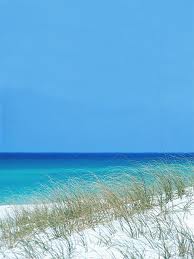
Pensacola Beach’s laid-back surfer dude charm is worlds away from the hustle and bustle of Miami and tacky tourist spring break debauchery of Fort Lauderdale. The community is accepting, embraces gay travelers and is home to many gay residents and several successful gay business owners. I can’t begin to describe the beauty of the Gulf Coast beaches in this area if you have never experienced them. The sugar white sands are luxurious and the water is crystal clear with a perfect blue-green hue. It will surely take your breath away.

Located on Santa Rosa Island, in Northwest Florida, Pensacola Beach is a barrier island buffered at both ends by bridges.  There are water views in all directions, with the emerald blue vistas of the Gulf of Mexico ‘Gulfside’ and the tranquil views of Pensacola Bay ‘Soundside’.  Local development is severely curtailed by the protected beaches in the Gulf Islands National Sea Shore located on either end of the island.

On Memorial Day weekend colorful pride flags wave in anticipation as LBGT visitors from all over the country exit the bridge onto the beach.  The colors of the rainbow stand in stark contrast to the glittering white sand as the beach transforms into a seemingly spontaneous parade of beautiful bodies and fashionable swim wear.

Revelers start flooding the beach the week prior to Memorial Day.  The local vibe is always awash with boisterous anticipation.  Friendships and romances are kindled and reunions celebrated.   Days are spent nurturing a tan and people watching with a frosty ‘Bushwhacker’ in hand.  Everything you need to have fun in the sun is easily accessible on foot.

At the main beach, live music and cocktails are plentiful. If you’re energetic there is an ample variety of activities such as stand up paddle boarding, parasailing, kayaking and dolphin watching.   There’s also mini golf, go-carts, beach cruiser bike rentals and funky but fashionable beach stores.  If you prefer a more tranquil atmosphere then migrate east or west and enjoy a romantic picnic on the wild and non-commercial beaches in the National Seashore.  While you are there make sure to explore historic Fort Pickens.

When I was growing up, Pensacola was one of the closest beaches to us, and my parents used to take us camping a few weekends out of the year to the Gulf Islands National Seashore at Fort Pickens. You know that I love history, and Fort Pickens was a wonderful place to explore as a kid. The Fort is an old Civil War fort that stayed in Union hands throughout the war, sitting directly across Pensacola Bay from Fort Barrancas, the Confederate fort. Did you know that the actual first shots fired between Union and Confederate troops was not the Confederates firing on Union forces at Fort Sumpter, but actually Union forces at Fort Pickens firing on Confederate forces at Fort Barrancas? Pensacola has such a wonderful history for any lover of history to enjoy and you don’t have to deal with all the hustle and bustle of larger historic southern towns like New Orleans.

Also, if you want a wonderful meal with great service, try one of my all-time favorites, Hall’s Seafood on East Gregory Street.  Hall’s Seafood features casual dining with a waterfront view & great food. Try their famous hush puppies with cheese sauce, or start your meal with an excellent bowl of gumbo. Don’t go to Hall’s expecting to eat ultra healthy because if you don’t try their hush puppies with cheese sauce, then you might as well not go. They are worth the calories, and even if you think you don’t like hush puppies, give these a try. If you get there and are disappointed, then just give the hush puppies and cheese sauce to me, I will eat them. Try it, you won’t be disappointed.

For those who crave more than hush puppies with cheese sauce, Pensacola has plenty of culture in nearby Downtown Pensacola which is a theme park for architectural buffs.  Did you know Pensacola is the oldest city in America? (Grant it the Spanish abandoned it the first time to build a city at St. Augustine, eventually they simply couldn’t stay away.) Wander through the North Hill residential area and dream of renovating your own antebellum mansion.  Then stroll through the pedestrian friendly streets of the Historic District and enjoy unique culinary offerings, theaters, museums and galleries tucked behind flourished iron balconies reminiscent of New Orleans.

Don’t miss out on numerous Gay Memorial Day events.   This year, renowned comedian Leslie Jordan of Will and Grace, Designing Women and Sordid Lives fame, performed at the historic Saenger Theatre. Emerald City, Pensacola’s premier Gay club, hosted blowout bashes every night featuring DJ Jay-R and DJ Joe Gauthreaux. At the beach many of the local bars such as Crabs We Got Em, Flounders Chowder House and Castaways hosted all night parties.

If you ever get down to Pensacola for Memorial Day Weekend, don’t plan on leaving early because on Monday over 150,000 revelers come back to the beach to put their toes in the sand one final time, to share weekend gossip about new loves or break ups, recruit new Facebook friends, get phone numbers or finally muster to courage to say hi to that beautiful person they’ve been eyeing up all weekend.   Most importantly this is the time to say see y’all next year to newfound friends.

Maybe you’ll meet the love of your life and plan a commitment ceremony for the following year.  While same sex marriage is not yet legal in Florida, dozens of couples choose this weekend to say “I Do” with those nearest and dearest to them.  Once you have experienced Pensacola Beach you’ll understand why.


The History of Southern Decadence

image Since it was founded in 1781, New Orleans has marched to the beat of its own drum.  For two centuries, those in control of the Louisiana state government have tried in vain to impose their prejudices on a city that is French, Spanish, Creole, African, Catholic, pagan and very gay (in both senses of the word).  If nothing else, New Orleans knows how to throw a party, from the world-famous Mardi Gras to other, more specialized celebrations.
One of these celebrations began quite inauspiciously in August of 1972, by a group of friends living in a ramshackle cottage house at 2110 Barracks Street in the Treme section of New Orleans, just outside of the French Quarter. image It was in desperate need of repair, and the rent was $100 per month.  At any given time the residents numbered anywhere from six to ten, and it was still sometimes difficult to come up with the rent.
The large bathroom became a natural gathering place in the house.  It had no shower, only a clawfoot tub, but it also had a sofa.  With from six to ten residents, and one bathtub, everyone became close friends.  While one soaked in the tub, another would recline on the couch and read A Streetcar Named Desire aloud. The Tennessee Williams play inspired the residents to fondly name the house “Belle Reve” in honor of Blanche DuBois’ Mississippi plantation.
image And so it was, on a sultry August afternoon in 1972, that this band of friends decided to plan an amusement.  According to author James T. Spears, writing in Rebels, Rubyfruit and Rhinestones: Queering Space in the Stonewall South, this “motley crew of outcasts” began Southern Decadence as a going away party for a friend named Michael Evers, and to shut up a new “Belle Reve” tenant (from New York) who kept complaining about the New Orleans heat.  As a riff on the “Belle Reve” theme, the group named the event a “Southern Decadence Party: Come As Your Favorite Southern Decadent,” requiring all participants to dress in costume as their favorite “decadent Southern” character.    According to Spears, “The party began late that Sunday afternoon, with the expectation that the next day (Labor Day) would allow for recovery. Forty or fifty people drank, smoked, and carried on near the big fig tree … even though Maureen (the New Yorker) still complained about the heat.”
The following year the group decided to throw another Southern Decadence Party.  image They met at Matassa’s bar in the French Quarter to show off their costumes, then they walked back to “Belle Reve.”  This first “parade” included only about 15 people impersonating such “decadent Southern” icons as Belle Watling, Mary Ann Mobley, Tallulah Bankhead, Helen Keller, and New Orleans’ own Ruthie the Duck Lady.  This impromptu parade through the French Quarter and along Esplanade Avenue laid the groundwork for future events, and  the group decided to repeat the party again the following year.
In 1974, the Southern Decadence visionaries named Frederick Wright as the first Grand Marshal, hoping to provide at least a modicum of order.  For the next six years, the format of the celebration changed little.  The founding group continued to appoint each year’s Grand Marshal by consensus.  Some were gay, some were not. But all were members of the founding group.
image By 1981, most of the original organizers had moved on with their lives.  Many felt that the event had become so big that it was no longer the intimate party they had started nine years earlier.  Of the original group, only Grand Marshal V Robert King was actively participating.  He, along with some of his friends that hung out at the Golden Lantern bar, thought it was worth continuing and they took over the festivities.  It was at this point that Southern Decadence became primarily a gay event.  Other protocol changes made in 1981 included moving the starting point of the annual parade from Matassa’s to the Golden Lantern bar, and allowing Grand Marshals to personally name their own successors.  Both of these traditions continue today. And in 1987, the Grand Marshal began to make a proclamation of the official theme, color and song.
image Because the 2005 celebration was cancelled due to Hurricane Katrina, Southern Decadence 2005 Grand Marshals Lisa Beaumann and Regina Adams reigned for both 2005 and 2006, making the very first time in Southern Decadence history that grand marshals
ruled for two years.  And keeping with the unpredictability of Decadence, the Grand Marshals from 2008 reigned once again in 2009.
The rest, as they say, is history.  What began as a little costume party is now a world-famous gay celebration.  In the 39th year, it has mushroomed from a small gathering of friends to a Labor Day weekend tradition, attracting over 100,000 participants, predominantly gay and lesbian, and generating almost $100 million in tourist revenue.  This annual economic impact ranks it among the city’s top five most significant tourist events.  The mayor has even welcomed the event with an Official Proclamation.
Southern Decadence Grand Marshals XXXIII Lisa Beaumann and Regina AdamsDescribed by one reporter as “a happening of haberdashery fit for an LSD Alice in Wonderland,” Southern Decadence 2010 will be as outrageous as ever and live up to its reputation as New Orleans’ largest gay street fair.  It all begins in earnest six weeks before Labor Day.  However, the real party starts on the Wednesday before Labor Day, and the events are non-stop. It picks up steam daily as it nears Sunday’s big street parade, which rivals New Orleans’ gay Mardi Gras in scope, with the party lasting well into the day on Monday.
image If you’ve never been to Southern Decadence, and sadly I haven’t, here are some tips to know before you go. What follows are some thoughts gathered from locals that will help you get the most out of your experience.
Pass by the NO/AIDS Task Force’s information tables located on the St. Ann Street sidewalk in front of Hit Parade Gift and Clothing, at the corner of Bourbon and St. Ann Streets.  You’ll find lots of community information and details of the weekend’s events.  The literature racks inside of Hit Parade are another great source for all of the Southern Decadence information that you will need.
During Southern Decadence, some streets of the French Quarter do not allow parking – look for, and heed, no parking signs. Plan on doing a lot of walking. Comfortable shoes are a must. Always walk where it is well lit and there are a lot of people. New Orleans is a city of neighborhoods. imageLike all large cities, the Big Easy does have some trouble spots. Always walk with others, never alone if possible. Don’t wander about the city. In New Orleans the neighborhoods can change, literally, when you cross a street. Always carry a map. If you’re drinking, don’t go stumbling about the French Quarter. Locals know that the people who encounter trouble are usually the ones who have been drinking.
And a bit of urban common sense is in order. When you walk the streets, don’t bring your wallet. Take the cash you need and possibly a credit card, along with some sort of identification, and put them in a pocket that no one can slip their hand into. Don’t wear expensive jewelry. Basically, don’t take anything with you that you would have a hard time replacing if it were lost.
If your car is impounded, it will cost you over $100 plus whatever else the city decides to tack on. Your car can be retrieved from the City Auto Pound, located in a dangerous area of the city, 400 N. Claiborne Ave., (504.565.7236). This will spoil a good time. Cabs are not difficult to get during Southern Decadence. If you are going to take a cab, try UNITED CABS: 504.522.9771 or 504.524.9606. Write these numbers down and put them in your wallet. This cab company can be trusted. United Cabs has a sound reputation with the New Orleans gay community.
imagePeople are allowed to drink on the streets in New Orleans —  that large 24-oz Southern Decadence cup that you’ll see people walking with and drinking from likely contains several shots of alcohol!  However, if your drink isn’t already in a plastic cup, please ask for one before leaving your favorite watering hole. Glass and cans are not allowed on the streets for safety reasons.
Most bars in New Orleans are open twenty-four hours a day. Pace yourself. Most important, it’s easy to get caught up in all the excitement and forget to eat. If you want to make it through the weekend, solid food is a necessity. Of course, New Orleans is world famous for its food and indulging is part of a complete New Orleans experience.
Clean bathrooms can be difficult to find during Southern Decadence. Most businesses close their facilities to everyone but paying customers. If your hotel is far from the action, take care of the more important business before you hit the streets. If you need to, plan on buying lunch or dinner and using the restaurant’s bathroom before you pay the check!
image The French Quarter is an historic neighborhood. Please respect it. No matter how “bad” you have to go, do not urinate in the streets or on door steps or through iron gates. This is a good way to end up in central lock-up, and people who are arrested sit in jail until the courts re-open after Labor Day. It will cost you about $200. And it’s not polite. Listen to your body. Get in line before you really have to go. By the time you’re crossing your legs, you might be at the front of the line.
During Southern Decadence weekend, you’re guaranteed to get an eyeful of great costumes and fabulous bodies. Officially, public nudity is not allowed and there are obscenity laws on the books. Better judgment should be the rule of the day.
Southern Decadence is a BIG non-stop party. People drink and are having a good time. It’s easy to forget that there is a real world out there. Free condoms are available from the NO/AIDS Task Force station located near the Bourbon Pub / Parade. Don’t allow the party to overwhelm your better judgment. We want you to come again. Have fun and play safe!


Marriage Is So Gay

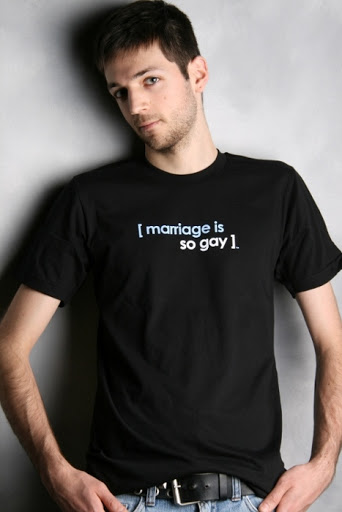
There has recently been some controversy over a lesbian couple who took their children to Dollywood’s water amusement part Splash Country. One of the mothers was asked to turn her t-shirt inside out because it said “Marriage is so gay” on it. A lesbian couple who was entering the park with friends were asked to make the change by a worker who said the phrase “Marriage is so gay” might offend some patrons and that it is a “family park.” The couple obliged the employee, then registered a complaint with Dollywood. Dollywood has received a lot of flack over this issue. There are a few observations that I would like to make on this subject.

First of all, Dolly Parton who is the co-owner of Dollywood has been outspoken in the past about gay rights and gay marriage. Dolly has a rather large gay fan base. I for one have always been a big fan of Dolly Parton. In a 2009 interview with Joy Behar, Dolly stated her views on gay rights and gay marriage. See the video below:

Dolly is certainly not the conservative county music star that most of us see and hear about. Dolly seems more socially liberal than conservative. When asked by Bill O’Reilly if she was a conservative she told him “Not really, I’m more patriotic than political.” Dolly’s fan base covers a large range -she has both straight fans and gay fans. She has said, “I think it’s great when people accept themselves for exactly who they are and accept other people. I think that’s the key to happiness and success. It doesn’t matter who you are, as long as you do that really good. We’re all God’s children. He loves us all the same. We have to learn to love each other and ourselves a little better.”

Dolly Parton has responded to the gay marriage T-shirt controversy. Earlier this month, Dollywood front gate attendants asked Olivier Odom to turn her “marriage is so gay” shirt inside out for violating the park’s dress code. Parton issued the following statement to ABC on Friday:

“I am truly sorry for the hurt or embarrassment regarding the gay and lesbian t-shirt incident at Dollywood’s Splash Country recently. Everyone knows of my personal support of the gay and lesbian community. Dollywood is a family park and all families are welcome,” she wrote to ABC. ABC reports that Parton’s statement went on to explain that the dress code rules are enforced to protect the person wearing the shirt and keep park disturbances to a minimum.  Parton concludes in writing, “I am looking further into the incident and hope and believe it was more policy than insensitivity. I am very sorry it happened at all.”  As a bit of a side note, Dollywood has gay days similar to those at the Disney Theme Parks (at least they were doing so a few years ago, I’m not sure if they still do or not).

I have been to Dollywood several times when I was younger. We used to go to the mountains (that would be the Great Smokey Mountains for my family) about every other summer. Dollywood is on the East Tennessee side of the Great Smokey Mountain National Park. It was always a fun place to go, but make no mistake, it was a bit of a redneck heaven. It is in East Tennessee, Pigeon Forge to be exact, which is a bit of a country music paradise. Not all of the people there are rednecks but there are quite a number who are, some are just good country folk. The thing is, you know what kind of place you are going. I personally would not have worn a gay rights t-shirt, but then that’s me. I am not one to wear something as a political statement or wear something just to be noticed. That being said, the amusement park has stated that they asked the woman to turn her shirt inside-out because of their dress code. I don’t think the park was making any sort of statement against gay marriage. The printing on the shirt highlighted the words “so gay” in a way that made it look derogatory. A kid would likely not understand the play on words. Business Week reported that the couple, Jennifer Tipton and Olivier Odom, said they objected to the employee stating that it is a “family park” as a reason for her to have to hide the shirt. Apparently the couple took it personally and felt they were not looked at as a family. I think it’s likely the standard line when asking any guest to remove offending apparel.

That being said, I have never been comfortable with people derogatory phrases and turning them into empowering statement. A friend of mine used to use the phrase, “That’s so gay” all the time. I was the first gay person he had ever really knew was gay. I explained to him why I disliked the use of the phrase and he realized that it was derogatory and stopped. In fact, he quit allowing other friends of his to use the phrase when around him. I have also never been comfortable with the word faggot. I know that some gay people now use it as an empowering word, but for me it reminds me of all the times that I heard it in the most derogatory fashion and was so often called a faggot or a fag. I don’t like the word. I don’t like to read it. I don’t like to write it. I don’t like to hear it. I’ve gotten better at hearing the word queer, but I doubt I will ever get over flinching when I hear the word faggot.

African-Americans have been doing the same thing with the N-word. I detest that word, and I am white. I heard it far too often in a derogatory way growing up in the South. Yet, black people don’t want us to call them nigger, yet they will use it themselves. I received a text message the other day on my phone that read, “Damn you act like you don’t no a nigga.” The fact is that I did not know the person. It was a wrong number, but I would assume that the person was black. I have no proof of that though.

The lesbian woman wearing the shirt seems to me like cafeteria-style political correctness on the part of the couple, in the same way the person who texted me did. We want people to stop using words in an inflammatory manner, but we still want to be able to poke at something when it’s all in good fun. This one has to be all or nothing. Either kids continue to call something or someone “gay” in a derogatory manner or we stop it now. All of us.

How do you feel about inflammatory/derogatory speech when it is used in an empowering way?


Gay Paree

tumblr_ler5nwvfjH1qdzkffo1_500
Paris is certainly one of the Top 3 travel destinations in Europe, and for the author of these lines it is the most beautiful one. Considering how many wonderful cities in Europe had been destroyed in the last war and didn’t gain their former beauty and fame, yet, after 60 years, Paris is truly a treasure and miracle.

You could stay in Paris for months or visit Paris again and again, and you would still see other beautiful and interesting spots if you explore the city with curiosity and open eyes. Just stroll around a bit and do not only follow the routes in your travel guide book.

If you come to Paris not only to visit the Louvre and other sights but want to dive into the Parisian life then try to avoid August. Many Parisians take their long vacations in August and some companies have even closed completely. In the gay scene even the most popular gay clubs and bars won’t be very crowded or will be empty or closed.

The gay center of Paris is the Marais, an old district in the 4th Arrondissement of Paris with adorable, narrow streets breathing centuries-old history. You’ll find a lot of gay bars, cafes and shops here, as well as plenty of gay-friendly restaurants, most of them quite close to each other, creating a bit of a ghetto atmosphere.

gay Paris
Gay Parisians can be a bit difficult when it comes to flirting. If you dare to show your interest to somebody in a direct way you could easily be seen as too needy, too easy or too cheap. Our two Euro cents of advice: Don’t waste your time with behavior research to understand the rituals and peculiarities of flirting in the gay scene of Paris. Just do it your own way and don’t take the Parisian rudeness personally.

Besides, it is often said that Parisian guys come and stick in groups. Exploring Paris with friends can really make a difference, both at day and at night.

Annual gay highlight in the French capital is Paris Gay Pride end of June, called ›Marche des Fiertés LGBT‹ in France.  The only gay pride parade I have ever had the luxury of attending is Paris Gay Pride a few years ago when I was in Paris for a study abroad program.

The Parisian attitude toward sexual preferences is VERY relaxed and very pragmatic. Vending machines for condoms have recently been installed in high schools. You also find condom vending machines at Metro stations. When it comes to Paris nightlife, the Parisian scene abounds with transformist night clubs, and after hours clubs with a predominantly gay flavor. The annual Gay Pride Parade gets bigger and better each year.

Paris’s official tourist office site offers a listing of gay-friendly hotels and suggestions for your stay in the “City of Love.” Here is a city where you can walk hand-in-hand and feel truly at home.

Paris’s Marais district may be considered the epicenter of Paris’s gay community, but you’ll find that this city has plenty to offer gay visitors, especially when it comes to nightlife in various arrondissements, so don’t limit yourself to just one neighborhood. Some of Paris’s hottest night spots are gay-oriented.

To learn more, please check out these two sites:
and

Patroc Gay Travel Guide Europe 2011 is a wonderful site for gay travel.  I must apologize to this site because I inadvertently forgot to add my sources for this post.  Check out  Patroc Gay Travel Guide Europe 2011 for more information about gay travel in Europe.  I know that I will the next time I head for Europe.


Travel Thursday: Here Is a Gay Guide to Europe

Europe According to Gay Men


The History of Southern Decadence

image Since it was founded in 1781, New Orleans has marched to the beat of its own drum.  For two centuries, those in control of the Louisiana state government have tried in vain to impose their prejudices on a city that is French, Spanish, Creole, African, Catholic, pagan and very gay (in both senses of the word).  If nothing else, New Orleans knows how to throw a party, from the world-famous Mardi Gras to other, more specialized celebrations.
One of these celebrations began quite inauspiciously in August of 1972, by a group of friends living in a ramshackle cottage house at 2110 Barracks Street in the Treme section of New Orleans, just outside of the French Quarter. image It was in desperate need of repair, and the rent was $100 per month.  At any given time the residents numbered anywhere from six to ten, and it was still sometimes difficult to come up with the rent.
The large bathroom became a natural gathering place in the house.  It had no shower, only a clawfoot tub, but it also had a sofa.  With from six to ten residents, and one bathtub, everyone became close friends.  While one soaked in the tub, another would recline on the couch and read A Streetcar Named Desire aloud. The Tennessee Williams play inspired the residents to fondly name the house “Belle Reve” in honor of Blanche DuBois’ Mississippi plantation.
image And so it was, on a sultry August afternoon in 1972, that this band of friends decided to plan an amusement.  According to author James T. Spears, writing in Rebels, Rubyfruit and Rhinestones: Queering Space in the Stonewall South, this “motley crew of outcasts” began Southern Decadence as a going away party for a friend named Michael Evers, and to shut up a new “Belle Reve” tenant (from New York) who kept complaining about the New Orleans heat.  As a riff on the “Belle Reve” theme, the group named the event a “Southern Decadence Party: Come As Your Favorite Southern Decadent,” requiring all participants to dress in costume as their favorite “decadent Southern” character.    According to Spears, “The party began late that Sunday afternoon, with the expectation that the next day (Labor Day) would allow for recovery. Forty or fifty people drank, smoked, and carried on near the big fig tree … even though Maureen (the New Yorker) still complained about the heat.”
The following year the group decided to throw another Southern Decadence Party.  image They met at Matassa’s bar in the French Quarter to show off their costumes, then they walked back to “Belle Reve.”  This first “parade” included only about 15 people impersonating such “decadent Southern” icons as Belle Watling, Mary Ann Mobley, Tallulah Bankhead, Helen Keller, and New Orleans’ own Ruthie the Duck Lady.  This impromptu parade through the French Quarter and along Esplanade Avenue laid the groundwork for future events, and  the group decided to repeat the party again the following year.
In 1974, the Southern Decadence visionaries named Frederick Wright as the first Grand Marshal, hoping to provide at least a modicum of order.  For the next six years, the format of the celebration changed little.  The founding group continued to appoint each year’s Grand Marshal by consensus.  Some were gay, some were not. But all were members of the founding group.
image By 1981, most of the original organizers had moved on with their lives.  Many felt that the event had become so big that it was no longer the intimate party they had started nine years earlier.  Of the original group, only Grand Marshal V Robert King was actively participating.  He, along with some of his friends that hung out at the Golden Lantern bar, thought it was worth continuing and they took over the festivities.  It was at this point that Southern Decadence became primarily a gay event.  Other protocol changes made in 1981 included moving the starting point of the annual parade from Matassa’s to the Golden Lantern bar, and allowing Grand Marshals to personally name their own successors.  Both of these traditions continue today. And in 1987, the Grand Marshal began to make a proclamation of the official theme, color and song.
image Because the 2005 celebration was cancelled due to Hurricane Katrina, Southern Decadence 2005 Grand Marshals Lisa Beaumann and Regina Adams reigned for both 2005 and 2006, making the very first time in Southern Decadence history that grand marshals
ruled for two years.  And keeping with the unpredictability of Decadence, the Grand Marshals from 2008 reigned once again in 2009.
The rest, as they say, is history.  What began as a little costume party is now a world-famous gay celebration.  In the 39th year, it has mushroomed from a small gathering of friends to a Labor Day weekend tradition, attracting over 100,000 participants, predominantly gay and lesbian, and generating almost $100 million in tourist revenue.  This annual economic impact ranks it among the city’s top five most significant tourist events.  The mayor has even welcomed the event with an Official Proclamation.
Southern Decadence Grand Marshals XXXIII Lisa Beaumann and Regina AdamsDescribed by one reporter as “a happening of haberdashery fit for an LSD Alice in Wonderland,” Southern Decadence 2010 will be as outrageous as ever and live up to its reputation as New Orleans’ largest gay street fair.  It all begins in earnest six weeks before Labor Day.  However, the real party starts on the Wednesday before Labor Day, and the events are non-stop. It picks up steam daily as it nears Sunday’s big street parade, which rivals New Orleans’ gay Mardi Gras in scope, with the party lasting well into the day on Monday.
image If you’ve never been to Southern Decadence, and sadly I haven’t, here are some tips to know before you go. What follows are some thoughts gathered from locals that will help you get the most out of your experience.
Pass by the NO/AIDS Task Force’s information tables located on the St. Ann Street sidewalk in front of Hit Parade Gift and Clothing, at the corner of Bourbon and St. Ann Streets.  You’ll find lots of community information and details of the weekend’s events.  The literature racks inside of Hit Parade are another great source for all of the Southern Decadence information that you will need.
During Southern Decadence, some streets of the French Quarter do not allow parking – look for, and heed, no parking signs. Plan on doing a lot of walking. Comfortable shoes are a must. Always walk where it is well lit and there are a lot of people. New Orleans is a city of neighborhoods. imageLike all large cities, the Big Easy does have some trouble spots. Always walk with others, never alone if possible. Don’t wander about the city. In New Orleans the neighborhoods can change, literally, when you cross a street. Always carry a map. If you’re drinking, don’t go stumbling about the French Quarter. Locals know that the people who encounter trouble are usually the ones who have been drinking.
And a bit of urban common sense is in order. When you walk the streets, don’t bring your wallet. Take the cash you need and possibly a credit card, along with some sort of identification, and put them in a pocket that no one can slip their hand into. Don’t wear expensive jewelry. Basically, don’t take anything with you that you would have a hard time replacing if it were lost.
If your car is impounded, it will cost you over $100 plus whatever else the city decides to tack on. Your car can be retrieved from the City Auto Pound, located in a dangerous area of the city, 400 N. Claiborne Ave., (504.565.7236). This will spoil a good time. Cabs are not difficult to get during Southern Decadence. If you are going to take a cab, try UNITED CABS: 504.522.9771 or 504.524.9606. Write these numbers down and put them in your wallet. This cab company can be trusted. United Cabs has a sound reputation with the New Orleans gay community.
imagePeople are allowed to drink on the streets in New Orleans —  that large 24-oz Southern Decadence cup that you’ll see people walking with and drinking from likely contains several shots of alcohol!  However, if your drink isn’t already in a plastic cup, please ask for one before leaving your favorite watering hole. Glass and cans are not allowed on the streets for safety reasons.
Most bars in New Orleans are open twenty-four hours a day. Pace yourself. Most important, it’s easy to get caught up in all the excitement and forget to eat. If you want to make it through the weekend, solid food is a necessity. Of course, New Orleans is world famous for its food and indulging is part of a complete New Orleans experience.
Clean bathrooms can be difficult to find during Southern Decadence. Most businesses close their facilities to everyone but paying customers. If your hotel is far from the action, take care of the more important business before you hit the streets. If you need to, plan on buying lunch or dinner and using the restaurant’s bathroom before you pay the check!
image The French Quarter is an historic neighborhood. Please respect it. No matter how “bad” you have to go, do not urinate in the streets or on door steps or through iron gates. This is a good way to end up in central lock-up, and people who are arrested sit in jail until the courts re-open after Labor Day. It will cost you about $200. And it’s not polite. Listen to your body. Get in line before you really have to go. By the time you’re crossing your legs, you might be at the front of the line.
During Southern Decadence weekend, you’re guaranteed to get an eyeful of great costumes and fabulous bodies. Officially, public nudity is not allowed and there are obscenity laws on the books. Better judgment should be the rule of the day.
Southern Decadence is a BIG non-stop party. People drink and are having a good time. It’s easy to forget that there is a real world out there. Free condoms are available from the NO/AIDS Task Force station located near the Bourbon Pub / Parade. Don’t allow the party to overwhelm your better judgment. We want you to come again. Have fun and play safe!


A Nudist Religion?

image
Occasionally, the Professor learns something new. I had heard of Jains, and have even taught about them, but the other night, I learned something new about the Jains.
Jainism: Reverence for All Living Things
Jainism was founded by Nataputra Vardhamana, known as Mahavira, “Great Hero,” who became an ascetic, who promoted pacifism and vegetarianism.   His followers believe that all living things have an eternal spirit and must be treated with reverence. The central ideas of their faith is Ahisma—nonviolence to all living things, Moksha—liberation from the cycle of death and reincarnation, and The Three Jewels—right knowledge, right faith, and right conduct.  There are five basic ethical principles (vows) prescribed. The degree to which these principles must be practiced is different for renunciant and householder. Thus:

1. Non-violence (Ahimsa) – to cause no harm to living beings.
2. Truth (Satya) – to always speak the truth in a harmless manner.
3. Non-stealing (Asteya) – to not take anything that is not willingly given.
4. Celibacy (Brahmacarya) – to not indulge in sensual pleasures.
5. Non-possession (Aparigraha) – to detach from people, places, and material things.

Jains mostly became scholars and merchants, but farmers, who periodically had to kill plants and animals, could not fully commit to Jainism, though some followed its tenements.  Jains are known to walk with a broom before them, sweeping away all living things, so as not to harm them.
image

Jain saints

Among Jains , there are two main sects- Shwethambara and Digambara. Shwethabars worship idols in pre-sainthood form while digambars worship god in the sainthood form.Nude saints are found in digambar jains community only.


Symbol of Great Sacrifice

Sainthood itself, according to principles, is a symbol of sacrifice. Jaina saints follow strict principles.In digambar community, saints are of three categories.

image 1. KSHULLAKA
2.AILLAKA, and
3. NIRGRANTHA

Kshullakas wear a saffron dhothi and a saffron cloth is put across their bust. Aillaks wear only a piece in the waist just cover their penis, and nirgranthas are fully nude. This is always followed irrespective of seasonal changes. Female saints (nuns) are allowed only for the first stage and they are called Aryikas. Other two stages are not allowed for them.
Principles followed by jaina nude saints are the following:

image 1. They will not take a bath or brush their teeth. They only wash their hands and feet and face after going for excretion. They just rub their teeth with their finger after eating food. But they are not permitted to use brush and bathe , as we do. The reason is that, by that action, microbes and other small organisms on our body may die. And , a nirgrantha is to see that no creature dies by his behavior.
2. They take food only once a day. imageThat too is a strict practice. They can not use dishes or dining table . They stand , stretch out their palms, and somebody puts food into their open palms. They test by perusing cleanly and, after confirming that no germ, nor any other dust is there in it, they eat it. If any such thing is found, they leave it there  and no food will be taken by them till next day.
3. If they hear any cry of an animal or of a person in distress etc., while taking food , they give up their food.
4. The food they take is simple and tasteless. They take rice, chapa made of wheat, some curry image(without salt), coconut water. The food is just to get minimum strength required to maintain life activities.
5. They often take ‘hunger vow’-i.e., no food for the day. Sometimes, this hunger vow continues for up to eight days. The great nude saint of twentieth century, Acharya Shantisagarji Maharaj, had a total period of twenty-six years of hunger in his life span of seventy years.
6. They should not use vehicles for movement. They have to travel by walking only. And they walk faster than us! As they are not supposed to use vehicles, they cannot be seen in foreign countries. They are seen only in India.
image7. They do not use beds, sleeping bags, or bed sheets and rugs. They sleep on wooden planks or wooden cots, just with a mat on  it. In sleep also they do not change their side, with the idea that some germ moving there might be get killed.
8. They do not speak at night.
9. They are not expected to involve themselves in any worldly matters.
image10. Needless to say- they keep away from sex, not only physically, but also mentally.
11. They keep only the following items with them -a pincha (a  bundle of naturally fallen peacock feathers to brush away the dust while sitting), a kamandala (a wooden vessel to clean themselves after going for excretion), and shastras (religious books). They do not keep money or any valuable things.
image12. They are not supposed to get angry- even to someone who who is angry with them.
13. They don’t even drink water after their regular food, i.e. once a day.
14. They remove their hairs on their face and head only with their hands/ They wont use tools for that.

image


Forever Florence

sl-david This article, “Forever Florence,” is by Felice Picano and is from from the Fall 2004 issue of The Out Traveler. It is one of my favorite writings about Florence. I wanted to share it with you and I hope that you enjoy it.

Florence, Italy 022 My first night in Florence, I was walking home late from dinner to my pensione in the mostly residential Santa Croce (central west) side of town. Fog had begun to creep up from the Arno river. I don’t know what I was thinking, perhaps how quiet the town was at 11 p.m. or how I should take a look the next day into the huge library, the Biblioteca Nazionale, I’d just passed. When I turned I faced a long double row of buildings, identical in the misted-over streetlight, all the shops closed for the night. There was a succession of arched doorways, and in the first doorway I walked by were two young men kissing. Not just kissing, they were necking passionately, hands all over each other, inside each other’s clothing, oblivious of me, of anyone or anything but their mutual passion.

6 I began smiling then, and as far as Florence is concerned I’ve never stopped smiling. One of the most beautiful and best-maintained cities in Europe, from the beginning Firenze, literally “the flowery one,” has been thoroughly sexy, thoroughly gay, and thoroughly welcoming. There, even my high school Italian was tolerated, if at times politely corrected. Unlike in Rome, where I lived almost a year. When I spoke Italian there, they called me Professorino–little professor–interrupting before I was through to tell me the dialect word I should have used.

660 Unlike so many others, I never fell in love while in Florence, alas, but on a later visit I made a friend, a book clerk working at the well-known Feltrinelli bookstore, and it was Flavio who expostulated the much-used “Ah, certo!” (“of course”) to the anecdote of my first night in town. He explained, “The great Michelangelo lived directly across the street. His spirit haunts la citta, you know, and drives men to seduce other men.”

2023_p_gabriel_garko_2 A myth, right? The next day I checked the spot, and indeed it was located on Via Buonarroti, and there was Casa Buonarroti, a museum to the artist that I’d never noticed.

gabriel garko It was at the end of that same visit that I found myself chided one night by my dinner companions for never having seen their famous Duomo. Obediently, the next rainy afternoon I dragged myself to the spectacular cathedral in the center of the city. In truth, I’d had my fill of Italian churches. So I took in the view from atop the dome, which was admittedly pretty cool, and I was back downstairs, exiting, when a young cleric passed by with candle-lighting equipment in his hands–and a considerable tenting effect at crotch level.

argentero-luca_00012 I never found out whether he was a postulant, priest, deacon, dean, or what, but, hypnotized by the sight, I followed him through the main body of the church, past a nave, and into a dim chapel, where he’d found an isolated spot near a large pillar and was just standing there, waiting. Waiting for me, it turned out. No sooner had I joined him than he began kissing me.

LucaArgentero04Fanciulli was a word the young cleric used for boyfriends when we chatted later. And that’s the very word that comes up time and time again in Michael Rocke’s study of homosexuality in Florence, Forbidden Friendships, a book that confirms, if any confirmation was needed, just how gay Florence has been historically–or at least from the time of record-keeping about such matters, the 15th century on.

luca-argentero-foto Naturally, while in Florence I’d heard the stories of famous artists of the Renaissance. How young Leonardo da Vinci, the most bronzedavid beautiful youth in the city, had aristocratic men fighting over him but was eventually spirited away by Francis I, king of France – now, that’s a sugar daddy! – and didn’t return until he’d grown a beard. Or how Donatello, who, like Leonardo, never married and kept a studio full of apprentices, sculpted his statue of David, the first fully free-modeled statue since classical times. Only when it was shown did others get the joke literally behind the masterpiece. Goliath may have been defeated–his head cut off, and young David standing atop it–but from the rear view the slain Philistine’s helmet feather erectly rises along the boy’s legs, poking at his naked butt. It is as though Donatello is saying, “The boy’s so beautiful, even the dead can get it up for him.”

We think of Botticelli in the context of his Venus and other lovely women, but he never married either, and he also kept apprentices in style. The story goes that he was utterly taken with one lad and was so proud of his beauty that he painted him naked, sleeping, taken from life, in a piece titled Venus and Mars, where, let’s

BotticelliVenusMars recall, Venus is fully clothed. The gesture was intended to show his friends and enemies the young man’s ineffable beauty. But the boy, although willing, turned out to be faithless, so Botticelli painted him again, this time as the North Wind in his famous Primavera saying, in effect, that the boy blew hot and cold and also–impugning his masculinity–that he blew, period.

Luca-Argentero-Intimissimi-01 On another trip to the city I began hanging out in a café in the Piazza Santa Trinita, between the bridge of the same name and the chic shopping street Via de Tornabuoni. Seeing me writing all the time, one waiter, Titone, began calling me “the poet.” He told me he’d grown up around the corner and that another poet, Lord Byron, had lived nearby, after he’d fled England. Byron’s vengeful wife, tired of his infidelities with both men and women, accused him of sleeping with his own sister. So Byron was forced into exile. Fancy exile, I found out, since he stayed with the unmarried William Beckford, a British millionaire and author of the justly forgotten Gothic novel Vathek. According to Titone, Byron satisfied Beckford and all of his live-in boys. “Ha un cazzo grande!” the waiter assured me. When I asked how he knew Byron’s size, Titone began limping away, crowing, “The clubfoot! God compensates!”

Luca-Argentero-Intimissimi-02 A stone’s throw from my preferred café is where the Old Market had been located for centuries, and also the ancient Street of the Furriers, which, according to Rocke’s book, were two conspicuous stomping grounds of artisans and working-class 15th-century queers looking for sex. The aristos meanwhile favored the Boboli Gardens, meeting lower-class youths behind the Pitti Palace, and later at night, when the river mists rose from the Arno, outdoor sex was freely available in the corners and doorways of shops along the venerable Ponte Vecchio (Old Bridge), then filled with grocers, butchers, and carpenters, now a tony leather and jewelry mart by day that’s still cruisy at night.

2701419812_071e4ffcc3 Florence was so devastated by plague in 1348–the population ebbed to 40,000–that everyone was encouraged to make babies. The city fathers founded an Office of the Night to police the widespread homosexuality the city had become known for all over Europe–in Renaissance Germany the word for gay was Florenzer. In the 70-year history of the office, over 3,000 men were convicted of same-sex sodomy, and thousands more confessed to gain amnesty; as many as 17,000–one out of every two men in Florence–were accused. Gay and straight, married and single, the accused came from all ages, classes, areas of the city-state, and walks of life (although, like today, the clothing trade was best represented). “The links between homosexual activity and broader male social relations were so dense and so intertwined,” writes Rocke, “that there was no truly autonomous distinctive sodomitical subculture, much less one based on a modern sense” of being gay. In late-medieval and Renaissance Florence, Rocke concludes, “there was only a single sexual culture with a predominantly homoerotic character.”

normal_raoul_3B211B Despite fines, exile, and corporal punishment, the Office of the Night failed in its task and was disbanded after a brief surge of intense gay repression by the followers of the Dominican reformer Savonarola. After he was burned at the stake, his supporters lost credit and the city magistrates decided more or less to sweep the “problem” of widespread homosexuality under the rug.

raoul_bova2 The pervasive, mostly man-boy homoeroticism that defined Florence for centuries persists to this day. Over lattes and glasses of wine, across counters at the flower-filled outdoor produce markets, in any clothing, book, or butcher store, male clerks, bartenders, and waiters will flirt shamelessly with young men, openly calling them bello and uaglio (beautiful lad and sweet boy, respectively). Who knows how much is traditional banter, how much mere bluff? Living in Rome, I was always invited by Florentine flirters to move to their city and repeatedly told that the SPQR found on ancient Roman shields and obelisks stood for Sono Porci, Quelle Romani, which translates as “Those Romans are pigs.” With my looks, in Tuscany, the Florentine men flattered me, I’d be assured of love eternally.

raoul_bova41 Even the stylish young lesbian couple I met in the lobby of the English-language theater showing Kim Novak as Moll Flanders–said within minutes of our meeting that they had the perfect man for me. Molto gentile, they insisted, handsome, and from one of the Four Hundred families. Fool that I was, looking for love and not a meal ticket, I never showed for the appointment.

raoul-bova-in-una-foto-del-calendario-di-max-10711Since 1795 homosexuality has been decriminalized in Florence. The age of consent for sex is 14, with male hustlers legal at 18. Italian homosexuals, almost 5 million of whom are eligible voters, according to Arcigay, Italy’s largest and oldest gay association, have not thrown their considerable weight behind any particular political party or coalition. In a Roman Catholic nation with an openly homophobic pope issuing antigay decrees, the political situation is still not as open or loose as in much of Northern Europe. Enrico Oliari, who heads Gay Lib, a center-right gay association with about 400 members, rejects the clichÈ that the left is pro-gay and the right is homophobic. He claims that Italy’s gay voters have yet to be mobilized by anyone. Although in 2003 the Italian legislature had bills presented on same-sex marriage, the right of gays to adopt children, and banning discrimination on the basis of sexual orientation, none became law. Only the bill annulling a decree that barred gays from giving blood made it through the parliament.

Florence 082 Florence 086

Where can you find romance in Florence? Besides the usual places, museums (don’t miss the Uffizi Gallery–formerly Medici government offices, explaining the name), trattorias, palaces, and theaters are all good bets. Gay locals swear by the annual Maggio Musicale Fiorentino, the distinguished May opera and concert festival that brings performers and audiences from all over Europe. Many think the off-season is better than when tourists flood the well-known piazzas. And lately gay Florentines have come to prefer living in what used to be older, more rustic villages and byways: new suburbs above the city, toward the town of Fiesole–another worthwhile day trip. I say aim for the spring and summer, when every hillside around the everlasting city of Florence is a patchwork of brilliant colors thanks to the name-giving flowers.

The original article can be found by clicking on the following link.

Another interesting look at Florence, Italy, can be found in David Leavitt’s Florence, A Delicates Case. It is a truly fascinating little book.

Just a side note, the pictures of men in this post are of three very hot Italian actors: Gabriel Garko, Luca Argentero, and Raoul Bova. Some of you may recognize Raoul Bova from the movie “Under the Tuscan Sun.”


My Title Picture

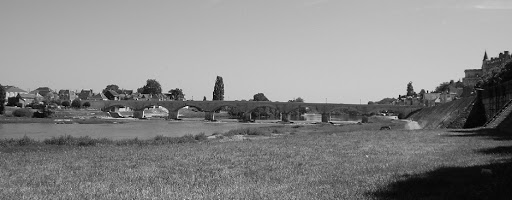
This picture was taken by me several years ago when I was in France. As we sat to have a picnic lunch, with all the food bought fresh from the local farmer’s market, we had this beautiful view of the medieval bridge in the picture. The bridge is located in town of Amboise.

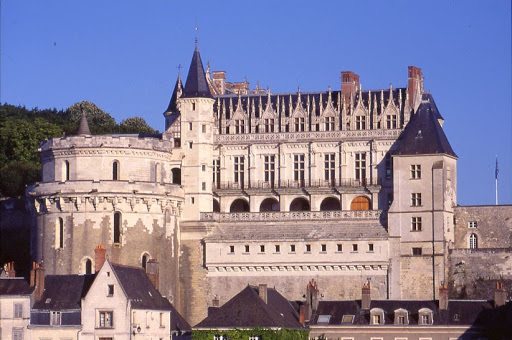
Amboise is a town in north central France, in Touraine, on the Loire River (the river in the picture). It is a wine and wool market, and its manufactures include sporting goods, pharmaceuticals, and film and radio equipment. The town is chiefly famous, however, for its Gothic château, a royal residence from the reign of Charles VIII (who was born and died there) to that of Francis II. Leonardo da Vinci, who probably worked on it, is said to be buried in its chapel. Amboise was the scene (1560) of a Huguenot plot against the Guise family. Other old structures in the town include St. Denis Church (12th, 15th, 16th, and 17th cent.), St. Florentine Church (15th cent.), the town hall (16th cent.; restored), and the Clos-Lucé (15th cent.), where Francis I spent part of his youth and where da Vinci lived while in France and where he died.

Below is a picture of Château Amboise.