





Other than having to work tomorrow, I am on vacation until Wednesday. Working on a Saturday won’t be too bad; I’ll be there by myself. Today though, I plan to just enjoy the day. I need to do some laundry and a few things around my apartment, but nothing major. It’s mostly a day to relax.
Tonight, I’m going to dinner with a friend of mine. We are going to go to Texas Roadhouse. I love the rolls they serve. They are so delicious. I’m not sure what else I’ll get, but the food is pretty good for a chain restaurant. I’m also looking forward to spending some time with my friend. She and I always have a good time together. She’s a wonderful friend.

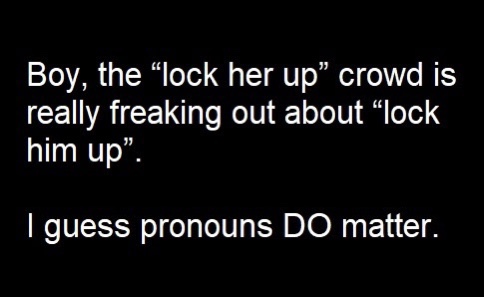
I haven’t talked about politics in a while, but recent news just makes me smile.
After flying back to Florida from New York on Tuesday, where he had been arrested and charged with 34 felony counts, the twice impeached and disgraced former president said, “I never thought anything like this could happen in America.” My response: neither did anyone else. The majority of Americans never expected a minority of Americans would elect a fascist wannabe, “billionaire,” reality television personality who ran on his “genius” as a businessman even after having most of his businesses go bankrupt because of his ineffectual business acumen. Who could have foreseen that in 2016, the Electoral College would elect a vindictive, racist, sexist, fascist, failed businessman as President? I know there are times in American history when that was desired by a minority of citizens (1930s or 1960s, to name two decades), but it had never happened. Those candidates failed.
His speech Tuesday night was filled with lies and misdirection, just like most of his speeches. You can read CNN’s fact check on their website. Sometimes, he just used the wrong words, as in the case when he said, “This is a persecution, not an investigation.” I think he’s confused. It’s a prosecution, not persecution. Besides, the investigation is over, and the charges have been brought. I hope in the end, he will be wearing an orange jumpsuit that will match his fake tanned skin color. I hope justice will prevail. Honestly, I’m not sure it will, but this is not the end of the charges against him.

I considered writing about what has been making my life so stressful the last few days, but I’ve made the decision to not talk much about my job anymore. The whole thing that’s happened has pissed me off more than anything else. I now know for certain that I work with a couple of “malcontents.” I can do my job without them. It would be nice if we could work together as a team, but they have made it clear that they are not team players. Thankfully, I will be the only one working today.
I know I am damn good at my job. I get told regularly by people I work with outside the museum how much they enjoy/appreciate/are impressed with the job I do. I get the same response from my boss, who is the only opinion at the museum that matters. I have a little over three weeks of vacation I need to take before the end of May, so for the next six weeks or so, I will be there when my job requires me to be, but otherwise, I’m going to enjoy my time off.
I have no plans to go anywhere or really do much of anything. I really don’t have the spare cash to do so. However, I can enjoy spending my days with Isabella, even if all she will do is wake me up at 5 am and sleep away the rest of the day. I might just take follow her example and take some cat naps myself.

Invictus
By William Ernest Henley
Out of the night that covers me,
Black as the pit from pole to pole,
I thank whatever gods may be
For my unconquerable soul.
In the fell clutch of circumstance
I have not winced nor cried aloud.
Under the bludgeonings of chance
My head is bloody, but unbowed.
Beyond this place of wrath and tears
Looms but the Horror of the shade,
And yet the menace of the years
Finds and shall find me unafraid.
It matters not how strait the gate,
How charged with punishments the scroll,
I am the master of my fate,
I am the captain of my soul.
About the Poem
“Invictus” by William Ernest Henley is an inspirational poem. It depicts the poet’s attempt to motivate himself when there is no hope at all. When the poet wrote this poem, he had already lost one of his legs. So, in such a situation of mental and physical agony, the poet tried to lift up his courage.
In the very beginning of the poem, the poet says that he wants to thank God. In fact, he admits that his life has no ray of hope. Rather his future seems to be as dark as a pit. But then also he is grateful to God for his ‘unconquerable soul.’ He says that no pain can be able to curve his soul. In the next stanza, he claims that whenever he fell into some difficulty, he always remained unbeatable. However, situations have tried to destroy him, but he always fights back with courage. In fact, he agrees that sometimes difficulties have made him bleed and suffer. But he never let himself bow before them and cry out of fear.
In the third stanza, the poet says that horror has always lurked behind him. But it always finds him unafraid. Whenever menace or trouble has come into his life, he has faced it bravely. Finally, in the last stanza, Henley says that though the gate of life is narrow, he will definitely pass it with vigor. Moreover, he declares that he is the master of his fate, meaning his fortune. Also, he claims that he is the captain of his soul. Hence, this poem motivates the readers to understand the fact that nobody can control our lives. It only depends on us how we choose to live our lives. Henley ends his poem with a note that one should become the friend, philosopher, and guide of one’s own soul.
My friend Susan sent me this poem. It is one I needed to read yesterday. It spoke to me in the way some poems do when we read them at just the right moment. I had a rough day at work.
About the Poet
Born in Gloucester, England, poet, editor, and critic William Ernest Henley was educated at Crypt Grammar School, where he studied with the poet T.E. Brown and the University of St. Andrews. His father was a struggling bookseller who died when Henley was a teenager. At age twelve, Henley was diagnosed with tubercular arthritis that necessitated the amputation of one of his legs just below the knee; the other foot was saved only through a radical surgery performed by Joseph Lister.
As he healed in the infirmary, Henley began to write poems, including “Invictus,” which concludes with the oft-referenced lines “I am the master of my fate; / I am the captain of my soul.” Henley’s poems often engage themes of inner strength and perseverance. His numerous collections of poetry include A Book of Verses (1888), London Voluntaries (1893), and Hawthorn and Lavender (1899).
Henley edited the Scots Observer (which later became the National Observer), through which he befriended writer Rudyard Kipling, and the Magazine of Art, in which he lauded the work of emerging artists James McNeill Whistler and Auguste Rodin. Henley was a close friend of Robert Louis Stevenson, who reportedly based his Long John Silver character in Treasure Island in part on Henley.


 | noisilycool3bc985058… on Pic of the Day |
 | Joe on Pic of the Day |
| noisilycool3bc985058… on Pic of the Day |
 | iameverywhere1 on Pic of the Day |
| noisilycool3bc985058… on Pic of the Day |





As an Amazon Associate I earn from qualifying purchases. So, if you click on a link that takes you to Amazon.com, I may earn a commission.
Trust me, it isn’t much, but every little bit helps.







 The Closet Professor