










A Different Kind of Weekend

It’s finally Friday, and I’m glad to see the week winding down. My schedule has been a little unusual these past few days. Normally, I work from home on Fridays, but this week’s oddities had me doing that yesterday instead. I only put in a half day yesterday, and today will be another half day for me since I have an appointment this afternoon up near Burlington. While I’m in the area, I may take the opportunity to do a little shopping—something I don’t often get the chance to do outside of errands.
Of course, the other reason for my adjusted schedule is that I’ll be working tomorrow. The museum is rarely open on Saturdays except for special occasions, but this weekend happens to be one of those times. That means I’ll be in today and tomorrow, but I’ll be the only staff member on duty. I’ll still have visitors coming through, which keeps things lively, but otherwise, the museum will be quiet and mine to manage alone. Honestly, that’s how I prefer it these days—peaceful, focused, and with time to make sure everything runs smoothly without distractions.
So while others may be easing into their weekend, I’ll still be in work mode a little longer. But I’ll also find small ways to enjoy it—a bit of shopping in Burlington, a quiet afternoon to myself, and the satisfaction of guiding the museum solo for a couple of days.
Wherever your weekend takes you—whether it’s filled with plans, completely restful, or somewhere in between—I hope it brings you a little peace and a lot of joy. Have a wonderful weekend, my friends!
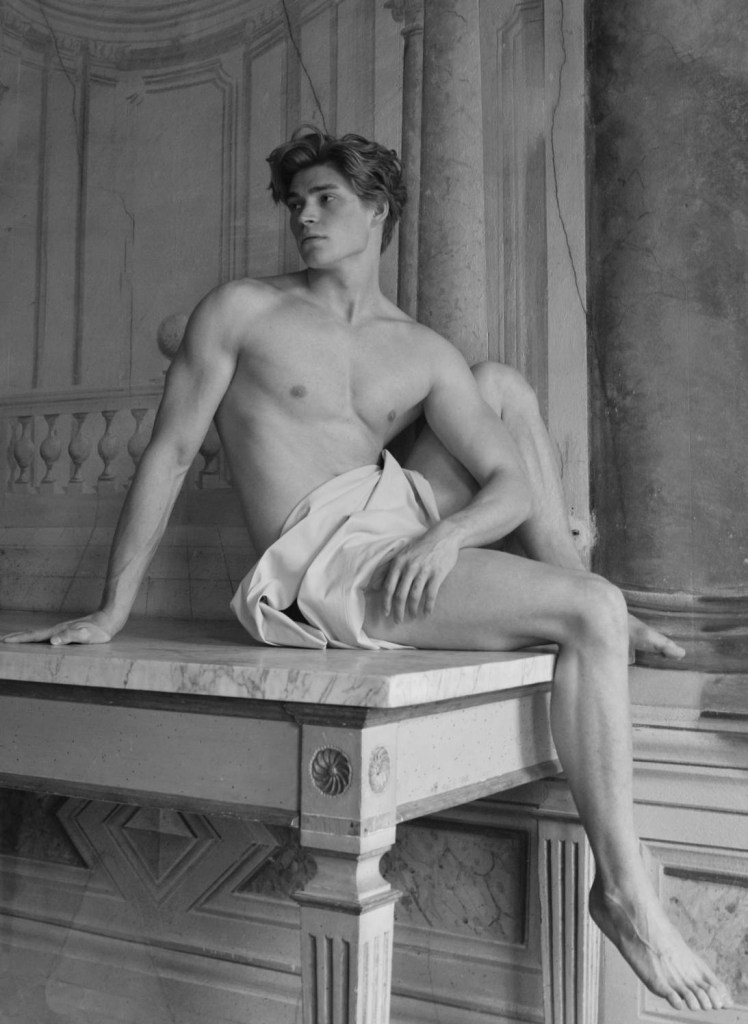
Innocence, Desire, and Discipline in Billy Budd, Sailor
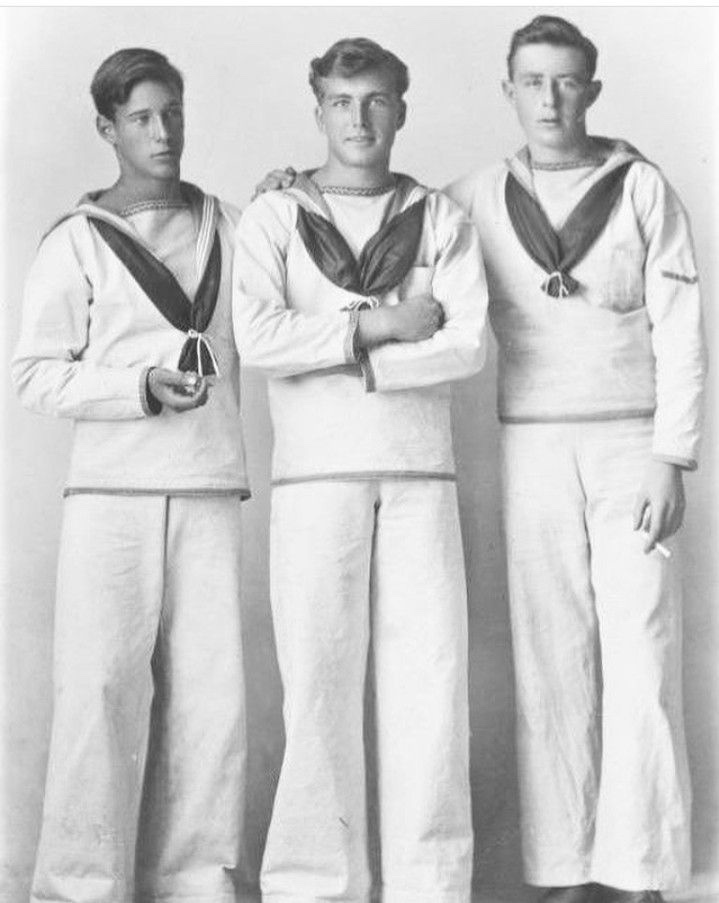
This week we turn from the visual arts to the literary, continuing our discussion of Herman Melville with a closer look at his haunting final work, Billy Budd, Sailor.
Herman Melville’s Billy Budd, Sailor (published posthumously in 1924) is, on the surface, a moral tragedy about innocence destroyed by rigid authority. Yet for many readers—especially in LGBTQ+ literary studies—it has long carried unmistakable queer undertones.
The novella tells the story of Billy Budd, the “Handsome Sailor,” whose beauty and innocence win the admiration of nearly everyone on board the Bellipotent. But his very perfection provokes the envy of John Claggart, the ship’s master-at-arms. Claggart’s obsession with Billy has been widely read as coded desire—an attraction so repressed that it curdles into destructive malice. When Claggart accuses Billy of mutiny, and Billy’s stammer leaves him unable to defend himself, Billy lashes out and strikes him dead. Captain Vere, though he believes in Billy’s essential innocence, insists on enforcing naval law, and Billy is executed.
This framework—an innocent young man destroyed not by his own fault but by the inability of others to reckon with their own desires—fits squarely within a long tradition of queer literature. For centuries, queer-coded characters in fiction have met tragic ends: death, exile, madness, or erasure. From Carmilla to The Well of Loneliness, from coded Hollywood films of the mid-20th century to countless novels well into the late 20th century, queer lives were depicted as doomed. The rare exception—stories offering queer joy and fulfillment—did not become more common until the 21st century. Read in this light, Billy Budd becomes more than a moral allegory; it is part of this larger pattern, a queer tragedy written before the word “queer” had the meaning we give it today.
It is not only the text that invites this reading, but also the life of the author himself. Herman Melville (1819–1891) wrote with unusual intensity about male beauty and intimacy, often setting his stories in all-male environments—ships, armies, or remote islands. His close friendship with Nathaniel Hawthorne produced letters of remarkable passion, describing a “sweet mystery” and “infinite fraternity” that some scholars have read as expressions of romantic love. While we cannot say with certainty what Melville’s own sexuality was, his works consistently return to themes of male closeness, desire, and repression.
That is why Billy Budd continues to resonate. It is a story of desire unnamed, beauty destroyed, and innocence sacrificed to rigid authority. Billy’s calm acceptance of his fate, his blessing of Captain Vere even as he goes to his death, echoes the countless queer characters who, in fiction and in history, have borne the cost of a society unwilling to recognize the fullness of their humanity.
I have not returned to Billy Budd, Sailor since first reading it in college, because it left me with an unsettling feeling and a profound sadness. Billy is pressed unwillingly into service, yet he performs his duty faithfully. He is beloved for both his sweetness and his beauty, but his flaw—his speech impediment—ultimately seals his fate. Having struggled with a speech impediment myself as a child, that aspect of his character resonated deeply. So too did the queer subtext. The tragedy in Billy Budd does not lie in Billy’s own sexuality, but in the repressed same-sex desires of others. I have often wondered whether Billy may have been subjected to unwanted advances, whether he resisted them, or whether it was simply the intensity of others’ unacknowledged longing for him that condemned him. His Christ-like depiction suggests that he does not die for his own sins, but rather as a sacrifice demanded by the sins of those around him.
That is what has always made the story so unsettling for me: Billy’s destruction comes not from his own flaws, but from the world’s inability to deal honestly with desire. In that sense, Melville’s novella anticipates the tragic arc of so much queer literature to follow, where beauty, love, or innocence is sacrificed to repression and fear. And yet, reflecting on Billy Budd today, I take some comfort in knowing how far literature has come. We now have stories that celebrate queer joy and resilience, stories where love does not have to end in silence or the grave. Wrestling with Melville’s tragic vision honors the past, but telling and living new stories of survival and fulfillment blesses the future.

When Republicans Throw a Tantrum, the Rest of Us Pay the Price

Republicans have made a habit out of sabotaging government from the inside. Whenever they hold power, they seem less interested in governing than in proving their own cynical point that government “doesn’t work.” And how do they do it? By breaking it themselves. By throwing tantrums, grinding everything to a halt, and leaving ordinary Americans to pay the price.
And so, here we are again. Another government shutdown. Another round of reckless brinkmanship, all because Republicans can’t get their way. They strut and posture about “fiscal responsibility” while happily holding the economy hostage for their own greed and petty vendettas.
Let’s be honest: this isn’t about saving money. It’s never about saving money. If it were, Republicans wouldn’t pass tax cuts for billionaires like candy at Halloween. This is about power, cruelty, and pure, unfiltered hate. Hate for programs that help working families. Hate for policies that protect the vulnerable. Hate for anyone who doesn’t fit their warped vision of America.
And don’t forget — Republicans have been pushing this kind of shutdown nonsense for years. The last one wasn’t decades ago, it was just in 2018–2019, when Donald Trump was president and Republicans controlled both the House and the Senate. That 35-day shutdown, the longest in U.S. history, was over Trump’s obsession with a useless border wall. Republicans owned every lever of power, and they still managed to grind the government to a halt.
The irony is almost laughable if it weren’t so damn destructive. They shut down the government, brag about how they’re fighting “wasteful spending,” and then cash their paychecks while federal employees are left scrambling to pay rent and buy groceries. National parks close. Small businesses that rely on government contracts grind to a halt. Soldiers, law enforcement officers, and border agents are expected to keep working without pay. But the Republicans? They’ll stand in front of Fox News cameras pretending to be heroes.
This is governance by tantrum. A toddler breaks his toy, cries, and then blames everyone else. The difference is that these toddlers wear suits, sit in Congress, and can tank the economy while patting themselves on the back.
The truth is simple: Republicans don’t want government to work. They want to break it, sabotage it, and then campaign on how broken it is. It’s cynical, it’s cruel, and it’s exhausting. And once again, it’s the American people who are caught in the crossfire.
So the next time Republicans whine about “big government,” remember this: they’re not trying to fix it. They’re just throwing matches into the house and blaming the smoke on everyone else.

Art,
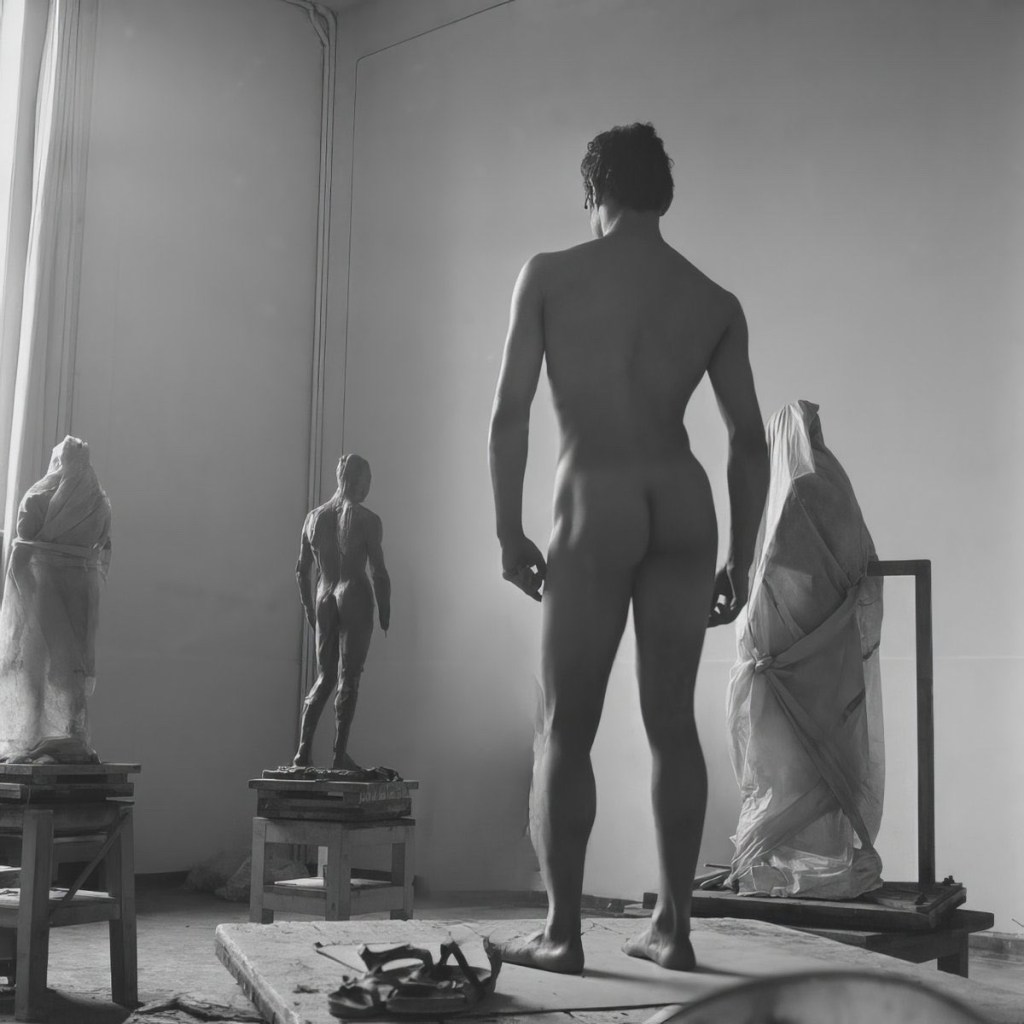
Art,
By Herman Melville
In placid hours well-pleased we dream
Of many a brave unbodied scheme.
But form to lend, pulsed life create,
What unlike things must meet and mate:
A flame to melt—a wind to freeze;
Sad patience—joyous energies;
Humility—yet pride and scorn;
Instinct and study; love and hate;
Audacity—reverence. These must mate,
And fuse with Jacob’s mystic heart,
To wrestle with the angel—Art.
About the Poem
Herman Melville’s short but powerful poem Art distills into a few compact lines the contradictory forces at the heart of creation. It opens with a scene of calm:
“In placid hours well-pleased we dream
Of many a brave unbodied scheme.”
Here, Melville acknowledges what many of us know too well—ideas come easily in quiet moments. Our minds are full of “unbodied schemes,” bold plans and visions that exist only in imagination. But dreaming alone is not art. The difficulty lies in giving those dreams form, in pulling them out of the ether and shaping them into something tangible.
Melville describes this process as a marriage of opposites:
“A flame to melt—a wind to freeze; Sad patience—joyous energies; Humility—yet pride and scorn; Instinct and study; love and hate; Audacity—reverence.”
Each pair of opposites illustrates the tension of creation. Art requires both the fire of inspiration and the cooling restraint of discipline. It requires patience to endure long labor, and bursts of joy to keep the work alive. An artist must balance humility before the task with pride in their own vision, instinct with study, raw emotion with critical judgment.
These contradictions are not obstacles—they are the materials. To create something of value, the artist must bring them together, “fuse with Jacob’s mystic heart, / To wrestle with the angel—Art.”
That final biblical allusion is striking. In Genesis, Jacob wrestles through the night with an angel, demanding a blessing and emerging wounded but transformed. Melville suggests that to make art is a similar struggle: a contest with forces larger than oneself, leaving the artist changed, exhausted, and blessed with creation.
For Melville—better known for his sprawling novels like Moby-Dick—this poem is a confession of the artist’s burden. Creation is not a smooth act but a wrestling match, a fusion of contradictions, a labor of both agony and ecstasy.
I find this poem resonates deeply with the creative process in any form—whether writing, painting, composing, or even living an honest life. We all carry “brave unbodied schemes,” but only by engaging in the struggle, by wrestling with the angel, do we bring them into the world.
About the Poet
Herman Melville (1819–1891) is best remembered today as the author of Moby-Dick (1851), one of the towering works of American literature. Yet his career was far from smooth. His early sea novels brought him popularity, but his later, more ambitious works—Moby-Dick included—were commercial failures in his lifetime. Melville turned to poetry in his later years, publishing several volumes, including Battle-Pieces and Aspects of the War (1866) and Timoleon (1891). His poetry often reveals the same themes as his prose: the struggle of humanity against vast forces, whether nature, fate, or, as in this poem, the act of creation itself.


Authors
Recent Comments
Joe on Coffee, Toast, and Starfleet… noisilycool3bc985058… on Coffee, Toast, and Starfleet… noisilycool3bc985058… on Pic of the Day iameverywhere1 on Pic of the Day vandycolt on Finding Peace in the Midst of… Top Posts & Pages




Amazon Associate

As an Amazon Associate I earn from qualifying purchases. So, if you click on a link that takes you to Amazon.com, I may earn a commission.
Trust me, it isn’t much, but every little bit helps.

 Joe
Joe


 The Closet Professor