This is really Isabella’s moment of zen and not mine. Nearly every morning when I get out of bed, Isabella immediately curls up in the warm spot I just vacated. Usually, she stays there for most of the morning before venturing out of the bedroom around lunchtime.
Representative Marjorie Taylor Greene (R-Ga.) has been in the news a lot this last week as more and more evidence of her support for terror and extremism mounts. CNN reported that Greene “liked” a social media post that suggested “a bullet to the head” for House Speaker Nancy Pelosi (D-Calif.) and seemed to approve of a suggestion that other prominent Democrats should be hanged, not to mention similar calls for the death of President Obama and Hillary Clinton. Greene has supported QAnon conspiracy theories about a global pedophilia cabal, approved of suggestions that mass shootings were staged, and made various racist comments. Furthermore, a video emerged of Greene harassing David Hogg, who survived the mass shooting at the Marjory Stoneman Douglas High School in Parkland, Florida, on Valentine’s Day 2018. The video shows Greene following Hogg down the street in Washington, D.C., in March 2019, and badgering him, calling him a crisis actor paid by George Soros, telling him she was armed, demanding he talk to her, and calling him a coward. Hogg walked on without engaging her.
Speaker of the House Nancy Pelosi (D-CA) said yesterday in a press conference that, “Assigning her to the Education Committee when she has mocked the killing of little children at Sandy Hook Elementary School when she has mocked the killing of teenagers in high school at the Marjory Stoneman Douglas high school — what could they be thinking? Or is thinking too generous a word for what they might be doing? It’s absolutely appalling, and I think the focus has to be on the Republican leadership of this House of Representatives for the disregard they have for the death of those children.” Pelosi knows that Republicans have known for a while that they had trouble brewing with Marjorie Taylor Greene back in the summer of 2020 when she was running for Congress. House Minority Whip Steve Scalise (R-La.) called the QAnon supporter’s comments about Black people and Muslims “disgusting,” while a spokesman for House Minority Leader Kevin McCarthy (R-Calif.) called them “appalling.” Scalise backed her primary opponent.
So, I am sure a lot of people have questions about how this woman could be elected. I have some thoughts on that because I have always lived in rural congressional districts. In most congressional races in rural districts, especially in the South, candidates often don’t get many campaign contributions. Many don’t even have websites, and if they do, they are sparse with their information. If multiple people are in a primary, I believe most people just pick the name they like best. Voters don’t really care who they are voting for in these primaries. When the general election comes around, they either vote for the one with the R after their name or the D after their name. As a general rule, I do vote for Democrats almost exclusively. Still, I’ve known a few Democrats I won’t vote for, and on rare occasions, I find someone in the Republican Party or a third party that I want to vote for, but I do my research on candidates. Most voters don’t research candidates. Ignorance by the voting public is especially problematic in rural areas where school systems are often the poorest. People are often uneducated or undereducated. Internet access is difficult to come by without paying exorbitant prices, making it difficult to research candidates. If they have a smartphone, they probably get most of their information from Facebook, which is misleading at best but is most often completely inaccurate.
While Greene was covered in the news as a QAnon candidate, Green and other Republicans tried to distance her from her QAnon conspiracy theories during the general election. Now the crazy is coming out in full force. She should have never been elected, but our previous president and his followers pushed for her election. To top that off, northwest Georgia, which Greene represents, is extremely conservative and backwoods and is over 84 percent white and nearly 57 percent blue-collar. The district leans heavily Republican. Donald Trump carried the district with over 75 percent of the vote in 2016, his eighth-best showing in the nation. Among Georgia’s congressional districts, only the neighboring 9th district is more Republican. Since its creation, no Democrat has managed as much as 30 percent of the vote.
When I lived in Alabama, I lived at times in the 2nd Congressional and the 7th Congressional districts. The 7th Congressional district is the “Black Belt” district. The shape of the current district was largely established in 1992 when it was reconstituted as a majority-minority district under provisions of the Voting Rights Act of 1965, as amended in 1982 to encourage greater representation for minorities in Congress. Since its creation in 1843, a Republican has only represented the district once and for just one term from 1965-1967. In contrast, Alabama’s 2nd congressional district is majority white, and only one Democrat has represented the district since 1965. That one Democrat, former Montgomery mayor Bobby Bright, only served one term, and most recently switched parties and ran again and lost as a Republican candidate. The current representative from the 2nd congressional district is Barry Moore, who was elected for the first time in 2020. Moore is crooked to the core and has been under near-constant investigation for using his office as a legislator to get preferential contracts and for committing perjury in another corruption case. Moore’s opponent, a black woman named Phyllis Harvey-Hall, worked as an elementary school teacher for 25 years before her retirement. Her credentials and clean history of no criminal charges made no difference. She only received 34.7 percent of the vote (the minority population of the district is just 37 percent).
The House of Representatives tends to be more radical than the Senate because of the smaller and more localized districts. While there are moderates in the House, there are more members who are at opposite ends of the political spectrum. There are also more members who are highly unqualified to be in Congress. The Senate has its bad eggs too. Alabama’s new Republican Senator Tommy Tuberville could very well make history as the most unqualified and incompetent, at least in recent memory. There are some awful people in the Senate, such as McConnell, Graham, Hawley, Cruz, etc., but they at least have some brains, even if they continuously make stupid, hateful, and often contradictory statements. Tuberville, however, takes the cake. He was a football coach known for being extremely lazy. Every time it appeared that his job would become challenging, he left the coaching position.
Furthermore, he’s a crook who defrauded investors of millions during his ownership of an investment company. His partner in the venture was convicted of fraud and was sentenced to ten years in prison. Tuberville turned on him during the trial and escaped being indicted. The Tommy Tuberville Foundation has also been found to mismanage the funds and lining the pockets of Tuberville. He was only elected because he somehow gained our previous president’s support, probably because he sucked up to the former president the most. Voters did not care that he had zero experience that showed he would make a good politician. They cared nothing about his inability to understand the most basic of civic lessons. They cared that he ran as a Republican, was hateful, and had the support of a Republican president. One of his first acts as a Senator was to cast a treasonous vote to overturn a legitimate election.
The point I want to make is that the American electorate is composed of millions of uneducated individuals who are easily swayed by propaganda and hate. Politicians feed on their fears when they actually do tell constituents what their policies are. When NBC News asked Greene’s constituents about the awful things she has said and supported, they simply did not care. One woman talked about how Greene was bold and spoke her mind; we heard Trump supporters say the same thing. Another woman said she didn’t care what Greene had said or done; she still supported the congresswoman. These attitudes and the radicalization and encouragement of extremists led to the January 6 attack on the Capitol. A lack of education is a dangerous thing because it makes people too impressionable and gullible.
I don’t have much to say today. A lot is going on in the news. There was a tornado in Fultondale, Alabama. Senator Patrick Leahy was hospitalized last night, but apparently, he was released a short time later. My thoughts and prayers are with the people of Fultondale and with Senator Leahy. There are other things I could write about, but as I was writing this last night, I just wasn’t up to writing much. Every once in a while, I just need to take a day off.
if you didn’t mind the bible you’d surely mind the belt
This may be the shortest poem I have ever posted. I was looking at D. A. Powell’s poems and originally came across “The Fluffer Talks of Eternity.” While it is an interesting poem, I decided it just wasn’t what I was looking for in today’s poem. Then I came across “Bible Belt.” I was so intrigued by the simplicity of the poem but also its deep meaning. Considering that I was born in the buckle of the Bible Belt where in cities there is a church on nearly every street corner or in rural areas where you can hardly drive a mile without passing a church.
In a chat with the Rumpus Poetry Book Club, Powell talked about being born in the Bible Belt. In the interview he said, “I was born in the Bible Belt. My father’s family were all Bible belters. They belted us with the Bible. But despite their abuse of it, it’s a Good Book.” I think there are several ways you can take this poem, whether the second line means “They belted us with the Bible” or if the belt was used for corporal punishment, is up to the reader. You can hear Powell read the poem here.
About D. A. Powell
Born in Albany, Georgia, D. A. Powell earned an MA at Sonoma State University and an MFA at the Iowa Writers’ Workshop. His first three collections of poetry, Tea, (1998), Lunch (2000), and Cocktails (2004), are considered by some to be a trilogy on the AIDS epidemic. Lunch was a finalist for the National Poetry Series, and Cocktails was a finalist for the National Book Critics Circle Award for poetry. His next two books were Chronic(2009), which won the Kingsley Tufts Poetry Award and was a finalist for the National Book Critics Circle Award;and Useless Landscape, or A Guide for Boys (2012) won the National Book Critics Circle Award for poetry.
Noting Powell’s “open-secret sexiness, his confident collage effects and his grave subjects” in Cocktails, New York Times critic and Harvard professor Stephen Burt says, “No accessible poet of his generation is half as original, and no poet as original is this accessible.” As a teacher at Sonoma State, he noticed that most of his students’ poems were written to fit the demands of the page. His experiments with his students in writing on unexpected surfaces (such as candlesticks or rolls of toilet paper) led to his own breakthrough in “subverting the page:” he turned a legal pad sideways and wrote the first poem for Tea. Powell explains that “by pulling the line longer, stretching it into a longer breath, I was giving a little bit more life to some people who had very short lives.” Powell has also taught at Harvard University, Columbia University, and the University of San Francisco.
Sen. Jon Ossoff, D-Ga., speaks to reporters outside the Senate chamber just after being sworn-in by Vice President Kamala Harris, at the Capitol in Washington, Wednesday, Jan. 20, 2021.
One of the most misunderstood aspects of the federal government is the arcane Senate rule known as the filibuster. Both Democrats and Republicans have argued against the filibuster, according to whether it is useful to them or not. Considering how little the contemporary version of the U.S. Senate accomplishes, that may be reason enough to kill the filibuster — a tool used by the minority party to keep the Senate in a state of near-perpetual obstruction. There’s another reason. Despite an enormous amount of work to be done now at the start of a new Congress, the Senate can’t accomplish tasks as basic as picking committee chairs because Minority Leader Mitch McConnell is using the threat of a filibuster to hold up the rules organizing the new Senate, which is split 50-50, with Vice President Kamala Harris’ tiebreaking vote giving Democrats a razor-thin majority. Why? Because McConnell wants a guarantee that Democrats won’t bend the rules to eliminate the filibuster.
At this point in this post, I am going to give all of you a choice. You can watch a 20-minute video of John Oliver explaining in an irreverent but often humorous way the history and structure of the filibuster, or you can read my more detailed and analysis of the filibuster. If you choose the video, then you can skip to the section below the dividing line.
For a little history, the filibuster, contrary to popular belief, is not in the Constitution and the founding fathers never even mentioned it at the Constitutional Convention or in The Federalist Papers, which argued against supermajority required votes in Federalist No. 58 written by James Madison and Federalist No. 22 by Alexander Hamilton. While the Constitution does not mandate it, the framers clearly envisioned that simple majority voting would be used to conduct business. It took seventeen years for the simple majority rule to be changed. In 1789, the first U.S. Senate adopted rules allowing senators to move forward to vote on a bill by a simple majority vote. However, Vice President Aaron Burr argued that voting on whether or not to vote on a bill was redundant, and the Senate had only exercised the procedure once in the preceding four years. He believed the rule should be eliminated, which was done in 1806 after he left office. The Senate agreed and modified its rules; however, filibusters became theoretically possible because it created no means for ending debate. Just an aside, Burr, who accidentally created the filibuster, was later tried multiple times for treason for attempting to establish an independent country in the Southwestern United States and parts of Mexico. This was after he killed Alexander Hamilton in a duel, and Burr ended up fleeing to Europe to get away from the charges of treason. Treason, by the way, is very difficult to prove by the standards set by the Constitution.
Though the option of the filibuster had been created, it remained only theoretical until the 1830s. The first Senate filibuster occurred in 1837. In 1841, a defining moment came at the hands of Alabama senator and future vice president William Rufus King (who I wrote about several weeks ago as being the possible lover of James Buchanan). During debate on a bill to charter a new national bank, Senator Henry Clay tried to end the debate through a majority vote. King threatened a filibuster, saying that Clay “may make his arrangements at his boarding house for the winter.” Other senators sided with King, and Clay backed down. At the time, both the Senate and the House of Representatives allowed filibusters as a way to prevent a vote from taking place. Subsequent revisions to House rules limited filibuster privileges in that chamber, but the Senate continued to allow the tactic.
Eight decades passed before a rule was created to end a filibuster. In 1917, during World War I, a rule allowing cloture (a motion to end debate through a vote) was adopted by the Senate on a 76–3 roll call vote at the urging of President Woodrow Wilson, after a group of 12 anti-war senators managed to kill a bill that would have allowed Wilson to arm merchant vessels in the face of unrestricted German submarine warfare. From 1917 to 1949, the requirement for cloture was two-thirds of senators voting. During the 1930s, Senator Huey Long of Louisiana used the filibuster to promote his populist policies and ushered in the politics of strange speeches that mocked the dignity of the Senate. Long recited Shakespeare and read out recipes for “pot-likkers” during his filibusters, which occupied 15 hours of debate. Senator Ted Cruz more recently read Green Eggs and Ham by Dr. Suess, even though the need to continually speak is no longer necessary. The threat of filibuster suffices these days. In 1949, the Senate made invoking cloture more difficult by requiring two-thirds of the entire Senate membership had to vote in favor of a cloture motion. However, that lasted a mere ten years. In 1959, then-Majority Leader and future president Lyndon Johnson anticipated a flurry of civil rights legislation and restored the cloture threshold to two-thirds of those voting to keep Southern Democrats from hijacking the Senate. As presiding officer, Vice President Richard Nixon supported the move and stated his opinion that the Senate “has a constitutional right at the beginning of each new Congress to determine rules it desires to follow,” which is the reason the Senate is currently debating the rules governing the Democratic majority in the Senate.
After a series of filibusters in the 1960s over civil rights legislation, the Senate put a “two-track system” into place in 1970. Before this system was introduced, a filibuster would stop the Senate from moving on to any other legislative activity. Tracking allows the majority leader—with unanimous consent or the agreement of the minority leader—to have more than one main motion pending on the floor as unfinished business. Under the two-track system, the Senate can have two or more pieces of legislation or nominations pending on the floor simultaneously by designating specific periods during the day when each one will be considered. (This might be a possible way for the Senate to move ahead with the current impeachment trial that is expected to come forward sometime today.) This change’s side effect was that by no longer bringing Senate business to a complete halt, filibusters on particular motions became politically easier for the minority to sustain, leading to the number of filibusters increasing rapidly. In 1975, the Senate revised its cloture rule so that three-fifths of sworn senators (60 votes out of 100) could limit debate, with only a few exceptions to the rule.
Whoever was the minority party at the time began to use the filibuster as a way to hold up judicial appointments. In 2005, a group of Republican senators proposed having the presiding officer, Vice President Dick Cheney, rule that a filibuster on judicial nominees was unconstitutional, as it was inconsistent with the President’s power to name judges with the advice and consent of a simple majority of senators. On November 21, 2013, Senate Democrats used the so-called “nuclear option,” voting 52–48 — with all Republicans and three Democrats opposed — to eliminate the filibuster’s use on executive branch nominees and judicial nominees, except to the Supreme Court. In 2015, Republicans took control of the Senate and kept the 2013 rules in place. On April 6, 2017, Senate Republicans eliminated the sole remaining exception to the 2013 change by invoking the “nuclear option” for Supreme Court nominees. This was done to allow a simple majority to confirm Neil Gorsuch to the Supreme Court. The vote to change the rules was 52 to 48 along party lines.
The supermajority rule has made it very difficult, often impossible, for Congress to pass any but the most non-controversial legislation in recent decades. During times of unified party control, majorities have attempted (with varying levels of success) to enact their major policy priorities through the budget reconciliation process, resulting in legislation constrained by budget rules. Meanwhile, public approval for Congress as an institution has fallen to its lowest levels ever, with large segments of the public seeing the institution as ineffective, which brings us to the current situation. Senate Majority Leader Chuck Schumer cannot organize the Senate under his majority rule because Minority Leader Mitch McConnell insists that the Democrats commit to leaving the filibuster intact. The Democrats have no plans at this time to kill the filibuster altogether. Quite frankly, they do not have the votes, since Democratic Senator Joe Manchin openly opposes the idea and others are cautious; however, they want to keep the threat of killing the filibuster to prevent McConnell and the Republicans from abusing it and stopping all Democratic legislation.
_________________________
The stakes here are interesting because the issues are deeper than just the filibuster. While the new Senate is split evenly, the 50 Democrats in the Senate represent over 41.5 million more people than the 50 Republicans represent. The filibuster means that no legislation can pass Congress without the support of 10 Republicans. What that means is that the fight over the filibuster is a fight not just about the ability of the Democrats to get laws passed, but about whether McConnell and the Republicans, who represent a minority of the American people, can kill legislation endorsed by lawmakers who represent quite a large majority. We are in an uncomfortable period in our history in which the mechanics of our democracy are functionally anti-democratic. The fight over the filibuster might seem dull, but it’s a pretty significant struggle as our lawmakers try to make the rules of our system fit our changing nation.
One of the biggest problems with the filibuster is that it’s held as a hallowed tradition of the Senate, when it was not originally part of the rules of the Senate. Furthermore, it allows for just forty-one people out of the 328.2 million Americans to stop legislation from even being considered. The other major problem is that the Senate, contrary to popular belief, is filled with racists, homophobes, misogynists, and/or stupid people. The stupidity may be the worst of them all because they cause the other three. I will not give the obvious example of the election of a football coach who doesn’t even know the three branches of the government or who the Allies fought in World War II because no one is claiming Tommy Tuberville is a genius. Instead, I want to bring to your attention the stupidity of a man many in the Senate often claim to be a genius, Ted Cruz. The Senator tweeted the following statement on Tuesday:
By rejoining the Paris Climate Agreement, President Biden indicates he’s more interested in the views of the citizens of Paris than in the jobs of the citizens of Pittsburgh. This agreement will do little to affect the climate and will harm the livelihoods of Americans.
Many senators, including Democrats and Republicans, have stated that Cruz is a very intelligent man. Yet, he is too stupid to understand that the Paris Climate Accord is named as such because it was signed in Paris, not because it represents the views of Parisians. While he probably does realize this, he is more likely playing to his constituents’ stupidity and the supporters of the previous administration. This kind of stupidity is the reason Chuck Schumer and the Democrats must end the filibuster. If they don’t, they might as well just go back to letting Mitch McConnell be Majority Leader and allow the Senate to continue to prevent any legislation from moving on through the Senate.
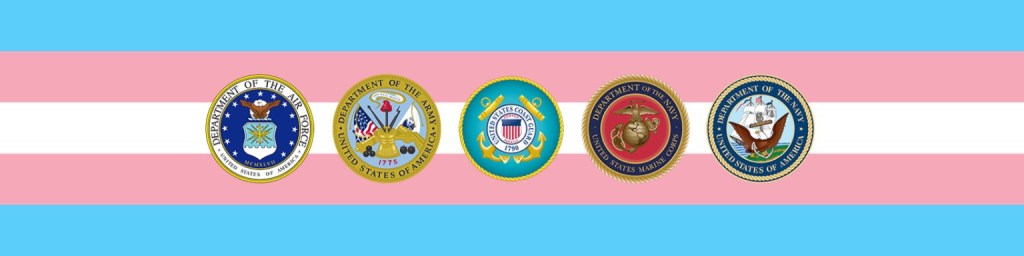
In other news: President Biden is expected to sign an executive order today that will lift the Pentagon’s ban on transgender people serving in the military. The controversial ban was announced by the previous president in 2017 and reversed the Obama administration’s policy to allow open service by transgender people.