

College football season is here—time for touchdowns, tight pants, and plenty of eye candy.





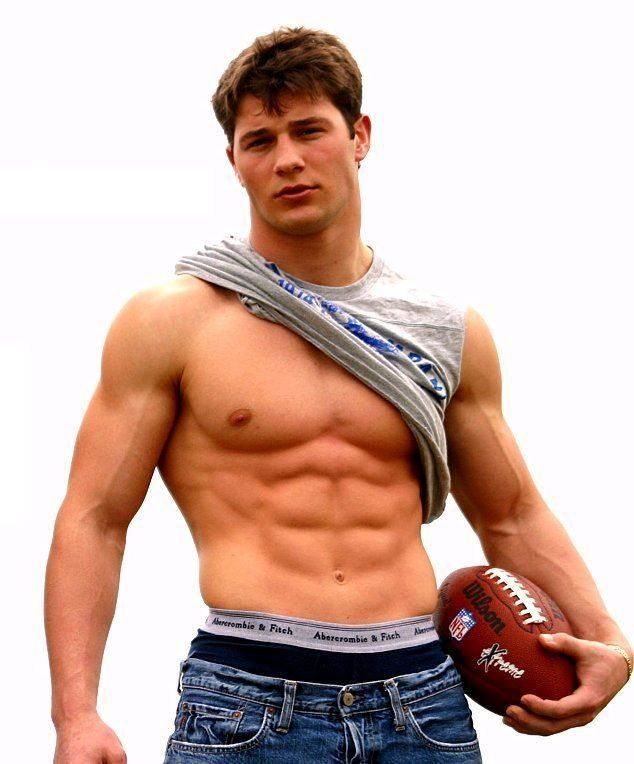


College football season is here—time for touchdowns, tight pants, and plenty of eye candy.

Friday is finally here—and it’s a holiday weekend, too. It’s been quite a week. Most of my time at work has been spent buried in emails: finding the right information to answer them, or carefully wording responses to delicate matters that really should have been handled by my boss. Still, I think it turned out to be a successful week overall.
I’ve got a few more emails to get through today, but the good news is that I’m working from home. Well, part of the day will be spent working from the mechanic’s while I get an oil change, but that still counts.
Once the workday is done, I’ve got three days ahead for some much-needed rest and relaxation. Here’s hoping it’s a restorative weekend for all of us.
Have a wonderful holiday weekend, everyone!

I’ve had some good days and some bad days lately with my back and leg pain. Monday wasn’t too bad, Tuesday was not so good, and yesterday turned out to be a pretty good day. The trouble is, my migraines seem to have struck a bargain with my body—if the back and leg aren’t bothering me, then the migraine will.
I’m about two weeks out from another round of Botox treatment, so the timing of these flare-ups is not entirely surprising. Monday began with a migraine that thankfully lifted by Tuesday, only to come back again yesterday. Yesterday’s was minor (if there is such a thing), but around midnight it flared up again and hasn’t eased this morning.
Still, I’m determined not to call in sick. I have things that need doing, emails to send, and hopefully I can get through them quickly. If the migraine doesn’t ease, today may turn into a half-day. The good news is that I’ll be working from home tomorrow, which should make it easier to take things at a slower pace if I need to. And after that comes a three-day weekend—something I’m definitely looking forward to.
Here’s hoping a little rest, a quieter schedule, and some time away from the grind will bring more good days than bad in the week ahead.
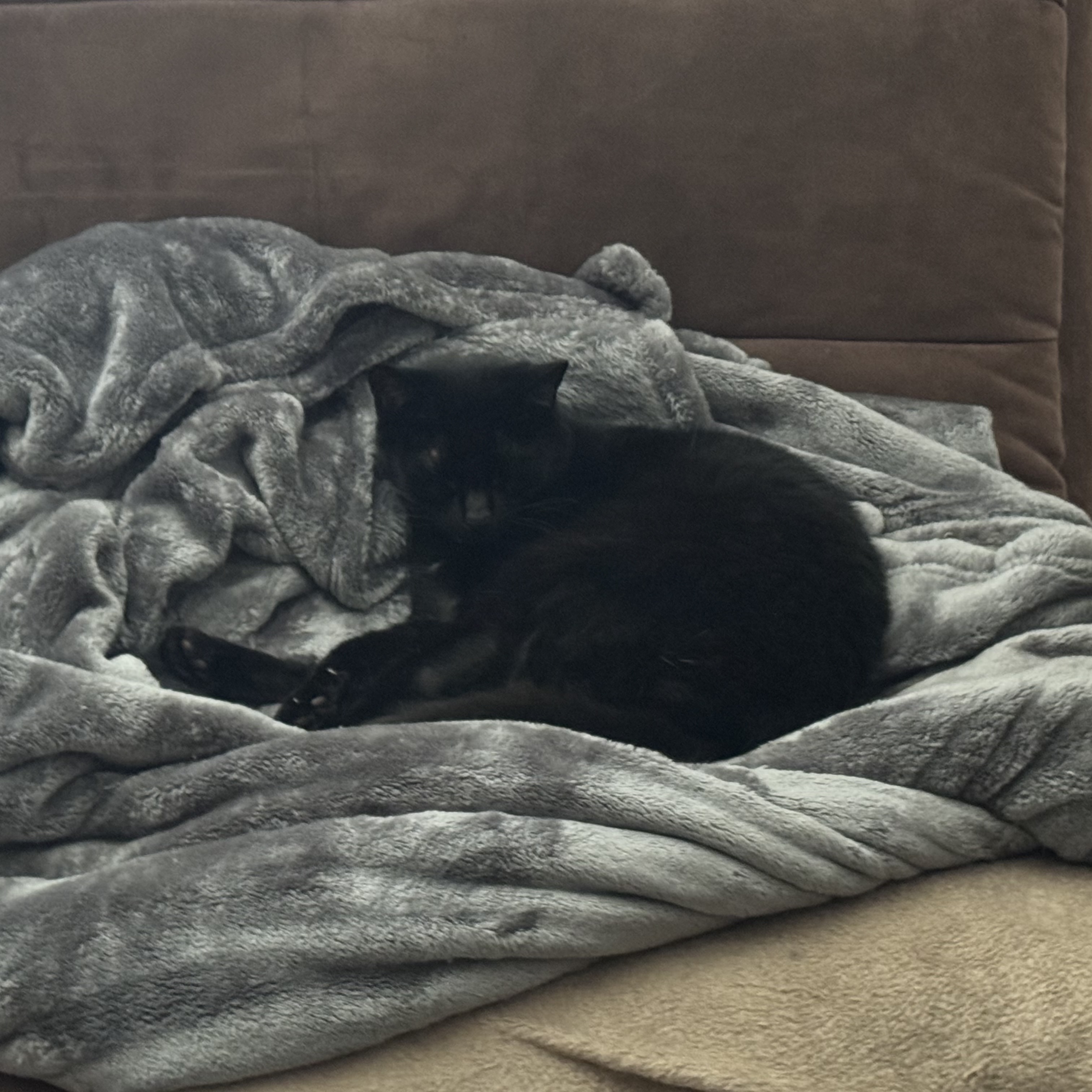
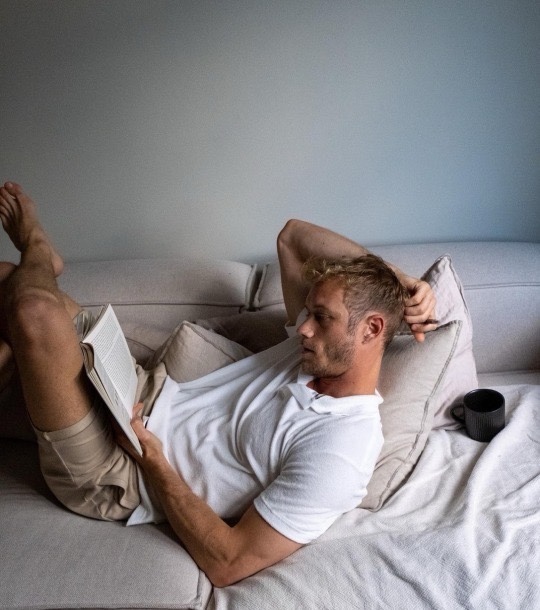
And of course, no week is complete without the Isabella Pic of the Week—Her Majesty all curled up in a soft gray blanket, perfectly demonstrating how to do rest and relaxation the right way.
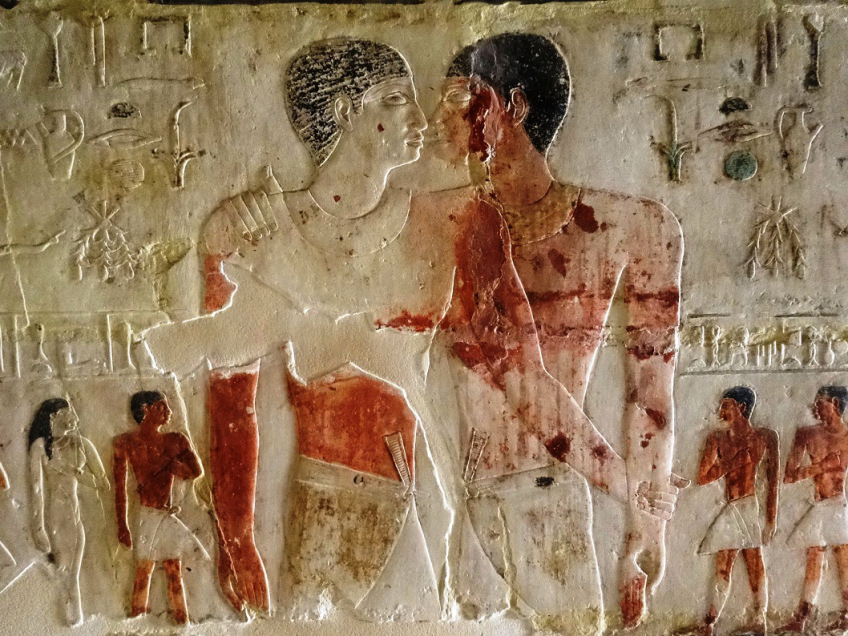
When we step into a museum gallery of Egyptian art, our eyes are often drawn first to the monumental: gilded sarcophagi, stone statues of gods and pharaohs, and painted papyri filled with hieroglyphs. Yet another thread runs quietly through these collections: the unclothed male body. Ancient Egyptian artists depicted nudity with striking frankness, and far from being taboo, it carried layered meanings about status, labor, youth, purity, and renewal.
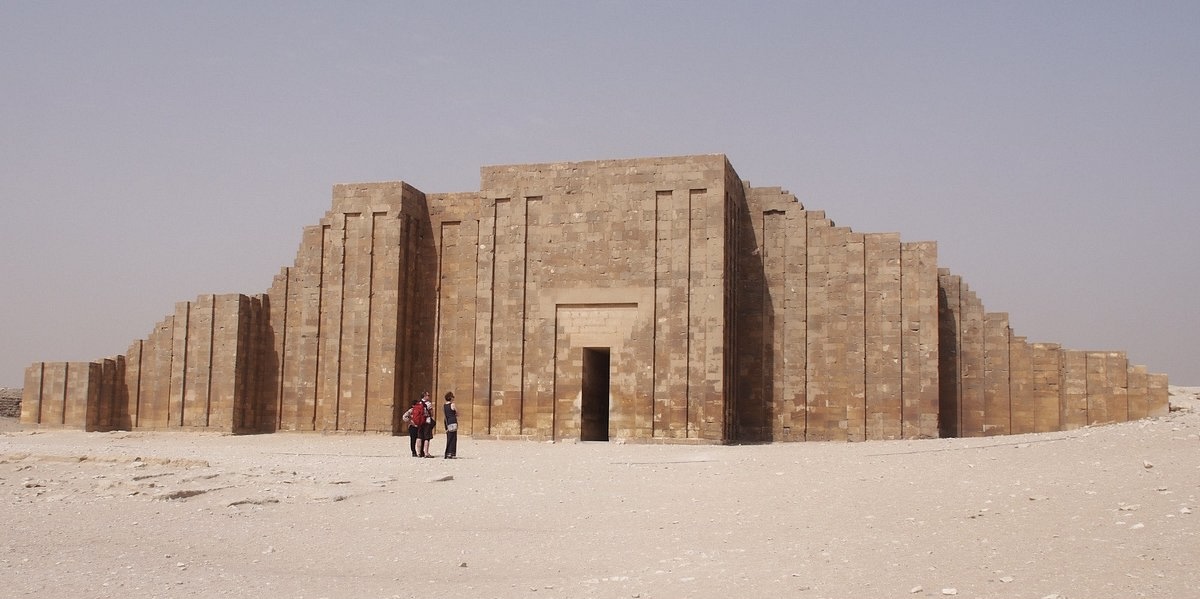
Unlike the Greeks, who later celebrated the nude as the pinnacle of beauty and heroism, the Egyptians approached nudity as a visual code. In Old Kingdom tombs, men engaged in physical work—farmers, boatmen, fishermen—are often shown nude or in the simplest of belts. The tomb of Ti at Saqqara (c. 2400 BCE) shows such figures, their lean musculature emphasizing vitality and their role in sustaining society. In contrast, Ti himself appears clothed in fine linen, his dress underscoring elite distinction.
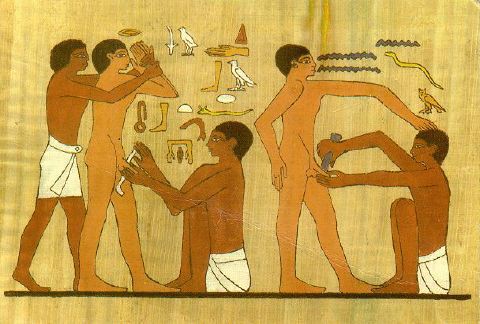
One particularly rare and fascinating relief from Saqqara, dating between 2350–2000 BCE, shows a circumcision ceremony in the tomb of Ankhmahor. Here, nude male figures are shown undergoing and performing the ritual—one of the few surviving artistic records of the practice in ancient Egypt. The nudity underscores both the ritual’s intimacy and its role in marking transition into maturity.
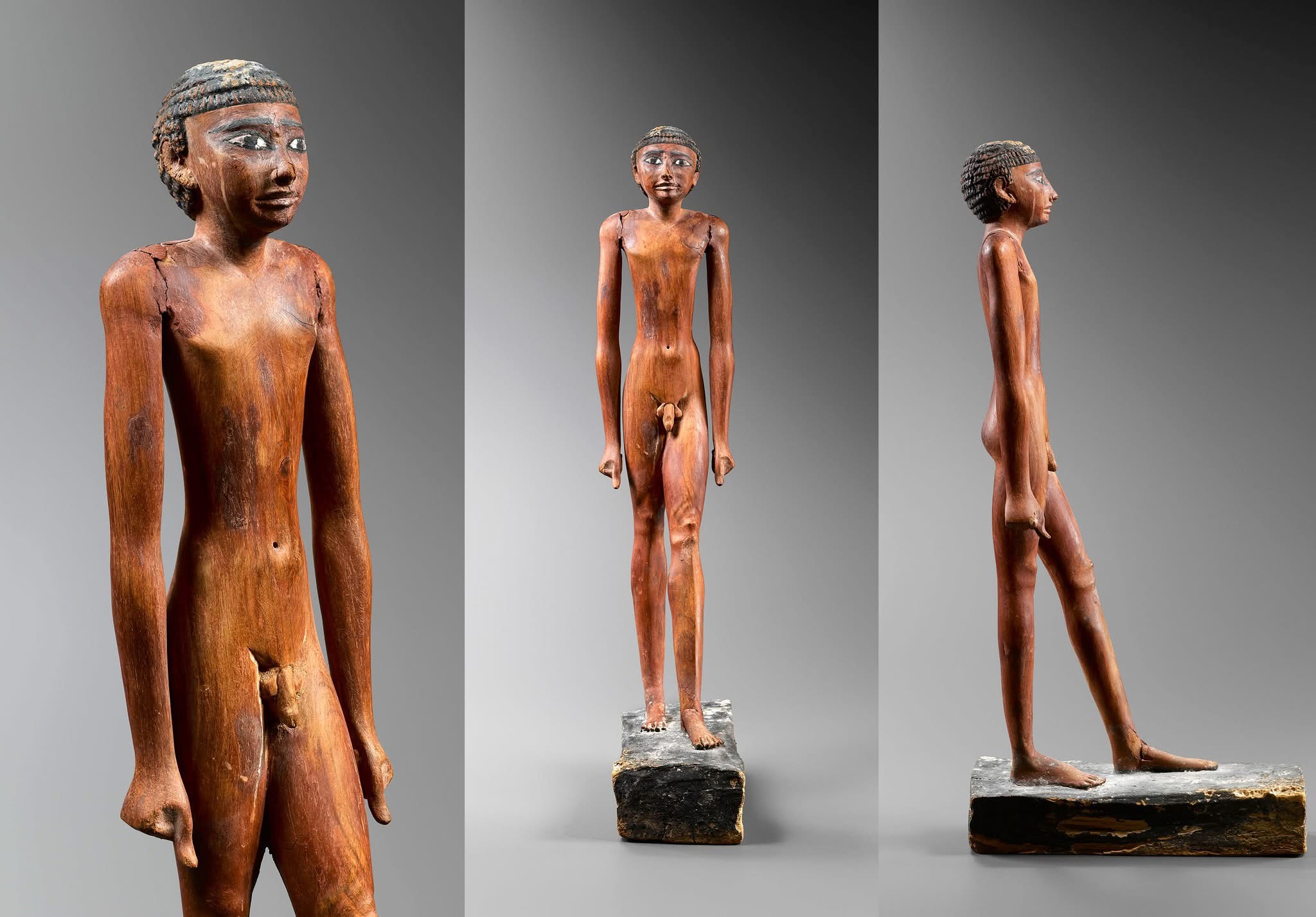
Sculpture also embraced this frankness. A striking wood and plaster figure from the Teti pyramid cemetery at Saqqara depicts a naked man, his body rendered with a simple, direct realism. Nudity here communicates not shame, but the humanity and vitality of the subject.
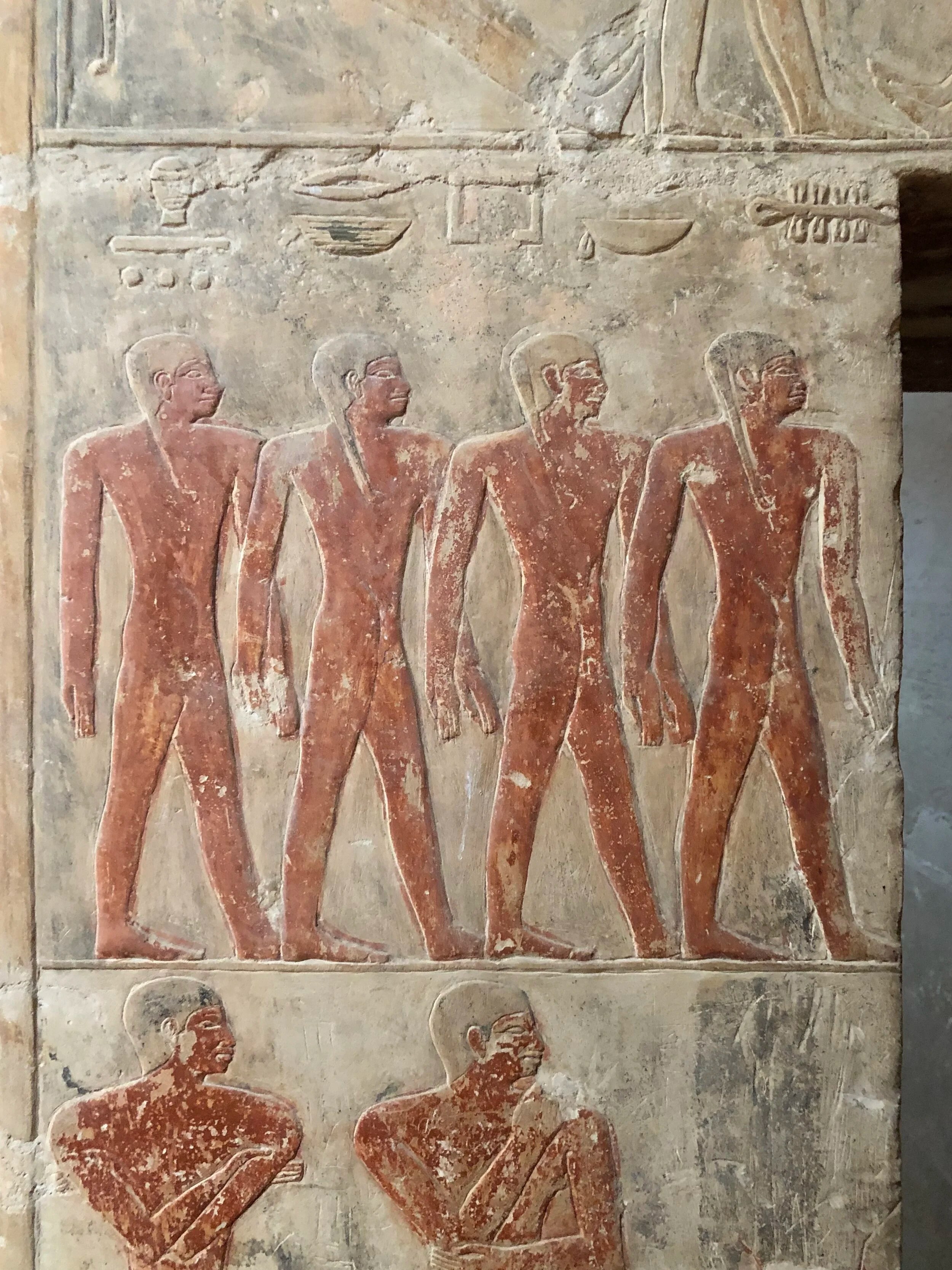
Children, meanwhile, were almost always represented nude, often with the distinctive side lock of hair. In the tomb of Mereruka, on a wall leading to the suite of his son Meryteti, reliefs show nude boys with this hairstyle—a clear marker of youth. Such depictions reinforced the cultural code that nudity signified a stage of life, unencumbered until maturity called for clothing and social role.
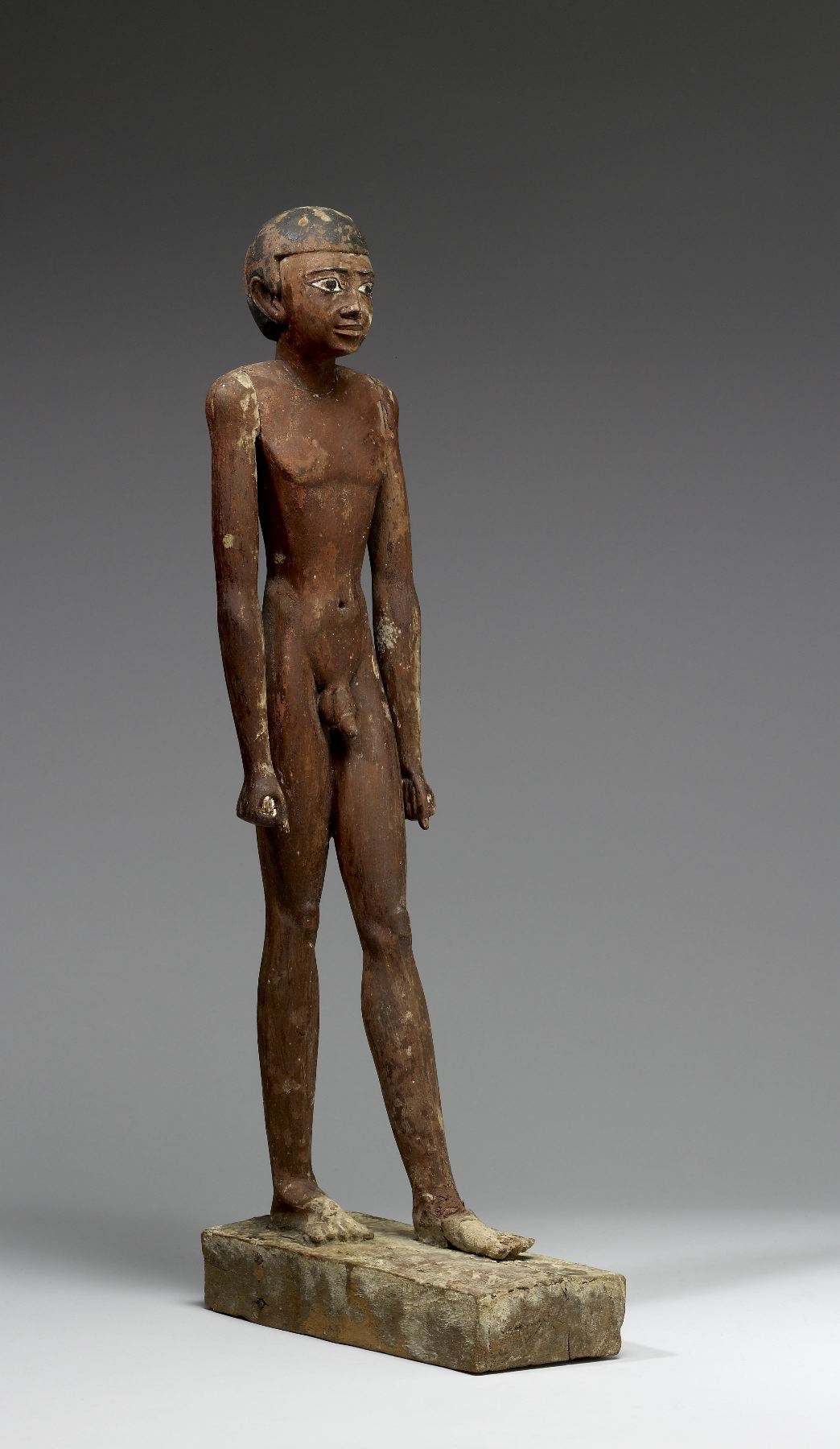
Even tomb owners themselves were not always portrayed clothed. For a brief period in the late Old Kingdom and the First Intermediate Period, there emerged a fashion of depicting the deceased nude before Osiris, lord of the underworld. These figures symbolized renewal and rebirth. A powerful example is the statue of the “sole companion Ha’a,” now at the Walters Art Museum, which shows the tomb owner nude in a stance of rejuvenation. His unclothed body is not vulnerable but potent—a symbol of life reborn.
Priests could also be represented nude in scenes of purification, where absence of clothing symbolized ritual purity. Nudity here functioned as a spiritual statement, aligning the physical with the sacred.
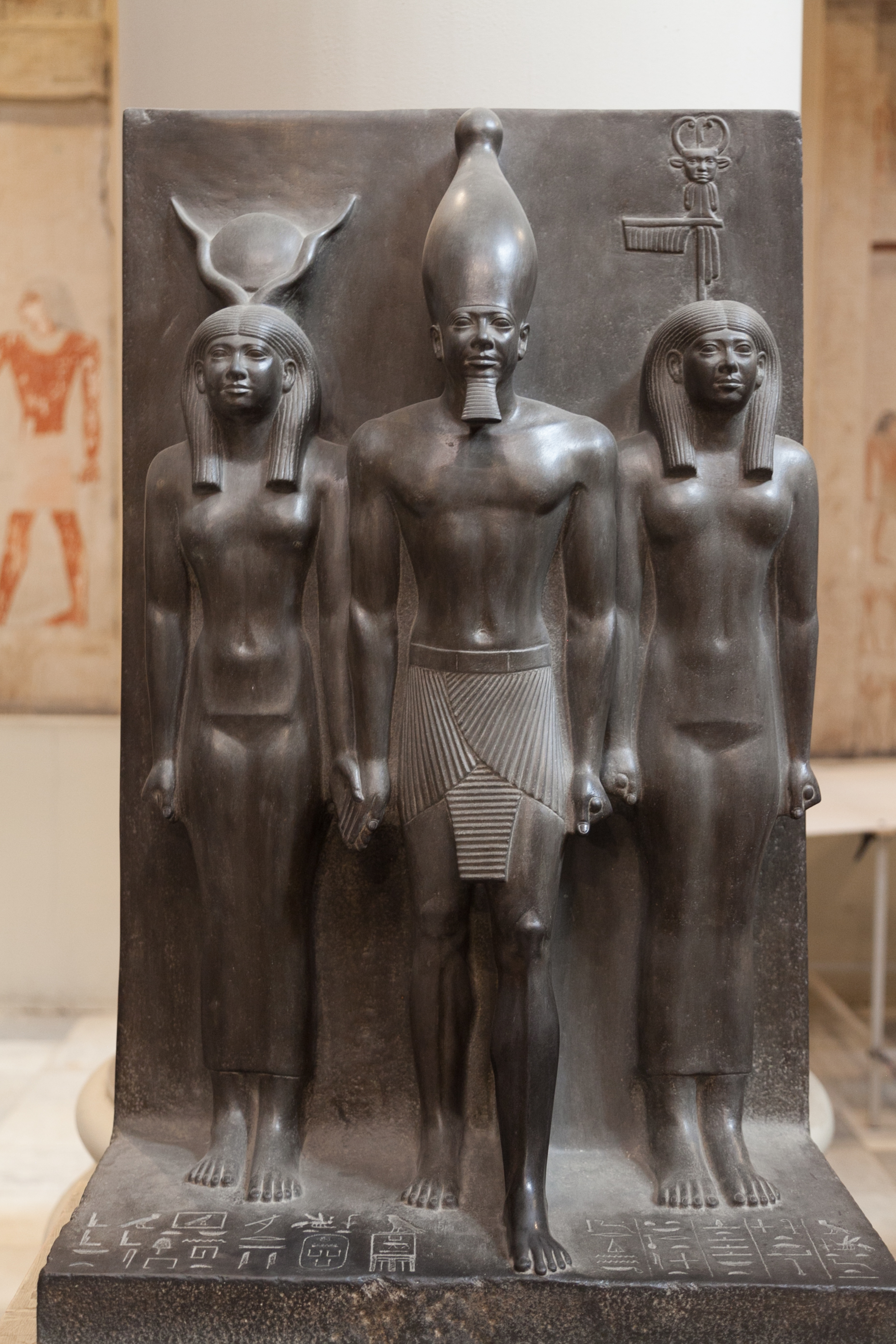
Even the kings, though usually shown in elaborate regalia, sometimes reveal the ideals of the nude body beneath. The famous triads of Menkaure (Mycerinus) from Giza (c. 2490 BCE) clothe the pharaoh in a kilt, yet the carving clings so closely that the idealized musculature beneath is practically a nude form.
It is worth remembering that erotic art did exist in Egypt—the Turin Erotic Papyrus (New Kingdom, c. 1150 BCE) leaves little doubt about the Egyptians’ playful side—but within tomb and temple contexts, nudity was symbolic rather than sensational. It marked youth, labor, ritual purity, or eternal renewal.
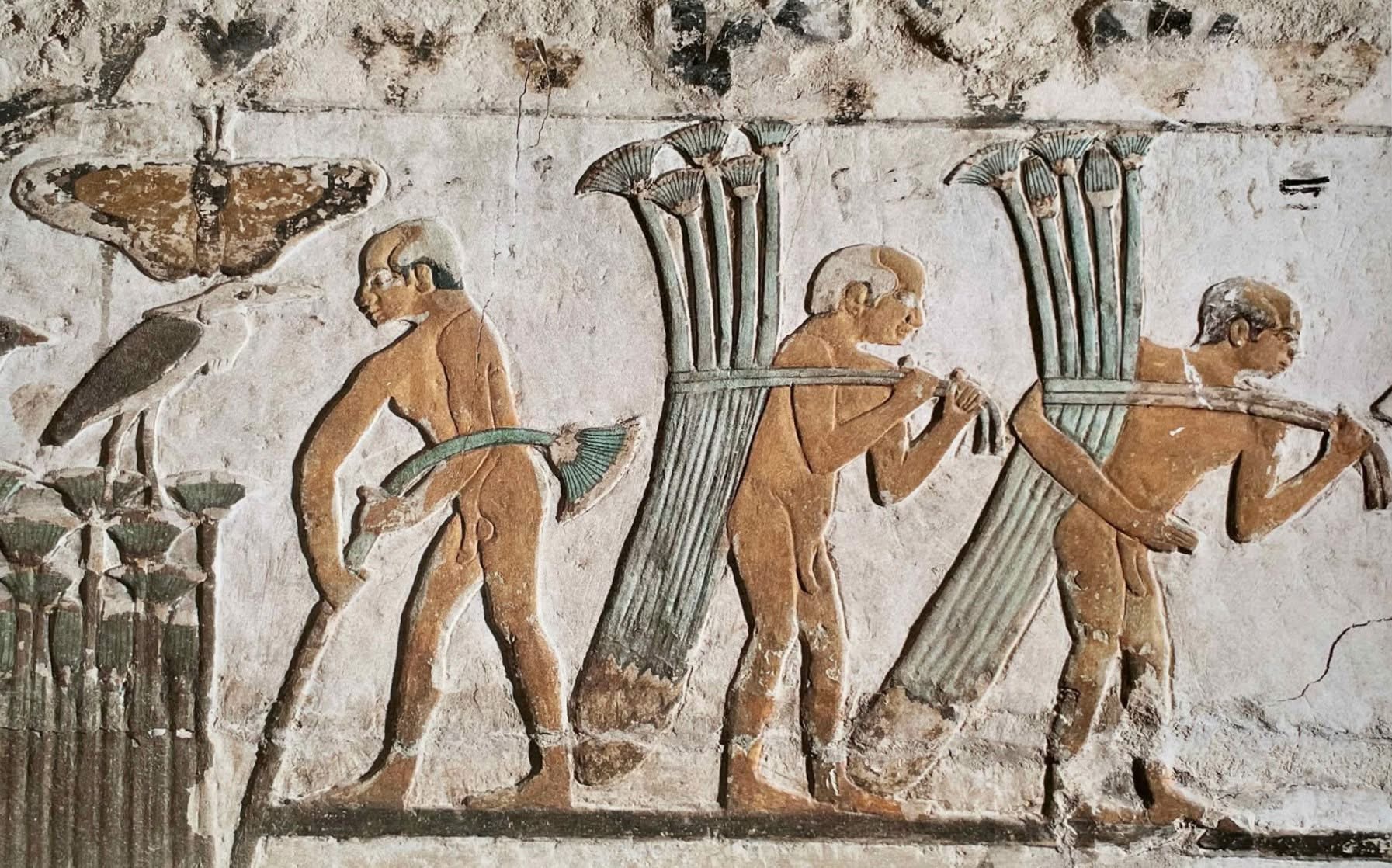
For us today, the honesty of these depictions can feel startling. To stand before the Ankhmahor relief in Saqqara, or to study the Walters’ statue of Ha’a, is to be reminded that the ancient Egyptians saw nudity not as scandalous, but as part of the visual language of life, death, and rebirth. For queer viewers especially, there’s something poignant here: the male body, shown frankly across centuries, becomes not just a record of status or ritual, but a reminder of continuity in human fascination with form, vitality, and beauty.
Where to See These Works Today
If you’d like to connect these ideas with objects you can actually view, here are a few key examples:

I’m Dating a Man Who’s Married
By Aaron Smith
to a man who’s dating a man who’s
married to a woman. The husband
of the man I’m dating knows he’s
dating me and my boyfriend knows his
husband is dating the man who’s
married to the woman who does not
know her husband is gay. The guy
she’s married to—the boyfriend
of my boyfriend’s husband—just told
his mom he’s gay and she’s happy
because she never liked his wife
which is kind of funny but mostly
sad and I feel sad that her husband
who’s dating a man is also a man
with a mother who has never liked her.
I tell my boyfriend to tell his husband
to tell his boyfriend that he needs
to tell his wife sooner rather than later
and I know he knows that but still it needs
to be said. My boyfriend said his husband
said his boyfriend plans to tell his wife
Memorial Day weekend when his grown
kids are home from college and everyone,
I imagine, is eating potato salad by the pool.
She works at a flower shop two towns
over. I want to go there when she’s not
there and buy her flowers, leave a note
with her coworker at the counter:
You deserve happiness, Natalie.
You deserve love.Love,
Your husband’s boyfriend’s
husband’s boyfriend.
About the Poem
Aaron Smith’s poem “I’m Dating a Man Who’s Married” is a witty, layered, and poignant exploration of queer relationships, secrecy, and the tangled webs of love and obligation. At first glance, it reads like a piece of small-town gossip, the kind of convoluted story that grows more confusing the more one tries to explain it. Smith himself admits he “wanted this poem to seem like gossip and to sound convoluted in the way these scenarios sound when we try to convey them.” And indeed, the poem succeeds—its sentences loop and overlap, names vanish into pronouns, and each relationship branches into another until the reader feels caught in the same dizzying spiral as the speaker.
The poem begins plainly enough: the speaker is dating a man who is married to a woman. But very quickly, the cast expands—his boyfriend has a husband, that husband has a boyfriend, that boyfriend is still married to a woman, and on it goes. Each turn introduces another complication, another layer of secrecy or disclosure. The humor lies in the almost absurd wordplay of “my boyfriend’s husband’s boyfriend’s wife,” a construction that captures both the awkwardness of explaining queer love in heteronormative contexts and the entangled reality of lives lived in partial closets.
But beneath the comic tangle is sadness. At the heart of this web is Natalie—the unsuspecting wife, working in a flower shop two towns over. Her husband is living a life she doesn’t fully know, and the speaker’s compassion for her emerges in the imagined gesture of leaving her a note:
Your husband’s boyfriend’s
husband’s boyfriend.
It is the poem’s emotional crux. For all the confusion and gossip, Smith doesn’t let us forget the human cost of secrecy, the pain of those excluded from the truth, and the longing for everyone involved to find honesty and love.
The ending drives this home. The planned revelation is postponed until a convenient holiday weekend, when the family gathers “eating potato salad by the pool.” The image is almost comically suburban, yet it underscores how deeply closeted lives are woven into everyday rituals. Queerness is here, already part of the family table, even if it hasn’t been named aloud.
Smith’s poem is, in its way, deeply queer—not only in subject matter but in form. It resists straight lines, tidy categories, or simple relationships. It embraces convolution, contradiction, and the messy truth that love doesn’t always fit the scripts we’re handed. It is funny, yes, but also sad, compassionate, and achingly real.
For LGBTQ+ readers, the poem may feel familiar: the half-truths, the awkward explanations, the struggle to claim love openly without hurting others along the way. And for straight readers, it may pull back the curtain on just how complex closeted relationships can be—not only for the queer person hiding but for everyone around them.
Smith reminds us that at the end of all this gossip, the heart of the matter is love—love withheld, love shared, love denied, love deserved. And that is a truth worth repeating, even if it takes a whole poem of tangled pronouns to get there.
About the Poet
Aaron Smith is the author of several poetry collections, including Blue on Blue Ground (2005), Appetite (2012), and The Book of Daniel (2019). His work often explores themes of queer identity, desire, humor, and vulnerability, blending candor with a sharp, conversational style. Smith has received fellowships from the New York Foundation for the Arts and the Massachusetts Cultural Council, and his poems have been widely published in literary journals. Known for his mix of wit and emotional honesty, Smith often examines the complications of gay life in America—balancing comedy, longing, and sharp social observation.

I woke up this morning with a bad migraine. Sometimes, if I get up, take my morning medicines, and have a cup of coffee, the pain will ease enough to get through the day. Unfortunately, this is not one of those mornings.
I’ll wait until just after 6 a.m. to text my boss and let her know that I won’t be in. There are times when I can push through a mild migraine, but this one is anything but mild. I’m nauseated, and every movement makes the pain worse.
My back and leg are aching too, but they’re background noise compared to the pounding in my head. So today, I’m doing the only sensible thing I can do: calling in sick and going back to bed.
I do have physical therapy tomorrow morning, and maybe that will at least help improve my overall well-being. Here’s hoping tomorrow looks a little brighter.


 | Michael Edwin Simond… on Drawn to Form: The Academic Nu… |
 | vandycolt on Moment of Zen: Fun in the… |
 | noisilycool3bc985058… on A Quiet Thursday |
| noisilycool3bc985058… on The Winter War |
 | The Winter War | The… on The Broken Dawn |



As an Amazon Associate I earn from qualifying purchases. So, if you click on a link that takes you to Amazon.com, I may earn a commission.
Trust me, it isn’t much, but every little bit helps.


 Joe
Joe
 The Closet Professor