

Queer Trivia Night

Queer Trivia Night
By Jenny Johnson
for Nica, Mary, Ryan, et al.
A friend on a rival team confesses
they’ve always been into it.
As a kid, they locked themselves in a closet
to read Trivial Pursuit cards.
They wanted to know everything.
Their team is named Shooting Nudes.
We are Butch Believers.
The next category is Famous Dykes.
The whole bar is packed and smells like
bike sweat and Cosmo slushies.
Our best guess is that it was Audre Lorde
in ’89 advocating for Palestine.
On the fly, we struggle to spell
Stormé DeLarverie, but we’re hoping
bad handwriting hides it, huddling closer
so no one hears our answers.
Meanwhile, the National Park Service
erases the letter T in twenty places
from the Stonewall Monument website.
Slime mold? Whiptail lizards? The category is
Queer Ecology. Now, a federal directive
threatens to cut gender-affirming
care for youth in our city.
The category is Gay for Pay.
Will Smith, Tom Hanks, Hilary Swank.
Cleverness I know can feel exclusive
but here I lean into my friends’ literacies,
their wisdoms my shelter.
The forty somethings know the local lore,
the bygone parties: Donny’s, Pegasus,
Operation Sappho, while The Gen Z kids ace
the tech round, scribbling the name of
a translesbian hacktivist on a canceled sci-fi show.
It turns out being an autodidact is
the unspoken prerequisite for being queer in America.
Will we nerd ourselves into futures
of intergenerational knowing?
In our time, the Press 3 option
of the youth suicide hotline
was created and deleted.
In booths with curly fries,
we turn to each other and say:
Kiki. Bussy. Bulldagger.
Kitty Tsui. Vaginal (Crème) Davis.
Truths our bodies internalized arise
in quick crescendos like this one:
Bernard Mayes founded
the first suicide prevention hotline
in the country. I know this because
he was a dean at my college and the first
audaciously out educator I ever met.
Monthly he held a donut hour,
I was closeted then, so I showed up early
to squeeze onto a cramped couch
and listen: In 1961, he leafletted streets
with a phone number safe to dial
and then waited by a red rotary phone
certain that many would call.
The category is Gay Rage.
Name the band and the song:
Bikini Kill, “Suck My Left One”
Bronski Beat, “Why?”
Princess Nokia, “Tomboy”
Planningtorock, “Get Your
Fckin Laws Off My Body”
I’ve always joked that my head is filled with trivial trivia. I have a bad habit of responding to almost any conversation with, “Did you know…?” People inevitably tell me I should go on Jeopardy!—and I always laugh, because I know I’d be terrible at it. The moment a question is asked under pressure, my mind goes blank, even though I can often answer the questions effortlessly when I’m watching from my couch.
I’ve only participated in a Queer Trivia Night once. I can’t even remember the name of our team, but I do remember who was on it: museum professionals and librarians. Unsurprisingly, we won with ease. What stuck with me, though, wasn’t the victory. It was the realization that queer trivia isn’t really about knowing random facts—it’s about shared memory, survival, and the way knowledge circulates within our community. That’s what makes Jenny Johnson’s poem “Queer Trivia Night” resonate so deeply, and why it feels less like a novelty poem and more like a quiet manifesto.
About the Poem
Jenny Johnson’s “Queer Trivia Night” uses the format of a bar trivia competition to explore something much bigger than questions and answers: how queer knowledge is created, shared, and fought for. The poem moves quickly from playful details—team names, sticky tables, categories like “Famous Dykes” and “Queer Ecology”—to the sobering reality that queer history and queer bodies are constantly under threat. The fun of trivia is always shadowed by erasure: the National Park Service quietly removing the “T” from Stonewall’s history, and federal directives endangering gender-affirming care.
What makes the poem especially powerful is how it reframes trivia as survival. Queer people become autodidacts not because they love facts for their own sake (though many of us do), but because knowing is how we find each other and how we stay alive. The poem’s categories—Gay for Pay, Gay Rage, Famous Dykes—aren’t just cheeky; they map a curriculum of lived experience, culture, protest, and grief.
Johnson also highlights intergenerational knowledge. Older queers remember bars and parties that no longer exist; younger queers know digital spaces and activist figures from canceled shows. Together, they form a collective mind that shelters them when laws and institutions fail. Even the list of names and slang—“Kiki. Bussy. Bulldagger. Kitty Tsui. Vaginal (Crème) Davis.”—becomes a kind of chant, proof that language itself carries history in the body.
One of the most moving moments comes with the story of Bernard Mayes and the first suicide prevention hotline. It connects trivia to testimony: a fact becomes a memory, and a memory becomes a lifeline. In this poem, knowing things is not about winning a round—it’s about refusing to disappear.
“Queer Trivia Night” suggests that queer community is built out of shared literacy: knowing the songs, the scandals, the heroes, the dangers. The poem asks whether we can “nerd ourselves into futures of intergenerational knowing,” and the answer feels cautiously hopeful. As long as we keep telling each other what we know, something survives.
About the Poet
Jenny Johnson is an American poet whose work often blends humor, pop culture, and sharp political awareness with deep emotional intelligence. Her poems frequently explore queer identity, community, and the ways personal memory intersects with public history. She is known for writing that feels conversational and accessible while still being formally and intellectually rigorous.
Johnson’s poetry is especially attentive to how knowledge circulates—through classrooms, friendships, activism, and everyday talk. In “Queer Trivia Night,” she captures both the joy of shared culture and the urgency of preserving it in a time of erasure. Her work reminds us that poetry can hold facts and feelings at once, and that even something as silly as trivia can become a record of who we are and how we endure.
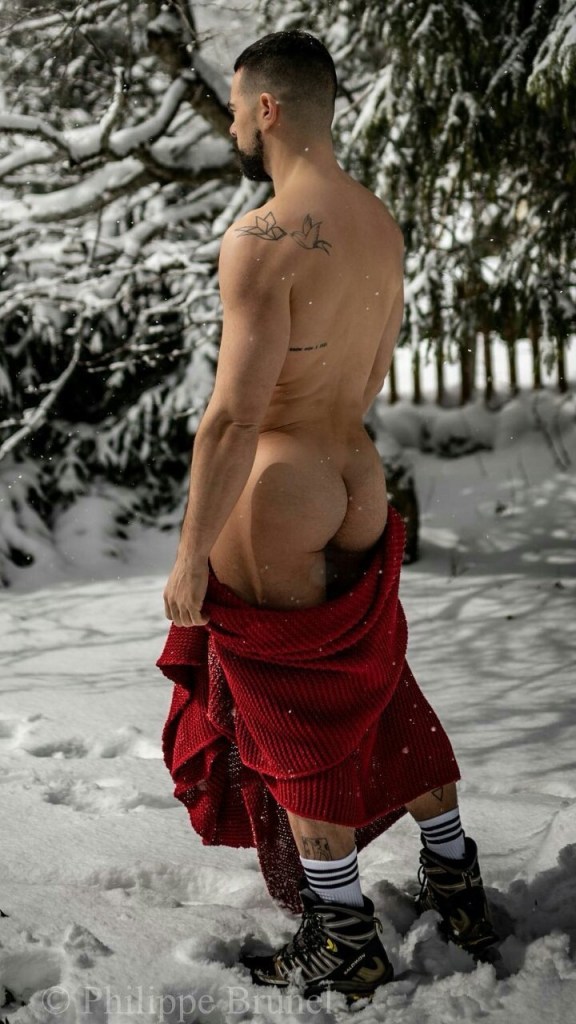
❄️ Snow Day ❄️

When I went to bed last night, it had been snowing all day, but not much had accumulated—maybe 2–3 inches. When I woke up this morning, that number had jumped to somewhere between 9 and 10 inches.
We were notified on Friday that if we couldn’t make it in today, we could either work from home or take a vacation day. I have absolutely no desire to work from home today—I much prefer saving that for my usual Friday. So I sat here for a while debating whether to go in. Technically, I probably could. It didn’t snow so much that getting to work is impossible, but it would definitely make for a difficult commute.
It’s still snowing, and while the roads have been plowed, they can’t keep up. Lanes are hard to see, and according to the local news’s mobile weather van, the interstate is essentially down to one lane. Speeds are hovering around 50 mph or less, well below the usual 65. That translates into a long, slow, and stressful drive.
I also didn’t sleep well last night, which tipped the scales. So I think I’ll take the other option—which is to take a vacation day.
Sometimes the wisest choice is the coziest one. ❄️

Faith That Endures: When the Church Is the Trial

“My brothers and sisters, whenever you face trials of any kind, consider it nothing but joy, because you know that the testing of your faith produces endurance.”
—James 1:2–3
The Epistle of James is my favorite book of the Bible. In my opinion, James truly understood the teachings of his brother Jesus and distilled them with remarkable clarity in this public letter. I have read the Epistle of James many times, and I am always struck by James 1:2–3—verses I return to again and again, sitting with them, wondering how joy and suffering can possibly occupy the same space.
James does not ask us to pretend trials are good, chosen, or deserved. He simply tells the truth: they will come. And then he reframes them—not as evidence of God’s absence, but as the place where endurance is formed.
For our brothers, sisters, and nonbinary siblings in the LGBTQ+ community, trials are not theoretical. They show up in rejection by family, silence or condemnation from churches, and real harm done by people who claimed divine authority while denying our humanity. Many turn away from God not because they rejected faith, but because faith was used as a weapon against them.
James does not leave us alone in that pain. Just a few verses later, he writes in James 1:5 that if any of us lacks wisdom, we are invited to ask God, who gives generously and without blame.
Wisdom here is not obedience to abuse, nor the ability to endure mistreatment quietly. This is the wisdom to discern what is truly of God and what is not. For LGBTQ+ people, this verse can be a lifeline. It tells us that we are allowed—encouraged, even—to ask hard questions, to seek clarity, and to trust that God does not shame us for doing so. God gives wisdom without blame. That alone corrects so much of the damage done in God’s name.
James is also clear about who God is—and who God is not. In James 1:17–18, he reminds us that every generous and perfect gift comes from God, who does not change, and that God brought us forth by the word of truth. God is not the source of cruelty, rejection, or dehumanization. Those do not come from above. What comes from God is life, truth, and dignity. You were not created as an afterthought or an exception. You are part of God’s intention—called first fruits, not mistakes to be corrected or problems to be solved.
James then turns his attention to harm—especially the kind that comes from unchecked religious certainty. In James 1:19–20, he urges us to be quick to listen, slow to speak, and slow to anger, reminding us that human anger does not produce God’s righteousness.
How different the Church might look if this were taken seriously. So much suffering in the LGBTQ+ community has been fueled by people who were quick to speak, quick to judge, and quick to anger—while claiming righteousness. James dismantles that posture entirely. Anger that crushes others is not holy. Loud certainty is not faithfulness. God’s righteousness is not produced by silencing, shaming, or exclusion.
Faith, James insists, must be lived—not merely proclaimed. In James 1:22–25, he calls us to be doers of the word, not hearers only, pointing us toward the perfect law—the law of liberty.
That phrase matters. Faith that binds, controls, or erases people is not the gospel James describes. The word of God, when truly received, moves us toward freedom—toward actions that reflect love, justice, and mercy. Anything less is self-deception.
James closes this chapter with what may be one of the most overlooked verses in the Bible, especially among those most eager to define themselves as Christian. James 1:27 tells us that religion that is pure and undefiled before God is this: to care for those in distress and to refuse to be shaped by a world that thrives on harm.
True faith, James reminds us, is not measured by how loudly we proclaim belief, but by how faithfully we love. For LGBTQ+ people who have been wounded by the Church, James 1 offers both comfort and clarity. God is with you in the trials. God invites your questions. God is not the author of your suffering. And God’s vision of faith looks far more like care, humility, and embodied love than condemnation ever could.
If you are still walking through hardship, know this: endurance does not mean erasing yourself to survive. It means becoming rooted enough to stand in truth—your truth—while trusting that God has never let go of you. And never will.













Hell Is Freezing Over 🥶

Jack Frost must have rebranded himself as Jack Freeze. From Texas to Maine, much of the country is bracing for severe winter weather. Friends in Alabama are expecting over an inch of ice—never a good sign, since power lines tend to come down at just a quarter inch.
Here in Vermont, the temperature is dropping steadily all day. By the time I leave work, wind chills will already be in the negatives. Tomorrow, we’re looking at subzero temperatures all day, with wind chills plunging to somewhere between –25 and –45 degrees. By Sunday and Monday, forecasts are calling for 8–12 inches of snow, with southern Vermont likely seeing more than a foot.
Once I get home this evening, I have no intention of leaving my apartment.
Simply put, it feels like hell is freezing over—that is, the United States under Donald Trump.
Here’s a piece of medieval trivia for you: hell wasn’t always imagined as blazing hot. While the Bible gives us fire and brimstone, some medieval writers pictured the devil trapped in extreme cold—the furthest possible point from God’s light and warmth. In that tradition, hell freezing over isn’t a contradiction at all. It’s the final, most absolute form of separation.
Which feels… depressingly on theme right now.


Recent Comments
vandycolt on Finding Peace in the Midst of… Steve Davis on Finding Peace in the Midst of… noisilycool3bc985058… on Pic of the Day Joe on Pic of the Day noisilycool3bc985058… on Pic of the Day Top Posts & Pages


Amazon Associate

As an Amazon Associate I earn from qualifying purchases. So, if you click on a link that takes you to Amazon.com, I may earn a commission.
Trust me, it isn’t much, but every little bit helps.


 The Closet Professor