Tag Archives: United States

Thanksgiving

20131123-222237.jpg

Make a joyful noise to the LORD, all the earth!
Serve the LORD with gladness!
Come into his presence with singing!

Know that the LORD, he is God!
It is he who made us, and we are his;
we are his people, and the sheep of his pasture.

Enter his gates with thanksgiving,
and his courts with praise!
Give thanks to him; bless his name!

For the LORD is good;
his steadfast love endures forever,
and his faithfulness to all generations.

Psalm 100

Thankfulness in God’s Word is a major theme throughout the Bible. But, the actual first official ceremony of Thanksgiving in the Bible is listed in Leviticus 7:11-15. “And this is the law of the sacrifice of peace offerings that one may offer to the LORD. If he offers it for a thanksgiving, then he shall offer with the thanksgiving sacrifice unleavened loaves mixed with oil, unleavened wafers smeared with oil, and loaves of fine flour well mixed with oil. With the sacrifice of his peace offerings for thanksgiving he shall bring his offering with loaves of leavened bread. And from it he shall offer one loaf from each offering, as a gift to the LORD. It shall belong to the priest who throws the blood of the peace offerings. And the flesh of the sacrifice of his peace offerings for thanksgiving shall be eaten on the day of his offering. He shall not leave any of it until the morning.” God ordained a practice of specific instructions to show gratitude. Clearly, gratitude is the door that opens peace in our hearts. God’s design for mankind is that giving thanks means receiving peace. Giving thanks in the Bible is the formula to peace because when we are truly thankful to God, we are expressing our trust in Him.

The theme of thanks in the Bible continues from the commanded thanksgiving sacrifices to the beautifully written Psalms of praise and thanks to our Lord. “Praise the LORD! Oh give thanks to the LORD, for he is good, for his steadfast love endures forever!” (Psalm 106:1) And, Thanksgiving in the Bible continues to be practiced with Christ, giving thanks at the Lord’s supper. Paul wrote many times of his gratitude to Christ and for his gratitude to the followers of Christ. “I thank my God always when I remember you in my prayers.” (Philemon 1:4)

To celebrate a day of thanks is to take a day and clearly honor God in praise for the enormous blessings He has bestowed upon us. As Thanksgiving facts reveal a Biblical foundation, we know that this holiday must have more to do with honoring God than any other fact. When we look back at history, thanksgiving in the Bible, and the celebration that first took place in this country, we find that God’s people are to turn their hearts to Him, thanking Him for all things in all circumstances. Perhaps one of the most quoted scriptures in the New Testament says it best. “Rejoice in the Lord always; again I will say, rejoice. Let your reasonableness be known to everyone. The Lord is at hand; do not be anxious about anything, but in everything by prayer and supplication with thanksgiving let your requests be made known to God. And the peace of God, which surpasses all understanding, will guard your hearts and your minds in Christ Jesus.” (Philippians 4:4-7)

Let us not only be thankful only one day a year but celebrate the greatness of our God with thanks everyday! I have realized in the last months or so, just how thankful I am to God for all that he has done for me. I thank Him for my family. I thank Him for my friends, new and old. I thank Him for my wonderful neighbors. I thank Him for this blog and the many people he has brought into my life because of it. I’m thankful to those people for sharing with me their hopes and dreams and allowing me to share mine. I thank Him for the many blessings he has bestowed on me. I thank God for his wisdom and for showing me, and all of us, His infinite love. I feel truly blessed, and I thank God for His bounty of blessings. It’s not just one day of the year, I am thankful to God each and every day.


The Eleven Nations of America

20131117-220820.jpg

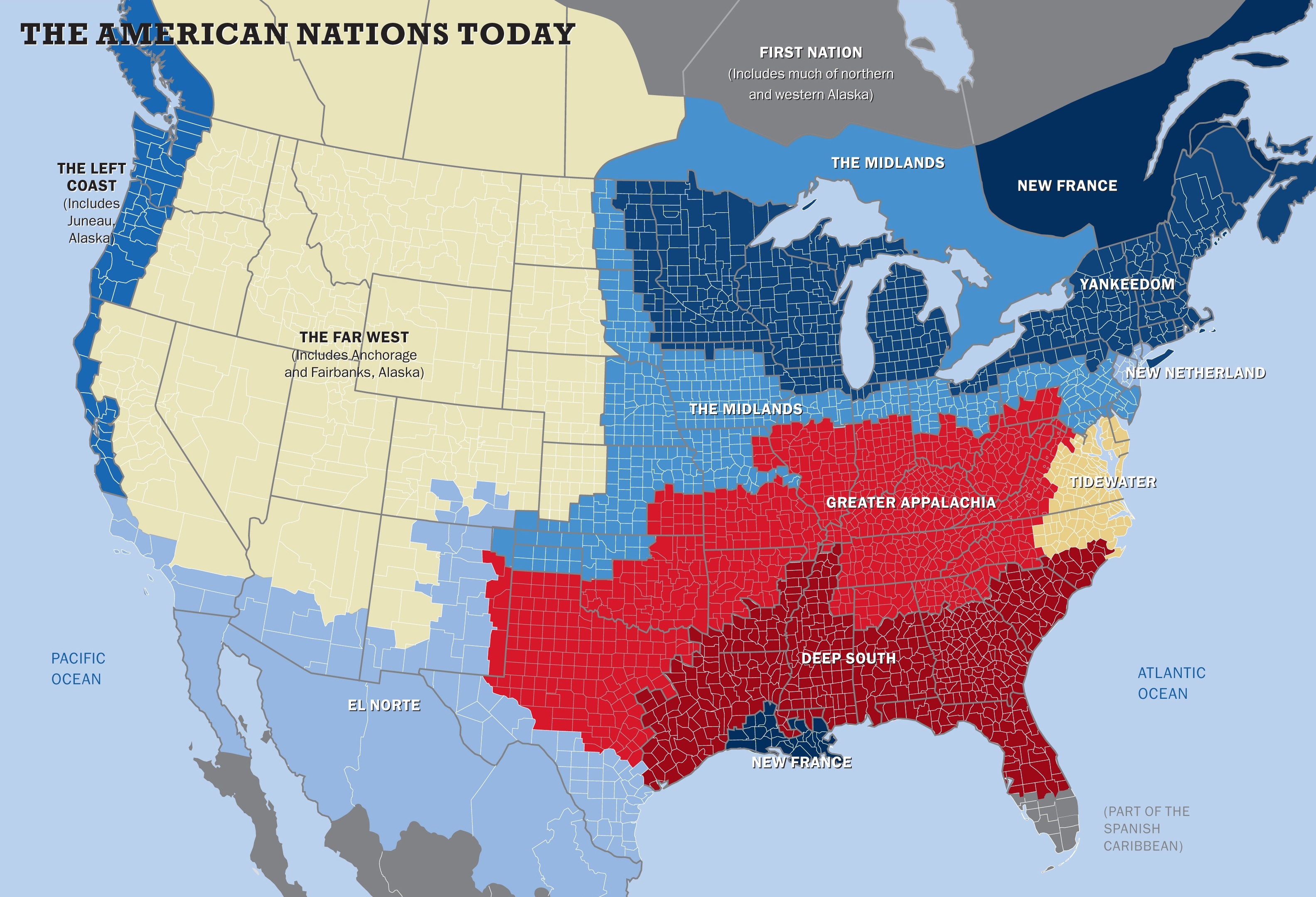
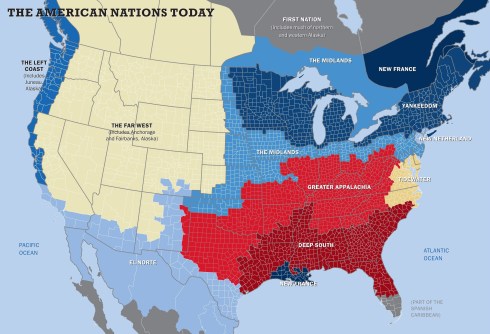
For hundreds of years, this nation has been known as the United States of America. But according to author and journalist Colin Woodard, the country is neither united, nor made up of 50 states. Woodward has studied American voting patterns, demographics and public opinion polls going back to the days of the first settlers, and says that his research shows America is really made up of 11 different nations.

Woodard says that while individual residents will have their own opinions, each region has become more segregated by ideology in recent years. In fact, he says the mobility of American citizens has increased this partisan isolation as people tend to self-segregate into like-minded communities. Woodard lays out his map in the new book “American Nations: A History of the Eleven Rival Regional Cultures of North America.” Here’s how he breaks down the continent:

YANKEEDOM. Founded on the shores of Massachusetts Bay by radical Calvinists as a new Zion, Yankeedom has, since the outset, put great emphasis on perfecting earthly civilization through social engineering, denial of self for the common good, and assimilation of outsiders. It has prized education, intellectual achievement, communal empowerment, and broad citizen participation in politics and government, the latter seen as the public’s shield against the machinations of grasping aristocrats and other would-be tyrants. Since the early Puritans, it has been more comfortable with government regulation and public-sector social projects than many of the other nations, who regard the Yankee utopian streak with trepidation.

NEW NETHERLAND. Established by the Dutch at a time when the Netherlands was the most sophisticated society in the Western world, New Netherland has always been a global commercial culture—materialistic, with a profound tolerance for ethnic and religious diversity and an unflinching commitment to the freedom of inquiry and conscience. Like seventeenth-century Amsterdam, it emerged as a center of publishing, trade, and finance, a magnet for immigrants, and a refuge for those persecuted by other regional cultures, from Sephardim (Jews of Spanish and Portuguese descent; I had to look it up, so I thought I’d share the definition) in the seventeenth century to gays, feminists, and bohemians in the early twentieth. Unconcerned with great moral questions, it nonetheless has found itself in alliance with Yankeedom to defend public institutions and reject evangelical prescriptions for individual behavior.

THE MIDLANDS. America’s great swing region was founded by English Quakers, who believed in humans’ inherent goodness and welcomed people of many nations and creeds to their utopian colonies like Pennsylvania on the shores of Delaware Bay. Pluralistic and organized around the middle class, the Midlands spawned the culture of Middle America and the Heartland, where ethnic and ideological purity have never been a priority, government has been seen as an unwelcome intrusion, and political opinion has been moderate. An ethnic mosaic from the start—it had a German, rather than British, majority at the time of the Revolution—it shares the Yankee belief that society should be organized to benefit ordinary people, though it rejects top-down government intervention.

TIDEWATER. Built by the younger sons of southern English gentry in the Chesapeake country and neighboring sections of Delaware and North Carolina, Tidewater was meant to reproduce the semifeudal society of the countryside they’d left behind. Standing in for the peasantry were indentured servants and, later, slaves. Tidewater places a high value on respect for authority and tradition, and very little on equality or public participation in politics. It was the most powerful of the American nations in the eighteenth century, but today it is in decline, partly because it was cut off from westward expansion by its boisterous Appalachian neighbors and, more recently, because it has been eaten away by the expanding federal halos around D.C. and Norfolk.

GREATER APPALACHIA. Founded in the early eighteenth century by wave upon wave of settlers from the war-ravaged borderlands of Northern Ireland, northern England, and the Scottish lowlands, Appalachia has been lampooned by writers and screenwriters as the home of hillbillies and rednecks. It transplanted a culture formed in a state of near constant danger and upheaval, characterized by a warrior ethic and a commitment to personal sovereignty and individual liberty. Intensely suspicious of lowland aristocrats and Yankee social engineers alike, Greater Appalachia has shifted alliances depending on who appeared to be the greatest threat to their freedom. It was with the Union in the Civil War. Since Reconstruction, and especially since the upheavals of the 1960s, it has joined with Deep South to counter federal overrides of local preference.

DEEP SOUTH. Established by English slave lords from Barbados, Deep South was meant as a West Indies–style slave society. This nation offered a version of classical Republicanism modeled on the slave states of the ancient world, where democracy was the privilege of the few and enslavement the natural lot of the many. Its caste systems smashed by outside intervention, it continues to fight against expanded federal powers, taxes on capital and the wealthy, and environmental, labor, and consumer regulations.

EL NORTE. The oldest of the American nations, El Norte consists of the borderlands of the Spanish American empire, which were so far from the seats of power in Mexico City and Madrid that they evolved their own characteristics. Most Americans are aware of El Norte as a place apart, where Hispanic language, culture, and societal norms dominate. But few realize that among Mexicans, norteños have a reputation for being exceptionally independent, self-sufficient, adaptable, and focused on work. Long a hotbed of democratic reform and revolutionary settlement, the region encompasses parts of Mexico that have tried to secede in order to form independent buffer states between their mother country and the United States.

THE LEFT COAST. A Chile-shaped nation wedged between the Pacific Ocean and the Cascade and Coast mountains, the Left Coast was originally colonized by two groups: New Englanders (merchants, missionaries, and woodsmen who arrived by sea and dominated the towns) and Appalachian midwesterners (farmers, prospectors, and fur traders who generally arrived by wagon and controlled the countryside). Yankee missionaries tried to make it a “New England on the Pacific,” but were only partially successful. Left Coast culture is a hybrid of Yankee utopianism and Appalachian self-expression and exploration—traits recognizable in its cultural production, from the Summer of Love to the iPad. The staunchest ally of Yankeedom, it clashes with Far Western sections in the interior of its home states.

THE FAR WEST. The other “second-generation” nation, the Far West occupies the one part of the continent shaped more by environmental factors than ethnographic ones. High, dry, and remote, the Far West stopped migrating easterners in their tracks, and most of it could be made habitable only with the deployment of vast industrial resources: railroads, heavy mining equipment, ore smelters, dams, and irrigation systems. As a result, settlement was largely directed by corporations headquartered in distant New York, Boston, Chicago, or San Francisco, or by the federal government, which controlled much of the land. The Far West’s people are often resentful of their dependent status, feeling that they have been exploited as an internal colony for the benefit of the seaboard nations. Their senators led the fight against trusts in the mid-twentieth century. Of late, Far Westerners have focused their anger on the federal government, rather than their corporate masters.

NEW FRANCE. Occupying the New Orleans area and southeastern Canada, New France blends the folkways of ancien régime northern French peasantry with the traditions and values of the aboriginal people they encountered in northeastern North America. After a long history of imperial oppression, its people have emerged as down-to-earth, egalitarian, and consensus driven, among the most liberal on the continent, with unusually tolerant attitudes toward gays and people of all races and a ready acceptance of government involvement in the economy. The New French influence is manifest in Canada, where multiculturalism and negotiated consensus are treasured.

FIRST NATION. First Nation is populated by native American groups that generally never gave up their land by treaty and have largely retained cultural practices and knowledge that allow them to survive in this hostile region on their own terms. The nation is now reclaiming its sovereignty, having won considerable autonomy in Alaska and Nunavut and a self-governing nation state in Greenland that stands on the threshold of full independence. Its territory is huge—far larger than the continental United States—but its population is less than 300,000, most of whom live in Canada.

“The borders of my eleven American nations are reflected in many different types of maps — including maps showing the distribution of linguistic dialects, the spread of cultural artifacts, the prevalence of different religious denominations, and the county-by-county breakdown of voting in virtually every hotly contested presidential race in our history,” Woodard writes in the Fall 2013 issue of Tufts University’s alumni magazine. “Our continent’s famed mobility has been reinforcing, not dissolving, regional differences, as people increasingly sort themselves into like-minded communities.”

His main thesis seems to be that the culture of violence is one of the main dividing factors between the “11 Nations.” Though Woodward says that clashes between the 11 nations play out in every way, from politics to social values. He particularly notes that states with the highest rates of violent deaths are in the Deep South, Tidewater and Greater Appalachia, regions that value independence and self-sufficiency. States with lower rates of violent deaths are in Yankeedom, New Netherland and the Midlands, where government intervention is viewed with less skepticism. States in the Deep South are much more likely to have stand-your-ground laws than states in the northern “nations.” And more than 95 percent of executions in the United States since 1976 happened in the Deep South, Greater Appalachia, Tidewater and the Far West. States in Yankeedom and New Netherland have executed a collective total of just one person.

Woodward does point out that while these particular “11 Nations” are original to him, others have suggested similar divisions, which include maps showing the distribution of linguistic dialects, the spread of cultural artifacts, the prevalence of different religious denominations, and the county-by-county breakdown of voting in virtually every hotly contested presidential race in our history. Woodward writes that “Our continent’s famed mobility has been reinforcing, not dissolving, regional differences, as people increasingly sort themselves into like-minded communities, a phenomenon analyzed by Bill Bishop and Robert Cushing in The Big Sort (2008). Even waves of immigrants did not fundamentally alter these nations, because the children and grandchildren of immigrants assimilated into whichever culture surrounded them.”

He also makes the following distinctive point:

Before I describe the nations, I should underscore that my observations refer to the dominant culture, not the individual inhabitants, of each region. In every town, city, and state you’ll likely find a full range of political opinions and social preferences. Even in the reddest of red counties and bluest of blue ones, twenty to forty percent of voters cast ballots for the “wrong” team. It isn’t that residents of one or another nation all think the same, but rather that they are all embedded within a cultural framework of deep-seated preferences and attitudes—each of which a person may like or hate, but has to deal with nonetheless. Because of slavery, the African American experience has been different from that of other settlers and immigrants, but it too has varied by nation, as black people confronted the dominant cultural and institutional norms of each.

Though Woodward makes some interesting points, and I will admit that I have not read his new book American Nations: A History of the Eleven Rival Regional Cultures of North America, I think he has oversimplified the issue by erring on political correctness and gun control debates. The areas that he claims are more violent are often either more racially diverse or more economically divided. Yet, Woodward does not discuss this in any meaningful way in his article in Tuft Magazine. I hope he does in his book.my biggest problem, however, is that he completely ignores Hawaii and south Florida, both of which he dismisses as not being part of the United States. It seems to me that it would have been a better choice to have 13 Nations, not 11, which would have been more in line with the historical distinction of the Thirteen Colonies. Then he could have included south Florida as part of the Spanish Caribbean and Hawaii as a culture distinct of its own. Yet, I’m not sure that Hawaii shouldn’t be aligned with the Left Coast, bit Woodward simply does not consider it.

No matter what the problems with Woodward’s thesis is, it is an interesting debate, especially considering how he pits the two superpowers of the eleven nations against each other. He ends his article in Tufts Magazine by writing:

Among the eleven regional cultures, there are two superpowers, nations with the identity, mission, and numbers to shape continental debate: Yankeedom and Deep South. For more than two hundred years, they’ve fought for control of the federal government and, in a sense, the nation’s soul. Over the decades, Deep South has become strongly allied with Greater Appalachia and Tidewater, and more tenuously with the Far West. Their combined agenda—to slash taxes, regulations, social services, and federal powers—is opposed by a Yankee-led bloc that includes New Netherland and the Left Coast. Other nations, especially the Midlands and El Norte, often hold the swing vote, whether in a presidential election or a congressional battle over health care reform. Those swing nations stand to play a decisive role on violence-related issues as well.

For now, the country will remain split on how best to make its citizens safer, with Deep South and its allies bent on deterrence through armament and the threat of capital punishment, and Yankeedom and its allies determined to bring peace through constraints such as gun control. The deadlock will persist until one of these camps modifies its message and policy platform to draw in the swing nations. Only then can that camp seize full control over the levers of federal power—the White House, the House, and a filibuster-proof Senate majority—to force its will on the opposing nations. Until then, expect continuing frustration and division.

In many ways he’s correct, the great American divide is still between the North and the South. In every major American conflict from the American Revolution to the Civil War and from the Civil Rights Movement to the modern Gay Rights Movement, the North and South are still pitted against one another.

Links:

“Up in Arms” by Colin Woodward, Tufts Magazine

“Which of the 11 American nations do you live in?” by Reid Wilson, The Washington Post.

“Forget The 50 States; The U.S. Is Really 11 Nations, Author Says” NPR


Veterans Day

20131110-094604.jpg

World War I – known at the time as “The Great War” – officially ended when the Treaty of Versailles was signed on June 28, 1919, in the Palace of Versailles outside the town of Versailles, France, exactly five years after the assassination of Archduke Franz Ferdinand, which had set the war in motion. However, fighting ceased seven months earlier when an armistice, or temporary cessation of hostilities, between the Allied nations and Germany went into effect on the eleventh hour of the eleventh day of the eleventh month. For that reason, November 11, 1918, is generally regarded as the end of “the war to end all wars.”

In November 1919, President Wilson proclaimed November 11 as the first commemoration of Armistice Day with the following words: “To us in America, the reflections of Armistice Day will be filled with solemn pride in the heroism of those who died in the country’s service and with gratitude for the victory, both because of the thing from which it has freed us and because of the opportunity it has given America to show her sympathy with peace and justice in the councils of the nations…”

The original concept for the celebration was for a day observed with parades and public meetings and a brief suspension of business beginning at 11:00 a.m.

The United States Senate refused the ratify the Treaty of Versailles that officially ended the war with Germany because it contained the League of Nations Charter. The United States Congress officially recognized the end of World War I with the Knox-Porter Resolution signed into law by President Harding on July 2, 1921. Congress officially recognized Armistice day when it passed a concurrent resolution on June 4, 1926, with these words:

Whereas the 11th of November 1918, marked the cessation of the most destructive, sanguinary, and far reaching war in human annals and the resumption by the people of the United States of peaceful relations with other nations, which we hope may never again be severed, and

Whereas it is fitting that the recurring anniversary of this date should be commemorated with thanksgiving and prayer and exercises designed to perpetuate peace through good will and mutual understanding between nations; and

Whereas the legislatures of twenty-seven of our States have already declared November 11 to be a legal holiday: Therefore be it Resolved by the Senate (the House of Representatives concurring), that the President of the United States is requested to issue a proclamation calling upon the officials to display the flag of the United States on all Government buildings on November 11 and inviting the people of the United States to observe the day in schools and churches, or other suitable places, with appropriate ceremonies of friendly relations with all other peoples.

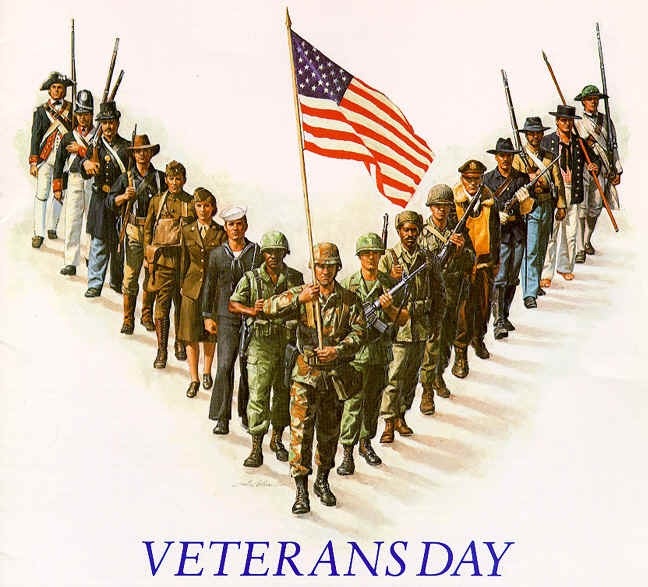
An Act (52 Stat. 351; 5 U. S. Code, Sec. 87a) approved May 13, 1938, made the 11th of November in each year a legal holiday—a day to be dedicated to the cause of world peace and to be thereafter celebrated and known as “Armistice Day.” Armistice Day was primarily a day set aside to honor veterans of World War I, but in 1954, after World War II had required the greatest mobilization of soldiers, sailors, Marines and airmen in the Nation’s history; after American forces had fought aggression in Korea, the 83rd Congress, at the urging of the veterans service organizations, amended the Act of 1938 by striking out the word “Armistice” and inserting in its place the word “Veterans.” With the approval of this legislation (Public Law 380) on June 1, 1954, November 11th became a day to honor American veterans of all wars. In much of the rest of the world, November 11th is still honored as Armistice Day or in the Commonwealth as Remembrance Day, renamed after World War II to celebrate and remember all veterans.

The Uniform Holiday Bill (Public Law 90-363 (82 Stat. 250)) was signed on June 28, 1968, and was intended to ensure three-day weekends for Federal employees by celebrating four national holidays on Mondays: Washington’s Birthday, Memorial Day, Veterans Day, and Columbus Day. The first Veterans Day under the new law was observed with much confusion on October 25, 1971. It was quite apparent that the commemoration of this day was a matter of historic and patriotic significance to a great number of our citizens, and so on September 20th, 1975, President Gerald R. Ford signed Public Law 94-97 (89 Stat. 479), which returned the annual observance of Veterans Day to its original date of November 11, beginning in 1978. This action supported the desires of the overwhelming majority of state legislatures, all major veterans service organizations and the American people.

Veterans Day continues to be observed on November 11, regardless of what day of the week on which it falls. The restoration of the observance of Veterans Day to November 11 not only preserves the historical significance of the date, but helps focus attention on the important purpose of Veterans Day: A celebration to honor America’s veterans for their patriotism, love of country, and willingness to serve and sacrifice for the common good.

20131110-094637.jpg

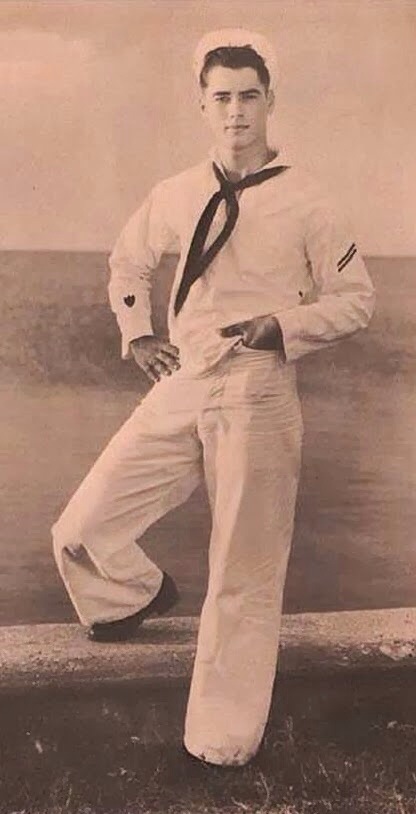
Considering the main goal of this blog, I would particularly like to honor all the LGBT service members who have fought and died for our country. For most of America’s history you have served in silence, and often persecuted for who you were. Yet you strove to fight for your country. One of the earliest goals of the gay rights movement, under the leadership of the Mattachine Society in the 1950s and 1960s, was to allow the gay men to serve in the military without persecution. Today service members can finally serve their country as out and proud gays and lesbians. Yet we should never forget those who risked everything to serve their country in silence, even when their country refused to give them full equal rights.


ENDA

20131107-221059.jpg

Workplace discrimination is alive and well. If the fact that I was gay became common knowledge at the school where I teach, then it is likely that I would lose my job. I believe that I would have the support of my headmaster, a good portion of the faculty, and several people on the schools board of directors. However, even that might not save my job, but the U.S. Senate passage of S.285, the Employee Nondiscrimination Act of 2013 (ENDA) yesterday could give me the protection I would need if it also passed the House and was signed by President Obama. If passed, ENDA would prohibit discrimination in hiring and employment on the basis of sexual orientation or gender identity by civilian, nonreligious employers with at least 15 employees. Though my school may consider itself Christian-oriented, we are not affiliated with any religious organization and we have more than 15 employees. Therefore, they could not be exempt from ENDA.

I am not the only teacher in America who works extremely hard to educate America’s children who risk losing their job each day because of their sexual orientation. Besides, it does not just pertain to teachers, but all professions. The American people have, over the past two decades, become much more amenable to LGBT Americans, and LGBT rights in general, yet there are still parts of the country which need a push further in the right direction (i.e. the South). According to the Williams Institute at UCLA Law, between 15 and 43 percent of LGB people have experienced workplace discrimination or harassment, and between 8 and 17 percent have been hired or fired due to their sexual orientation. Just as startlingly, up to 41 percent of LGB employees have experienced anti-gay harassment or abuse in the workplace. That number soars up to 90 percent for trans people. Meanwhile, gay people can still be fired for their sexuality in 29 states. (For trans people, it’s 34.)

The first time the full U.S. Senate had an opportunity to vote on the Employment Non-Discrimination Act was on Sept. 5, 1996, after the legislation had already died twice in what was then known as the Senate Committee on Labor and Human Resources. When all of the votes had been cast, ENDA lost by just one, 50-49. Flash-forward to today, and ENDA has now passed the Senate by a 64-32 margin. The Senate roll call vote tells the tale: of the 50 seats from which a “Nay” vote was cast in 1996, 20 are now occupied by “Yea” voting senators, while only four “Yea” voting seats have flipped back. In Alaska, Colorado, and New Hampshire, there have been complete makeovers — two “Nays” swapped out for a pair of “Yeas” in each state.

One of the most commonly observed features in the growing support for LGBT people across the country is the fact that younger Americans tend to be leading the shift in opinion. Interestingly enough, there were some examples of this in the Senate vote. Sen. Lisa Murkowski (R-Alaska) voted for the bill Thursday, 17 years after her father, then-Sen. Frank Murkowski (R-Alaska), voted against it. And Sen. Mark Pryor (D-Ark.) voted in favor, while back in 1996, his father, then-Sen. David Pryor (D-Ark.), did not vote.

Republicans should support these protections, and I hope the GOP leadership in the House schedules the bill for a vote. It’s the morally right thing to do. No one should lose their job, or not get hired, because of their sexual orientation. Allowing people to be successful in their workplaces is an essential piece of individual opportunity and liberty. Working for a living is one of America’s freedoms. It’s a virtue to be encouraged — and supporting it is important to the future of the Republican Party. In an era in which the government often punishes hard work and individual success, this bill encourages it.

At its core, the Employment Non-Discrimination Act is about individual liberty. All employees should be treated the same and be judged on their job performance. No one should receive special treatment, and no one should be fired because of their sexual orientation. Since the 1960s, Congress has passed laws ensuring that employers can’t discriminate on the basis of race, religion or gender — personal characteristics that have nothing to do with how well someone does his or her job. These laws are widely accepted throughout our society. Who among us today would say an employer should have the right to fire someone because of their faith or the color of their skin? The same sense of fairness and respect should apply to the hundreds of thousands of qualified, hardworking Americans covered by ENDA.

Many in the business community, recognizing the importance of a qualified, skilled workforce, are well ahead of the federal government. Now is time for the government to catch up so that nondiscrimination laws protect workers at all companies, not just some. The reason there is Republican and business support for ENDA is simple: It’s reasonable. The bill respects many different viewpoints, allowing exemptions for religious organizations, for example.

Senator John McCain put out a statement Thursday before the vote, indicating that he planned to support the bill:

I have always believed that workplace discrimination – whether based on religion, gender, race, national origin or sexual orientation – is inconsistent with the basic values that America holds dear. With the addition of an amendment I co-sponsored with Senators Rob Portman and Kelly Ayotte strengthening protections for religious institutions, I am pleased to support this legislation.

Republicans in the House claim that the bill would encourage frivolous lawsuits that have more to do with enriching attorneys and less to do with fighting discrimination. But there is no evidence to suggest that would not be the case, based on the experience of the states and municipalities that have already adopted ENDA-like policies and the growing number of businesses that have done the same. If Fortune 500 companies were concerned about lawsuits, they wouldn’t be tackling discrimination on their own.

I hope the House Republicans do the right thing by bringing ENDA up for a vote and voting for its passage.


TMI QUESTIONS: LOST AND FOUND

20131106-222053.jpg

Only occasionally do I answer the TMI questions from Just a Jeep Guy. Most of the time, I can only answer a few of them, but when I can answer most of them, these posts are generally fun to write. So here is my TMI: LOST AND FOUND?

1. Do you tend to lose things only to find them later?

Yes, I do. If you saw my desk at school, you would understand. I constantly lose things on my desk, only to find them later. However, it’s not just my desk. I constantly lose things and then find whatever I lost when I least expect it. The bad thing is, I usually don’t need it when I find, but then need it a few days later, only to forget where I found it.

2. Have you ever gone “shopping” in the Lost and Found?

Only for props and costumes for my Drama Club.

3. Has a dog or other pet “followed” you home?

No. I have an aunt who has had a lot of pets “follow” her home, but HRH was chosen on purpose and has made a wonderful companion.

4. How are you at finding a bargain?

I am pretty good at finding bargains. Being a poor grad student and now a teacher, I have to search for the bargains.

5. How many times have you lost your wallet?

Only twice, that I can remember. Once was in the basement of a gay bar in Florence, Italy. I was a bit to busy with “other things” to notice that it had fallen out of my pocket. Luckily, the bartender went down there with a flashlight and found it. Even more lucky, everything was still in my wallet. The other time, I didn’t actually lose it, it was stolen.

6. How do you find the time?

I just do. Sometimes, it has a lot to do with a lack of sleep. Plus, I have the philosophy, “Don’t freak out; it will all get done…eventually.”

7. Have you found your soul mate? Do you think you ever will?

I have not found my soul mate, at least as far as I know. Will I ever find him? It looks less and less likely as the years go on. I hope I will find him someday, but I will just have to wait and see. I will keep searching, nonetheless.

8. Do you have a lost love?

No, I don’t. I thought I had once, but I realized that it was just the idea that I was in love with.

9. When did you loose your innocence?

I lost my innocence the day that my best friend told me she had had sex with numerous guys. We had always said that we would save ourselves for marriage, yet she had not. I didn’t know this because she had moved away for a few years. Back before emails and cell phones (and when long distance was too expensive), we used to write each other letters. When she moved back, we were friends as if she had never left. Year, there was lots of things about her years away that she didn’t tell me until later. So when the truth came out, my innocence was lost from that point on. I did always enjoy hearing “all” the details about her various boyfriends. I think I knew the dick size of half the guys of south Alabama, LOL.

BONUS
When did you loose your virginity? How many times have you helped someone loose their’s?

When I lost my virginity to a girl, it was to the only girl I ever thought I loves. She was a bit of a tomboy and I met her when I was attending the University of Alabama for an honors program during the summer between my junior and senior year of high school. I remember we were sitting on a bench behind the business library and telling her that I wanted to ask her something. For the life of me, I do not remember what I was going to ask, but I do remember that she said, “I know what you’re going to ask.” She said that I was going to ask her to have sex. It wasn’t my intent, but I thought what the hell. It took a week or so to finally convince her, and I lost my virginity in Parker-Adams Hall at the University of Alabama.

My first time with a man was when I was 23. It was not a particularly pleasant experience, and it is not a story I want to relate. It was consensual, but a bad experience. It was the only bad sex that I have ever had though, so I think I have been pretty fortunate since.

As far as helping someone loose theirs. For sure I know that I have only twice, but there could have been a few more times. Once was with the aforementioned girl I lost my virginity too, and the other was a guy who I hooked up with.


Eclecticism

20131105-203637.jpg

Eclecticism: a conceptual approach that does not hold rigidly to a single paradigm or set of assumptions, but instead draws upon multiple theories, styles, or ideas to gain complementary insights into a subject, or applies different theories in particular cases.

I realize that my posts can be a bit eclectic at times. I post a Bible study each Sunday, a poem each Tuesday, and a “moment of zen” picture each Saturday. The rest of my posts can be about anything. I used to post more historically oriented posts, yet there is just so much that I can write about LGBT history without spending way too much time on this blog. After all, I do teach during the day, try to spend time working on my dissertation (maybe one day soon it will be finished), and I have, though limited as it is, a social life. So I wanted to do a post on who I am. At least, who I am intellectually.

I’m a simple history teacher, who also teaches government and English. I received my bachelor’s and master’s degrees in history (the M.A. was in American military history, believe it or not) and am currently working on my PhD in US History. I had minor fields in jurisprudence (undergrad) and gender and American literature for my graduate degrees. I have a wide range of interests. Some of them are things that I love, others are things that I wanted to understand more about myself, which leads me to the main point of this post. Some people mistake me for an English teacher, and others mistake me for a religious scholar. I’m neither. As I said, I’m simply an historian who teaches.

My posts are generally things that interest me, and I am always gratified when it interests others as well. I think that what makes a great teacher is someone who is intellectually curious and wants to share that knowledge. That might sound like I called myself a “great teacher,” I’m not. I constantly work hard to become a better teacher, but I enjoy sharing the knowledge that I have. So why do I write my posts on religion and poetry?

My posts on religion are for my study of the Bible and for those who want to go on that journey with me. I am by no means a religious scholar. I study the Bible to help me be a better person. I share these studies hoping that I will make a difference in this world, however small it may be. I know that some of my readers are not big fans of my religious posts, but I enjoy writing them. Those posts help me to deal with life. Just as hearing a sermon on Sunday morning generates warmth in my heart, so does writing my posts on religion.

As for my poetry posts, I happen to have a personal passion for poetry. I love the melodic structure of poetry and how a poem can resonate a special meaning to different people. For me, poetry is not about the literary analysis that so many people want to associate with poetry. Yes some of it does take a deeper look, just look at the poetry of Ezra Pound, some of which have so few words that each word must be dissected for its meaning. When I read poetry, I look at what it says to me, not necessarily what I am told that it is supposed to mean. Because of my love of poetry, my English students always get more poetry than they ever wanted to learn about. I often even use poetry when teaching history.

I am an eclectic person. I have always believed that a good historian has as much working knowledge of as many subjects as he or she can. Therefore, I always find it hard to find anyone to play a trivia game with me. It’s not that I am incredibly smart, but it’s that I have a wide range of trivia knowledge. It helps me make my lectures interesting, and to be able to answer questions that I get from students by using what I consider informed bullshit. I can generally come up with an answer to most question, but that does not make me an expert. There are really only two things that I would consider myself an expert on. Those two things have to do with topics of my master’s thesis and my PhD dissertation. Other than that, I am constantly adding to my repertoire of knowledge.

Anyway, that’s me, at least, the intellectual side. I don’t want to give anyone the impression that I am an expert on anything I post. I think that I am credible because I do my research on my posts, but I hate for anyone to think that I provide “the” answer for anything.

Oh, and I didn’t address my other regular feature, my “moments of zen.” Those posts are eye candy to wind down the week. Thank you all for reading my blog. I will continue to endeavor to provide you with quality posts each day.

P.S. I hope that this is not just a totally narcissistic post.


November

20131104-203330.jpg

November
by William Cullen Bryant

Yet one smile more, departing, distant sun!
One mellow smile through the soft vapory air,
Ere, o’er the frozen earth, the loud winds run,
Or snows are sifted o’er the meadows bare.
One smile on the brown hills and naked trees,
And the dark rocks whose summer wreaths are cast,
And the blue gentian flower, that, in the breeze,
Nods lonely, of her beauteous race the last.
Yet a few sunny days, in which the bee
Shall murmur by the hedge that skirts the way,
The cricket chirp upon the russet lea,
And man delight to linger in thy ray.
Yet one rich smile, and we will try to bear
The piercing winter frost, and winds, and darkened air.

About William Cullen Bryant
William Cullen Bryant’s poetry is affiliated with the Romantics, often reflecting an obsession with nature and a thoughtful desire for silence and solitude. Bryant was born on November 3, 1794. An American nature poet and journalist, Bryant wrote poems, essays, and articles that championed the rights of workers and immigrants. In 1829, Bryant became editor in chief of the New York Evening Post, a position he held until his death in 1878. His influence helped establish important New York civic institutions such as Central Park and the Metropolitan Museum of Art. In 1884, New York City’s Reservoir Square, at the intersection of 42nd Street and Sixth Avenue, was renamed Bryant Park in his honor.


Times Have Changed

20131103-212854.jpg

Actually, it’s just the time that has changed, and it drives me crazy. I enjoyed having the extra hour of sleep yesterday, but I still woke up at the normal time to get ready for church. Last night my body was not used to the time change and it felt like it was so late, but it was only 9pm. I’m hoping I will get used to going to bed a bit early and thus get a better night’s sleep, but I know once I get used to the time change, then I will be back to my old schedule again. I just hope that for a few mornings that my body will think I’m sleeping late.

Maybe I will be in a better mood this week. I really wasn’t in a bad mood last week, but my students thought I was. I was a raving bitch to my students, but most of that had to do with me not wanting to deal with their attitudes anymore. This year I have more students who talk back or just refuse to stop talking and interrupting class, so I’m taking care of it once and for all. They can either learn to act like students with manners who know how to behave like a proper student, or they can spend more and more time with our headmaster. Hopefully, my students have learned their lesson, and it won’t have to be a bitch this weeks too.

Here’s hoping that we all have a wonderful week, and that the time change doesn’t mess us up too much.


Arguing with Henry Longfellow

20131024-223250.jpg

The title of this post is one of the best euphemisms for masturbation that I have ever seen. I knew this would have to be a quickie because I left my computer at school by accident, so I’m typing this post on my iPhone. By the way, iPhones are great for porn, LOL. You can lay in bed, watch a video while holding the iPhone in one hand, and using the other to “argue with Henry Longfellow.” I hope that all of my readers have enjoyed my week-long series of posts about masturbation.

So considering the title of this post: What is your favorite euphemism for masturbation?


From Atum to Kinsey

20131020-232852.jpg

Since we are on the discussion of masturbation, I thought I would write a post on the history of masturbation. As an historian, I always find the history of almost any subject very interesting. So I did a little research on the history of masturbation.

It seems likely masturbation has always been the most common and universal of human sexual experiences – but only in recent decades have attitudes toward sexuality in general, and masturbation in particular, begun to improve. There never has been a “golden age” of sexual freedom and tolerance, though specific taboos have always varied widely. The frequent condemnation of masturbation apparently stems from a surprisingly simple mandate: there’s safety in numbers. For centuries, all forms of sexual pleasure unlikely to result in population increase have routinely been denounced as wrong. Which is the major reason that I believe that in most societies there is a prohibition on homosexuality.

In order to understand current attitudes, it helps to examine earlier human cultures. Before history, which is defined by the existence of written records, the evidence proves sketchy. Prehistoric petroglyphs and rock paintings from around the world evidently depict male masturbation, though these are entirely matters of interpretation. Most early people seem to have connected human sexuality with abundance in nature. A clay figurine of the 4th millennium B.C., from a temple site called Hagar Qim on the island of Malta, depicts a woman masturbating. However, in the ancient world depictions of male masturbation are far more common. A figure of a masturbating male from a Neolithic cemetery in Greece is roughly contemporary with the Malta image and likewise suggests fertility rites. From the Sumerians, who invented the first written Western language, we find references to the Mesopotamian god Enki masturbating, his ejaculation filling the Tigris River with flowing water.

Male masturbation became an even more important image in ancient Egyptian cosmology. When performed by a god it could be considered a creative or magical act, but a mortal human masturbator might not receive such approval. According to one major creation myth the god Atum appeared on the Primordial Mound out of the void of Nu. As the first “thing” in the midst of nothingness, Atum relieved his loneliness by masturbating. His ejaculation resulted in the appearance of the first god and goddess, Shu and Tefnut, who became the parents of all other elements of the world. An alternate version indicates that the god Ptah, architect of the universe, maintains cosmic order through continual masturbation. The yearly flooding of the Nile, on which Egypt depended entirely, was also said to flow from the secretions of the Nile god Hapy. Min, the god of male potency, was always shown standing with an immense erection, often held in his own hand. Min represented the sexual potency of the Pharaoh, the Great House, an aspect of the Good God considered necessary to the fertility of the Nile valley. During the annual festival of Min men engaged in public acts of masturbation, but otherwise such exhibitionism would not have been tolerated. So even in that pleasure-loving culture the attitude toward masturbation depended entirely upon context.

Far Eastern cultures are sometimes viewed as more sexually tolerant, but this may often be a case of social cosmetics. “Out of sight, out of mind” can mean that human nature (including sexual behavior) is tacitly accepted, so long as it is kept private or unseen. A Hindu myth from India described the phallic god Shiva being masturbated by Agni, the god of fire, who swallowed his semen. Agni then gave birth to Skanda, a god of male beauty. But the Hindus, like later Buddhists, often denounced attachment to sexual pleasure as a cause of human suffering. The oldest Chinese traditions of Taoism equated certain forms of sexual pleasure with generating chi, or life force. As “cultivation,” prolonged masturbation without ejaculating was believed to enhance health and well being. At the same time, frequent ejaculation was considered a waste of this same precious chi.

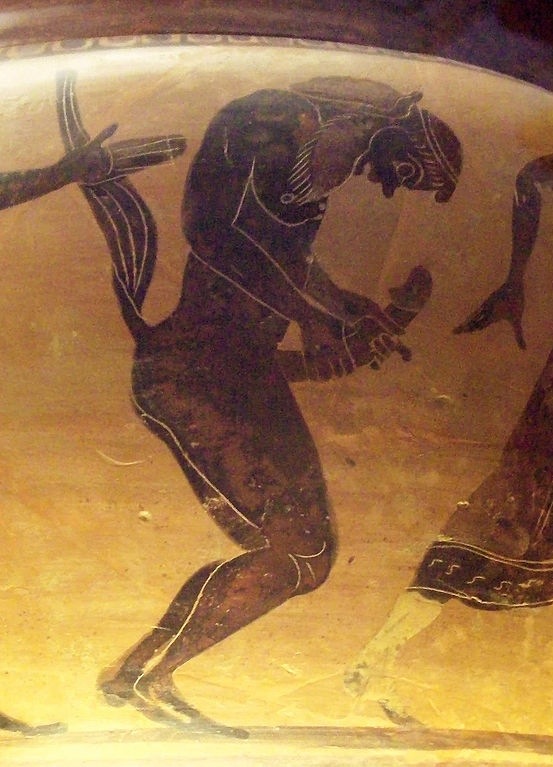
The ancient Greeks had a more natural attitude toward masturbation than the Egyptians did, regarding the act as a normal and healthy substitute for other forms of sexual pleasure. They considered masturbation a safety valve against destructive sexual frustration. Numerous vase paintings depict male masturbation as a regular part of daily life, neither a virtue nor a vice. Greek culture was extremely phallocentric, meaning the erect penis was a major object of veneration, both spiritually and in daily life. Women did not enjoy a high status in the male-dominated culture, being primarily confined to roles of breeding and motherhood. The society was largely segregated by gender, men spending most of their time with men and women with women – yet the Greeks considered procreation and the family unit of supreme importance. They tolerated male masturbation in daily life only to the extent that it did not interfere with the stability of the family or protection of the state.

In a wonderful Greek myth, Hermes invented masturbation. He taught the practice to Pan, so that the woodland god no longer suffered his habitual frustration. Thereafter Pan learned to give pleasure to others as well as to himself.

More unusual for the ancient world, the Greeks also dealt with female masturbation in both their art and writings. Having ample reason for frustration, Greek women were often depicted using dildos or artificial phalluses made of leather, wood, or ivory for their self-satisfaction. The city of Miletus in Asia Minor was well known as the source of the best such instruments, as was the Island of Lesbos, the home of the legendary poet Sappho.

When the Roman Empire began dominating the Western world, an obsession with distinguishing virtue and vice became increasingly important. Though we often consider the Romans decadent, in fact they practiced a kind of prudish hypocrisy. The Latin term masturbari was only one among half a dozen terms they used for the act. Originally it meant only to rub by hand or to agitate, without negative connotations. Over time, however, the term gained associations of disturbance and defilement. Some authors came to associate the term with manus sinistra, meaning the left hand, indicating uncleanliness, since the Romans linked the left hand with elimination functions. The cosmopolitan civilization of Rome had no consistent attitudes toward sexuality, only a growing intolerance for diversity and concern over distinguishing virtue and vice.

Sexuality began to suffer a stigma with the growing influence of the Christian Church. Such figures as the apostle Paul (of the first century), Augustine (A.D. 354-430), and Thomas Aquinas (1225-1274) contributed to increasingly negative attitudes toward the human body and all forms of pleasure in general. Paul fostered misogyny, or anti-female sentiments, starting a trend which has been interpreted by many as condemning all forms of sexuality other than heterosexual intercourse for the purpose of reproduction. This continued an existing philosophical trend of separating the physical and the spiritual, considering them as conflicting opposites. Augustine institutionalized the religious distaste for sexual union itself, while Aquinas particularly vilified homosexuality. An early medieval manual of punishments to be bestowed by priests prescribed severe penalties for men over 20 who engaged in mutual masturbation. Men under that age were punished less severely, and boys under 14 engaging in solo masturbation were punished the least. As I wrote in yesterday’s post, the Bible itself never mentions masturbation specifically: the “sin” of Onan was clearly coitus interruptus, or early withdrawal to prevent conception. Still, this misconception persists.

Islam and Judaism share common roots with Christianity, yet both of these religions deal with masturbation quite differently. They maintain their own rigidly prescribed attitudes toward sexual behavior, advocating only heterosexuality within the context of marriage. Yet neither religion consistently condemns masturbation as Christianity has, in practice taking a more Eastern approach of tacitly accepting some aspects of human nature. On a more encouraging note, some Native Americans call masturbation by their young people “warming the heart.”

Unfortunately in the Western world attacks on masturbation grew increasingly irrational. A 1710 work titled “Onania, or the Heinous Sin of Self-Pollution,” blamed venereal disease on masturbation. By the 19th century the cereal magnate John Harvey Kellogg declared “sex for anything but reproduction” to be “sexual excess.” Kellogg and others began advocating routine circumcision of males as a deterrent to masturbation. Sylvester Graham invented the Graham cracker, believing it would diminish male sexual desire. (Though with s’mores being a popular camping treat, I don’t believe that it ever prevented randy boys/men from experimenting sexually on camp outs.) A variety of awful devices were employed in attempts to forcibly prevent masturbation. Much worse, female circumcision, or the removal of the clitoris, was sometimes advocated by the Victorians, preventing many females from ever experiencing orgasm. In 1864 Ellen G. White published a book claiming that the “solitary vice” led to everything from retardation to insanity and cancer.

As late as 1940, a pediatric text titled “Diseases of Infancy and Childhood” proclaimed masturbation to be harmful. Research suggests an overall agenda behind such anti-pleasure sentiments, the deeper motive being to increase population at all costs by controlling and denying non-reproductive erotic outlets. The more of “us” there are, the less we need to feel threatened by “them.” Until the last century, this kind of reasoning made at least some partial, rudimentary sense. But in our times of runaway overpopulation, when sexuality no longer remains tied to reproductive imperatives, it makes no sense at all.

Beginning with the Kinsey Report of 1948, masturbation has finally been demystified and even discovered to be beneficial. In 1966 Masters & Johnson revealed the practice to be virtually universal in North America, cutting across all boundaries of sex, age, race, and social class. In 1971 Goldstein, Haeberle & McBride determined masturbation to be the most common form of sexual activity among humans. Dr. Joycelyn Elders was far ahead of the political establishment in her 1993 suggestion that masturbation be taught in our schools. She is now being vindicated: Accurate information is being widely disseminated to autonomous learners through the “school” of the Internet.

Though ignorance and superstition linger, healthy and accepting attitudes toward masturbation are increasing. The eminent neuropsychologist James W. Prescott has said: “Deprivation of physical affection in human relationships…constitutes the single greatest source of violence in human societies.”

Adapted from “MASTURBATION THROUGHOUT HISTORY” By Bruce McFarland (http://www.jackinworld.com/resources/general-articles/masturbation-throughout-history)