Tag Archives: United States

Sleeping In…

20131013-223704.jpg

I finally have a day out of school with nothing to do today. Thank you, Columbus for landing in the Americas, even if you died thinking that you had reached Asia. I will have to grade some papers today once I finally get out of bed, but at least I can grade with peace and quiet. I can’t believe that we’ve been in school for nine weeks already. I have to catch up on my grading so that I can get all of my grades posted. A teacher’s work is never done. However, I am going to enjoy sleeping late and cuddling with HRH this morning.

I hope everyone has a wonderful Columbus Day!


The Importance of Individualism

20131010-214820.jpg

I have been reading up on summaries and analyses of Emerson’s “Self-Reliance.” I put off the reading and discussion of the essay until we return to school on Tuesday. I knew that if I started yesterday, I’d be interrupted for the holiday weekend, so I put it off. It also allowed me to study up on Emerson more. I’m trying to make it as interesting and thought provoking as I can so that we can have a good discussion, which means I need to make it as simple as possible for this particular group of students, who can be a bit lazy at times. Though you, my dear readers, may not be as enamored with Emerson and Transcendentalism as I am, I hope you will stick with reading this post as I get around to explaining why I think that a reading of Emerson today, of all days, is especially important.

As I was reading commentaries on Emerson, I came across the article “The Foul Reign of ‘Self-Reliance’,” in which Benjamin Anastas exposes what he considers to be the havoc wreaked by Ralph Waldo Emerson’s seminal essay on generations of Americans. Anastas asks us to consider: Did the great Ralph Waldo Emerson get it wrong? Have we? Have we turned self-reliance into self-centeredness? And while I tend to think he goes a bit overboard in laying virtually all American self-centeredness at Emerson’s feet, his ultimate point about his interpretation of self-reliance being an unassailable (and dangerous) moral and spiritual principle these days is one that is at least worth taking a closer look at. And we certainly wouldn’t advocate for a return to the dehumanizing, piety of the Puritanism to which Emerson was responding.

Early in the heart of the 19th Century, young America was in trouble. A brutal economic bust. Banks collapsing all over. Confidence was wavering. And here came the brilliant transcendentalist philosopher Ralph Waldo Emerson, like a blazing star. Trust yourselves, he said. Look inside. Speak what you think in hard words. Above all, embrace self-reliance. And boy did that go deep. It’s American bedrock. Maybe too deep, which is what Anasta says in his article. It’s become self-centeredness. Polarizing rigidity. In an interview with Tom Ashbrook. Of NPR’s “On Point,” Anasta states that he wrote “The Foul Reign of ‘Self-Reliance’” in an Emersonian style of purposeful antagonism. I personally think that he was a bit too antagonistic, and that “Self-Reliance” spoke to him in a totally different way then it did to me.

Anastas read “Self-Reliance” and sees a call for each person to be concerned with their own self and not be concerned with others. At least, he claims this is how Americans interpreted it and has in turn become the American pursuit of self-interest and self-centeredness.

However, I believe that Emerson’s true point is not to advocate selfish people, but to advocate non-conformity. Emerson wanted people to rely on their inner self. That inner self which is guided by a rational God. No two people are identical. We were created that way on purpose. If all we do is follow others, then there is no free will. We simply conform to the pack mentality. Does this mean that we should be selfish? No it doesn’t. Emerson believes that our true inner voice is not selfish. If we rely on our inner moral code then we work for the betterment of all mankind.

If we were to blindly follow and conform, then no LGBT person would ever come out of the closet. Today is National Coming Out Day. It is a day for us to celebrate who we truly are. National Coming Out Day is observed annually to celebrate coming out and to raise awareness of the LGBT community and civil rights movement. The holiday is observed in a wide variety of ways: from rallies and parades to information tables in public spaces. Participants often wear pride symbols such as pink triangles and rainbow flags. Whereas, I may not go around telling people, especially those who have no need to know, that I am gay, I have become more comfortable in my own skin. If people want to assume I am gay or assume that I am straight, then that is their prerogative. However, the one major thing that Emerson has taught me is to be who I am. Being who we are has been a bit of a theme this week for this blog, and I thank Emerson for that reminder.


Self-Reliance

The high school English class that I teach has been learning about the transcendentalist movement.  Today, we will read excerpts from Ralph Waldo Emerson’s essay “Self-Reliance.”  This essay really speaks to me, and so I have included some excepts from the essay below.  When I first read this essay, I was not yet out of the closet, and it did not mean as much to me then as it does now.  Emerson may actually be speaking more directly to the GLBT community than we realize. There is some evidence that Ralph Waldo Emerson was bisexual. Emerson may have had erotic thoughts about at least one man. During his early years at Harvard, he said he was “strangely attracted” to a young man named Martin Gay, about whom he wrote sexual poetry. Nathaniel Hawthorne was also purportedly one of his infatuations.

Emerson is the seminal intellectual, philosophical voice of the nineteenth century in America. Although readers today may find his thought slightly facile, even unrealistic–times do change–his influence among his contemporaries and those who followed immediately after him was enormous. Emerson was the spokesman for the American Transcendentalists, a group of New England romantic writers, which included Thoreau, who believed that intuition was the means to truth, that god is revealed through intuition to each individual. They celebrated the independent individual and strongly supported democracy. The essay “Self-Reliance,” from which an excerpt is presented here, is the clearest, most memorable example of Emerson’s philosophy of individualism, an idea that is deeply embedded in American culture. His variety of individualism grows of the self’s intuitive connection with the Over-Soul and is not simply a matter of self-centered assertion or immature narcissism

Consider what Emerson says about the importance of non-conformity and independent beliefs and contrast this with the prevailing attitude in contemporary America.  With so much discussion of bullying in schools, this essay should be, and in most textbooks is, essential reading.  It teaches us that we should be ourselves, not the conforming sheep that bullies try to push us into.  Emerson is telling us to trust ourselves, because it is us alone that can overcome the bullies of the world.  With the rate of GLBT youth suicides and bullycide going on in American schools, we should realize that it will get better and that we should be proud to be ourselves.

There is a time in every man’s education when he arrives at the conviction that envy is ignorance; that imitation is suicide; that he must take himself for better, for worse, as his portion; that though the wide universe is full of good, no kernel of nourishing corn can come to him but through his toil bestowed on that plot of ground which is given to him to till. The power which resides in him is new in nature, and none but he knows what that is which he can do, nor does he know until he has tried. Not for nothing one face, one character, one fact, makes much impression on him, and another none. This sculpture in the memory is not without preëstablished harmony. The eye was placed where one ray should fall, that it might testify of that particular ray. We but half express ourselves, and are ashamed of that divine idea which each of us represents. It may be safely trusted as proportionate and of good issues, so it be faithfully imparted, but God will not have his work made manifest by cowards. A man is relieved and gay when he has put his heart into his work and done his best; but what he has said or done otherwise, shall give him no peace. It is a deliverance which does not deliver. In the attempt his genius deserts him; no muse befriends; no invention, no hope.
Trust thyself: every heart vibrates to that iron string. Accept the place the divine providence has found for you, the society of your contemporaries, the connection of events. Great men have always done so, and confided themselves childlike to the genius of their age, betraying their perception that the absolutely trustworthy was seated at their heart, working through their hands, predominating in all their being. And we are now men, and must accept in the highest mind the same transcendent destiny; and not minors and invalids in a protected corner, not cowards fleeing before a revolution, but guides, redeemers, and benefactors, obeying the Almighty effort, and advancing on Chaos and the Dark….
These are the voices which we hear in solitude, but they grow faint and inaudible as we enter into the world.Society everywhere is in conspiracy against the manhood of every one of its members. Society is a joint-stock company, in which the members agree, for the better securing of his bread to each shareholder, to surrender the liberty and culture of the eater. The virtue in most request is conformity. Self-reliance is its aversion. It loves not realities and creators, but names and customs.
For nonconformity the world whips you with its displeasure. And therefore a man must know how to estimate a sour face. The by-standers look askance on him in the public street or in the friend’s parlour. If this aversation had its origin in contempt and resistance like his own, he might well go home with a sad countenance; but the sour faces of the multitude, like their sweet faces, have no deep cause, but are put on and off as the wind blows and a newspaper directs. Yet is the discontent of the multitude more formidable than that of the senate and the college. It is easy enough for a firm man who knows the world to brook the rage of the cultivated classes. Their rage is decorous and prudent, for they are timid as being very vulnerable themselves. But when to their feminine rage the indignation of the people is added, when the ignorant and the poor are aroused, when the unintelligent brute force that lies at the bottom of society is made to growl and mow, it needs the habit of magnanimity and religion to treat it godlike as a trifle of no concernment….
A foolish consistency is the hobgoblin of little minds, adored by little statesmen and philosophers and divines. With consistency a great soul has simply nothing to do. He may as well concern himself with his shadow on the wall. Speak what you think now in hard words, and to-morrow speak what to-morrow thinks in hard words again, though it contradict every thing you said to-day.–‘Ah, so you shall be sure to be misunderstood.’–Is it so bad, then, to be misunderstood? Pythagoras was misunderstood, and Socrates, and Jesus, and Luther, and Copernicus, and Galileo, and Newton, and every pure and wise spirit that ever took flesh. To be great is to be misunderstood.
I suppose no man can violate his nature. All the sallies of his will are rounded in by the law of his being, as the inequalities of Andes and Himmaleh are insignificant in the curve of the sphere. Nor does it matter how you gauge and try him. A character is like an acrostic or Alexandrian stanza;–read it forward, backward, or across, it still spells the same thing. In this pleasing, contrite wood-life which God allows me, let me record day by day my honest thought without prospect or retrospect, and, I cannot doubt, it will be found symmetrical, though I mean it not, and see it not. My book should smell of pines and resound with the hum of insects. The swallow over my window should interweave that thread or straw he carries in his bill into my web also. We pass for what we are. Character teaches above our wills. Men imagine that they communicate their virtue or vice only by overt actions, and do not see that virtue or vice emit a breath every moment.
Let a man then know his worth, and keep things under his feet. Let him not peep or steal, or skulk up and down with the air of a charity-boy, a bastard, or an interloper, in the world which exists for him. But the man in the street, finding no worth in himself which corresponds to the force which built a tower or sculptured a marble god, feels poor when he looks on these. To him a palace, a statue, or a costly book have an alien and forbidding air, much like a gay equipage, and seem to say like that, ‘Who are you, Sir?’ Yet they all are his, suitors for his notice, petitioners to his faculties that they will come out and take possession. The picture waits for my verdict: it is not to command me, but I am to settle its claims to praise. That popular fable of the sot who was picked up dead drunk in the street, carried to the duke’s house, washed and dressed and laid in the duke’s bed, and, on his waking, treated with all obsequious ceremony like the duke, and assured that he had been insane, owes its popularity to the fact, that it symbolizes so well the state of man, who is in the world a sort of sot, but now and then wakes up, exercises his reason, and finds himself a true prince….
It is easy to see that a greater self-reliance must work a revolution in all the offices and relations of men; in their religion; in their education; in their pursuits; their modes of living; their association; in their property; in their speculative views.

Emerson’s “Self-Reliance” teaches us to trust ourselves. By ourselves, we have unique voices and opinions, which society shuts down as soon as we confront other people and the group. Society’s primary concern is creating wealth and status, while the individual’s concern is self-expression and fulfillment. We want to take life slow, savor every moment, express ourselves, and explore many talents and skills. Society wants us to be big shots, put all our education towards one career, weed out our competitors to become successful, and make more money than we could ever need. But since society’s goal’s are so ingrained inside us, we must learn to trust our own instincts as to what society tells us.

Emerson states that in solitude, individuals have voices, “which grow faint and inaudible as we enter the world.” Some of these thoughts and opinions that people come up with in solitude might cause fear when presented to society. Since society is such a delicate structure based on fear of chaos, any novel voice will make the person who spoke it become “the other.” Fear of alienation prevents voices from leaving solitude into the realm of society.

Emerson states that individuals who work hard and pursue fulfillment should not be proud of the possessions they acquired. He says, “a cultivated man becomes ashamed of his property, ashamed of what he has, out of respect for his own being,” meaning that acquiring property is just an accident. If you trust yourself and work towards the proper development of yourself by discovery of your innermost talents, then you should not accept society’s false reward of property. An ordinary person doing his best work is just as valuable as the “great” lives of kings and royalty. The greatest reward is knowing that you have found your own unique self, and fully trust it.

Fulfillment verses success, self expression verses conformity, and solitude verses the group are important factors to distinguish. Emerson in “Self-Reliance” is not advocating staying in solitude, because humans are social beings. Rather he wants us to discover ourselves away from society, and then confront society as our fulfilled and cultivated selfs. In reality, the wealth power structure of society is just a response to fear of our chaotic world, and if we just embrace this chaos, we might be more fulfilled, happy people. Trust yourself. Learn to let go.

Sources:


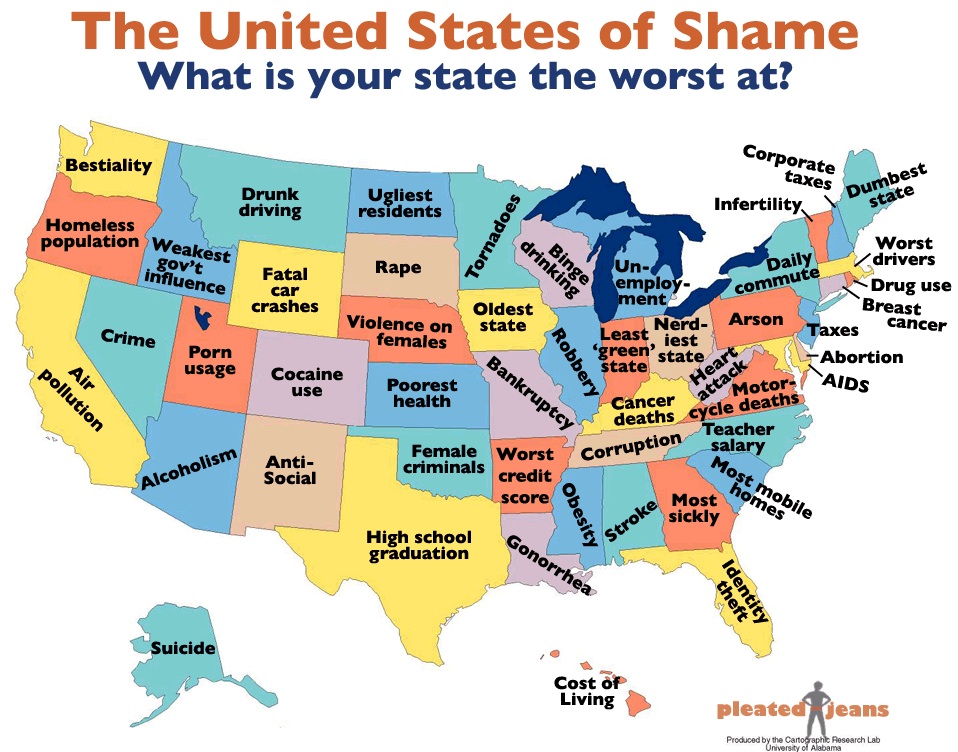
The United States of Shame

image

I am ashamed of our government!

Brinkmanship is no way to operate a government!

Our country should not have to be held hostage by the Tea Party!

Those are just a few of my many negative thoughts right now about our government. The members of Congress are acting like a bunch of squabbling children who can only say “NO!” We are the United States of Shame, though not necessarily for the 50 reasons stated in the cartoon above.

I have said before that we need a strong third party. Republicans are moving further to the right, while Democrats are moving further to the left. It leaves out the moderates of this country. If we had a stronger third party for moderates, then we could force the current two-party system to compromise. However, compromise is not likely as long as the current members of Congress are in office.

The U.S. Constitution (Article I, section 9, clause 7) states that “No money shall be drawn from the Treasury, but in Consequence of Appropriations made by Law; and a regular Statement and Account of Receipts and Expenditures of all public Money shall be published from time to time.” In other words, Congress is mandated by the Constitution to pass a federal budget. It is one of the few expressed Powers given to the legislative branch. However, they have failed to pass a federal budget since 2009. Think about it, what would happen if you chose not to do whatever is the major part of your job for four years? For most of us, that is unconscionable. Yet Congress has done this, or in this case not done a damn thing but bicker.

I am disgusted with the way our government works. I have been studying the provisions of Obamacare for the past few days trying to wrap my head around the issues that the Tea Party has with it. I asked a friend, who I described as the most rational conservative I know, what is so wrong with Obamacare? Her answer was that she doesn’t like the government telling her what to do. I agree. I don’t like the government telling me I have to buy a product or pay a fine (or tax as SCOTUS declared it). However, is the world going to end because Obamacare went online yesterday. NoIn fact, I think many of the provisions of Obamacare are necessary. Is it a perfect law? HELL NO! So why shut down the government for something that you can’t stop? Because we are dealing with immature assholes (and yes, I know name calling is immature as well).

The more I study the issues and try to keep up with everything so that I can answer my students questions about what is happening, the madder I get. Before the government shut down I was already pissed off at the local justice system. As you know from my post Monday, I was supposed to return to court on the matter of my speeding ticket. I had called last week to gain a continuance because my witness and I were finding it hard to get off work. I was told by the clerk’s office that under no circumstances would a continuance be allowed because the trial had already been continued once. The assistant district attorney had originally set my trial for 1:00 pm on the day of the original hearing but had called and told me that the officer who gave me the ticket was out of town and could not be in court at one o’clock that day. Therefore, the clerk’s office informed me that since it had been continued once, it could not be continued again. However, I received a call from the district attorney’s office on Monday stating that the State Trooper who issued the ticket could not be in court on October 1 due to training and that the hearing had been continued again. This is simply not equal justice.

I am growing very weary of the government, whatever part it may be, saying one thing and doing another. Republicans claim they want government out of our lives, yet they fight to tell us who we can’t marry, what we can do with our own bodies, etc., yet when the Democrats pass a law requiring us to buy insurance, they go apeshit. Ignorance, hypocrisy, and arrogance are my greatest pet peeves. Politicians seem to embody all three.

Thanks for reading my rant today. By the way, I do think there are many government employees who do wonderful and necessary jobs; however, I’m not so sure about politicians. I hope that this can be resolved soon, as I feel sorry for the nearly one million federal employees who are going without pay. Our politicians should be ashamed of themselves.

By the way, I scheduled this last night. If by a miracle, the government shutdowns ends before this is posted, I will still be pissed off at our government.


Sad, But True

image

Kids like this really get on my last nerve. I asked on a test the other day “Who wrote the Federalist Papers and how did they sign their name?” The answer is easy: John Jay, James Madison, and Alexander Hamilton wrote the Federalist Papers, each signing with the pseudonym “Publius.” Yet, the answer I received: “Men with ink.” I was furious. I hate smartass answers.

However, since the above is not one of my students, I do find the answers a tad bit humorous.

On a completely different note, HRH turns 15 years old today.


Love in War

20130915-193823.jpg
 
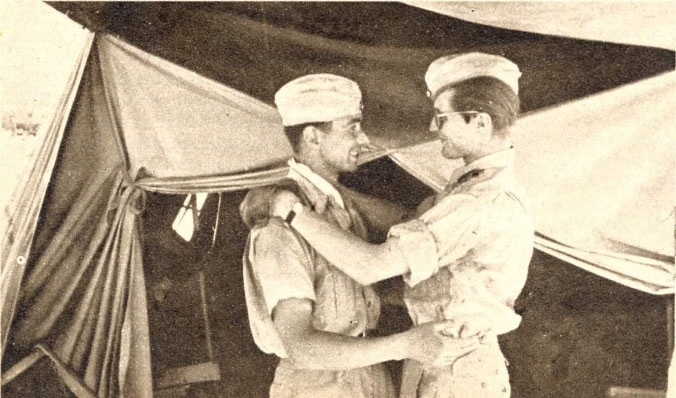
The Second World War was a huge disruption of American life. People from farms, small towns, and cities, from all regions and classes now found themselves suddenly uprooted and thrown together. People who had never traveled more than 5 miles from home now found themselves in the South Pacific or flying over Central Europe. This was true, not just for soldiers, but for civilians on the home front. The war created desperate labor shortages in factories contracted for war production. Those jobs were filled by women, African Americans, and other minorities. Like the soldiers, many of these workers left home and found themselves living together, sometimes in close quarters in alien environments. Time honored customs and beliefs about class, gender, region, and race came under unprecedented strain. While this created incredible stress for many, for others, this created unexpected opportunities and raised expectations.
 
Gays and lesbians were an invisible minority; not only invisible to society at large, but to each other. Most of the American population at the start of the war still lived in small towns and on farms. A lot of gay men and lesbians from those backgrounds who previously felt very isolated now found each other in the military or in wartime production. Within the ranks of the military, a huge underground gay culture began to flourish. Gay soldiers in the South Pacific would create “gay beaches” for gathering sometimes within days of capturing an island from the Japanese.
 
A gay soldier from rural America recalled visiting Paris within days of liberation in 1944. He sought out a once famous Parisian gay night spot thinking it may still be closed for the duration. When he arrived, the place was wide open and packed with soldiers from a dozen different countries. He described American and Free French soldiers dancing together with Polish and Italian partisans and British troops. Not only did this soldier no longer feel isolated, he also began to see a certain potential. Gay men may have been a minority, but they were not a small minority. Formerly isolated gay men and lesbians discovered that there were lots and lots and lots of people like them. This caused a lot of people to rethink some things and to get some ideas.
 
Regulations and anti-sodomy laws had limited gay service since the Revolutionary War, leading to dishonorable discharge, courts-martial, or imprisonment for men found having sex with other men. The massive manpower needs during World War II and the growing influence of psychiatry in America led the military to classify some homosexual troops as psychologically unfit for service. Still, among the sixteen million Americans who served in the Armed Forces during World War II were hundreds of thousands of gay and lesbian military personnel who proudly served. Only about 5000 of the eighteen million men called before draft boards and medical inspectors during World War II were screened out initially because of homosexuality.  As Charles Rowland, a gay draftee from Arizona explained, “We were not about to be deprived the privilege of serving our country in a time of great national emergency by virtue of some stupid regulation about being gay.”
 
The military’s policies toward gays and lesbians became increasingly aggressive and more punitive as the war drew to a close.  The American military only used the ban against LGBT service members when it was convenient; times of war, WWII, Korea, and Vietnam, were not convenient times for the American military.  They often overlooked homosexuality because they needed the manpower.   However, just as African- American servicemen saw freedom abroad, so did LGBT service members.  The Stonewall Riots of 1969 are often credited with being a watershed moment that fundamentally altered the course of gay history. This, of course, is true. But it was not the watershed moment. Long before gay bar patrons rioted against the NYPD and gave momentum to the largest political mobilization of gays and lesbians in history, World War II was setting the stage for Stonewall.  This emerging gay culture continued to flourish, and it survived the war’s end. Large American port cities like New York, Boston, Chicago, and San Francisco found themselves with huge populations of gays and lesbians at the end of the war; people who couldn’t or wouldn’t go home again. Friendships and communities formed during the war would quickly become useful for resisting and pushing back as an increasingly paranoid Post War America tried hard to put the genie of expectations for women, African Americans, and LGBTs back into the bottle.
 
A particular letter of love and loss between two World War II soldiers is making its rounds on the Internet, and the heartbreakingly beautiful story it paints for the reader will have you reaching for the tissues.
 
Long before the days of “Don’t Ask Don’t Tell” and its subsequent repeal, the two men appear to have met and fallen for one another while on duty in Africa. However, their idealistic romance seems to have been cut short.
 
An excerpt reads,
 

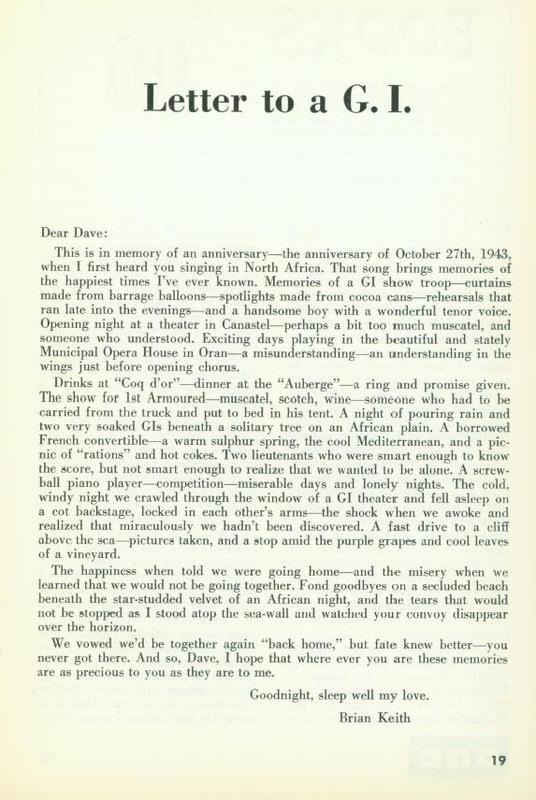
This is in memory of an anniversary — the anniversary of October 27th, 1943, when I first heard you singing in North Africa. That song brings memories of the happiest times I have ever known. Memories of a GI show troop — curtains made from barrage balloons — spotlights made from cocoa cans — rehearsals that ran late into the evenings — and a handsome boy with a wonderful tenor voice … The happiness when told we were going home — and the misery when we learned that we would not be going together. Fond goodbyes on a secluded beach beneath the star-studded velvet of an African night, and the tears that would not be stopped as I stood atop the sea-wall and watched your convoy disappear over the horizon…

 
The heart-rending love letter was written by American World War II veteran Brian Keith to Dave, a fellow soldier he met and fell in love with in 1943 while stationed in North Africa. It was penned on the occasion of their anniversary and reprinted in September of 1961 by ONE Magazine, a groundbreaking pro-gay magazine first published in 1953.  The original is supposedly preserved in the Library of Congress. Read the rest of the letter below, and have a somber glimpse inside the mid-century romance of Dave and Brian.
 

20130915-193759.jpg

Here is the full transcript:
Dear Dave,
 
This is in memory of an anniversary — the anniversary of October 27th, 1943, when I first heard you singing in North Africa. That song brings memories of the happiest times I’ve ever known. Memories of a GI show troop — curtains made from barrage balloons — spotlights made from cocoa cans — rehearsals that ran late into the evenings — and a handsome boy with a wonderful tenor voice. Opening night at a theatre in Canastel — perhaps a bit too much muscatel, and someone who understood. Exciting days playing in the beautiful and stately Municipal Opera House in Oran — a misunderstanding — an understanding in the wings just before opening chorus.
 
Drinks at “Coq d’or” — dinner at the “Auberge” — a ring and promise given. The show 1st Armoured — muscatel, scotch, wine — someone who had to be carried from the truck and put to bed in his tent. A night of pouring rain and two very soaked GIs beneath a solitary tree on an African plain. A borrowed French convertible — a warm sulphur spring, the cool Mediterranean, and a picnic of “rations” and hot cokes. Two lieutenants who were smart enough to know the score, but not smart enough to realize that we wanted to be alone. A screwball piano player — competition — miserable days and lonely nights. The cold, windy night we crawled through the window of a GI theatre and fell asleep on a cot backstage, locked in each other’s arms — the shock when we awoke and realized that miraculously we hadn’t been discovered. A fast drive to a cliff above the sea — pictures taken, and a stop amid the purple grapes and cool leaves of a vineyard.
 
The happiness when told we were going home — and the misery when we learned that we would not be going together. Fond goodbyes on a secluded beach beneath the star-studded velvet of an African night, and the tears that would not be stopped as I stood atop the sea-wall and watched your convoy disappear over the horizon.
 
We vowed we’d be together again “back home,” but fate knew better — you never got there. And so, Dave, I hope that where ever you are these memories are as precious to you as they are to me.
 
Goodnight, sleep well my love.
 
Brian Keith
 
I recommend Alan Berube’s book Coming Out Under Fire: The History of Gay Men and Women in World War II. Bérubé argues in Coming Out Under Fire, “the massive mobilization for World War II relaxed the social constraints of peacetime that kept many gay men and women unaware of themselves and each other.”  

Relief

image

Yesterday did provide some relief, but all of the dread I was feeling gave me a terrible migraine. I’m sure all of you have heard of functioning alcoholics; well, I’m a functioning migraine sufferer. Some people who have migraines have to go to bed in a dark place. It’s what I always want to do when I have a migraine, but I rarely have that luxury. I did not have at luxury yesterday. I had to keep going and do what I needed to do. Since I had the day off, I went ahead and ran some errands after my “ordeal.”

When I got home, I cooked supper. I had promised my aunt that I would fry some okra for her. She told me that since I had a migraine, I shouldn’t have tried to cook, but I did anyway. I braised a London broil that was on sale at the grocery store, cooked some collard greens and fried some cornbread. It was quite delicious, but I didn’t have much of an appetite because migraines tend to make me slightly nauseous. After supper, I went to bed. Luckily, I can always count on HRH to bring me some comfort. She curled up on top of me after I laid down, and we called it an early night.

By the way, with my triskaidekaphobia* I’m dreading today, just a little bit. However, since it’s my mothers birthday, I probably shouldn’t see it as bad luck.

*Triskaidekaphobia (from Greek tris meaning “3”, kai meaning “and”, deka meaning “10” and phobos meaning “fear” or “morbid fear”) is fear of the number 13 and avoidance to use it; it is a superstition and related to a specific fear of Friday the 13th, called paraskevidekatriaphobia (from Παρασκευή Paraskevi, Greek for Friday) or friggatriskaidekaphobia (after Frigg, the Norse goddess Friday is named after in English).


True Confession

20130904-225329.jpg

At school, we have this one particular coach that is very hot and has an amazing butt. Since most of the day he teaches P.E., he is almost always wearing athletic shorts, which shows off his butt incredibly. As one of my coworkers likes to say, “I hate to see him go, but I sure do love to watch him walk away.” Honestly, it’s mesmerizing, and it never fails to make me incredibly horny. He has one of those amazingly shaped men’s asses in which the cheeks move up and down separately as he walks….I have to just turn away and think of dead puppies or something to keep from getting incredibly turned on. It also doesn’t hurt that he is incredibly nice, and he makes his athletes behave. Not enough coaches these days take their job as role model serious enough; they only care about winning, not understanding that if your players respect you, then they will try even harder. His athletes, though, know their punishment will be hell if they cause a teacher trouble. Oh, and have I failed to mention that he has the most gorgeous blue eyes?

I’m not the only one who notices either. All of the girls at school think he is “just so hot.” The female teachers feel the same way. It was really tough last year during spring sports when he had a coaching intern/assistant coach that was just as hot, if not a little more so (but he was a bit young for my taste). They made nice eye candy at lunch.

While I’m confessing, I probably should admit that as I was writing this post last night, I was incredibly horny, which is probably the reason that this was on my mind enough to,actually write this post.


Same Love

20130902-205752.jpg

I have to admit that I am behind the times on this. I had heard about this song (which will be the poem for today), but I had not heard it. I could have easily listened to it on YouTube, but I hadn’t taken the time. On my way home Friday night, I felt like my local Top 40 station was having a gay night. It started with this song, several commercials for the local gay club (or alternative nightspot, as they called it), and then numerous songs about being yourself. It was actually a lot of great music. It was also a bit surreal considering that they kept updating the Friday night football scores as well. Though I am not a fan of rap music in the least, I have to admit that the words to Macklemore’s “Same Love” are quite poetic and meaningful. Besides isn’t tap supposed to be urban poetry?

“Same Love” is the fourth single released by Seattle-based rapper Macklemore and producer Ryan Lewis from their 2012 debut studio album, The Heist. The track, featuring vocals by Mary Lambert, talks about legalizing same-sex marriage and was recorded during the campaign for Washington Referendum 74, which, upon approval in 2012, legalized same-sex marriages in Washington state. The song has so far reached number 11 on the Billboard Hot 100 in the United States and reached number 1 in both New Zealand and Australia.

The cover artwork for the single shows a photograph of Macklemore’s uncle, John Haggerty, and his partner, Sean.

The song was featured as a part of YouTube’s Pride Week (http://youtu.be/OQngzapK5dM).

“Same Love”
Macklemore with Ryan Lewis featuring Mary Lambert
By Ben Haggerty (Macklemore), Ryan Lewis, Mary Lambert, Curtis Mayfield

When I was in the third grade I thought that I was gay,
‘Cause I could draw, my uncle was, and I kept my room straight.
I told my mom, tears rushing down my face
She’s like “Ben you’ve loved girls since before pre-k, trippin’ ”
Yeah, I guess she had a point, didn’t she?
Bunch of stereotypes all in my head.
I remember doing the math like, “Yeah, I’m good at little league”
A preconceived idea of what it all meant
For those that liked the same sex
Had the characteristics
The right wing conservatives think it’s a decision
And you can be cured with some treatment and religion
Man-made rewiring of a predisposition
Playing God, aw nah here we go
America the brave still fears what we don’t know
And God loves all his children, is somehow forgotten
But we paraphrase a book written thirty-five-hundred years ago
I don’t know

And I can’t change
Even if I tried
Even if I wanted to
And I can’t change
Even if I tried
Even if I wanted to
My love
My love
My love
She keeps me warm
She keeps me warm
She keeps me warm
She keeps me warm

If I was gay, I would think hip-hop hates me
Have you read the YouTube comments lately?
“Man, that’s gay” gets dropped on the daily
We become so numb to what we’re saying
A culture founded from oppression
Yet we don’t have acceptance for ’em
Call each other faggots behind the keys of a message board
A word rooted in hate, yet our genre still ignores it
Gay is synonymous with the lesser
It’s the same hate that’s caused wars from religion
Gender to skin color, the complexion of your pigment
The same fight that led people to walk outs and sit ins
It’s human rights for everybody, there is no difference!
Live on and be yourself
When I was at church they taught me something else
If you preach hate at the service those words aren’t anointed
That holy water that you soak in has been poisoned
When everyone else is more comfortable remaining voiceless
Rather than fighting for humans that have had their rights stolen
I might not be the same, but that’s not important
No freedom till we’re equal, damn right I support it

(I don’t know)

And I can’t change
Even if I tried
Even if I wanted to
My love
My love
My love
She keeps me warm
She keeps me warm
She keeps me warm
She keeps me warm

We press play, don’t press pause
Progress, march on
With the veil over our eyes
We turn our back on the cause
Till the day that my uncles can be united by law
When kids are walking ’round the hallway plagued by pain in their heart
A world so hateful some would rather die than be who they are
And a certificate on paper isn’t gonna solve it all
But it’s a damn good place to start
No law is gonna change us
We have to change us
Whatever God you believe in
We come from the same one
Strip away the fear
Underneath it’s all the same love
About time that we raised up… sex

And I can’t change
Even if I tried
Even if I wanted to
And I can’t change
Even if I tried
Even if I wanted to
My love
My love
My love
She keeps me warm
She keeps me warm
She keeps me warm
She keeps me warm

Love is patient
Love is kind
Love is patient
Love is kind
(not crying on Sundays)
Love is patient
(not crying on Sundays)
Love is kind
(I’m not crying on Sundays)
Love is patient
(not crying on Sundays)
Love is kind
(I’m not crying on Sundays)
Love is patient
(not crying on Sundays)
Love is kind
(I’m not crying on Sundays)
Love is patient
Love is kind

PS I hope you will all wish me luck today as I go to court to fight a speeding ticket. My cruise control was set at 65 mph, but the state trooper said he clocked me going 85 mph. Cars were passing me left and right, including a similar model to my car that was the same color. If I had been speeding, I’d just pay it, but I wasn’t, so I’m going to court.


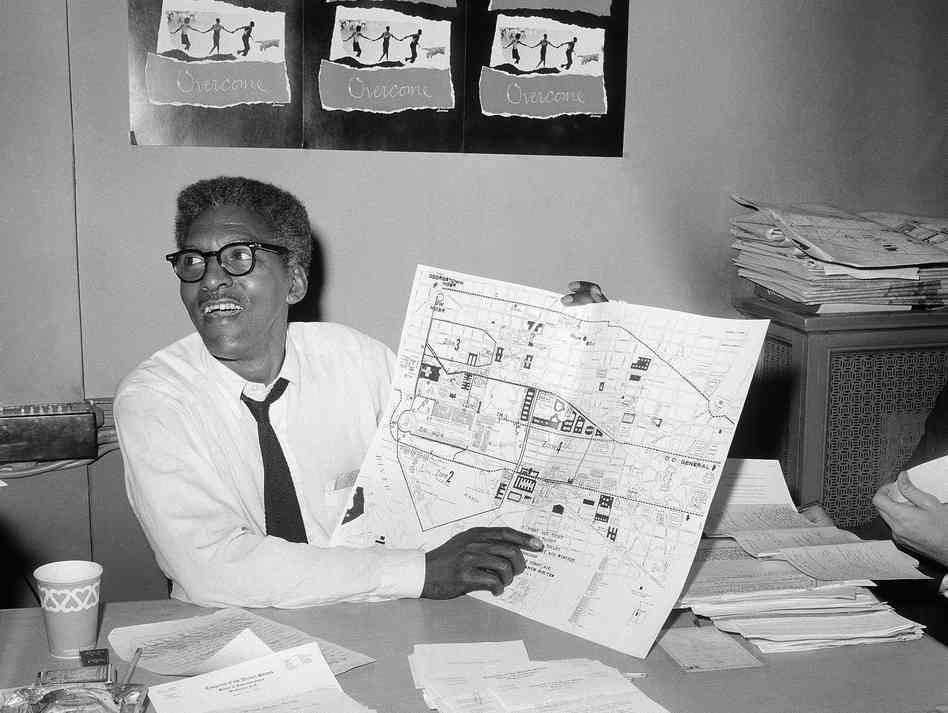
Bayard Rustin Will Posthumously Be Awarded the Presidential Medal of Freedom

image

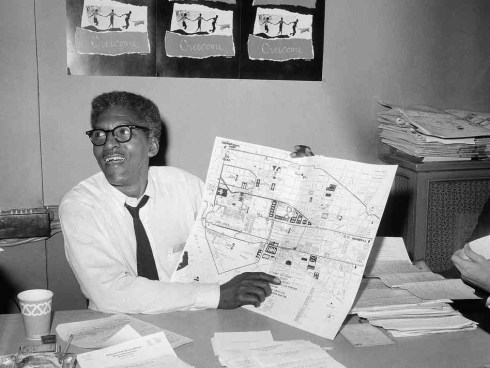
The trailblazing strategist behind the 1963 March on Washington will this year be posthumously awarded the Presidential Medal of Freedom. That’s a long way from the days when civil rights activists counted on Bayard Rustin’s hard work. Rustin taught MLK about non-violence, a strategy he’d learned from Gandhi. He organized the 1963 March on Washington. But he was discouraged from being a public spokesperson for civil rights because he was gay. Many activists at the time felt the movement wasn’t big enough to include homosexuality.

For 60 years, Rustin fought for peace and equal rights — demonstrating, organizing and protesting in the United States and around the world. Rustin grew up in West Chester, Pa. In college in the 1930s, he joined the Communist Youth League for a few years, attracted by the group’s anti-racist efforts. He later embraced socialism.

He was a gay black man, tall, with high cheekbones, and a gifted singer. He played a bit part in a Broadway musical alongside Paul Robeson, and Rustin often sang for his audiences as he toured the country, conducting race-relations workshops.

Rustin was considered a master organizer, a political intellectual and a pacifist; he served time in prison for refusing to register for the draft. He created the first Freedom Rides, which challenged segregation on interstate buses. Along with King, Rustin was one of the founders of the Southern Christian Leadership Conference.

He had two strong mentors. A.J. Muste, the head of the pacifist organization the Fellowship of Reconciliation, hired Rustin as a youth secretary to conduct workshops and demonstrations against war and segregation. Rustin’s other mentor was A. Philip Randolph, the head of the first predominantly black union, the Brotherhood of Sleeping Car Porters.

“What Rustin took away from Randolph, especially, is the recognition that economic issues and racial justice issues are completely intertwined,” says his biographer, John D’Emilio.

Despite his extensive involvement in the civil rights movement, Rustin was content to remain behind the scenes, D’Emilio says.

“I think of it as part of the Quaker heritage that he internalized. You don’t push yourself forward,” D’Emilio says. “It doesn’t matter if you don’t get the credit for it. What is important is this notion of speaking truth to power.”

In 1953, Rustin’s homosexuality became a public problem after he was found having sex in a parked car with two men. He was arrested on a morals charge. Later, when he was chosen to organize the 1963 march, some civil rights activists objected. In an effort to discredit the march, segregationist Sen. Strom Thurmond took to the Senate floor, where he derided Rustin for being a communist, a draft dodger and a homosexual. Ironically, author D’Emilo says, it became a rallying point — for the civil rights leaders.

“Because no one could appear to be on the side of Strom Thurmond, he created, unwittingly, an opportunity for Rustin’s sexuality to stop being an issue,” he says.

The march was a success, and at its end, a triumphant Rustin stepped up to the microphone to read the demands that the leaders of the civil rights movement would take to President John F. Kennedy.

First on the list: “effective Civil Rights legislation — no compromise, no filibuster — and that it include public accommodations, decent housing, integrated education, [fair employment], and the right to vote.”

Rustin wanted to move the civil rights agenda from protesting to politics and to work within the system — blacks and whites together — to create jobs and other opportunities. His effort fell flat, stymied by a more militant generation and the dominant issue of the times, the Vietnam War. Rustin said, “It has split the civil rights movement down the middle. It has caused many white people who were in it to say, ‘That must wait now until we stop Vietnam.’ ”

In his later years, Rustin continued to speak out on a variety of fronts, and his personal life also changed: He met Walter Naegle.

Naegle, Rustin’s surviving partner, says that in the final years of his life, Rustin became more involved in gay rights.

“He saw this as another challenge, another barrier that had to be broken down — a larger struggle for human rights and for individual freedoms,” Neagle says.

Or, as Rustin put it:

“The barometer for judging the character of people in regards to human rights is now those who consider themselves gay, homosexual, lesbian. The judgment as to whether you can trust the future, the social advancement, depending on people, will be judged on where they come out on that question.”

Activist Mandy Carter says Rustin was a visionary, understanding the parallels in the civil rights struggle and the gay rights movement. Carter is on the leadership council the National Black Justice Coalition, an LGBT civil rights group.

“For me and for a lot of us who are black, and gay and lesbian, bi, trans, who see ourselves as social justice advocates as well, to have this person — such an amazing role model,” she says.

Carter says there was just no one like him, and she is delighted such a key individual in the civil rights movement is now being recognized with the nation’s highest honor.

Rustin died in 1987 in New York. He was 75.