Category Archives: Miscellaneous

TMI Movies

On Sean’s blog, Just a Jeep Guy, he posted on Tuesday “TMI TUESDAY QUESTIONS: LET’S GO TO THE MOVIES.”  And I decided that I would once again participate.  So here we go:

LET’S GO TO THE MOVIES

1. Do you still go to the movies? Why or Why not?
I do, but it is very rarely.  I tend to wait for a movie to come out on DVD, unless I am really excited about the movie and can find the time to go see one. I love watching a movie in the theater, but sometimes it’s just too much of a hassle.  Though I love the experience, I have never been a big movie goer.
2. Would you go by yourself?
Generally, I do end up going by myself, which is another reason I don’t go often.
3. What was the last movie you saw? Recent recommendation?
The last movie I saw was the Hunger Games.  ( I wanted to see Magic Mike, but wasn’t able to make it, because too much was going on during the time it was in the theaters.)  Hunger Games was a good movie, but it still could have been better.  The books was far superior.  That being said, since the second and third book in the series were mediocre, I’m hoping that the movies based on those books will be better.  If the movies are on par with the first movie, then they should be better than the actual second and third books of the trilogy. They could be worse, but I hope not.
4. Snacks: Buy, Bring or Boycott?
I usually buy a Coke and a bag of popcorn.  It just makes the experience better for me, even if it tends to be way overpriced. I love good salty movie theater popcorn, but no extra butter please.
5. Teenagers used to go to the movies to make out. Have you ever and if so, when was the last time?
I did when I was a teenager and in college, but I have not been to the movies on a date in years.  I probably wouldn’t now anyway.
6. Have you ever gone to an adult movie theater? Did you pull a Pee Wee Herman?
Never been to an adult movie theater.  They just don’t exist around here.

Bonus


Which all-time favorite movie would you pay to see on the big screen again? Of course cell phones, babies, and assholes are banned.
Hands down, without a doubt in my mind, Fried Green Tomatoes. I never had the chance to see it in the theater, but given the chance, I would be the first in line if it was shown again. I could watch this movie over and over again and never tire of it.  But to really answer the question, a movie that I saw in the theater that I would go see again…it would have to be between Indiana Jones and the Raiders of the Lost Ark or the latest Star Trek.  Indiana Jones makes the list mainly because I don’t remember seeing it the first time, though I know we saw it in the theater.  I think it would be so cool to see it on the big screen.  Star Trek makes the list because it was truly fantastic on the big screen (I’m a bit of a Trekkie) and loses some of the effect when watched on the small screen.

Not This Again: The Circumcision Debate Continues

The American Academy of Pediatrics on Monday announced its first major shift on circumcision in more than a decade, concluding that the health benefits of the procedure clearly outweigh any risks.

“There is clear evidence that supports the health benefits of circumcision,” said Susan Blank, who led the 14-member task force that formulated the new policy being published in the journal Pediatrics.

The statement, and accompanying technical report, marks the first revision of the organization’s position since 1999, when the academy backed away from circumcision. At that time, the group, which represents about 60,000 pediatricians nationwide, concluded that there was no clear evidence for or against circumcising newborns. The group affirmed that position in 2005.
 Since then, the popularity of circumcision in the United States has declined. Only about 56 percent of newborn males are circumcised.

The academy’s task force spent seven years combing through the latest research, analyzing more than a thousand studies. Their conclusion?
For starters, Blank says, circumcision helps baby boys pretty much immediately.

“The health benefits of male circumcision include a drop in the risk of urinary tract infection in the first year of life by up to 90 percent,” she says.

But there’s a much bigger reason to do it, Blank said. Circumcised males are far less likely to get infected with a long list of sexually transmitted diseases.
“It drops the risk of heterosexual HIV acquisition by about 60 percent. It drops the risk of human papillomavirus [HPV], herpes virus and other infectious genital ulcers,” she says.

It also reduces the chances that men will spread HPV to their wives and girlfriends, protecting them from getting cervical cancer.

“We’ve reviewed the data and, you know, we have gone through them with a fine-tooth comb, and the data are pretty convincing,” she says.

Critics, however, were not convinced. They liken the procedure to female genital mutilation.

“We have no right as parents or as physicians or adults to strap them down and chop off a normal part of their body. To do that is a human rights violation and an ethical travesty,” says Georgeanne Chapin of the anti-circumcision group Intact America.

Chapin and other critics argue that the scientific evidence is questionable. For one thing, the studies about HIV have only been done in Africa, where AIDS is much more common among heterosexuals.

“They’re cherry-picking their evidence,” she says. “They act as though there’s this huge body of literature. It’s all the same couple of studies that have been regurgitated and reprogrammed. Over the past 150 years, all kinds of medical benefits have been proposed as resulting from cutting off the foreskin, and they have all been disproven.”

Critics also question the safety of the procedure, saying too many boys are damaged for life by botched circumcisions.

But many experts say the academy is making the right call. They dismiss any comparison to female genital mutilation as grossly misleading and say male circumcision is about as safe as any procedure could be.

Some think the academy’s position is long overdue, and that the group should have gone even further and more forcefully recommended circumcision.

“I think that all healthy newborn babies should be circumcised,” saysEdgar Schoen, a professor emeritus at the University of California, San Francisco. “I feel about newborn circumcision the way I do about immunization: It’s a potent preventive health procedure that gives you a health advantage.”

For its part, the pediatricians group hopes the new recommendations will encourage more parents to circumcise their sons — and more insurance plans to pay for it. As Shots reported last week, a lot of state Medicaid programs have stopped covering circumcision.

“Those families who choose circumcision should have access to circumcision. Cost should not be a barrier,” Blank says.

The federal Centers for Disease Control and Prevention has been promising for years now to issue the government’s first guidelines about circumcision. But the CDC keeps delaying it and still has not said when that will happen.


Queer Conference at the College of Wooster

I would like to draw your attention to a queer conference that will be held at the College of Wooster from October 4-7, 2012.

“Global Queerness: Sexuality, Citizenship, and Human Rights in the 21st Century”

Cherrie Moraga will be giving our keynote address and we will have keynote performances by E. Patrick Johnson and Marga Gomez.Jimmy A. Noriega, Assistant Professor of Theatre and Dance at The College of Wooster, requested that I help circulate the call-for-papers among my faculty and students, as well as anyone else you feel may be interested in attending and/or presenting at our conference. All of the events are free and open to the public and we hope that you will consider joining us for the proceedings. If you need any assistance or would like additional information, do not hesitate to contact Jimmy Noriega at jnoriega@wooster.edu.

The conference website is: http://globalqueerness.voices.wooster.edu/


I am considering presenting a paper myself, and since some of you are in academia as well, I encourage you to submit a paper as well.

Call for Papers

We invite the submission of proposals for a scholarly conference to be held at the College of Wooster (Wooster, Ohio), from October 4-7, 2012. The interdisciplinary nature of this meeting will allow participants to engage with the themes of queer identity, belonging, race, gender, and human rights in an academic and social context. The conference will consist of a keynote address by Cherríe Moraga, keynote performances by E. Patrick Johnson and Marga Gomez, scholarly panels, roundtable discussions, a queer international film screening, a forum with queer athletes, and a celebration to end the gathering. An atmosphere of diversity and equality will engage all involved and promote acceptance and understanding between individuals of all backgrounds. With the growing number of LGBTQ students across U.S. campuses, we hope to use this conference as a way of putting the College of Wooster at the forefront of this important social dialogue.

This is a queer-focused conference designed for scholars, students, creative writers, human rights advocates, and performance artists to present and discuss their work and to exchange and encourage new ways of engaging with LGBTQ issues across disciplines and institutions.

Proposals from all disciplines are welcome. We are soliciting proposals that address topics including, but not limited to:

Queer theory and criticism
Queer images and media
Queer identities in global contexts
Queer theatre and performance
Queer health and wellbeing
Transgender identities and experiences
Queerness and the fine arts
Queerness and faith
Queer history
Queer literature
Queer issues in education
LGBTQ politics, law, and justice

Please send an abstract of no more than 500 words and a CV to aatay@wooster.edu andjnoriega@wooster.edu

Deadline: August 15, 2012.


Let’s Play A Game…

Can any one guess why there is not a real post here today?
(The picture is a hint.)


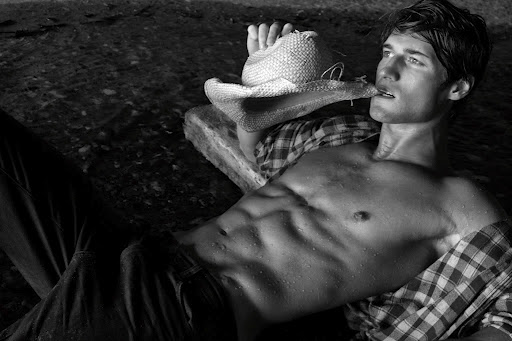
The Dandy

Quite honestly, I really had no idea what to write about today; however, I came across this picture and the fist thought in my mind was “dandy.”  A dandy is a man who places particular importance upon physical appearance, refined language, and leisurely hobbies, pursued with the appearance of nonchalance in a cult of Self.  Historically, especially in late 18th- and early 19th-century Britain, a dandy, who was self-made, often strove to imitate an aristocratic lifestyle despite coming from a middle-class background.  Though the definition of a dandy may sound like a bad stereotype of a gay man, many of the dandies in history were homosexual.

The dandy creates his own unity by aesthetic means. But it is an aesthetic of negation. “To live and die before a mirror”: that according to Baudelaire, was the dandy’s slogan. It is indeed a coherent slogan. The dandy is, by occupation, always in opposition. He can only exist by defiance. Up to now, man derived his coherence from the Creator. But from the moment that he consecrates his rupture from Him, he finds himself delivered over to the fleeting moment, to the passing days, and to wasted sensibility. Therefore he must take himself in hand. The dandy rallies his forces and creates a unity for himself by the very violence of his refusal. Profligate, like all people without a rule of life, he is only coherent as an actor. But an actor implies a public; the dandy can only play a part by setting himself up in opposition. He can only be sure of his own existence by finding it in the expression of others’ faces. Other people are his mirror. A mirror that quickly becomes clouded, it’s true, since human capacity for attention is limited. It must be ceaselessly stimulated, spurred on by provocation. The dandy, therefore, is always compelled to astonish. Singularity is his vocation, excess his way to perfection. Perpetually incomplete, always on the fringe of things, he compels others to create him, while denying their values. He plays at life because he is unable to live it.

Just Because…

…I’d love to be in Venice, Italy, right now.

The Conch Republic

The Conch Republic was established by secession of the Florida Keys from the United States of America, on April 23rd, 1982 in response to a United States Border Patrol Blockade setup on highway U.S.1 at Florida City just to the north of the Florida Keys. This heinous act effectively isolated Keys Citizens from the U.S. mainland since the blockade was on our only land artery to and from the mainland. This roadblock portrayed Keys residents as non-U.S. citizens who had to prove their citizenship in order to drive onto the Florida mainland! Hardly an American thing to do!

 Today, the Conch Republic celebrates its thirtieth birthday. The thirtieth anniversary celebration runs from April 20-29. The gay community of Key West joins in o the celebration with several events at the Bourbon Street Pub. Key West’s Great Conch Republic Drag Race wore Saturday. The race featured 16 high-heeled female impersonators navigating across an obstacle course filled with automobile tires and scantily-clad passengers in shopping carts. According to the Florida Keys News Bureau, the race was hosted by the republic’s Bourbon Street Pub Complex, where contestants raced down Duval Street, or the fittingly nicknamed “main drag.” The wacky drag challenge has been held annually since 1982 as part of Key West’s independence celebration. This year’s celebration runs through April 29th, filled with other events to look forward to such as a reenactment of the secession, a fun sea battle with tall ships, and an open-air bed race that’s said to be “the most fun you can have in bed with your clothes on.”

 The City of Key West is a menagerie of people from all walks of life. The people of Key West are fortunate to live in a tolerant community that respects and celebrates differences. They have a vibrant gay and lesbian community and Key West has been ranked as one of the “Top Gay and Lesbian Destinations” in the world. This spirit of tolerance is evident everywhere on the Island. Filled with a funky charm, Key West is a sophisticated place with amazing restaurants, diverse entertainment, eclectic art, professional theatre, and live music that includes salsa, show tunes, disco, country, opera, and classical. Key West’s gay and lesbian guest houses are legendary, and our mainstream hotels and inns are always All Welcome. Drag shows, commitment ceremonies, water excursions, late night parties, beaches, clothing optional resorts, and the only gay & lesbian historic trolley tour make our island the preeminent LGBT vacation choice. But the best part about our town is our open and accepting attitude. “One Human Family” is our city motto, and our closets are only used for our costumes!

One of these days, I am going to have to visit Key West.  It sounds like a fantastically fun place, and one of my favorite writers, Ernest Hemingway, used to live there. Hemingway lived and wrote in Key West for more than ten years beginning in the 1930s. Calling Key West home, he found solace and great physical challenge in the turquoise waters that surround this tiny island.


Exhaustion

So much has been going on this week, that I almost don’t know up from down. I had several emails that I needed to catch up on, I can be terribly slow about answering emails, but rest assured that if you emailed me recently, I will get back to you as soon as I can. However, last night I came home from my night class so tired that I just crawled into bed, watched a couple of episodes of “Big Bang Theory” on TBS, and then fell asleep. I just couldn’t hold my eyes open any longer. I needed a good night of sleep.


My South

In the last couple of weeks, I’ve had a number of emails, comments, and conversations about life in the South. I am the first to admit that I have a love/hate relationship with my section of the United States, so I thought I would explain some of what I love and some of what I hate about the South.

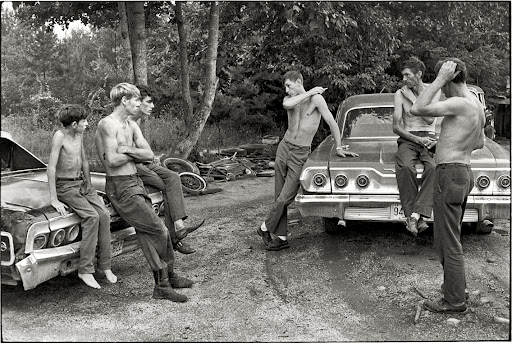
Photograph by William Gedney

I love the beauty of the South. First of all, there is nothing more beautiful than a country boy, what a friend of mine would call a “preppy cowboy” or what I call a “preppy redneck.” Either way, a man of this distinction has certain qualities that I find beyond perfection. He will obviously be handsome, generally with a six-pack, but then again he might just have a six-pack in his hand and have a ever-so-slight beer belly (a measure of a man who knows how to have a good time). Without a doubt he must have a Southern lilt to his voice, an accent that is sure to drive you wild with the softness and gentleness of his soothing words. He must also have impeccable manners; no matter how rough around the edges, he knows his manners and follows them when it counts. Many people find southern manners to be a tad annoying, but no true gentleman is without them, and when he shows them off, he is sure to make you melt. A true Southern gentleman will go to any length not to offend someone, but he also knows when to speak his mind and let someone know, in the most gentle way possible, when they have committed a social wrong. He will never embarrass someone on purpose, and he will not only be honorable in all occasions, but make sure that your honor remains intact.

Southern Gentlemen

Beyond the men and manners, the South is one of the most beautiful areas of North America. From the white sandy beaches on the Gulf of Mexico to the verdant mountains of the Appalachians, the beauty of the South is breathtaking. The lakes, rivers, ponds, and streams provide a gentle cool reprieve from the heat of the long hot summers. The azaleas, magnolias, camellias, jasmine, honeysuckle, wisteria, and the myriad of other flowers provide the smells of the great outdoors of the South. The smells of the rural south bring a simplicity to childhood memories: newly plowed soil, fresh cut grass, a recently cut tree–pine, oak, pecan, etc., a just ripened fruit–peaches, blackberries, apples, pears, etc. Your senses come alive in the South.

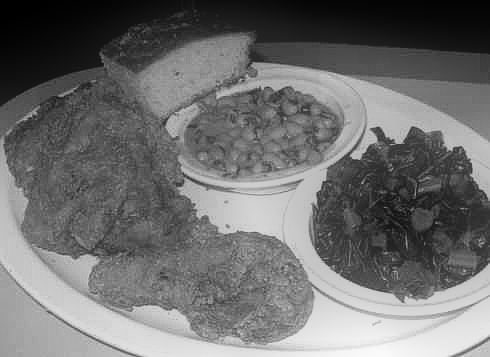
Fried Chicken, Turnips, Black-Eyed Peas, and Cornbread

Then there is the food. Life would hardly be worth living without the tastes of Southern home cooking. Chicken ‘n Dumplins, fried chicken, a salt cured ham, mama’s macaroni and cheese, most anything fried, those are the foods of my world. That does not even begin to include all of the fresh grown vegetables, pink-eye purple hull peas being one of my favorites. Of course, there must be bread with any southern meal, usually cornbread (never sweet) or buttermilk biscuits, like only grandmama can make. It takes a lifetime to learn to cook this way. You are taught from a young age, watching mama and grandmama cook. They are the true master chefs of the world because the include the most important ingredient, and I’m not talking butter, but love. The love that goes into their cooking and the joy that it brings is an ingredient that not just anyone can provide.

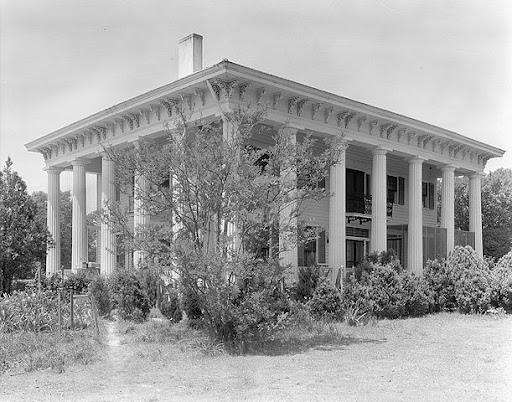
Antebellum Plantation

There are also the small towns where everyone knows each other and will do what they can to help in any way. The beauty of antebellum architecture. The ability to walk into a store or place of business and the person behind the counter knows you by name and knows how best to help you, and always with a smile on their face. The sense of community and family are ever present around you. It’s that small town feel and sense of community that makes the South a wonderful place to live.

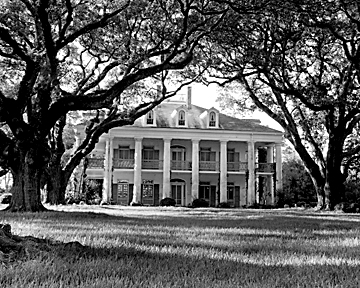
Oak Alley Plantation

Those things above are the bright and sunny parts of the South that make it such a wonderful place to live. But it is not always so wonderful. The South has always had a dark side, one that I am afraid will never go away. Bigotry and hatred of those things that don’t fit into the neat little packages above will always find this darker side. Wherever in the South you live, whether it is a mostly white region of the mountainous regions or the majority black areas of the Black Belt and Mississippi Delta, the minority population will face bigotry, and it does not matter about race when you are in the minority, even when your white. Race is not the only issue in the South. Religious bigotry is alive and well. Catholics and Jews are not as welcomed in certain parts of the Protestant dominated South. You will be shunned if you are not a regular churchgoer in the more rural areas. Sexual ‘immorality’ becomes the feeder of gossip, and homosexuality has a long way before it will be widely accepted in the South.

Governor George Wallace stands defiant at the University of Alabama

The South is full of those who judge. The South has its own codes of morality, and you have three choices: fit in, be shunned, or leave. The South has as many gay men as any other part of the country, yet more seem to be in the closet. As Tim Gunn says on Project Runway, we “make it work.”. Being different is one of the hardest things in the South to face, but you learn who you can trust with your secret and who you can’t and you make the best of it or move to an area, such as a larger city, where the people are more accepting.

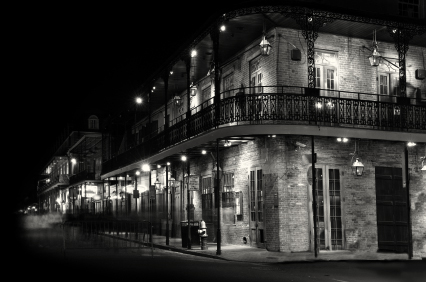
New Orleans French Quarter

Lastly, one of the worst things about the South for me personally is the heat. The winters are often mild and I looks forward to the reprieve it brings from the often repressive heat of late spring through early fall. As someone said to me the other day, the humidity is so thick that you don’t need to drink water because you breath enough in already. My thought on the heat is that in the winter you can put on enough clothes to be warm, but in the summer you can’t legally take off enough clothes to be cool. Thank God for air conditioning, I don’t know that I could survive without it.

Magnolia

Overall, I love the South, and quite honestly if those who don’t fit in, i.e. gay men like myself, don’t stay, then we cannot make the effective changes that are necessary. There will always be the darker side of the South, but by standing our ground and fighting the good fight, we can make that darker side hide in the shadows instead of us. We need to do with the South’s darker side what Southerners have often done with their family secrets, put them in the attic and throw away the key. It can only be done if we stay and fight for change. We need to throw out the bad and keep the good.

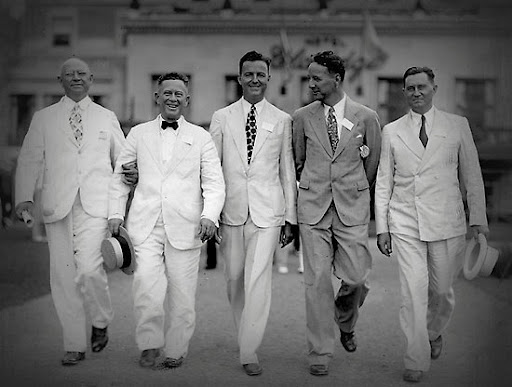
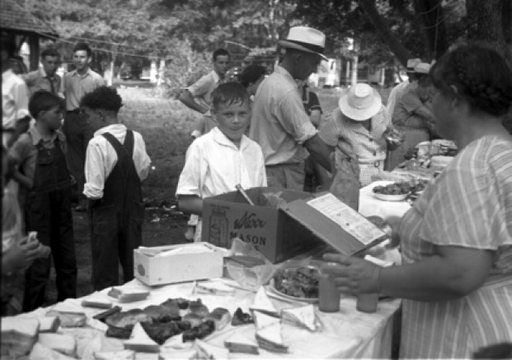
Residents of Penderlea Homesteads enjoy a Sunday school picnic in 1937.

To me, the South is hot summers.  The South is humidity that completely defeats the purpose of a hairdo.  The South is sweet tea, lakes and the Mighty Mississippi, old houses, mosquitos, dirt roads, watermelon and peaches and pears, comfort food like cornbread and grits.  The South is catfish and swimming holes and tire swings and slow talking, front porches and bare feet.

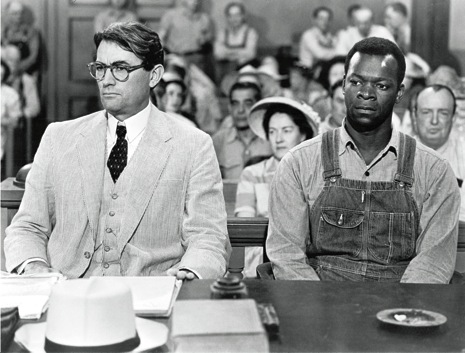
From To Kill a Mockingbird

The South is William Faulkner, Louis Armstrong, Rosa Parks, Atticus Finch, Zora Neale Hurston, Thomas Jefferson, Johnny Cash, Helen Keller, Elvis Presley, and Tennessee Williams.  The South are those who have made it such a wonderful place.  Those who tell it’s stories, who sing the songs, who cook the food. These are the people who make up the South and make it such a special place to live.


Antigay Hate Groups on the Rise

In recent years, the gay rights movement has advanced by leaps and bounds, but there is still much more we need to do. But such remarkable progress has also given rise to more and more homophobic disciplines as noxious and infuriating as the National Organization for Marriage and the Family Research Council—among many others—whom would very much like to force LGBT men and women everywhere back into the closet, which they will of course keep locked in order to protect traditional families from mere heathens like you and me.  And this is something that we cannot take for granted.

So it should come as no surprise that the number of anti-gay hate groups in the United States increased by 60% in the past year from 17 in 2010 to 27 in 2011, according to a recent Intelligence Report from the Southern Poverty Law Center (SPLC).

From the SPLC:

The LGBT community made significant advances in 2011, with the repeal of the “Don’t Act, Don’t Tell” policy on gay men and lesbians in the military, the growing acceptance of same-sex marriage by Americans and the legalization of such bonds in New York state. But it was precisely these advances that seemed to set off a furious rage on the religious right, with renewed efforts to ban or repeal marriage equality and what seemed to be an intensification of anti-gay propaganda in certain quarters. American Family Association official Bryan Fischer, for instance, said that “gays are Nazis,” claimed that HIV does not cause AIDS but gay men do, and, for good measure, criticized black welfare recipients who “rut like animals.” In another development, most of the religious right groups that started out opposing abortion but moved on to attacking LGBT people have recently begun to adopt anti-Muslim propaganda en masse. The gay-bashing Traditional Values Coalition, for instance, last year redesigned its website to emphasize a new section entitled “Islam vs. the Constitution,” published a report on Shariah law, and joined anti-Shariah conferences. Overall, the number of anti-gay hate groups in the United States rose markedly, going from 17 in 2010 to 27 last year.

SOURCES: