Category Archives: News

Gaydar

image
I saw this on HuffPost Gay Voices and found it pretty interesting.

Is Gaydar Real?
By Rebecca Adams

Academic studies can be fascinating… and totally confusing. So we decided to strip away all of the scientific jargon and break them down for you.

The Background

Whether or not “gaydar” — a supposed intuitive ability to identify gay people — is real, many people believe it’s possible to tell someone’s sexual orientation just by looking at them. The problem is, research (and anecdotal evidence) has found that gaydar tends to rely on stereotypical attributes — like the way someone dresses or how they style their hair — that don’t actually tell you anything about who someone’s attracted to. Gaydar, therefore, seems to legitimize these stereotypical myths, something that’s been shown to lead to prejudice and oppression. Unlike other forms of stereotypes, however, gaydar has seeped it’s way into popular culture, and it’s considered relatively harmless and socially acceptable.

In a new five-part study, researchers from the University of Wisconsin-Madison set out to see if what they refer to as “the gaydar myth” is as “harmless” as some people may think or if it’s just a veiled method of perpetuating gay stereotypes.

The Setup

In the first study, participants looked at pictures of 55 gay men and 50 straight men’s faces selected from an online dating site. Each photo was rated for overall quality, from “very poor” to “excellent,” by a set of student raters before the study. Then, the researchers randomly paired the photos with a supposed descriptive statement about the person that was either gay-stereotypic (“He likes shopping.”), stereotype-neutral (“He likes to read.”) or straight-stereotypic (“He likes football.”). These weren’t actually applicable to the men in the photos, but participants didn’t know that. They were then instructed to determine whether or not the man in the photo was gay. For the second study, the researchers repeated the first study, but this time they only chose photos that were rated highest in quality from both the straight and gay men groups of photos.

Both the first and second studies found that when participants were given stereotypically gay personal statements with photos, they were much more likely to guess that the man in the photo was gay. Meaning: The pictures didn’t matter nearly as much as the stereotypes did.

The third study had participants categorize the same gay and straight men’s pictures without the accompanying stereotypic statements. The researchers found that people were more likely to assume men in higher quality photos were gay — they seemingly assumed gay men would take better photos. The fourth study replicated the third with women’s photos instead of men’s to see if the same was true for lesbians. Participants were unable to gauge sexual orientation simply by looking at a person’s face.

Finally, the researchers did their fifth study to determine whether or not gaydar serves as a legitimizing myth for these stereotypes. They gathered 233 undergraduate participants and divided them into three groups: one that would be told that gaydar is stereotyping, one that would be told that gaydar is real and one that would be given no information regarding gaydar. Participants then completed a modified version of the first study, using the same pictures and statements. This time, however, participants could refrain from guessing the person’s sexual orientation if they wanted.

The Findings

In the final study, participants’ answers depended on which group they were in. Those in the “gaydar is real” group tended to believe in gaydar more than the other groups, and people in the “gaydar is stereotyping” group believed in it less than the control group. In this final version of the study, it was easy to see that people didn’t assign sexual orientation simply because they were forced to choose — participants had a “no idea” option, yet they chose it “very infrequently,” according to the study.

As the researchers put it: “The evidence provided in Study 5 indicates that the folk concept of gaydar serves as a legitimizing myth, promoting stereotyping to infer orientation by giving that stereotyping process the alternate label of ‘gaydar.'” Basically, when people slap on a euphemism for stereotyping — in this case, “gaydar” — they feel free to judge groups of people by very limited parameters which legitimize societal myths. These findings build on past research about how stereotypes that seem plausible will likely lead to inaccurate assumptions.

The Takeaway

Taken at face value, the concept of gaydar may not seem like such a big deal, but there’s one big problem with stereotyping: It often leads to inaccurate conclusions. The researchers put it in terms of the “gay men like shopping” trope. If people assume gay men like shopping, that doesn’t mean that all men who like shopping are gay (or that all gay men like shopping). Not to mention, if gay men make up 1.8 percent of the male population in America, even if they’re ten times more likely to enjoy shopping, men who like shopping are still more likely to be straight — there are simply more men who identify as straight out there.

Perhaps the researchers put it best: “Whether people fit or violate their group’s stereotypes is immaterial to their value — we would hope that, rather than being judged or pressured based on the existence of a stereotype, people can be treated as individuals and judged on their own merit.” Amen.

The Closet Professor’s Conclusion

It seems to me that the study has two major flaws. First, it assumes that gaydar is purely visual and can be determined by a picture of a face. When my “gaydar” goes off, it’s more than just a picture of a face. It has to do with how he moves, how he talks, and basically, how he carries himself. The most sure fire way is to watch his eyes. If a hot guy walks by and his eyes follow, then he is probably gay, but if a hot girl walks by and his eyes follow her, then he is probably straight. You have to watch the eyes though, because head movements can be misleading, especially for someone in the closet.

Second, the study assumes that gaydar is something that heterosexual men possess. While I do think that some women possess gaydar, most straight men do not. Heterosexual men often use all kinds of bad stereotypes to identify gay men; however, gay men and some women use more subtle stereotypes to identify gay men. I do not dispute that a large part of gaydar is stereotyping, but I think gay men tend to be more careful with stereotyping and are more intuitive. Many gay men were stereotyped before they came out, so they aren’t as quick to judge others unfairly. That being said, I will postulate that wishful thinking does occasionally interferes with gaydar.

Finally, I think gaydar is possibly an evolutionary characteristic. Gay men have always existed, but we had to find one another. Historically, if a gay man hit on the wrong man, i.e. a straight man, then he might not survive the attempt. Therefore, I think along with the genetic code that makes us gay, we also have the ability to find one another. Then again, gaydar could be a complete myth built on stereotypes, but I think it is very real, some people just have better gaydar than others. I tend to think mine is pretty good.

The hitchBOT Tragedy

image

Sometimes, I am really embarrassed to be from the United States. For the most part I love my country, and I love the ideals that my country was founded on and the principles that are at the core, but it’s stories like the one below that makes me sad to be an American. This particular story is about a traveling robot name hitchBOT, a hitchhiking robot.

A bunch of really nice humans had already helped hitchBOT traverse the length of Canada and most of Germany, the robot was going to try to make it from Massachusetts all the way to California. HitchBOT is the brainchild of two Canadian social scientists. As Frauke Zeller and David Harris Smith explained it in a piece for the Harvard Business Review, it was an experiment meant to spark a discussion “about trust, notions of safety, and about our attitude towards technology.”

For his third trip, hitchBOT, a cute robot with kitsch appeal — made of a bucket, a display and noodle appendages — was dropped off at the Peabody Essex Museum in Salem, Mass., on July 17. The first few days, things went smoothly: With the help of friendly humans, who gave hitchBOT a ride and also charged him, he hit up Fenway Park and Providence and New Haven and even crossed off the first item on his bucket list: “See the lights in Times Square.”

Eventually, he made it to Philadelphia, where Jesse Wellens, of YouTube fame, showed him around town in the early morning hours of Saturday. At 3:57 a.m. ET on Saturday, Wellens tweeted that he was dropping hitchBOT off at Elfreths Ally, the oldest residential street in the U.S. Unfortunately, that’s where hitchBOT’s journey ended.

On his blog, the robot wrote that his body was damaged but “my love for humans will never fade.”

HitchBOT’s family — aka the researchers — issued this statement:

“hitchBOT’s trip came to an end last night in Philadelphia after having spent a little over two weeks hitchhiking and visiting sites in Boston, Salem, Gloucester, Marblehead, and New York City. Unfortunately, hitchBOT was vandalized overnight in Philadelphia; sometimes bad things happen to good robots. We know that many of hitchBOT’s fans will be disappointed, but we want them to be assured that this great experiment is not over. For now we will focus on the question ‘what can be learned from this?’ and explore future adventures for robots and humans.”

In an interview with the CBC back in March, Smith said he hoped hitchBOT’s journey would lead to some introspection on the way society works. Maybe, he said, it could spark discussion on some big questions like: “What kind of people are we? Are we kind? Do we live in a safe world, you know, for the most part?”. Which leaves me with one question: What does this say about the U.S.?

Sadly, I think it says awful things about the United States. The robot went unharmed across Canada and much of Germany, but after being in the United States for a few weeks, hitchBOT was vandalized. Really, what kind of people do that. I’m afraid more and more, the United States is filled with hate and meanness. Just look at how Donald Trump is doing in the polls. The meaner more hateful he gets the higher his numbers climb. How can people really want that type of person to lead our country? Yes, he speaks his mind, and yes, he doesn’t mind speaking the truth about himself, but it just goes to show how Americans are fascinated by a culture of rudeness and disrespect.


Quotes from the Obergefell v. Hodges Opinions


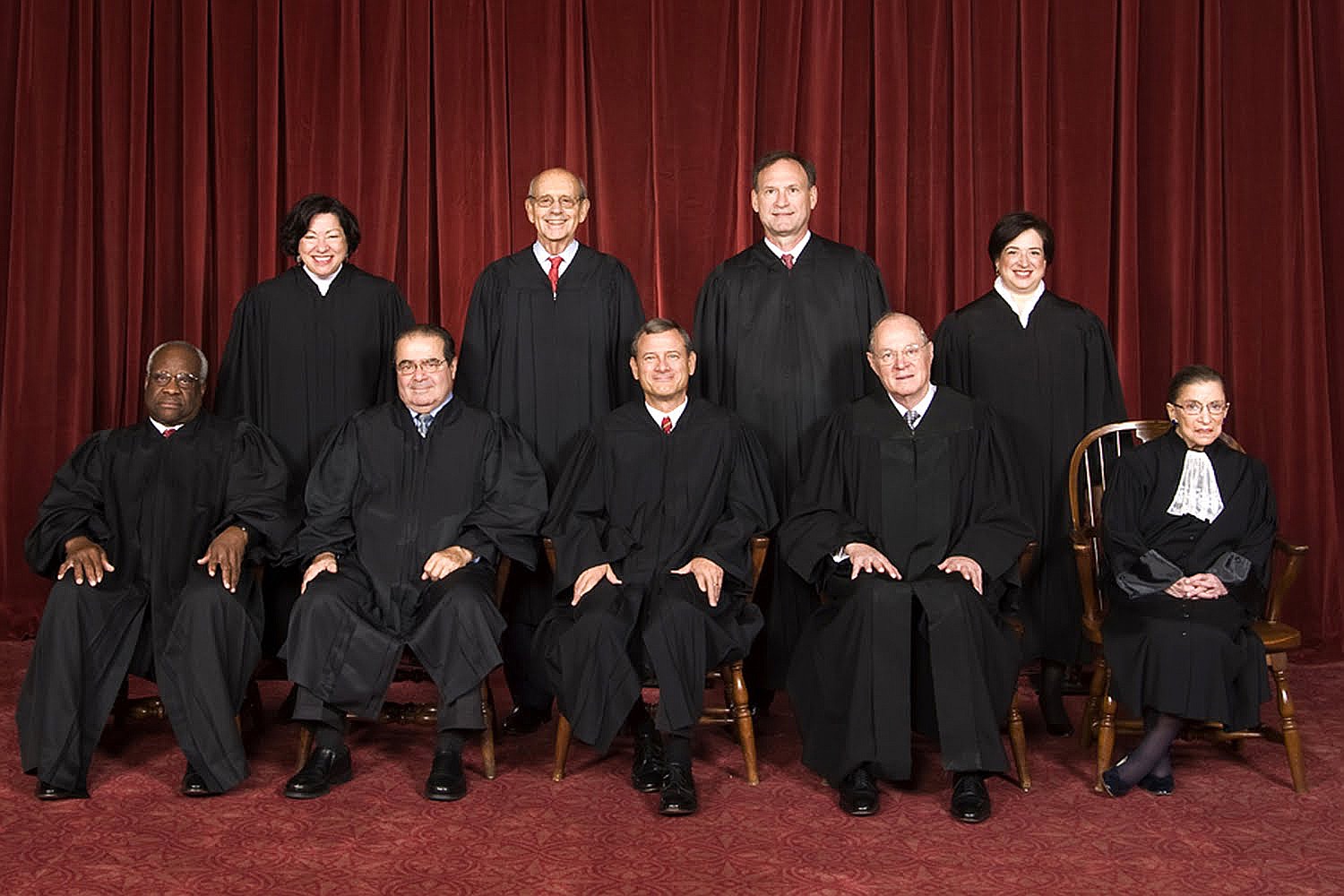
As a historian, I often wonder how certain events and people will be remembered in history. As Obergefell v. Hodges made its way through the Supreme Court this term, I began to ask myself: how will historians look back at the Roberts Court? The Marshal Court (three three previous Courts of Jay, Rutledge, and Ellsworth heard few cases) is known for establishing judicial review and establishing the court as a equal branch of the federal government. The Taney Court is best remembered for the Dred Scott case. The Reconstruction Era Courts developed the doctrine of substantive due process based on the Fifth and Fourteenth Amendments. The White and Taft Courts extended due process and the Bill of Rights to the states. The New Deal Courts upheld and strengthened the power of the federal government. The Warren Court was probably the most influential since the Marshall Court, establishing numerous rulings on equal protection and equality during the era of the Civil Rights Movement. The Burger Court gave us one of the most controversial cases, Roe v. Wade, while the Rehnquist Court gave us Lawrence v. Texas and expanded due process. The Roberts Court will probably go down in history as the Kennedy Court. Kennedy seems to be the swing vote on the court as Roberts, Scalia, Thomas, and Alito usually vote as a block for conservative issues, while Ginsburg, Breyer, Sotomayor, and Kagan usual vote as a block on more liberal issues. Therefore, Kennedy is the moderate who makes the real decisions in the courts. Decisions tend to go as Kennedy goes.

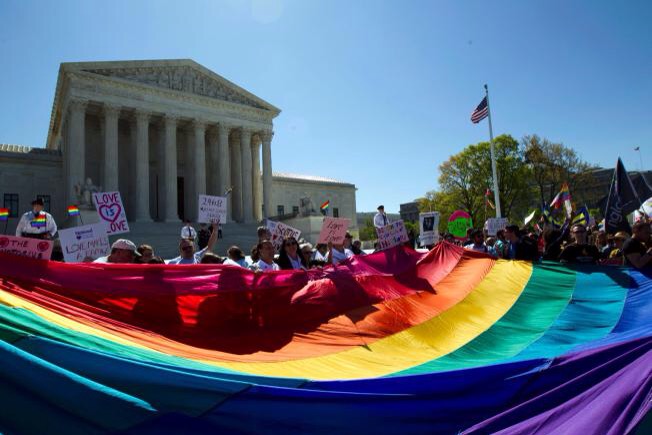
 In Obergefell v. Hodges, Justice Anthony Kennedy once again was the most important vote and laid out Americans’ right to marry. But the court was deeply divided, and I think that will be what the Roberts court will be mostly remembered for. In a 5-4 landmark decision Friday, the nation’s highest court deemed same-sex marriage a constitutionally guaranteed right, effectively nullifying all state laws that bar gay and lesbian unions.

Justice Anthony Kennedy crafted the court’s majority opinion, but the final ruling was hardly unanimous, with Chief Justice John Roberts and Justices Antonin Scalia, Clarence Thomas and Samuel Alito all authoring individual dissents. Here are some of the most important quotes from the major opinion and dissents in Obergefell v. Hodges:

Kennedy:

“Marriage is sacred to those who live by their religions and offers unique fulfillment to those who find meaning in the secular realm. Its dynamic allows two people to find a life that could not be found alone, for a marriage becomes greater than just the two persons. Rising from the most basic human needs, marriage is essential to our most profound hopes and aspirations.”

“As all parties agree, many same-sex couples provide loving and nurturing homes to their children, whether biological or adopted. … Excluding same-sex couples from marriage thus conflicts with a central premise of the right to marry. Without the recognition, stability, and predictability marriage offers, their children suffer the stigma of knowing their families are somehow lesser. They also suffer the significant material costs of being raised by unmarried parents, relegated through no fault of their own to a more difficult and uncertain family life. The marriage laws at issue here thus harm and humiliate the children of same-sex couples.”

“In forming a marital union, two people become something greater than once they were. As some of the petitioners in these cases demonstrate, marriage embodies a love that may endure even past death. It would misunderstand these men and women to say they disrespect the idea of marriage. Their plea is that they do respect it, respect it so deeply that they seek to find its fulfillment for themselves. Their hope is not to be condemned to live in loneliness, excluded from one of civilization’s oldest institutions. They ask for equal dignity in the eyes of the law. The Constitution grants them that right.”

Roberts:

“Many people will rejoice at this decision, and I begrudge none their celebration. But for those who believe in a government of laws, not of men, the majority’s approach is deeply disheartening. … Five lawyers have closed the debate and enacted their own vision of marriage as a matter of constitutional law. Stealing this issue from the people will for many cast a cloud over same-sex marriage, making a dramatic social change that much more difficult to accept.”

“If you are among the many Americans – of whatever sexual orientation – who favor expanding same-sex marriage, by all means celebrate today’s decision. Celebrate the achievement of a desired goal. Celebrate the opportunity for a new expression of commitment to a partner. Celebrate the availability of new benefits. But do not celebrate the Constitution. It had nothing to do with it.”

In Roberts’ dissent, he says that the five justices who voted in favor of marriage equality are making laws instead of interpreting them. However, we all know that as Justice Kennedy so eloquently wrote, “The nature of injustice is that we may not see it in our own times.” All of the important civil rights cases have been decided because there was an injustice that the states or congress refused to address. It has often been the duty of the Supreme Court to I force the principles of due process and equal protection under the law. I disagree with Roberts, the Constitution had everything to do with the decision in Obergefell v. Hodges.

Scalia: 

“The substance of today’s decree is not of immense personal importance to me. The law can recognize as marriage whatever sexual attachments and living arrangements it wishes, and can accord them favorable civil consequences, from tax treatment to rights of inheritance. … It is of overwhelming importance, however, who it is that rules me. Today’s decree says that my Ruler, and the Ruler of 320 million Americans coast-to-coast, is a majority of the nine lawyers on the Supreme Court.”

“If, even as the price to be paid for a fifth vote, I ever joined an opinion for the Court that began: ‘The Constitution promises liberty to all within its reach, a liberty that includes certain specific rights that allow persons, within a lawful realm, to define and express their identity,’ I would hide my head in a bag. The Supreme Court of the United States has descended from the disciplined legal reasoning of John Marshall and Joseph Story to the mystical aphorisms of the fortune cookie.”

Scalia consistently belittles Kennedy’s majority opinion on its prose, but if one were to read Scalia’s eight page dissent, you would see that Scalia makes a mockery of his position. His dissent is not based on legal precedent but one childish rant replete with name calling. Scalia should hide his head in a bag because he demeans the prestige of the court as he whines like a toddler who did not get his way.

Thomas:

“The Court’s decision today is at odds not only with the Constitution, but with the principles upon which our Nation was built. Since well before 1787, liberty has been understood as freedom from government action, not entitlement to government benefits. The Framers created our Constitution to preserve that understanding of liberty. Yet the majority invokes our Constitution in the name of a ‘liberty’ that the Framers would not have recognized, to the detriment of the liberty they sought to protect.”

Thomas is merely a hypocrite. Obergefell v. Hodges does for same sex couples what Loving v. Virginia did for interracial couples. If the Court did not have the right to make decisions about marriage equality, then Thomas would not be a the lone African-American on the Supreme Court Justice but a Virginia prison inmate for his marriage to Virginia Thomas, a white woman. Thomas needs to understand that he can’t have his cake and eat it too.

Alito:

“Today’s decision shows that decades of attempts to restrain this Court’s abuse of its authority have failed. A lesson that some will take from today’s decision is that preaching about the proper method of interpreting the Constitution or the virtues of judicial self-restraint and humility cannot compete with the temptation to achieve what is viewed as a noble end by any practicable means.”

Alito misses a major point of what the judiciary of the a United States is there for, to protect the citizens of the United States. When legislators fail to protect citizens and make arbitrary and bigoted laws, it takes the judiciary to step in and correct those wrongs. Justice is the conscience of the United States. It is what makes us a land where “all men are created equal.” We are not a nation where some men are created equal and the legislative bodies of this country can create second class citizens of others.

I think the fundamental problem is that the conservative members of the Court do not understand what the purpose of the Court is, which is to provide equal justice for all.


It Could Be Today

  
The countdown is on for the Supreme Court to render its verdict in watershed cases that could bring marriage equality to all 50 states. But an update to the high court’s calendar suggests we could get a ruling as early as this Thursday.

According to the Supreme Court website, the Court has added a non-argument session “for the announcement of opinions on Thursday, June 18, 2015, at 10 am.”  Insiders believe that’s when they’ll break the news of their decision in Obergefell v Hodges, which involves existing bans in Ohio, Michigan, Kentucky, and Tennessee.

It is possible, of course, that the justices will announce a verdict in some other case, and hold off on marriage equality until as late as June 30, when the current session ends.


What Are The Possible Verdicts In The Supreme Court Marriage Equality Cases?

Experts on both sides of the issue believe SCOTUS will issue a broad ruling granting federal marriage equality. But what does that actually mean? And what if the justices don’t? 

Below, I’ll review three possible verdicts the Supreme Court could issue in Obergefell v Hodges and spell out what they mean in practical terms.
Of course SCOTUS can be unpredictable at times, so it is still a situation we wait for with bated breath.

If SCOTUS Rules Marriage-Equality Bans Are Unconstitutional…

Any remaining barriers to gay marriage are also unconstitutional, meaning same-sex couples will be able to marry anywhere in the country.
 This is the best possible outcome, but if Ginsberg writes the opinion, then it could possibly be an even wider ruling.

If SCOTUS Limits Its Ruling To Require States To Recognize Marriage Equality…

Couples in states without same-sex marriage would actually have marry elsewhere, but must be afforded all the rights of the institution at home.
 This may be the case of Roberts writes the opinion.  If this is the case, then SCOTUS is keeping the status quo and issuing a half-hearted ruling such as we saw in Windsor, which struck down significant parts of DOMA.

If SCOTUS Rules In Favor of Bans On Marriage Equality…

In the immediate, bans in 14 states—including the ones in Ohio, Michigan, Kentucky, and Tennessee that are at stake in Obergefell v Hodges—would remain intact.
 This would be the most disastrous of rulings, and means that Kennedy, who wrote the opinion in Windsor sided against equality in Obergefell.

Tragically, though, states that had their marriage bans thrown out by federal courts in the past could attempt to reinstate such barriers. Existing same-sex marriages could come into question, as well. Experts agree such a ruling would have wide-ranging effects that could throw our hard-earned victories into chaos.

However SCOTUS rules, it’s guaranteed to be a major issue of the 2016 presidential race, and the religious right will go nuts, either with joy or with the belief that the world is ending.  
UPDATE: SCOTUS issued First Amendment and criminal law rulings, but nothing on Obergefell. The Court had seventeen opinions left to issue going into today. They issued six today. With eleven opinions left, SCOTUSblog believes that there is a possibility that they may extend the session into July. It happens on occasion, but because the justices have teaching and speaking obligations in July, they often attempt to finish by the end of June.


Obergefell v. Hodges 

 
Obergefell v. Hodges presented a lot of back and forth on the issue of same sex marriage at the Supreme Court on Tuesday, which was deeply divided as it heard oral arguments in the case.  Obergefell v. Hodges is a case which is likely to go down in the history books alongside other landmark civil rights cases.  This one centers on two questions: first, whether there is a constitutional right to gay marriage, and second, if not, whether states that have bans on gay marriage have to recognize gay marriages performed in other states where it’s legal.  The first question seems to be the most important, and I have tired to sum up the SCOTUS proceedings as succinctly as possible, but it turned out to be way too long.  The best summary I’ve read is from a New York Times article by Adam Liptak.  I read over numerous articles about the proceedings, and the one by Liptak seemed to be one of the best. So if you want to read about the arguments presented and the questions asked by the justices, then click on the link for the Liptak article.

Let’s face it, most of the arguments against same sex marriage are ridiculous.  Opponents argue that same sex marriage:  would destroy the institution of marriage, Marriage is for procreation, polygamy would follow, voters should be able to decide, tradition and history, and religious concerns.  Those six are the arguments that opponents seem to want to argue most.  So let’s look at these one at a time.  Same-sex marriage will have no effect on opposite-sex marriage.  Quite simply, it will not affect a heterosexual marriage in any way.  Also, if marriage is for procreation only, then barren couples should have their marriages invalidated, no one should be able to marry a post-menopausal woman, and couples who do not want children should not be allowed to marry.  However, opponents of same-sex marriage still say that LGBT couples should not be allowed to marry because the marriage cannot produce children.  What is equal about that?  As for polygamy, one of the arguments is for religious freedom, but we deny those whose religion allows polygamy to practice it.  So why not allow polygamy?  I want only one man in my life, but if you’re Islamic or Mormon, you should have the right to have multiple wives, as long as one woman can also have multiple husbands.  Furthermore, if voters were able to decide all issues about equality, the American South would still be segregated, interracial marriage would still be illegal, and sodomy would still be illegal (and for those who would think that it should still be illegal [none of my readers I hope] then please remember that most sodomy laws included any sex that was not in the missionary position).  The American voters cannot be trusted with protecting the rights of minorities, which is why we have the 14th Amendment.  As for tradition and history, if we are speaking strictly of American history, numerous Native American tribes allowed not only for transgender but also for same-sex marriage.  It is only the introduction of Christianity that those tribals laws changed.  Which brings me to my last point, America’s Founding Fathers believed in separation of church and state, therefore religious need not apply.

Preliminary indications are that the Court is ready to rule 5-4 in favor of marriage equality. However, while even those opposed to marriage equality concede as much, a win — especially one in which marriage equality is affirmed as a civil rights issue — is no guarantee.  The Supreme Court will release its ruling on Obergefell v. Hodges in June. While there’s reason to be optimistic, the oral arguments did not provide a clear win for the LGBT community, and even if marriage equality is affirmed, it could be affirmed in narrow terms that aren’t transferrable to other LGBT cases involving discrimination unrelated to marriage.  My greatest fear is that the Supreme Court will issue a very narrow decision in favor of same-sex marriage and those states who allow same-sex marriage will be allowed to continue and other states will be forced to wait, therefore, having two Americas, one with LGBT Americans having marriage equality in some states and others states where LGBT Americans will be deemed second class citizens.  I personally am hoping for a broad opinion written by Ginsberg.


Come Out to the National Parks 

The National Park Service is encouraging LGBT Americans to come out and visit the more than 400 parks overseen by the federal agency.  The latest move by the park service to engage the LGBT community is part of the new Find Your Park initiative, launched recently in conjunction with the National Park Foundation.

Gay and lesbian park service employees and lesbian singer Mary Lambert, one of several celebrity centennial ambassadors for the initiative, are helping to spread the inclusive invite as part of the new public awareness and education campaign celebrating the milestone centennial anniversary of the National Park Service in 2016.

I’ve always loved the National Parks, and once considered joining. The National Parks Service as a historian.  When I was a kid, my family would go camping at least once a year at the Gulf Islands National Seashore at Ft. Pickens near Pensacola.  We would also often go in the summers to the Great Smokey Mountain National Park and stay in either Pigeon Forge, Tennessee, or Cherokee, North Carolina.  I learned so much at these National Parks and Ft. Pickens was one of the major reasons for my love of history.  The beauty of the National Parks is unmatched anywhere, and they deserve to be celebrated.

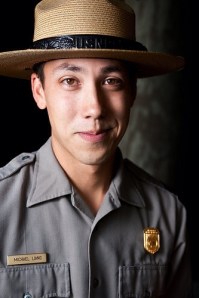
A video featuring gay park ranger Michael Liang, a visual information specialist at Santa Monica Mountains National Recreation Area in Southern California shows him jogging through Cheeseboro Canyon off the 101 where he runs prior to heading to work.  Liang noted that parks allow visitors to “slow down” their minds and “notice” the beauty of the outdoors.  “All you have to do is get up, get out there, and find your park,” said Liang.
Liang, 29, explained that the park service is looking to create the next generation of park supporters and advocates with the campaign.  “If you look at who we traditionally attracted, it was upper middle-class families,” noted Liang, who grew up in Michigan and started with the park service as an intern in 2004. “The parks are funded by the taxpayers, so it is really important we represent the diversity of the country and the population.”

Through the Find Your Park’s website, http://www.findyourpark.com/, any visitor can upload their own video talking about their love for America’s protected spaces or an individual park site that is of particular interest to them.  “It is a digital platform to share your stories. We invite the public to share their favorite national park stories or how they want to envision what the park service looks like,” said Liang. “It is a great way for LGBT people to share why it is important to them or what we can do to make them more relevant to our community.”

Responsible for the marketing materials of the park where he works, Liang said he is mindful of using photos that show a diverse array of visitors. He is working on a series of posters aimed at inspiring Los Angeles residents to visit the Santa Monica Mountains west of the city.  “I take personal responsibility to ensure the people depicted in those photos reflect the diversity of L.A., for example, having two men holding hands watching the sunset in the Santa Monica Mountains,” said Liang, who came to the park last June from Philadelphia where he worked in the park service’s regional office for the Northeast. “I am still discovering our park. By June my challenge is to identify LGBT historical figures with our park. It will be perfect timing to start digging into those stories.”

One way the parks can attract LGBT visitors, said Liang, is through the programming sites offer guests. He pointed to the Bay Area’s Rosie the Riveter/WWII Home Front National Historical Park on the waterfront in Richmond, which has sought to capture the stories of LGBT people who either worked in the East Bay shipyards during the war or were service members who embarked from Bay Area military bases for combat in the Pacific Rim.

“How we can attract LGBT visitors is through creating national park sites that tell the story of our community,” said Liang, who is hopeful that one day there will be an LGBT-specific national park site. “While there currently isn’t one yet in the system, there is the theme study looking at LGBT sites.”

In January 2014 the B.A.R. broke the news that the park service had teamed with Megan E. Springate, who identifies as queer and is seeking a Ph.D. in archaeology at the University of Maryland, to oversee a National Historic Landmark LGBTQ Theme Study and proposed framework.  As part of the project, the park service is seeking nominations of places important to the country’s LGBT community for inclusion on the National Register of Historic Places or to be designated as a National Historic Landmark. Both are considered important first steps that could lead to the properties one day becoming national park sites.

According to park service officials, only five properties in the country have been granted some form of federal historic preservation recognition specifically due to their relationship to LGBT history. There are four sites presently included in the National Register of Historic Places and one – New York City gay bar the Stonewall Inn – listed as a National Historic Landmark. The second landmark, the Chicago home of gay rights pioneer Henry Gerber, should be finalized later this year.

Last month the National Park Service released a seven-page document listing various ways members of the public can assist with its LGBTQ Heritage Initiative. Steps people can take run the gamut from proposing landmark-worthy sites to creating LGBT-themed tours of historic districts.

“The National Park Service has just released a document that brings together the many ways that people across America, regardless of identity, location, or how much time they have, can participate and engage with the initiative,” Springate wrote in an email to members of the Rainbow Heritage Network, a group for LGBT history advocates. “These include sharing information about places important to your community, spreading the word, visiting historic places, and writing nominations or nomination amendments for the National Register of Historic Places or National Historic Landmarks programs.”

The document can be downloaded online at http://www.nps.gov/history/heritageinitiatives/LGBThistory/GetInvolved.pdf


Back to the Grind 


Spring break is over and there are eight more weeks of school.  And thus begins the marathon.  I had such a wonderful and magical spring break, that it makes it even harder to return to school today.  However, my plan is to let my good mood shine through and hopefully it will rub off on the students.  I know that’s wishful thinking, but good things are happening and I’m trying to be optimistic.  The best news is that it’s a four day week.  We have Good Friday out of school.

I know this is a short post, and there were several things in the news from last week that I could talk about, but it seemed like a lot of the news was depressing.  California has a proposed ballot initiative that calls for killing gays with “bullets to the head.”  Really, what kind of sick minds could actually propose such a thing, but one lawyer in California has done just that.  Furthermore, indiana has passed a new law which the governor signed which is a legalized form of discrimination against gay people, even though it’s under the sick and misguided guise of “religious freedom.”  What utter bullshit!  It’s pure bigotry and has nothing to do with religious freedoms, because they are meant for people who call themselves Christian to refuse service to the LGBT community.  What they need is to be taught about “what would Jesus do” if they want religious freedom.  They should be doing all they can to help everyone and anyone, not finding ways to discriminate.  

There were other news related issues, but even thinking about gem make me sad and/or angry.  This week is Holy Week, and I plan to spend my week being optimistic and trying my best to love my fellow man, which I guess means being nice to my students, or at least as nice as I can be without losing control of them.

I hope everyone has a fabulous week.  I’m starting my morning with a cup of coffee, which always brightens my day and puts a pep in my step.

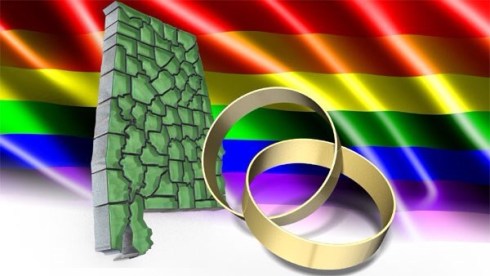
Give Alabama the Finger…The Wedding Finger #LuvUAlabama


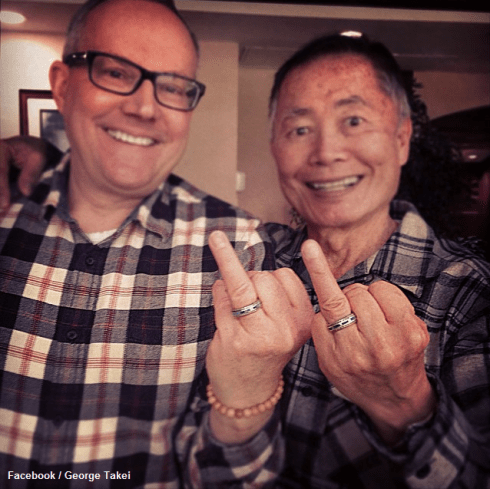
”Star Trek” icon George Takei is lending a hand — or, rather, a finger — to the battle for marriage equality in Alabama by helping to launch a social media effort in protest of Alabama’s recent halt on same-sex marriages.

The actor and outspoken lesbian, gay, bisexual and transgender (LGBT) rights activist shared a photo of himself with his husband, Brad Takei, on Instagram and Twitter calling for his followers to give Alabama “the wedding finger” in response to the state’s apparent backtracking on marriage equality.

“I’m going to say it. Alabama is really starting to piss me off,” Takei wrote in a separate Facebook post.

In an email sent to The Huffington Post, Takei said:

I was genuinely dismayed to hear that a state’s highest court would flout a federal court order, which was left to stand by both the Court of Appeals and the U.S. Supreme Court. This is grandstanding at its worst, and it is extraconstitutional.
You know, 60 years ago it wasn’t considered a real marriage if a white person wanted to marry an Asian American like me. And now look, I married a white dude. Times change. Attitudes change. And for the better.
We decided to speak out in this somewhat tongue in cheek way to make an important point. It is all about love, and we, as a same-sex couple, just want the same right to have our love recognized.
We hope enough couples, gay and straight, join with us to make this point. We’ll be collecting up the pics, all tagged with the hashtag #LuvUAlabama plus each couple’s home state, to create a mosaic of support for marriage equality. We hope Alabama, too, soon joins the right side of history, as all of America one day will.

Only time will tell if the effort will have an impact in Alabama, where the battle for same-sex marriage has taken some unexpected twists in recent weeks.

In January, a federal judge found that the state’s ban on same-sex marriage was unconstitutional, while a number of probate judges promptly refused to comply with the ruling.

Although the U.S. Supreme Court refused in February to halt same-sex marriages in Alabama, the Alabama Supreme Court ordered probate judges to stop issuing marriage licenses to same-sex couples statewide in what has been deemed “a defiant ruling” on March 3.

So let’s all give Alabama the finger…the wedding finger.


A Temporary Setback


Probate judges in Alabama’s 67 counties were caught in a tug of war between state and federal courts over the issue of same-sex marriage on Tuesday and were ordered by the state supreme court to stop issuing the licenses.

As of noon Wednesday, the Human Rights Campaign had identified 42 counties it said had stopped issuing same-sex licenses as of today. Another 19 never issued the licenses and the status of six — Bullock,  Crenshaw, Lamar, Macon, Monroe,  Sumter — is unclear, the advocacy group reported.

“Because of the Alabama Supreme Court’s willingness to ignore their oath of office, all Alabama’s counties appear to be in conflict with the intent of a federal court order,” HRC Legal Director Sarah Warbelow said in a press release. “This is only a temporary setback on the road to equality, but the message it sends to LGBT Alabamians is despicable.”

Same-sex couples will likely appeal up to the U.S. Supreme Court if necessary to block the latest state supreme court ruling, said Ben Cooper, chairman of Equality Alabama. “It’s important to understand that this is not nearly the end of this,” he said.

The federal government does not take kindly to states getting in the way of their rulings.  Attorney Shelley Bilbrey notes, “You know at some point, we end up with the George Wallace standing at the school-house door situation.”

Let’s say a probate judge wants to issue a same-sex marriage license. Let’s say they want to side with the federal court and ignore the state ruling.  Why not?

Bilbrey answers, “They would be fearful of a contempt citing.”  She’s saying probate judges could be jailed for following a federal court decision.  You can see why they may be reluctant to issue the same-sex marriage licenses, no matter their own feelings on the legality or morality of the issue.  Bilbrey adds, “Regardless of what he believes about the issue, I certainly would never want to risk a contempt citing.”  Because the ruling itself shows the state supreme court is using a lot of the powers at their disposal.  As for contempt, Bilbrey assesses, “I wouldn’t doubt that they would exercise that, since they’ve already taken this drastic measure.”

The Republicans in our state house and in our courthouses promised smaller, less intrusive government, but right now they are trying, instead, to write our marriage vows for us. And that love and cherish and sweet old fashioned notion stuff just got struck right out.  The Alabama Supreme Court has ruled that love is not a factor in marriage.  Have they decided to send us back hundreds of years to arranged marriages, when we weren’t able to choose who we’d marry?  No, these perverse judges instead want to look in our underpants to make sure our parts are compatible for baby-making.  


The Alabama Supreme Court of Idiots


Weeks after a United States District Court judge in Mobile ordered a probate judge there to issue same-sex marriage licenses, the Alabama Supreme Court has ordered a halt to same-sex marriages in the state.   In a 134-page opinion, seven of the nine justices said the U.S. Constitution “does not require one definition of marriage.”  The Alabama Supreme Court once again has instructed probate judges not to issue marriage licenses.

Of course the big conflict here is that a U.S. District Court judge struck down Alabama’s ban on gay marriage. That was appealed, but the Supreme Court refused to put a hold on that ruling while it decides on the issue of same-sex marriage itself.  Alabama seems not to be able to understand that federal jurisdiction trumps state jurisdiction.

“As it has done for approximately two centuries, Alabama law allows for ‘marriage’ between only one man and one woman,” the court wrote. “Alabama probate judges have a ministerial duty not to issue any marriage license contrary to this law. Nothing in the United States Constitution alters or overrides this duty.”

While same-sex marriage advocates chanted “love wins” outside Alabama courthouses last month, the Alabama Supreme Court said love has little to do with legal marriage in the state. 

In probably the most appalling part of the Supreme Court’s opinion, the justices stated that “Although love may be an important factor in a lasting marriage, civil marriage has no public interest in whether the people seeking a marriage license love one another.”

This means that that yesterday’s ruling from the Alabama Supreme Court throws the state into conflict with the federal judiciary. Remember, it was Alabama Chief Justice Roy Moore who issued a similar order in February.  U.S. District Court Judge Callie Granade, who struck down gay marriage in the state, has already ruled that probate judges should should follow her order, not that of the chief justice.  Now the Supreme Court of Alabama has decided to respond with an almost unanimous voice, over a case in which they have no jurisdiction.  Unlike the United States Supreme Court which does have a few instances of original jurisdiction, the Alabama Supreme Court only has appellate jurisdiction as the state’s highest court of appeal.  A case must begin in a lower state court in order to be heard by the Alabama Supreme Court.

Contrary to the Alabama constitution and Judicial precedent over jurisdiction, the Alabama Supreme Court issued the order, called a writ of mandamus, that had been requested by the Alabama Policy Institute and the Alabama Citizens Action Program last month to stop the issuing of same-sex marriage licenses.

The court seemed to chide Alabama Attorney General Luther Strange for not taking a more active role in enforcing state law, sadly however for the wrong reason.  “In the wake of the federal district court’s orders, Attorney General Strange has refrained from fulfilling what would otherwise have been his customary role of providing advice and guidance to public officials, including probate judges, as to whether or how their duties under the law may have been altered by the federal district court’s decision,” the court wrote. Strange had the legal duty to advise the probate judges to follow Judge Granade’s order; however, he remained silent on the subject and let chaos ensue.

Moore actually recused himself from Tuesday’s ruling, presumably, because his previous order had already been addressed by Judge Granade, but I have to wonder why Justice Tom Parker did not also recuse himself.  Parker was founding Executive Director of the Alabama Family Alliance (now the Alabama Policy Institute), which was one of the two public interest groups who asked the the Alabama Supreme Court to rule in this case as a court of original jurisdiction, which it cannot do.  One has to wonder how much in campaign contributions Parker and others justices received from the Alabama Policy Institute to make it worth their while to ignore Alabama legal precedents to even take up the issue.

Justice Greg Shaw was the lone dissenter in this case. He said that the Supreme Court should have put Granade’s ruling on hold, but that it is clear that this court has no jurisdiction to take this case and that the public interest groups suing on behalf of the state have no standing.  Further, Shaw stated in his dissent that pursuant to the Alabama Constitution, Alabama’s probate judges have both judicial and ministerial duties.  The Alabama Supreme Court only has jurisdiction of their judicial, not ministerial duties. Shaw pointed out that the judiciary of Alabama has no legal authority over issuing marriage licenses of any kind, therefore it is not in the jurisdiction of the Alabama Supreme Court to rule on this action of the county probate judges, just as they have no authority over the keeping of public records, driver’s licenses, or automobile tags.

Shaw concluded:

“By overlooking this Court’s normal procedures; by stretching our law and creating exceptions to it; by assuming original jurisdiction, proceeding as a trial court, and reaching out to speak on an issue that this Court cannot meaningfully impact because the Supreme Court of the United States will soon rule on it; and by taking action that will result in additional confusion and more costly federal litigation involving this State’s probate judges, this Court, in my view, is venturing into unchartered waters and potentially unsettling established principles of law. Therefore, I must respectfully dissent.”

“The state is going to take such a black eye on this,” said University of Alabama Law Professor Ron Krotoszynski, Jr.. “I think it’s going to play very badly in the national media,” he said, citing shows  like Bill Maher, John Oliver and The Daily Show with Jon Stewart.

“They’re rejecting Judge Granade’s reasoning lock stock and barrel,” Krotoszynski said.

Granade’s reasoning is in line with more than 60 federal district judges who have ruled on the same issue since the U.S. Supreme Court knocked down a part of the federal Defense of Marriage Act (or DOMA) in 2013, Krotoszynski said.

The next likely step is for one of the probate judges to file an emergency stay with the U.S. Supreme Court, Krotoszynski said. The situation could be “chaotic” between now and June when the U.S. Supreme Court is to rule on the issue anyway in a 6th Circuit case, he said.

Probate Judge Davis in Mobile could be in the worst position if the Alabama Supreme Court brings him under their order, which it appears they are inclined to do, Krotoszynski said. “He is between a rock and a hard place,” he said.  Davis had been ordered specifically to follow Judge Granade’s ruling when he initially refused to allow the Mobile County Probate Judge’s office to open for business after the initial stay ended.

The Human Rights campaign blasted the Alabama Supreme Court’s ruling, which it called meandering and bizarre.

“The Alabama state Supreme Court does not have the authority to interfere with a federal court order,” said HRC Legal Director Sarah Warbelow. “This order is outrageous and baffling, and no amount of legalese can hide the bare animus that forms the foundation of this extralegal ruling.”

If you are interested in reading the ruling, you can do so by clicking the link below.  I skimmed most of it, but the dissenting opinion by Justice Shaw is obviously written by someone who cares more about the rule of law and the procedure of law then by someone who is only concerned with politics.

Alabama Same Sex Marriage Decision