Category Archives: Poetry

Dear Friends

20131007-222402.jpg
Dear Friends
Edwin Arlington Robinson

Dear friends, reproach me not for what I do,
Nor counsel me, nor pity me; nor say
That I am wearing half my life away
For bubble-work that only fools pursue.
And if my bubbles be too small for you,
Blow bigger then your own: the games we play
To fill the frittered minutes of a day,
Good glasses are to read the spirit through.

And whoso reads may get him some shrewd skill;
And some unprofitable scorn resign,
To praise the very thing that he deplores;
So, friends (dear friends), remember, if you will,
The shame I win for singing is all mine,
The gold I miss for dreaming is all yours.

If you are familiar with the poems of Edwin Arlington Robinson then you probably know him for his poems “Richard Cory” or “Miniver Cheevy.” If you aren’t familiar with these two poems, I did a post about them nearly two years ago. In that particular post, I took these two poems and gave them a new personal meaning for me. I think that is the purpose of a lot of poetry. A poet may have a particular theme in mind when they write a poem, yet if it doesn’t resonate with the reader, then it really is just a personal exercise for the poet. Yet sometimes they have a special meaning for those who read them. Edwin Arlington Robinson’s poems always have a special meaning for me.

In “Dear Friends,” Arlington is explaining his craft of writing poetry. You can just picture his friends bemoaning his writing career. He was not particularly successful until later In life. It’s very sweet – their care – and very misdirected which is why I like his response to them in this poem – it’s still sweet and kind, but also firm as he says “this is my passion, so let me be.” As a teacher, people often wonder how I can stand my job. Yet, I truly love teaching. As Arlington says in the last three lines:

So, friends (dear friends), remember, if you will,
The shame I win for singing is all mine,
The gold I miss for dreaming is all yours.

Teaching is not about the money I make. I could do other things and make more money, yet my passion is to share my knowledge. So when someone disparages my career choice, I know that t was the calling that I was given. Yes, sometimes I might have felt like stepping outside my classroom and yelling, “This is not a classroom; it is Hell with fluorescent lighting!” Yet, this year I’ve taken a more positive approach, and it is slowly bit surely going to make this school year better.

I think, for those of us who tend to find their dreams at odds with popular tastes and are constantly torn between being true to themselves as square pegs and resigning themselves to whittling away at the corners in order to fit round holes, Robinson’s poem will resonate a lot. Not just as a teacher might I find it hard to fit expectations, but also as a gay man. Because I grew up in the South, there were certain expectations of me: get an education, get a good job, get married, have a family. Yet, I don’t fit those perfectly, nor will I ever. I am who I am, and that makes me the person I want to be. We should always remember that.

Ode to the Drama Teacher

20130930-194415.jpg

Some of you know that I am the faculty advisor for my school’s drama club. When our school decided to create more activities for our students who were not athletically inclined, the subject of creating a drama club came up. Without my knowledge, it was agreed that I would be in charge of the drama club, even though I had no experience with theater. Thankfully, I have wonderful support from other faculty members. I’ve enjoyed every minute of it, even if it is more work than I could ever imagine. So for any of you who have helped direct or helped with student theater, here is Samantha Bennett’s “Ode to the Drama Teacher.”

Ode to the Drama Teacher
By Samantha Bennett

And as you stand there: Aghast
Because we’re three days from Opening Night and
Ado Annie still doesn’t know her lines and
The Dream Ballet is a Nightmare and
The Light Board Op just got Detention…

Let us now praise You.

You, the Permanently Fatigued.
You, the Loyal-to-the-Point-of-Self-Neglect.
You, the Keeper of a Thousand-and-Eleventeen Secret Dreams.

You are the one who makes it all Look So Easy.
Who would have expected that the most important Skill you learned getting your BA
Was Juggling?

Juggling Paperwork and Personalities and oh, right — weren’t you supposed to have a
Private Life around here somewhere?

But even though you are Sick to Death of
Spoon River Anthology
You still puddle up every time you hear
There’s A Place For Us
No matter how Off-Key.

And while you still remember when you
Brought the House Down in
Midsummer
You now love This House.

You have created a House where any child — no matter how Flamboyant, no matter how Shy —
Can embrace their Inner Ethel Merman (and thanks to those English 101 classes you now must teach, you are keenly aware that using “their” in the previous sentence is increasingly considered correct and honestly, it’s really the only sensible answer as writing “his or her” is as damaging to poetry as the participle that dangles.)

And you have created a House where any child — no matter how Flamboyant, no matter how Shy — can dive straight to the Deepest, Darkest, Quietest corner of human suffering and bring a room of teenagers — and yes, you, too — to silent tears.

You have made a Home for the Misunderstood
A Family for the Misfit and a
Safe Spot to land no matter how bad The Mid-Terms are.

Because despite all the Budget Cuts and
The Paperwork and
The Meetings about the Meeting to Schedule the Meetings and
The Truancies and
The Parents
Dear God The Parents and
Did we mention The Paperwork?

Nothing on this Green Earth compares to watching a group of kids
Learn the true meaning of Ensemble.

And nothing compares to the pure joy of watching The Ones whom you knew would Eventually Get It
Finally. Really. Get It.

And nothing nothing nothing compares to The Confidences shared in low tones as they seek you out in
Your Office,
The Choir Room
The Front Seat of the Van on the way home from Fullerton.

You aren’t teaching Drama.
You are teaching Life
Which we all know is a Comedy — a Chekhovian Comedy — but a Comedy nonetheless.

And you aren’t teaching Choreography
You are teaching them to Dance.

And you aren’t teaching them how to be a Character.
You are teaching them how to be Themselves.

So here’s to you —

Making room for Art in a world that seems to have no room for Art.

(Because, by the way, that room has been repurposed as the new Standardized Test Prep Center — you don’t mind rehearsing outside, do you?)

And here’s to you —

Scrounging around for new shows that somehow match the sets you already have
Because some Genius on the School Board has
Recently Announced that not only can you not perform Huckleberry Finn
Or Anouilh’s Antigone (probably because he couldn’t pronounce it) and
Given the flap over the Scene from M. Butterfly last year, I guess
March of the Falsettos and The Vagina Monologues are
Out of the Question for the Spring

So Oh Dear God it looks like it’s going to be
Arsenic And Old Lace one more blessed time.

But that’s OK

I love Arsenic And Old Lace.

So here’s to you —

Making room for Another Coffee Mug with
Those Damn Masks on them
Making room in the Chorus for
Just One More
And

Making room for Each and Every Child
To Be
A
Star.

Samantha Bennett is a working actor and writer based in Los Angeles, and she’s the creator of The Organized Artist Company, an organization dedicated to helping creative people get unstuck from whatever way they’re stuck, especially by helping them focus and move forward on their goals. Bennett wrote this poem after presenting two days worth of workshops for CETA (California Educational Theatre Association) at their annual retreat at Asilomar, California, to honor drama teachers and their extraordinary work.


Nothing Gold Can Stay

20130923-215349.jpg

Nothing Gold Can Stay
by Robert Frost

Nature’s first green is gold,
Her hardest hue to hold.
Her early leaf’s a flower;
But only so an hour.
Then leaf subsides to leaf.
So Eden sank to grief,
So dawn goes down to day.
Nothing gold can stay.

Robert Frost wrote a number of long narrative poems like “The Death of the Hired Man,” and most of his best-known poems are medium-length, like his sonnets “Mowing” and “Acquainted with the Night,” or his two most famous poems, both written in four stanzas, “The Road Not Taken” and “Stopping by Woods on a Snowy Evening.” But some of his most beloved poems are famously brief lyrics—like “Nothing Gold Can Stay,” which is condensed into only eight lines of three beats each (iambic trimeter), four little rhyming couplets containing the whole cycle of life, an entire philosophy.

“Nothing Gold Can Stay” achieves its perfect brevity by making every word count, with a richness of meanings. At first, you think it’s a simple poem about the natural life cycle of a tree:

“Nature’s first green is gold,
Her hardest hue to hold.”

But the very mention of “gold” expands beyond the forest to human commerce, to the symbolism of wealth and the philosophy of value. Then the second couplet seems to return to a more conventional poetic statement about the transience of life and beauty:

“Her early leaf’s a flower;
But only so an hour.”

But immediately after that we realize that Frost is playing with the multiple meanings of these simple, mostly single syllable words—else why would he repeat “leaf” like he’s ringing a bell? “Leaf” echoes with its many meanings—leaves of paper, leafing through a book, the color leaf green, leafing out as an action, as budding forth, time passing as the pages of the calendar turn….

“Then leaf subsides to leaf.”

As the Friends of Robert Frost at the Robert Frost Stone House Museum in Vermont point out, the description of colors in the first lines of this poem is a literal depiction of the spring budding of willow and maple trees, whose leaf buds appear very briefly as golden-colored before they mature to the green of actual leaves.

Yet in the sixth line, Frost makes it explicit that his poem carries the double meaning of allegory:

“So Eden sank to grief,
So dawn goes down to day.”

He is retelling the history of the world here, how the first sparkle of any new life, the first blush of the birth of mankind, the first golden light of any new day always fades, subsides, sinks, goes down.

“Nothing gold can stay.”

Frost has been describing spring, but by speaking of Eden he brings fall, and the fall of man, to mind without even using the word. That’s why we chose to include this poem in our seasonal collection of poems for autumn rather than spring.


Why Poetry Can Be Hard For Most People

20130916-001124.jpg

Why Poetry Can Be Hard For Most People
by Dorothea Lasky

Because speaking to the dead is not something you want to do
When you have other things to do in your day
Like take out the trash or use the vacuum
In the edge between the stove and cupboard
Because the rat is everywhere
Crawling around
Or more so walking
And it is doesn’t even notice you
It has its own intentions
And is searching for that perfect bag of potato chips like you once were
Because life is no more important than eating
Or fucking
Or talking someone into fucking
Or talking someone into something
Or sleeping calmly and soundly
And all you can hope for are the people who put that calm in you
Or let you go into it with dignity
Because poetry reminds you
That there is no dignity
In living
You just muddle through and for what
Jack Jack you wrote to him
You wrote to all of us
I wasn’t even born
You wrote to me
A ball of red and green shifting sparks
In my parents’ eye
You wrote to me and I just listened
I listened I listened I tell you
And I came back
No
Poetry is hard for most people
Because of sound


About This Poem
“I wrote ‘Why Poetry Can Be Hard For Most People’ after reading and teaching some of Jack Spicer’s letters to Lorca. I became bewitched by the idea that we are always speaking to the dead when we write poems, especially Spicer’s line, ‘You are dead and the dead are very patient.’ I think the communication between the dead and undead is so full of real emotion because of its patience. Poetry is patient, too.”–Dorothea Lasky

About Dorothea Lasky
Born on March 27, 1978, in St. Louis, Missouri, Dorothea Lasky received her B.A. from Washington University. She continued her studies at the University of Massachusetts, Amherst, where she received her M.F.A. She has also earned a masters degree in arts and education from Harvard University and a PhD in creativity and education from the University of Pennsylvania. Lasky is the author of two books of poetry, AWE (Wave Books, 2007), and Black Life (Wave Books, 2010). She has also authored numerous chapbooks and pamphlets, most recently Poetry is Not a Project (Ugly Duckling Presse, 2010). She lives in New York.


In a Station of the Metro

20130909-231800.jpg

In a Station of the Metro
by Ezra Pound

The apparition of these faces in the crowd;
Petals on a wet, black bough.

About this Poem
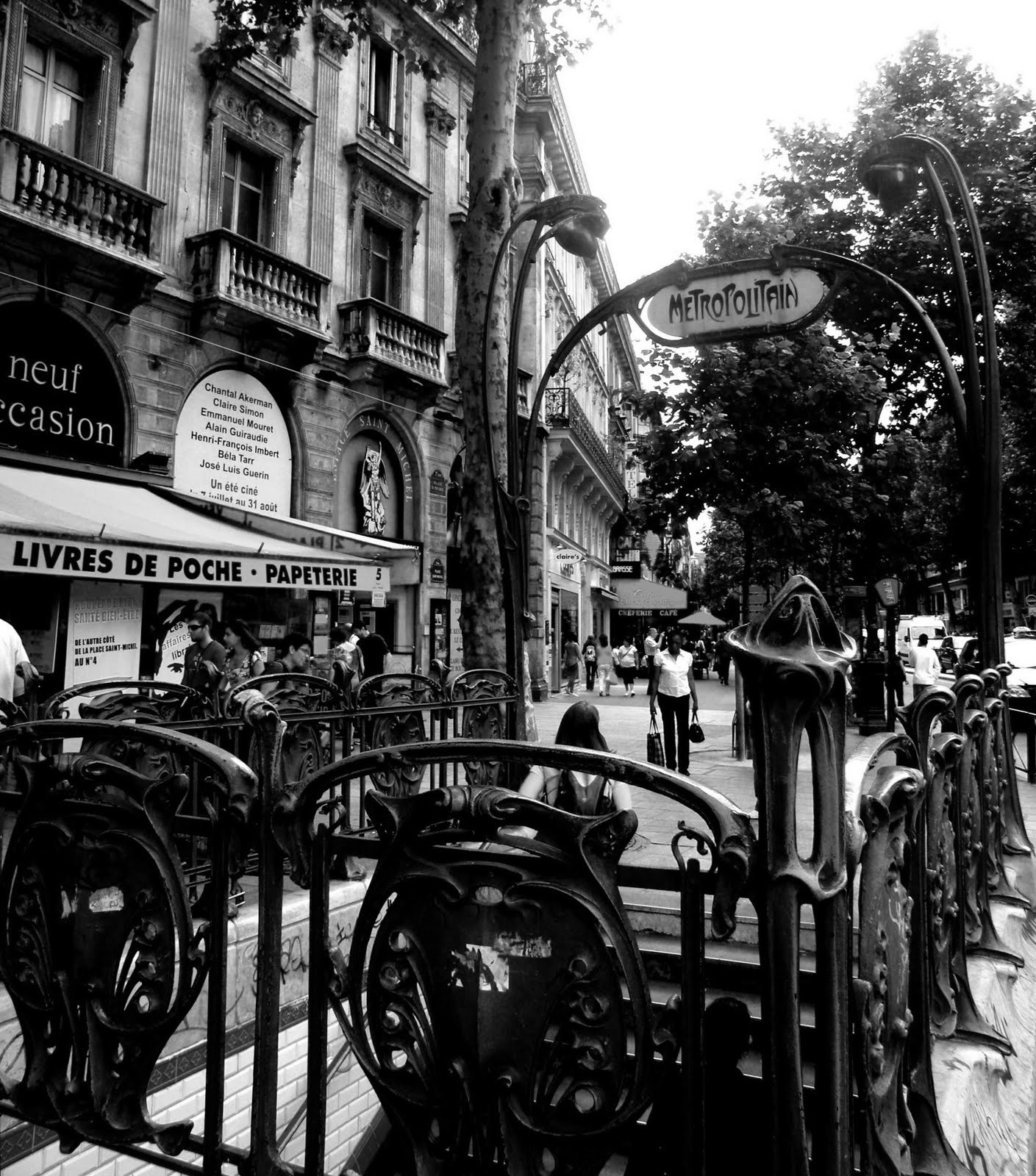
Though a very short poem, only fourteen words, this is the only Ezra Pound poem that many people will read in their lives. Why? Because it’s two lines long. “In the Station of the Metro” is an exercise in brevity. It is an Imagist poem, from a movement in early 20th-century Anglo-American poetry that favored precision of imagery and clear, sharp language. Pound wrote it after having a spiritual experience in a Paris metro (subway) station in 1912.

In 1916, Pound wrote about the process of writing the poem (Pound, Gaudier-Brzeska, 1916). Apparently, he originally thought he could best capture his vision in a painting. Unfortunately, he wasn’t a painter, which was a problem. So he wrote a 30-line poem, which he didn’t like. He pitched the long version in the waste bin. Six months later, he wrote a shorter poem, but didn’t like that one either and threw it away. Finally, a full year after the experience, he had been reading short Japanese poems called haikus, and he figured he would try to adapt this form to his vision in the metro. The result, which was published in 1913, is one the most famous, influential, and haunting works in modern poetry.

Pound packs a lot of meaning into these two lines and fourteen words. By linking human faces, an allusion for people themselves, with petals on a damp bough, the poet calls attention to both the elegance and beauty of human life, as well as its transience. A dark, wet bough implies that it has just rained, and the petals stuck to the bough were shortly before attached to flowers from the tree. They may still be living, but they will not be for long. In this way, Pound calls attention to human mortality as a whole – we are all dying. This is the essence of the poem.


Same Love

20130902-205752.jpg

I have to admit that I am behind the times on this. I had heard about this song (which will be the poem for today), but I had not heard it. I could have easily listened to it on YouTube, but I hadn’t taken the time. On my way home Friday night, I felt like my local Top 40 station was having a gay night. It started with this song, several commercials for the local gay club (or alternative nightspot, as they called it), and then numerous songs about being yourself. It was actually a lot of great music. It was also a bit surreal considering that they kept updating the Friday night football scores as well. Though I am not a fan of rap music in the least, I have to admit that the words to Macklemore’s “Same Love” are quite poetic and meaningful. Besides isn’t tap supposed to be urban poetry?

“Same Love” is the fourth single released by Seattle-based rapper Macklemore and producer Ryan Lewis from their 2012 debut studio album, The Heist. The track, featuring vocals by Mary Lambert, talks about legalizing same-sex marriage and was recorded during the campaign for Washington Referendum 74, which, upon approval in 2012, legalized same-sex marriages in Washington state. The song has so far reached number 11 on the Billboard Hot 100 in the United States and reached number 1 in both New Zealand and Australia.

The cover artwork for the single shows a photograph of Macklemore’s uncle, John Haggerty, and his partner, Sean.

The song was featured as a part of YouTube’s Pride Week (http://youtu.be/OQngzapK5dM).

“Same Love”
Macklemore with Ryan Lewis featuring Mary Lambert
By Ben Haggerty (Macklemore), Ryan Lewis, Mary Lambert, Curtis Mayfield

When I was in the third grade I thought that I was gay,
‘Cause I could draw, my uncle was, and I kept my room straight.
I told my mom, tears rushing down my face
She’s like “Ben you’ve loved girls since before pre-k, trippin’ ”
Yeah, I guess she had a point, didn’t she?
Bunch of stereotypes all in my head.
I remember doing the math like, “Yeah, I’m good at little league”
A preconceived idea of what it all meant
For those that liked the same sex
Had the characteristics
The right wing conservatives think it’s a decision
And you can be cured with some treatment and religion
Man-made rewiring of a predisposition
Playing God, aw nah here we go
America the brave still fears what we don’t know
And God loves all his children, is somehow forgotten
But we paraphrase a book written thirty-five-hundred years ago
I don’t know

And I can’t change
Even if I tried
Even if I wanted to
And I can’t change
Even if I tried
Even if I wanted to
My love
My love
My love
She keeps me warm
She keeps me warm
She keeps me warm
She keeps me warm

If I was gay, I would think hip-hop hates me
Have you read the YouTube comments lately?
“Man, that’s gay” gets dropped on the daily
We become so numb to what we’re saying
A culture founded from oppression
Yet we don’t have acceptance for ’em
Call each other faggots behind the keys of a message board
A word rooted in hate, yet our genre still ignores it
Gay is synonymous with the lesser
It’s the same hate that’s caused wars from religion
Gender to skin color, the complexion of your pigment
The same fight that led people to walk outs and sit ins
It’s human rights for everybody, there is no difference!
Live on and be yourself
When I was at church they taught me something else
If you preach hate at the service those words aren’t anointed
That holy water that you soak in has been poisoned
When everyone else is more comfortable remaining voiceless
Rather than fighting for humans that have had their rights stolen
I might not be the same, but that’s not important
No freedom till we’re equal, damn right I support it

(I don’t know)

And I can’t change
Even if I tried
Even if I wanted to
My love
My love
My love
She keeps me warm
She keeps me warm
She keeps me warm
She keeps me warm

We press play, don’t press pause
Progress, march on
With the veil over our eyes
We turn our back on the cause
Till the day that my uncles can be united by law
When kids are walking ’round the hallway plagued by pain in their heart
A world so hateful some would rather die than be who they are
And a certificate on paper isn’t gonna solve it all
But it’s a damn good place to start
No law is gonna change us
We have to change us
Whatever God you believe in
We come from the same one
Strip away the fear
Underneath it’s all the same love
About time that we raised up… sex

And I can’t change
Even if I tried
Even if I wanted to
And I can’t change
Even if I tried
Even if I wanted to
My love
My love
My love
She keeps me warm
She keeps me warm
She keeps me warm
She keeps me warm

Love is patient
Love is kind
Love is patient
Love is kind
(not crying on Sundays)
Love is patient
(not crying on Sundays)
Love is kind
(I’m not crying on Sundays)
Love is patient
(not crying on Sundays)
Love is kind
(I’m not crying on Sundays)
Love is patient
(not crying on Sundays)
Love is kind
(I’m not crying on Sundays)
Love is patient
Love is kind

PS I hope you will all wish me luck today as I go to court to fight a speeding ticket. My cruise control was set at 65 mph, but the state trooper said he clocked me going 85 mph. Cars were passing me left and right, including a similar model to my car that was the same color. If I had been speeding, I’d just pay it, but I wasn’t, so I’m going to court.


To Electra

20130826-210021.jpg

To Electra
by Robert Herrick

I dare not ask to kiss,
I dare not beg a smile,
Lest having that, or this,
I might grow proud the while.

No, no, the utmost share
Of my desire shall be
Only to kiss the air
That lately kissèd thee.

About This Poem
“To Electra” is one of many poems Herrick wrote to a woman he calls Electra, whose appearance he compares, in another poem, to “broad day throughout the east.”

About This Poet
Robert Herrick was most likely born in London in 1591. Although it is not known when Herrick was born, he was baptized on August 24, 1591. Overshadowed during his lifetime by metaphysical poets like John Donne and Andrew Marvell, Herrick became more popular as his work was rediscovered in the 19th century. He died in 1674.

PS Sometime it’s nice to imagine a poem like the one above is between two men.


The Barcelona Inside Me

20130819-224728.jpg

The Barcelona Inside Me
by Robin Becker

Give me, again, the fairy tale grotto
with the portico-vaulting overhead.
Let me walk beneath the canted columns
of Gaudí’s rookery, spiral
along his crenelated Jerusalem
of broken tiles, crazy shields.
Yes, it’s hot as hell and full
of tourists at the double helix,
but the anarchists now occupy
the Food Court, and the arcadian dream
for the working class includes this shady
colonnade cut into the mountainside.
I’ve postponed my allegiance to
the tiny house movement, to the 450
square feet of simple, American maple
infrastructure and the roomy
mind suspended like a hammock
between joists. Serpents and castle
keeps shimmer, and a mosaic invitation
to the Confectionery gets me a free
café con leche on the La Rambla,

where honeycombed apartments bend
on chiseled stone and host
floating, wrought-iron balconies.
I think I’ll move into Gaudí’s dream
of recycled mesh, walk barefoot
on his flagstone tiles
inscribed with seaweed
and sacred graffiti
from pagan tombs.
O, Barcelona of chamfered corners!
And chimneys of cowled
warriors! From Gaudí’s Book
of Revelations, I invite the goblet
and the stone Mobius strip
to a tapas of grilled prawns and squid.
Gaudí’s book of Revelations.

About This Poem
“Visiting several of Antoni Gaudí’s masterpieces challenged my attachment to minimalism, occasioned some reading about Spanish architectural and cultural history, and led to unfamiliar, descriptive language. I tried to make the poem’s line turns and diction shifts reflect the speaker’s surprise at the city’s delights. Into the architect’s fantastical creations I plunged, a tourist with a dream of staying on.”—Robin Becker

About This Poet
Robin Becker was born in 1951 in Philadelphia, Pennsylvania. She earned a B.A. and M.A. from Boston University and taught for seventeen years at the Massachusetts Institute of Technology.

I am dedicating the posting of this poem today to a dear friend of mine who will be traveling to Spain next month, and I wish him safe travels. I hope he will have a wonderful time.


Dreams

20130812-221135.jpg

Dreams
by Langston Hughes

Hold fast to dreams
For if dreams die
Life is a broken-winged bird
That cannot fly.

Hold fast to dreams
For when dreams go
Life is a barren field
Frozen with snow.


Move to the City

20130805-222628.jpg

Move to the City
by Nathaniel Bellows

live life as a stranger. Disappear
into frequent invention, depending
on the district, wherever you get off
the train. For a night, take the name
of the person who’d say yes to that
offer, that overture, the invitation to
kiss that mouth, sit on that lap. Assume
the name of whoever has the skill to
slip from the warm side of the sleeping
stranger, dress in the hallway of the
hotel. This is a city where people
know the price of everything, and
know that some of the best things
still come free. In one guise: shed
all that shame. In another: flaunt the
plumage you’ve never allowed
yourself to leverage. Danger will
always be outweighed by education,
even if conjured by a lie. Remember:
go home while it’s still dark. Don’t
invite anyone back. And, once inside,
take off the mask. These inventions
are the art of a kind of citizenship,
and they do not last. In the end, it
might mean nothing beyond further
fortifying the walls, crystallizing
the questioned, tested autonomy,
ratifying the fact that nothing will be
as secret, as satisfying, as the work
you do alone in your room.

About This Poem
“What can one learn from anonymity? Freedom, flexibility, invention, the chance to know who you are by acting out who you may not be. There is a lot to be gained from participating in the world around you, from engagement. This poem is an homage to the art of autonomy.”
–Nathaniel Bellows

About this Poet
Nathaniel Bellows is the author of Why Speak? (W. W. Norton, 2008). He is also the author of the novel, On This Day (HarperCollins, 2003). Bellows lives in New York City.

Many of us who write blogs do so in anonymity, so we know that we can learn much from anonymity. As an anonymous blogger, I continue to learn more about myself. There is so much we can learn from Mr. Bellows’s poem. I chose this poem the same way I choose many poems, after reading it and reading what the author said about it, the poem spoke to me. Poems that speak to us, are often the greatest of poetry because it brings its own meaning to our soul.