Category Archives: Religion

5 Goal for the New Year

Not that I have already obtained this or am already perfect, but I press on to make it my own, because Christ Jesus has made me his own.  Brothers, I do not consider that I have made it my own. But one thing I do: forgetting what lies behind and straining forward to what lies ahead, I press on toward the goal for the prize of the upward call of God in Christ Jesus.  Let those of us who are mature think this way, and if in anything you think otherwise, God will reveal that also to you.  Only let us hold true to what we have attained.
Brothers, join in imitating me, and keep your eyes on those who walk according to the example you have in us.  For many, of whom I have often told you and now tell you even with tears, walk as enemies of the cross of Christ.  Their end is destruction, their god is their belly, and they glory in their shame, with minds set on earthly things.  But our citizenship is in heaven, and from it we await a Savior, the Lord Jesus Christ, who will transform our lowly body to be like his glorious body, by the power that enables him even to subject all things to himself.
Philippians 3:13-21 
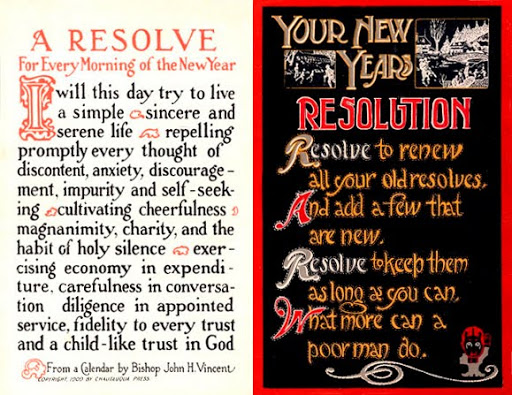
Now that 2013 is almost here, many of us are in the process of making New Year’s resolutions. The concept of making New Year’s resolutions is commonplace in our society; however, we all know how difficult it is to actually follow through. This list of Bible verses is designed to help you more specifically approach your New Year’s resolutions. The purpose of providing Bible verses is to establish a biblical grounding for the goals you set out. Moreover, rather than merely compiling Bible verses for New Year’s resolutions, I’ve included practical ways that you can use these verses to achieve your New Year’s resolutions. With all of that said, here are 5 Bible verses for New Year’s resolutions.

#1 of 5 Bible Verses for New Year’s Resolutions 

Colossians 3:12-13 – New Year’s Resolution: Mend a Broken Relationship

“Put on then, as God’s chosen ones, holy and beloved, compassionate hearts, kindness, humility, meekness, and patience, bearing with one another and, if one has a complaint against another, forgiving each other; as the Lord has forgiven you, so you also must forgive.”

Practical Application: When we make New Year’s resolutions, it is common that we first look to ways that we can improve ourselves. Chances are, however, there are broken or severed relationships in our lives that we’ve given up on. Maybe you’ve been hurt by a loved one or close friend. The concept of forgiving and forgetting isn’t one you’ll find in Scripture, but forgiveness is. Consider making it a New Year’s resolution to forgive someone who’s hurt you or seek forgiveness from someone whom you’ve pained.

#2 of 5 Bible Verses for New Year’s Resolutions 

Matthew 25:34-40 – New Years Resolution: Actively Seek Out to Help the Poor, Homeless, and Needy

“Then the King will say to those on his right, ‘Come, you who are blessed by my Father, inherit the kingdom prepared for you from the foundation of the world.  For I was hungry and you gave me food, I was thirsty and you gave me drink, I was a stranger and you welcomed me, I was naked and you clothed me, I was sick and you visited me, I was in prison and you came to me.’. Then the righteous will answer him, saying, ‘Lord, when did we see you hungry and feed you, or thirsty and give you drink?  And when did we see you a stranger and welcome you, or naked and clothe you?  And when did we see you sick or in prison and visit you?’. And the King will answer them, ‘Truly, I say to you, as you did it to one of the least of these my brothers, you did it to me.'”

Practical Application: The Bible continually reminds us to take care of the poor, the widowed, and the less fortunate. Make it a New Year’s resolution to consciously go out and help those in need. Whether you decide to serve at a soup kitchen or visit the elderly, this New Year’s resolution is all about serving. 

#3 of 5 Bible Verses for New Year’s Resolutions 

1 Corinthians 19:19-20 – New Years Resolution: Improve Your Physical Well-Being

Or do you not know that your body is a temple of the Holy Spirit within you, whom you have from God? You are not your own, for you were bought with a price. So glorify God in your body.

Practical Application: Ever considered that God actually wants you to take care of your body? While in context this verse is actually dealing with sexual immorality, the overarching theme is often missed. We ought to honor God with our bodies through everything that we do; thus, taking care of bodies physically falls under this umbrella and ultimately is a matter of good stewardship. If your New Year’s resolution is to get in shape, use this Bible verse to remind you that you’re working to improve something that you ought to make the best anyways.

#4 of 5 Bible Verses for New Year’s Resolutions 

Matthew 14:22-24 – New Year’s Resolution: Consciously Set Aside Time to Spend with God

“Immediately he made the disciples get into the boat and go before him to the other side, while he dismissed the crowds.  And after he had dismissed the crowds, he went up on the mountain by himself to pray. When evening came, he was there alone,  but the boat by this time was a long way from the land, beaten by the waves, for the wind was against them.”

Practical Application: Jesus understood the value of time spent with God in solitude. If you do not currently devote time to being alone with God, make it a New Year’s resolution to set aside some period of time to God. You can spend this time in prayer, reading your Bible, journaling, singing a worship song, etc. While this can definitely be a difficult New Year’s resolution, we have to remember that being in tune with God requires of us to actually spend time investing in the relationship.

#5 of 5 Bible Verses for New Year’s Resolutions 

Mark 12:29-31 – New Year’s Resolution: Loving God = Loving Others

“Jesus answered, “The most important is, ‘Hear, O Israel: The Lord our God, the Lord is one.  And you shall love the Lord your God with all your heart and with all your soul and with all your mind and with all your strength.’. The second is this: ‘You shall love your neighbor as yourself.’ There is no other commandment greater than these.”

Practical Application: You’ve may have read this particular verse before on this blog, but have you ever considered what it is really saying? The concept behind these commandments is twofold. One, loving God requires loving Him with all that you are. The second is a direct result of the first: if you love God, you will love others. The practical application here is very open because this Bible verse and corresponding New Year’s resolutions take all the previous options into account. All of the aforementioned New Year’s resolutions and Bible verses are essentially summed up through this passage. The question then is whether or not we are going to make these New Year’s resolutions much more than annual attempts to better ourselves, but daily convictions that stem from a true desire to love the Lord.


Christmas


What CHRISTmas Means

C- Stands for The Christ Child that was born in Bethlehem.

H- Is the Heavenly Father who sent His son for mortal man.

R- Means our Redemption plan, this Christ Child’s birth did bring.

I- Is Intercession for our sins from Christ Our King.

S- Says the brightest Star that led the wise men on their way.

T- Stands for this Treasured babe God sent to us, that day.

M- Proclaims the Meaning that this Christ Child’s birth conceived.

A – Means His Atonement, with Grace, that saves those who believe.

S- Is God’s greatest Sacrifice, His son’s life, for you and me.

~**~

Matthew 1:25 (KJV)

And knew her not till 

she had brought

forth her firstborn son: 

and he called his name Jesus.

~**~

May you have the gift of faith,

the blessing of hope and the peace of
His love at CHRISTmas;

and throughout the New Year !

Merry CHRISTmas!

What a Friend We Have in Jesus

What a Friend We Have in Jesus

Text by Joseph M. Scriven 
Music by Charles C. Converse 

What a friend we have in Jesus, 
all our sins and griefs to bear! 
What a privilege to carry 
everything to God in prayer! 
O what peace we often forfeit,
O what needless pain we bear, 
all because we do not carry 
everything to God in prayer. 

Have we trials and temptations? 
Is there trouble anywhere? 
We should never be discouraged; 
take it to the Lord in prayer. 
Can we find a friend so faithful 
who will all our sorrows share? 
Jesus knows our every weakness; 
take it to the Lord in prayer. 

Are we weak and heavy laden, 
cumbered with a load of care? 
Precious Savior, still our refuge; 
take it to the Lord in prayer. 
Do thy friends despise, forsake thee? 
Take it to the Lord in prayer! 
In his arms he’ll take and shield thee; 
thou wilt find a solace there.

Someone has well penned this statement, “A Christian’s practical theology is often his hymnology.” Many of us could attest to this truth as we recall some deeply moving experience – perhaps the loss of a dear loved one-and a simple hymn which has been used by the Holy Spirit to minister to our spiritual need. Such a hymn is “What a Friend We Have in Jesus.” Though it is not considered to be an example of great literary writing, its simply stated truths have brought solace and comfort to countless numbers of God’s people since it was first written in 1857. So relevant to the basic spiritual needs of people are these words that many missionaries state that it is one of the first hymns taught to new converts. The very simplicity of the text and music has been its appeal and strength.

“What a Friend We Have in Jesus” is a Christian hymn originally written by Joseph M. Scriven as a poem in 1855 to comfort his mother who was living in Ireland while he was in Canada. Scriven originally published the poem anonymously, and only received full credit for it in the 1880s. The tune to the hymn was composed by Charles Crozat Converse in 1868.

“What a Friend We Have in Jesus” has long been one of my favorite hymn.  Some songs you just sing in church, but this one truly speaks to your soul and it is something that I believe in living by.  I hope it gives each of you some inspiration today as well.

Greater love has no one than this, that he lay down his life for his friends.” ( John 15:13)


What the World Needs Now…Is Patience

“Patience is a virtue.” We’re all familiar with that cliché, and many of us know that patience is listed by Paul in Galatians 5:22-23, But the fruit of the Spirit is love, joy, peace, patience, kindness, goodness, faithfulness, gentleness, self-control; against such things there is no law. So there’s no disputing that Christians ought to be patient. But as with most of the virtues, the biblical writers assume that we know what patience is and don’t give an explicit definition. But do we? Could you define patience if you were asked? And, to make things more tricky, could you do so without simply citing examples of patience? Starting with the basic definition of patience as “waiting without complaint,”‘ we will address some key questions. Why is patience a virtue? What are the different varieties of patience? Why is patience so difficult at times?

When defined as “waiting without complaint,” patience might seem to be a morally insignificant trait. What’s so virtuous about not complaining? In itself, not complaining carries no particular virtue. Suppose a person awaits the arrival of a friend from out of town, and he spends the time happily reading or watching television. We wouldn’t say that, simply because he’s not complaining, he exhibits patience in this case. Something else must be required to make one’s lack of complaint virtuous. That something is discomfort. It’s because a circumstance is uncomfortable for someone that we find her refusal to complain remarkable and thus regard him as patient.  So to improve the initial definition above, to be patient is to endure discomfort without complaint. This calls into play some other virtues, specifically, self-control, humility, and generosity. That is, patience is not a fundamental virtue so much as a complex of other virtues.

What are the different contexts in which patience is demonstrated? One way to distinguish types of patience is based upon the nature of the discomfort involved. The following threefold distinction can be made: first is the patience needed when facing a nuisance of some kind. A person or a set of circumstances really irritates you, and you’d love to complain about it, but you hold your tongue, knowing that such a grievance would be petty or simply compound the problem. That person at the office who is so insufferably annoying doesn’t, after all, mean to pester you. And what good will it do to moan about those potholes on your street? So you quietly endure these things. Did you know you were being virtuous in doing so?

A second type of patience is called for when facing boredom. Those who fall into a rut at work or at home often experience discomfort over the uneventful routine. To those who don’t struggle with boredom, it might seem absurd to suggest it can be a serious trial. But those who endure the plague of drab routine without complaint exhibit the virtue of patience.

A third type of patience is the most serious and significant. It is the patience required when one suffers in some way, either physically or psychologically. If you’re struggling with some disease or mental illness, then patience is required of you. Or if you must assist someone else who suffers, a family member or friend, then you are called upon to be patient. Whether you bear the burden of affliction directly or indirectly, your challenge is to endure that discomfort. This doesn’t mean you shouldn’t cry out in your distress. Scripture, in fact, advises us to do just that, so it’s appropriate because the degree of discomfort in some situations warrants complaint. But this raises some important questions: What is a complaint? And which complaints are worthy?

To complain is to make known one’s irritation or frustration about some matter. This doesn’t necessarily imply that one says anything out loud. Usually we complain by speaking directly about the circumstance that bothers us. But we also complain in nonverbal ways, with a sigh, a huff, a shake of the head, or a roll of the eyes. Many of us are quite expert at communicating our irritation in subtle ways to those closest to us, through means that most people wouldn’t recognize as complaining. But our target complainee (the person we complain to) gets the message, and that’s all that matters.

From a personal standpoint, I don’t know which is more difficult—exercising patience with God or other human beings. Both can be tremendous challenges, and none of us have perfected the art of being patient with each other or with God. I, in fact, become impatient with myself (a potential third category worth considering) because I struggle in being patient with other people and with God.

It’s been said that nothing teaches like experience. To some degree this is true of the virtues. Pain and suffering teach us endurance and empathy. The experience of mercy and forgiveness inclines us to be more merciful and forgiving. We gain moral maturity each day precisely because each day brings some difficulty that we must overcome. Like it or not, we persevere, and we are morally the better for it. This is why James tells us to “consider it pure joy … whenever you face trials of many kinds, because you know that the testing of your faith develops perseverance. Perseverance must finish its work so that you may be mature and complete, not lacking anything” (James 1:2-4). The Stoic philosopher Seneca echoed this theme, noting the moral value of adversity:

Pampered bodies grow sluggish through sloth; not work but movement and their own weight exhausts them. Prosperity unbruised cannot endure a single blow, but a man who has been at a constant feud with misfortunes acquires skin calloused by suffering; he yields to no evil and even if he stumbles carries the fight on upon his knee.

Misfortunes are designed to build virtue in us, and among the virtues gained through difficulty is patience. That family member or work associate who annoys you is God’s gift to you to build your patience. If you’re stuck with a job you don’t like, and you can’t find any other work, then God is building your patience. Each nuisance, long wait, and affliction, every mosquito bite, traffic jam, and body ache in the life of the Christian raises his threshold of tolerance ever so much. Even tedious sermons and difficult reading (perhaps including what you are enduring right now!) can make you a more patient person.

Especially during the holiday season, we need patience.  Whether it is the long lines at stores, the crowds of people who always seem to be in the way when you are most in a hurry, the holiday traffic, or your family at a holiday gathering, we need patience to get us through.  Patience is a virtue.  I have struggled with it in the past, but have largely become a more patient person, and it makes life much less frustrating.


Faith

Faith is trusting in God. Lack of faith is doubting God. The Lord has shown us three things concerning Biblical faith. When you combine these three elements, we can operate in mountain moving faith!

Faith key #1: Knowledge brings faith

Knowledge of the truth (in God’s Word) brings faith. Faith is believing something, thus requiring something to believe. The new age movement believes that we can ‘believe things into existence’, which is not the same kind of faith that us believers should have. Our faith is based upon the truth in God’s Word. Thus, knowing what God’s Word has to say about something gives us the ability to believe it. Our faith should be based upon God’s Word.

Romans 10:17, “So then faith cometh by hearing, and hearing by the word of God.”

For example, how can you have faith to pray for a healing, believing that He will heal you, if you didn’t know it was God’s will for your healing? This is why Satan works so hard to tell the church today that it may not be God’s will for them to be healed! Why? Because it casts doubt, the opposite of faith, upon the hearts of God’s children! How can you lay hold of the promises of God, if you don’t know what they are? We must first know the truth, then believe it. That’s Biblical faith!

Mark 9:23, “Jesus said unto him, If thou canst believe, all things are possible to him that believeth.”

In the verse above, the word believeth means to trust. Jesus was in essence telling His disciples that all things (referring to the promises of God) are possible for them who will trust God for them (believe).
How can you believe something that nobody told you? You can’t. That’s why it’s important to know what the Word of God has to say, so that we can believe it. Faith comes by hearing, and hearing God’s Word:

Romans 10:17, “So then faith cometh by hearing, and hearing by the word of God.”

Faith key #2: Faith and a pure conscience

The Lord tells us about the connection between a clean conscience and faith. He tells us that you must KNOW you are clean spiritually, because your faith depends on it. How can you confidently approach God, when your conscience is dirty? The truth is, you can’t!

Hebrews 10:22, “Let us draw near with a true heart in full assurance of faith, having our hearts sprinkled from an evil conscience, and our bodies washed with pure water.”

We need to have a true heart of full assurance of faith and washed clean from an evil conscience.

Faith key #3: Faith works through love

The third key to operating in faith is to be rooted and grounded in love so that your faith will operate through love. The Bible tells us clearly that all believers should be rooted and grounded in the love of Christ, if we want to experience the fullness of God, who is able to do exceedingly abundantly above all that we ask or think. When we are grounded in the love of Christ,

Ephesians 3:16-20, “That he would grant you, according to the riches of his glory, to be strengthened with might by his Spirit in the inner man; That Christ may dwell in your hearts by faith; that ye, being rooted and grounded in love, May be able to comprehend with all saints what is the breadth, and length, and depth, and height; And to know the love of Christ, which passeth knowledge, that ye might be filled with all the fullness of God. Now unto him that is able to do exceeding abundantly above all that we ask or think, according to the power that worketh in us.”

We are told to put on the breastplate of faith and love… the two go together like hand and glove!

1 Thessalonians 5:8, “But let us, who are of the day, be sober, putting on the breastplate of faith and love; and for a helmet, the hope of salvation.”

As we walk in the Spirit, the love of Christ will begin to flow through us, and will give birth to much faith. Among the fruit of the Spirit, we find both faith and love:

Galatians 5:22-33, “But the fruit of the Spirit is love, joy, peace, longsuffering, gentleness, goodness, faith, Meekness, temperance: against such there is no law.”

When the love of Christ is flowing through us, it brings fourth much faith. God’s Word tells us clearly that faith works through love.

Galatians 5:6, “For in Jesus Christ neither circumcision availeth any thing, nor uncircumcision; but faith which worketh by love.”


Thankfulness

    “Make a joyful noise unto the LORD, all ye lands. Serve the LORD with gladness: come before his presence with singing. Know ye that the LORD he is God: it is he that hath made us, and not we ourselves; we are his people, and the sheep of his pasture. Enter into his gates with thanksgiving, and into his courts with praise: be thankful unto him, and bless his name. For the LORD is good; his mercy is everlasting; and his truth endureth to all generations.”

Psalm 100 

Thankfulness in God’s Word is a major theme throughout. But, the actual first official ceremony of Thanksgiving in the Bible is listed in Leviticus 7:11-15. “And this is the law of the sacrifice of peace offerings, which he shall offer unto the Lord. If he offer it for a thanksgiving, then he shall offer with the sacrifice of thanksgiving unleavened cakes mingled with oil, and unleavened wafers anointed with oil, and cakes mingled with oil, of fine flour, fried.” God ordained a practice of specific instructions to show gratitude. Clearly, gratitude is the door that opens peace in our hearts. God’s design for mankind is that giving thanks means receiving peace. Giving thanks in the Bible is the formula to peace because when we are truly thankful to God, we are expressing our trust in Him. 

The theme of thanks in the Bible continues from the commanded thanksgiving sacrifices to the beautifully written Psalms of praise and thanks to our Lord. “Praise ye the Lord; for he is good: for his mercy endureth forever.” (Psalm 106:1) And, Thanksgiving in the Bible continues to be practiced with Christ, giving thanks at the Lord’s supper. Paul the Apostle wrote many times of his gratitude to Christ and for his gratitude to the followers of Christ. “I thank my God, making mention of thee always in my prayers.” (Philemon 1:4)

To celebrate a day of thanks is to take a day and clearly honor God in praise for the enormous blessings He has bestowed upon our land. As Thanksgiving facts reveal a Biblical foundation, we know that this holiday must have more to do with honoring God than any other fact. When we look back at history, thanksgiving in the Bible, and the celebration that first took place in this country, we find that God’s people are to turn their hearts to Him, thanking Him for all things in all circumstances. Perhaps one of the most quoted scriptures in the New Testament says it best. “Be careful for nothing; but in every thing by prayer and supplication with thanksgiving, let our request be made known to God. And the peace of God, which passeth all understanding, shall keep your hearts and minds in Christ Jesus.” (Philippians 4:6-7)

Let us not only be thankful only one day a year but celebrate the greatness of our God with thanks everyday! 

God’s Good Purposes

When Joseph’s brothers saw that their father was dead, they said, “It may be that Joseph will hate us and pay us back for all the evil that we did to him.”
So they sent a message to Joseph, saying, “Your father gave this command before he died, ‘Say to Joseph, Please forgive the transgression of your brothers and their sin, because they did evil to you.’ And now, please forgive the transgression of the servants of the God of your father.” 
Joseph wept when they spoke to him.
His brothers also came and fell down before him and said, “Behold, we are your servants.”
But Joseph said to them, “Do not fear, for am I in the place of God? As for you, you meant evil against me, but God meant it for good, to bring it about that many people should be kept alive, as they are today.  So do not fear; I will provide for you and your little ones.” Thus he comforted them and spoke kindly to them.

Genesis 50:15-21

We can learn so much from what Joseph tells his brothers in the passage above.  As members of the LGBT community, we often have people who “mean evil against us.” However, we must remember that God has a plan and a purpose for us.  We cannot lose faith, we must persevere as Joseph did.
If you are not familiar with the story of Joseph, here is a quick synopsis:

In the Old Testament, the son of the patriarch Jacob and his wife, Rachel. He was favored by his father, and his brothers became bitterly jealous when he was given a resplendent coat of many colors (literally, coat with flowing sleeves). They sold him into slavery in Egypt, telling Jacob he had been killed by a wild beast. In Egypt Joseph gained favor with the pharaoh and rose to high office, owing to his ability to interpret dreams, and his acquisition of grain supplies enabled Egypt to withstand a famine. When famine forced Jacob to send his sons to Egypt to buy grain, the family was reconciled with Joseph and settled there.

Joseph is unwilling to take vengeance where God has shown mercy. His own deep faith and his own experience of God’s grace move him to forgive the past and build for the future. Not only does he forgive, but he promise to provide for and protect his repentant brothers and their families.

And it is what God would have for us too. A faith that looks not to the hurts and the wrongs that others have caused us, but to the grace and mercy God shows even in the midst of such wrongs. A faith that stands gratefully in the place of God to receive God’s gifts and live a life of forgiveness through service! A faith that is able to see the Lord’s mercy and grace at work even through the most evil of circumstances and trust that God will turn evil to good for those who love and trust in Him.
The lawyer may says “Let justice be done though the world perish.” A theologian says “Let sin be forgiven and the world be saved, for justice is not done, but sin is always done.” If the great, sublime article called the forgiveness of sins is correctly understood, it makes one a genuine Christian and gives one eternal life. This is the very reason why it must be taught in Christendom without unflagging diligence and without ceasing, so that people may learn to understand it clearly, and discriminatingly. For to do so is the one, supreme, and most difficult task of Christians. To do so is to understand the place of God – the work of God – the promise of God.
We sin every day, and we are also sinned against every day.  When someone who has wronged us asks for our forgiveness, you and I have the unique privilege to reflect the love of God into their hearts and minds.  

“I forgive you.”  Sometimes I think that phrase is even harder to say than, “I’m sorry.”  But that little phrase is packed with Christian power.  It’s packed with the power of Jesus’ blood that washes away a lifetime of guilt.  It’s packed with the power of God’s Word that makes it as valid as if God himself announced his forgiveness with a thundering voice from heaven.  You know how much those words mean to you.  Let’s share those words with the people in our lives who need to learn how much it means for them! 

Proverbs And Words, Part II

Last week, we looked at how the book of Proverbs deals with our propensity to talk.  I suggested taking some time to be quiet and listen to others instead of talking.  Did you do it?

If not, you’re not alone.  It’s so easy to fall into our old habits, worrying more about our own opinions and thoughts than about others’.  Keep making an effort, though; this is important stuff.

If you did do it, did you notice any differences in the way people responded to you?  Most people relish the chance to be heard, so when you make that space by shutting up and showing interest in others, you gain the chance to be influential in their lives.  You demonstrate the love of God, who always takes time to show interest in us – even though there’s absolutely nothing we have to say that God doesn’t already know!

This week, let’s take it one step further.  What about when you’re in dialogue with someone, and they say something that you really disagree with?  It might be anything from a conversation with your parents to a debate on the recent election  The point is, someone says something you know is wrong – maybe even a direct criticism against you.  How should you respond?
Here’s what Proverbs says:
Proverbs 12:15
The way of a fool seems right to him, but a wise man listens to advice.

Proverbs 18:2

A fool finds no pleasure in understanding but delights in airing his own opinions.
“But these aren’t just my opinions!” you say.  “They’re the truth!”  And of course that’s just what the fool says as well, isn’t it?

Notice – the difference between the wise and the foolish is that the fool wants to get his opinions out there, but he (or she) gains no pleasure from “understanding.”  Understanding what?  Why, the other points of view, of course.  By contrast, wise people also want to have their views heard, but not until after making sure they have fully understood the other person.  The wise person listens first.  And once the fool is convinced that the wise person has understood the fool’s point of view, then he or she will be much more open to listening to the (now much more informed) position of the wise.

Behaving this way takes humility and discipline.  It’s not easy to sit there quietly listening when you’re just dying to show the other person why they’re wrong.  It’s even more difficult to spend that time focusing on understanding the other person rather than trying to think of all the arguments you want to use against them.

It’s easy to think, in the midst of all this listening and patience, that you’re wasting your time when you should be correcting the other person – maybe they’re spouting false doctrine, and you need to stand up for what’s right.  But that’s exactly when you must use patience as a weapon for the Truth.  Proverbs says:
Proverbs 25:15 
Through patience a ruler can be persuaded, and a gentle tongue can break a bone.

Proverbs 16:32

Better a patient man than a warrior, a man who controls his temper than one who takes a city.

Proverbs 14:29

A patient man has great understanding, but a quick-tempered man displays folly.
Patience is powerful.  In arguments and debates, we so easily fall into the trap of thinking that being louder and more forceful gives us an advantage, but how often have you ever “won over” the other side by arguing with them?

If your goal is to change someone’s mind, patience and gentleness are the most effective weapons to do it.  Be kind, stop talking and listen whenever the other person has something to say, and if you must, sit there for hours until they’re done ranting.  Once they have nothing left to say and you’ve heard and understood it all, you’ve taken all the wind out of their sails.  Now they have nothing left to do but listen.  “Through patience a ruler can be persuaded, and a gentle tongue can break a bone.”  It’s counterintuitive, but it’s true.

Proverbs recommends the patient approach, because:

Proverbs 15:18

A hot-tempered man stirs up dissension, but a patient man calms a quarrel.
So what’s so wrong with a quarrel?  Isn’t a good quarrel healthy now and then?  Not according to the Scriptures.

Proverbs 17:19

He who loves a quarrel loves sin; he who builds a high gate invites destruction.

Proverbs 17:14 

Starting a quarrel is like breaching a dam; so drop the matter before a dispute breaks out.

Proverbs 20:3 

It is to a man’s honor to avoid strife, but every fool is quick to quarrel.
Are you a quarrel-loving fool?  It may be time to rethink that position.

But sometimes, arguments seem impossible to avoid, especially when someone else says something harsh against you.  So if somebody insults you, how can you avoid a quarrel?

Proverbs 24:29

Do not say, “I’ll do to him as he has done to me; I’ll pay that man back for what he did.”

Proverbs 29:11

A fool gives full vent to his anger, but a wise man keeps himself under control.

Proverbs 26:4

Do not answer a fool according to his folly, or you will be like him yourself.

Proverbs 12:16
A fool shows his annoyance at once, but a prudent man overlooks an insult.
Such a gargantuan task we have as Christians, isn’t it?  It rather reminds one of that “turn the other cheek” bit that a certain Jesus of Nazareth is famous for saying.

These proverbs are so simple, but if we really followed them as we should, we could increase our persuasiveness by hundreds of times.  We could literally change the entire world.

I for one need to be reminded of these on a daily basis.  I plan to print these out and review them regularly.  Maybe next time a quarrel breaks out, I’ll be reminded to respond more like a wise man… and less like the fool that I usually am.

Proverbs and Words

If you look through some of the things that the book of Proverbs has to say about wisdom and foolishness, you begin to notice some interesting patterns.
Can you spot the common thread in these passages?

Proverbs 10:19
When words are many, sin is not absent, but he who holds his tongue is wise.


Proverbs 15:28

The heart of the righteous weighs its answers, but the mouth of the wicked gushes evil.


Proverbs 13:3

He who guards his lips guards his life, but he who speaks rashly will come to ruin.


Proverbs 18:7

A fool’s mouth is his undoing, and his lips are a snare to his soul.


Proverbs 17:28

Even a fool is thought wise if he keeps silent, and discerning if he holds his tongue.


Proverbs 12:23

A prudent man keeps his knowledge to himself, but the heart of fools blurts out folly.


Proverbs 10:14

Wise men store up knowledge, but the mouth of a fool invites ruin.


Proverbs 29:20

Do you see a man who speaks in haste? There is more hope for a fool than for him.
You’ve probably gotten the point by now.  Over and over, the book of Proverbs entreats us to keep our words to a minimum.  Fools, we are told, are the ones who say what’s on their minds; wise people should hold their tongues, guard their lips, and keep silent.

As a guy who likes to talk a lot, I find this particularly hard to swallow!  But it’s actually excellent advice.

When we’re talking, we can’t be listening to others.  When I’m talking to you, what I’m essentially saying is that I believe I have information you need or want.  When I’m listening to you, what I’m saying is that I value what you have to say, and that your ideas are important to me.

Unfortunately, many people get into the habit of spending all their time talking.  We do listen, but mostly so we can get a turn to talk again.  We interrupt one another, and we talk more than we listen.  When people talk more than they listen, the message they send is that they think they have more valuable things to say than the people they’re talking to have.  It’s really quite an arrogant thing to do, isn’t it?

This is especially true in conversations about issues, although it applies to any conversation.  When a debatable issue comes up, whether it’s on a message board or in a face to face conversation, which is your first inclination – to share your own views on the subject, or to learn about other people’s views?
Most of us, right off the bat, want to share our own views.  And yet Proverbs says that a fool “delights in airing his own opinions” (18:2).  A wise individual, according to the passages above, should “store up knowledge” instead.

If you’re someone like me who likes to talk (and believe me, I do, though I can also be a very good listener), consider that it’s actually a tendency of our sinful nature.  Read again over the passages at the top of this page and think about how you might apply them yourself.  This week, make an effort to keep silent and get others talking instead.  Watch how it affects your daily interactions.  Next week we’ll revisit this issue, so try it out and see what happens!

Community and Gay Christianity

Hebrews 10:19-25
Therefore, brothers, since we have confidence to enter the holy places by the blood of Jesus, by the new and living way that he opened for us through the curtain, that is, through his flesh, and since we have a great priest over the house of God, let us draw near with a true heart in full assurance of faith, with our hearts sprinkled clean from an evil conscience and our bodies washed with pure water.  Let us hold fast the confession of our hope without wavering, for he who promised is faithful.  And let us consider how to stir up one another to love and good works, not neglecting to meet together, as is the habit of some, but encouraging one another, and all the more as you see the Day drawing near.
Gay and bisexual Christians understand that they are part of three communities at once. They are part of the church community, the straight community, and the queer community. They understand that they are called to be responsible and active members of each community, contributing to the well-being of the church and society through each community.

Some gay Christians are active in the gay community by helping with the planning and administration of gay community organizations and events.  They might donate time to present lectures about bullying in schools, how to treat gay youth or AIDS. A few gay Christians have a significant amount of work and business contacts within the gay community. Those gay Christians who are not living in an area where there are enough gay people to have a gay community may choose to be part of one of the many online gay Christian communities.

While being responsible, contributing members of the gay community, queer Christians are also contributing to the church. Their contributions to the church depend a lot on the specific talents and interests they have. Many gay Christians are sources of tremendous strength in local churches.

Because most people are straight, gay people interact as part of the straight community too. Gay people do not live their lives in total isolation from the straight community. In fact, it would be difficult for a small group comprising no more than about 10% of society to live without regularly coming in contact with the remaining 90% of society. Gay people go to straight schools, often work for straight businesses, firms and social service agencies. Many gay Christians are very dynamic, giving members of the straight community too. You may find them contributing to straight society by volunteering time as coaches, teachers and care-givers.

Queer Christians recognize they have responsibilities in three communities, the Christian community, the gay community and the straight community. They contribute to all three communities and are proud to be able to be part of the three communities.