Category Archives: Religion

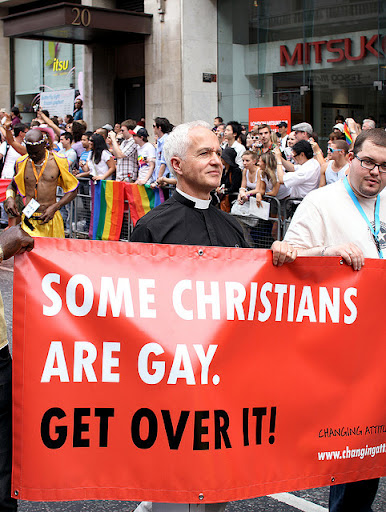
Some Christians are Gay. Get Over It!

Do you ever feel hated by the world for being a gay Christian?  We’re not just persecuted for being gay; the gay community’s not too fond of our Christian beliefs either, especially if it makes more than a marginal difference in our lives.

That’s why Jesus’ words in this week’s Bible passage are so meaningful for us.  Although his comments were addressed directly to his followers and refer to their dealings with the Jewish community of their day, in many ways they apply to us in our dealings with both the Christian community and the secular world.

John 15:18-21; 16:1-4 (NASB)If the world hates you, you know that it has hated Me before it hated you. If you were of the world, the world would love its own; but because you are not of the world, butI chose you out of the world, because of this the world hates you. Remember the word that I said to you, ‘ A slave is not greater than his master.’ If they persecuted Me, they will also persecute you; if they kept My word, they will keep yours also. But all these things they will do to you for My name’s sake, because they do not know the One who sent Me.These things I have spoken to you so that you may be kept from stumbling. They will make you outcasts from the synagogue, but an hour is coming for everyone who kills you to think that he is offering service to God. These things they will do because they have not known the Father or Me.  But these things I have spoken to you, so that when their hour comes, you may remember that I told you of them. These things I did not say to you at the beginning, because I was with you.

When you feel lonely in your struggle, come back to this passage and remember the One who endured that hate and persecution first.  God is with you, even now.

I don’t know about you, but there are times I don’t even want to be called a Christian.  When my non-Christian friends talk about the hypocrisy and self-righteousness they observe in many Christians, I can’t honestly disagree with them.  I see the same things, and it makes me angry.  In some cultures today, Christians are known more for hypocrisy than for grace, and that’s a terrible shame.
But I have to remind myself that these things made Jesus angry, too.  The Jesus I serve is the same Jesus who spent his time eating with the most obvious sinners of his day without condemning them.  He’s the same Jesus who spoke up for an adulteress when the rest of the town was ready to stone her for her sin.  And he’s the same Jesus who reserved his harshest words for the religious leaders, angrily denouncing them as “sons of hell.”
Next time you get angry at hypocritical Christians who turn people away from God, read this passage and know that God is angry with you.

Matthew 23:13-28 (NASB)” But woe to you, scribes and Pharisees, hypocrites,because you shut off the kingdom of heaven from people; for you do not enter in yourselves, nor do you allow those who are entering to go in. Woe to you, scribes and Pharisees, hypocrites, because you devour widows’ houses, and for a pretense you make long prayers; therefore you will receive greater condemnation.“Woe to you, scribes and Pharisees, hypocrites, because you travel around on sea and land to make one proselyte; and when he becomes one, you make him twice as much a son of hell as yourselves.Woe to you, blind guides, who say, ‘ Whoever swears by the temple, that is nothing; but whoever swears by the gold of the temple is obligated.’ You fools and blind men!Which is more important, the gold or the temple that sanctified the gold? And, ‘Whoever swears by the altar,that is nothing, but whoever swears by the offering on it, he is obligated.’ You blind men, which is more important, the offering, or the altar that sanctifies the offering? Therefore, whoever swears by the altar, swears both by the altar and by everything on it. And whoever swears by the temple, swears both by the temple and by Him who dwells within it. And whoever swears by heaven,swears both by the throne of God and by Him who sits upon it.” Woe to you, scribes and Pharisees, hypocrites! For you tithe mint and dill and cumin, and have neglected the weightier provisions of the law: justice and mercy and faithfulness; but these are the things you should have done without neglecting the others. You blind guides, who strain out a gnat and swallow a camel!“Woe to you, scribes and Pharisees, hypocrites! For you clean the outside of the cup and of the dish, but inside they are full of robbery and self-indulgence. You blind Pharisee, first clean the inside of the cup and of the dish, so that the outside of it may become clean also.” Woe to you, scribes and Pharisees, hypocrites! For you are like whitewashed tombs which on the outside appear beautiful, but inside they are full of dead men’s bones and all uncleanness. So you, too, outwardly appear righteous to men, but inwardly you are full of hypocrisy and lawlessness.

Notice how strong the language in this passages is.  Do you understand why Jesus was so angry?  Are you ever guilty of hypocrisy, ungrace, or other behaviors that might give Christians a bad name?

The church is made up of fallible human beings, so sometimes our pride gets in the way of becoming what the body of Christ is intended to be.  Nevertheless, what does this passage tell us about God’s character as well as God’s plans for us as Christians?

God’s Priorities

Suppose Jesus came to visit you today and you had the opportunity to talk to him.  What would you ask him?
Or imagine that God spoke to you in a booming voice from the heavens as you were sitting at your computer just now.  If God told you to do something, saying that it was more important than anything you had ever been asked to do before, would you do it?
As Christians, we want to know about God’s will for our lives, and we want to understand God’s priorities.  Sometimes we may think to ourselves, “If only I knew what God wanted me to do… but I don’t know!”
You’ve probably read this passage many times before, and you’ve probably heard preachers mention it in sermons so often that you’re sick of it.  In fact, I’ve used it on this blog before. But today, as you read it, think about how profound this is:  Jesus Christ is telling us exactly what God’s top priorities are.

Mark 12:28-34 (NASB)One of the scribes came and heard them arguing, andrecognizing that He had answered them well, asked Him, “What commandment is the foremost of all?” Jesus answered, “The foremost is, ‘ Hear, O Israel! The Lord our God is one Lord; and you shall love the Lord your God with all your heart, and with all your soul, and with all your mind, and with all your strength.’  The second is this, ‘ You shall love your neighbor as yourself.’ There is no other commandment greater than these.” The scribe said to Him, “Right, Teacher; You have truly stated that He is One, and there is no one else besides Him;   and to love Him with all the heart and with all the understanding and with all the strength, and to love one’s neighbor as himselfis much more than all burnt offerings and sacrifices.”  When Jesus saw that he had answered intelligently, He said to him, “You are not far from the kingdom of God.” After that, no one would venture to ask Him any more questions.

If these are God’s #1 and #2 priorities, they should be ours as well.  Stop and think for a moment: have you been acting according to these priorities today, or has something else been more important to you?  If your words and actions this week were judged according to this standard, how would they hold up?  What can you change in your life, or commit to do in the future, to more accurately reflect these priorities?
How about this week?  Tonight?  Right now?

Kiss Mor Chiks

Thousands of supporters of fast food restaurant Chick-fil-A made their way to restaurants all over Alabama and the United States Wednesday to stand in long lines in support of the restaurant chain.   Customers packed dining rooms and found themselves wrapped in lines outside restaurants in Montgomery, Prattville, Auburn, Dothan and many other locations around the state and country. Cars snaked around the buildings all day and stretched great distances beyond parking lots.  By early evening, some of the restaurants reported they’d exhausted their food supply and were preparing to close.

The day was billed by conservatives, and credited to talk show host and former Arkansas Governor Mike Huckabee, as an unofficial “Chick-fil-A Appreciation Day” in support of the company. CFA said it had nothing to do with the event’s organization.   CFA President, Dan Cathy, recently sparked a nationwide controversy following remarks that he does not support same-sex marriage. Cathy told a Baptist magazine that he believes in the Biblical definition of marriage, a union between a man and a woman. The family-owned company’s 1,600+ outlets remain closed on Sundays for religious reasons. Cathy’s remarks have made his company the target of multiple boycotts. The Jim Henson Company pulled its toys from the company’s kids’ meals. Mayors of several large cities, including Boston and Chicago, have also said the company isn’t welcomed, although its unlikely the company’s permits will be denied.

Protestors are planning a nationwide event, scheduled for Friday, at which point they’re planning to show their public displays of affection at area restaurants by kissing as same-sex couples.  Opponents of Cathy’s stance have planned “Kiss Mor Chiks” for Friday, asking people of the same sex to show up at Chick-fil-A locations and kiss each other.  Does anyone want to meet me at a Chick-fil-A for the kiss of a lifetime? Actually, I don’t think that the “Kiss Mor Chiks” event is the best way to deal with the situation.  A complete and total boycott of Chick-fil-A is my plan. I’ve always liked Chick-fil-A’s food, but I will not be supporting their restaurants. There are plenty of restaurants with better chicken.

I had not planned on blogging about this, but two things changed my mind. First, I heard my sister, who does not know I am gay, say that she would go to Chick-fil-A on Wednesday to show her support.  Before I could tell her that I would never go back to Chick-fil-A, she had already changed the subject, and I just let the comment slide (not something I am proud of).  The second thing was the massive amount of coverage about “Chick-fil-A Appreciation Day” on the local news.

As churches struggle with the issue of homosexuality, a long tradition of same sex marriage indicates that the Christian attitude toward same sex unions may not always have been as “straight” as is now suggested. A Kiev art museum contains a curious icon from St. Catherine’s monastery on Mt. Sinai.
It shows two robed Christian saints. Between them is a traditional Roman pronubus (best man) overseeing what in a standard Roman icon would be the wedding of a husband and wife. In the icon, Christ is the pronubus. Only one thing is unusual. The husband and wife are in fact two men.

The very idea seems initially shocking. The full answer comes from other sources about the two men featured, St. Serge and St. Bacchus, two Roman soldiers who became Christian martyrs.

While the pairing of saints, particularly in the early church, was not unusual, the association of these two men was regarded as particularly close. Severus of Antioch in the sixth century explained that “we should not separate in speech [Serge and Bacchus] who were joined in life.” More bluntly, in the definitive 10th century Greek account of their lives, St. Serge is openly described as the “sweet companion and lover” of St. Bacchus.

In other words, it confirms what the earlier icon implies, that they were a homosexual couple who enjoyed a celebrated gay marriage. Their orientation and relationship was openly accepted by early Christian writers. Furthermore, in an image that to some modern Christian eyes might border on blasphemy, the icon has Christ himself as their pronubus, their best man overseeing their gay marriage.

The very idea of a Christian gay marriage seems incredible. Yet after a twelve year search of Catholic and Orthodox church archives Yale history professor John Boswell, and author of Same Sex Unions In Pre-Modern Europe, has discovered that a type of Christian gay marriage did exist as late as the 18th century.


Contrary to myth, Christianity’s concept of marriage has not been set in stone since the days of Christ, but has evolved as a concept and as a ritual.

Professor Boswell discovered that in addition to heterosexual marriage ceremonies in ancient church liturgical documents (and clearly separate from other types of non-marital blessings of adopted children or land) were ceremonies called, among other titles, the “Office of Same Sex Union” (10th and 11th century Greek) or the “Order for Uniting Two Men” (11th and 12th century). That certainly sounds like gay marriage.

Boswell found records of same sex unions in such diverse archives as those in the Vatican, in St. Petersburg, in Paris, Istanbul, and in Sinai, covering a period from the 8th to 18th centuries. Nor is he the first to make such a discovery. The Dominican Jacques Goar (1601-1653) includes such ceremonies in a printed collection of Greek prayer books.

It sounds to me that the so-called “traditional” definition of marriage as between one man and one woman is not so traditional.  It is based on verses in the Old Testament, which also states that King Solomon had 700 wives and 300 concubines. 


"Just be yourself," but should you?

Being both gay and Christian, we often feel the pull of two very different cultures, each telling us how we should live.  And though we strive to live holy, Christ-centered lives, there are times when it seems impossible not to identify with the “me-first” mentality that permeates the mainstream gay community.

There is no question that gay people have been treated badly in our society, both in and out of the church.  It is in response to this treatment that we find ourselves wanting to say to the rest of the world, “I’m not going to care what you think of me anymore!  I’m going to live the way I want to live, and I’m going to have Pride in Myself!”  This is often the response of the secular gay community.

Essentially, the secular gay community says, “Be yourself in all situations.  Don’t worry about how anyone else feels about it.  If they’re offended, too bad.”

But as Christians, we are (as usual) called to something greater than this.  We are God’s abassadors to the world, and that means we must be willing to change and adapt ourselves to the different situations we find ourselves in.  We must be willing to put aside our own freedoms — although they are our freedoms — in order to reach others with the love of God, whether those “others” are strict fundamentalists or party-loving secular gays.

As you read the following passage, notice how the issues Paul dealt with almost 2000 years ago are remarkably similar to the ones we deal with today as gay Christians.

1 Corinthians 9:19-23 (NASB)
For though I am free from all men, I have made myself a slave to all, so that I may win more. To the Jews I became as a Jew, so that I might win Jews; to those who are under the Law, as under the Law though not being myself under the Law, so that I might win those who are under the Law; to those who are without law, as without law, though not being without the law of God but under the law of Christ, so that I might win those who are without law. To the weak I became weak, that I might win the weak; I have become all things to all men, so that I may by all means save some. I do all things for the sake of the gospel, so that I may become a fellow partaker of it.


What does it mean to be a true Christian?

Are you ever ashamed to identify as a Christian?  Do your friends and acquaintances have negative associations with what “Christians” are and how they go about spreading their message to the world?  If so, maybe it’s time for a reminder of what it means to live as a true Christian in this world.

Think for a moment about times you find yourself coming into conflict with others – perhaps others who identify as Christians, or perhaps others who want nothing to do with the church.  If they mistreat you (maybe because you’re a Christian; maybe because you’re gay; maybe for an entirely different reason), how do you respond?

When you read this passage, keep two things in mind: 1) In what ways can you change your own behaviors and attitudes to follow Peter’s advice here?  2) If all Christians behaved as Peter suggests, how might the world’s opinion of Christianity change?

1 Peter 3:8-16

New American Standard Bible (NASB)

To sum up, all of you be harmonious, sympathetic, brotherly, kindhearted, and humble in spirit; not returning evil for evil or insult for insult, but giving a blessing instead; for you were called for the very purpose that you might inherit a blessing. For,

” The one who desires life, to love and see good days,

Must keep his tongue from evil and his lips from speaking deceit.

” He must turn away from evil and do good;

He must seek peace and pursue it.

” For the eyes of the Lord are toward the righteous,

And His ears attend to their prayer,

But the face of the Lord is against those who do evil.”

Who is there to harm you if you prove zealous for what is good? But even if you should suffer for the sake of righteousness, you are blessed. And do not fear their intimidation, and do not be troubled, but sanctify Christ as Lord in your hearts, always being ready to make a defense to everyone who asks you to give an account for the hope that is in you, yet with gentleness and reverence; and keep a good conscience so that in the thing in which you are slandered, those who revile your good behavior in Christ will be put to shame.

Often, as gay Christians, we are misunderstood by fellow Christians who cannot understand how we can be gay and Christian, by the LGBT community who do not look at the infinite and awesome love of God but at the hatred by those so-called Christians who also do not look at God’s infinite and awesome love, or by the various other people who see gay and Christian as oxymorons.  However, we know God’s truth. We read it in his word.  We feel it in our hearts.  We are truly blessed by God’s love and should be eternally grateful for that love and thank God in our prayers for his love and blessings.

Comfort in a Time of Grief

St. Augustine of Hippo (354-430) in his writings gave us the following prayer for consolation:

God of our life, there are days when the burdens we carry chafe our shoulders and weigh us down; when the road seems dreary and endless, the skies grey and threatening; when our lives have no music in them, and our hearts are lonely, and our souls have lost their courage. Flood the path with light, run our eyes to where the skies are full of promise; tune our hearts to brave music; give us the sense of comradeship with heroes and saints of every age; and so quicken our spirits that we may be able to encourage the souls of all who journey with us on the road of life, to Your honor and glory. 

The loss of my Grandmama has been very difficult for me to deal with, as you can tell from my posts these last two weeks. For most of my life, she was the one person I could be guaranteed would love me completely and unconditionally. She was the one person that I could be guaranteed to see my side of things and understand me when others did not.  Though we never discussed that I was gay, I have no doubt that it would not have bothered her. 
As a way to deal with Grandmama’s passing, I have been searching the Bible for inspiration and comfort in this time of grief. These are some of the verses that have brought me some comfort.
Revelation 14:13 
And I heard a voice from heaven saying, “Write this: Blessed are the dead who die in the Lord from now on.” “Blessed indeed,” says the Spirit, “that they may rest from their labors, for their deeds follow them!”
Revelation 21:4 
He will wipe away every tear from their eyes, and death shall be no more, neither shall there be mourning, nor crying, nor pain anymore, for the former things have passed away.”
Romans 12:15 
Be happy with those who are happy, and weep with those who weep.
Ecclesiastes 3:1-8 
To every thing there is a season, and a time to every purpose under the heaven: 
A time to be born, and a time to die; 
A time to plant, and a time to pluck up that which is planted; 
A time to kill, and a time to heal; 
A time to break down, and a time to build up; 
A time to weep, and a time to laugh; 
A time to mourn, and a time to dance; 
A time to cast away stones, and a time to gather stones together; 
A time to embrace, and a time to refrain from embracing; 
A time to get, and a time to lose; 
A time to keep, and a time to cast away; 
A time to rend, and a time to sew; 
A time to keep silence, and a time to speak; 
A time to love, and a time to hate; 
A time of war, and a time of peace. 
Isaiah 57:1-2
Good people pass away; the godly often die before their time. But no one seems to care or wonder why. No one seems to understand that God is protecting them from the evil to come. For those who follow godly paths will rest in peace when they die.
Romans 15:13 
May the God of hope fill you with all joy and peace as you trust in him, so that you may overflow with hope by the power of the Holy Spirit.
2 Corinthians 1:3-4 
Praise be to the God and Father of our Lord Jesus Christ, the Father of compassion and the God of all comfort, who comforts us in all our troubles, so that we can comfort those in any trouble with the comfort we ourselves receive from God.
I have found particular comfort in these last three passages.  I hope if there are any others out there grieving, that these passages will bring them comfort as well.

I know that I have been a bit moribund these last two weeks, but Grandmama’s death has been, obviously, on the forefront of my mind. This blog is not a memorial blog, and I will be back to my usual posts starting tomorrow. I actually have some exciting things coming up that were already in the works before Grandmama’s illness and death. These are things that I hope you will be excited over as well.


John 14:1-4  Do not let your hearts be troubled. Trust in God; trust also in me. In my Father’s house are many rooms; if it were not so, I would have told you. I am going there to prepare a place for you. And if I go and prepare a place for you, I will come back and take you to be with me that you also may be where I am. You know the way to the place where I am going.
John 14:27  Peace I leave with you; my peace I give you. I do not give to you as the world gives. Do not let your hearts be troubled and do not be afraid.

Matthew 5:4 “Blessed are they that mourn: for they shall be comforted.”

Matthew 11:28 “Come to me, all who labor and are heavy laden, and I will give you rest.”

John 6:39-40 “And this is the Father’s will which hath sent me, that of all which he hath given me I should lose nothing, but should raise it up again at the last day. And this is the will of him that sent me, that every one which seeth the Son, and believeth on him, may have everlasting life: and I will raise him up at the last day.”

Romans 8:18 “For I reckon that the sufferings of this present time are not worthy to be compared with the glory which shall be revealed in us.”

2 Corinthians 4:17-18 “For our light and momentary troubles are achieving for us an eternal glory that far outweighs them all. So we fix our eyes not on what is seen, but on what is unseen. For what is seen is temporary, but what is unseen is eternal.”

1 Peter 1:3-9 
A Living Hope
“Blessed be the God and Father of our Lord Jesus Christ! By his great mercy he has given us a new birth into a living hope through the resurrection of Jesus Christ from the dead, and into an inheritance that is imperishable, undefiled, and unfading, kept in heaven for you, who are being protected by the power of God through faith for a salvation ready to be revealed in the last time. In this you rejoice,* even if now for a little while you have had to suffer various trials, so that the genuineness of your faith—being more precious than gold that, though perishable, is tested by fire—may be found to result in praise and glory and honour when Jesus Christ is revealed. Although you have not seen* him, you love him; and even though you do not see him now, you believe in him and rejoice with an indescribable and glorious joy, for you are receiving the outcome of your faith, the salvation of your souls.”


Hoping For Something More

C.S. Lewis Quotes on Hoping For Something More

“Most people, if they had really learned to look into their own hearts, would know that they do want, and want acutely, something that cannot be had in this world. There are all sorts of things in this world that offer to give it to you, but they never quite keep their promise.
“At present we are on the outside… the wrong side of the door. We discern the freshness and purity of morning, but they do not make us fresh and pure. We cannot mingle with the pleasures we see. But all the pages of the New Testament are rustling with the rumor that it will not always be so. Someday, God willing, we shall get “in”… We will put on glory… that greater glory of which Nature is only the first sketch.
We do not want to merely “see” beauty–though, God knows, even that is bounty enough. We want something else which can hardly be put into words–to be united with the beauty we see, to pass into it, to receive it into ourselves, to bathe in it, to become part of it.


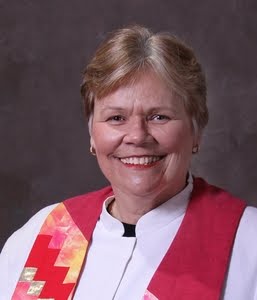
A Sermon by Rev. Dr. Kathlyn James

The other day as I was surfing the Internet, I came across the web page of Gary Lynn.  As a 71 year old man, he has a great deal of wisdom to share.  One of the things that struck me was this paragraph from his life story:

These painful feelings haunted me because of my upbringing in various Independent Christian Churches (Church of Christ) located around Los Angeles, California (these included the Inglewood First Christian Church in Inglewood, California and the Knott Avenue Christian Church in Anaheim, California) who proclaimed then and still do that “God’s word says that Homosexuality is against His Plan.” As a result of my church’s teaching I believed that I was defective, that I was in danger of spending eternity in Hell and that I was not good enough for God to love me. Going to church for me was not much fun.  But it was all I knew to do so I soldiered on.  As a personal comment here: As you will see in this web site I have recently found out that the Bible does not say that homosexuality is against His Plan.  In fact all of His committed followers are in His Plan.  God does not play favorites as between His Heterosexual and Homosexual Children. Acts 10:34-35 (New Living Translation) Then Peter replied, “I see very clearly that God doesn’t show partiality. In every nation he accepts those who fear him and do what is right.” and Galatians 3:28 (New Living Translation) “There is no longer Jew or Gentile, slave or free, male and female. For you are all one in Christ Jesus.

As I continued to read about his life’s journey to acceptance, I saw that he had posted a sermon by Rev. Dr. Kathlyn James of Lake Washington United Methodist Church, so I decided to read it and see what she had to say.  It is one of the most inspiring, life-affirming, and spiritually uplifting pieces that I have ever read.  You may find it odd, especially knowing that I am a member of the churches of Christ and what their beliefs are, that I am reporting a Methodist sermon, let alone one given by a woman, but this sermon was no doubt God inspired and is universal in its appeal.

Is Homosexuality a Sin?
by Rev. Dr. Kathlyn James
Lake Washington United Methodist Church
Kirkland, Washington
1997

Last August, we had a special Sunday in church called “Burning Questions,” in which I responded, on an impromptu basis, to written questions from the congregation. At that time, I also promised to preach a series of sermons later in the year that would specifically address the top three, or most-asked questions submitted on that day. I have to admit, I could not have predicted the ‘top three’ questions that would come my way! They were: (1) Is homosexuality a sin? (2) Is there a hell? And (3) How can we forgive? This morning we begin by looking at the first of these: Is homosexuality a sin?

In preparation for today, I gathered together all the materials I could find on this subject. I gathered official denominational studies on homosexuality and the church — not only the United Methodist study guide, but also documents from the Lutherans, Presbyterians, and the United Church of Christ. I also made a stack of books with titles like Living in Sin? by an Episcopal bishop, and Is the Homosexual My Neighbor? by two evangelicals. I eventually had a stack of books and papers a foot deep on my desk. I spent the next several days reading, making notes, and preparing a line of argument for this morning’s sermon.

But long about Tuesday of this week, I stopped and asked myself a question. What was my goal — what is my goal, in addressing this topic from the pulpit this morning?

As your pastor, I know very well that homosexuality is a tender subject among us. It is an issue on which, as Christian people, we have diverse opinions and often very complex feelings. But I also know that this is a real question among us; it is not just a theoretical one. That’s why you raised it. There are parents sitting here this morning who are wondering why their child is gay, does it mean they’ve done something wrong, and has anyone else ever struggled with this. There are gay and lesbian Christians who are active members of the church, but who live in the closet because they don’t want to lose their jobs, their homes, or your friendship and respect.

There are teenagers here who have contemplated suicide because they suspect they might be gay. Each of us here has our own background, confusion, and experience with this issue. It is time we talked about it.

My goal, this morning is to open the conversation. And this is the thought that occurred to me on Tuesday: what is the best way to begin the conversation? It’s not by presenting a logical line of argument. That’s how you begin a debate, not a conversation! The best way to begin a conversation, in which you want others to feel free to speak their mind, and no perspective to be silenced, is simply speak from your heart, out of your own experiences.

So let me set aside my pile of books and papers, this morning, and share with you at least part of my own journey around this issue. In the months ahead, beginning with the “dialogue” time immediately following church today, I invite you to do the same.

I grew up in an atmosphere of traditional values. My family belonged to a Congregational church in which, week after week, I absorbed a basically mainline Christian theology that emphasized the love of God for all people. I was taught that the most important thing in life is to love God, and to love our neighbors as ourselves. In that environment, oddly enough, I don’t remember one word ever being spoken about homosexuality. I don’t even know when I first heard the term — probably not before high school. When I did, it was not with any heavy overlay of negativity — and in this, I have come to realize, my experience is very different from many people. I did not grow up being told homosexuality was shameful or sordid; I never had a bad experience such as being molested by a person of my own gender. Only as an adult do I realize what a tremendous impact such early experiences have in shaping people’s attitudes toward homosexuality.

In fact, I had never met a homosexual person, as far as I knew, even into my twenties. This combination of influences meant that my attitude was pretty much “live-and-let-live.” I didn’t see how it hurt anyone, or how it threatened me, if two people of the same sex wanted to love each other and live together. What was the big deal?

It really wasn’t until seminary, when I was thirty years old, that the issue acquired a human face for me. Her name was Sally. I was a commuting student at Vancouver School of Theology, with a job and a husband and three children in Seattle. I drove up to Vancouver on Mondays and came home on Wednesdays, so I needed a place to stay two nights a week. Sally had a studio apartment on campus that she was willing to share in return for prorated rent. Over the next three years, Sally and I became fast friends.

I had never met anyone like Sally. For one thing, she was much more disciplined in her spiritual life than I was. She got up at 5:00 every morning, which I thought of as an ungodly hour, and left the apartment for a walk or a bike ride, during which she would pray. She bought all her clothes at Goodwill and had only five changes of clothing and two pairs of shoes in the closet. She spent several days a week volunteering in a soup kitchen downtown. She kept a prayer journal. Basically, she put me to shame. But the most appealing thing about Sally was that she loved God. She laughed easily, loved life, loved people, was funny and fun. One night, as we were going to bed–each of us in a single bed lined against the wall, our heads in the corners and our feet toward each other –she asked if I wanted to pray. I had never prayed with another person before–at least, not like that, opening our inner lives before God, in each other’s presence–and at first I was halting and shy. But over time we made a habit of praying together, and it was in the course of those years of praying, of being honest with ourselves as possible in the presence of God, that Sally came out to herself as gay.

It was no problem for me that Sally was discovering this–and I have to add here, that like most people, Sally discovered her sexual orientation; it wasn’t something she decided. Isn’t that true for you, that your sexual orientation is something that just seems “given”? It wasn’t as if Sally woke up one morning and thought, “All things being equal, I think I’d like to be a member of a despised minority.” It was more a process of discovering and owning the truth about her make-up as a human being.

But I soon learned what a traumatic discovery that would be. Sally came out first to herself before God, then to her family, then to the seminary, then to the church. I accompanied her in that process. When the Presbyterian Church kicked her out of the ordination process, I was stricken; how could they say that Sally was not qualified to be a pastor? She was the best student in her class, and a better Christian than I ever expect to be. I knew that she had been gifted and called to the ministry. Then Sally was fired from her job as the Youth Director at the church, because someone sent the pastor a letter saying that she was gay. All I could think at the time was; this is absurd, this is evil. Sally is great with those kids; why would people assume she is not safe to work with them? Why did they think a heterosexual man or woman would be safer?

Things came to a head for me, one morning; when I was standing in the kitchen, pouring a glass of orange juice, and listening to Sally cry her eyes out on the bed. She often did, in those days. Finally I went over to her, sat on the edge of the bed, and began to stroke her hair. I was filled with helpless rage at the world, and fierce tenderness for my friend. I heard myself saying, “Sally, I don’t know what being gay is. But if it’s part of who you are, and if God made you this way, I say I’m glad you are who you are, and I love who you are, and I wouldn’t want you to be any different.”

As soon as those words were out of my mouth, I realized something. I had taken a stand. I knew where I stood on this issue. Sally did not deserve to be despised and rejected; it was the church that was wrong. After seminary I was appointed to serve Wallingford United Methodist Church in Seattle, which had decided some years earlier to become a reconciling congregation — that is, a congregation that publicly states it is open and affirming toward all people, regardless of sexual orientation. From that point on, my learning curve was steep! One of my first pastoral calls was to a young man who had just slit his wrists with a razor blade. He explained that he was a Christian and couldn’t deny it, that he was also gay and couldn’t deny that either, even though he had tried. He had been told he couldn’t be both. His father had called him “human garbage” and that “He was not fit to live”. All I could do, in response, was to get down on my knees and ask for forgiveness for the church, for communicating to this young man that he was beyond the reach of God’s love.

In the five years that followed, I had many such experiences. I had young men with AIDS look up at me with hollow eyes and ask, “Do you think I am an abomination?” I sat with young men calling for their parents as they died, parents who never came. These experiences had a profound impact on me. I kept going back in my mind, again, and again, to my earliest Christian training; the message that God loves everyone, and that Jesus said to love your neighbor as yourself. He didn’t say, “love your neighbor, unless he or she happens to be homosexual.” He never said one word about homosexuality at all.

Jesus spent his whole life going to the poor, the marginalized, the persons who were called unclean by their society, and demonstrating that God’s love included them. He treated them with compassion. His own harshest words were for the Pharisees who believed that they were righteous in God’s eyes, that others were not, and that God’s judgments and opinions were identical to their own. 

Which brings me to the question of what the Bible has to say about homosexuality. There is not time, this morning, to take up that question in depth — we will have plenty of time for that later, in ongoing Bible studies and discussion. But let me say a few things here. The world “homosexual” does not appear anywhere in the Bible — that words was not invented in any language, until the 1890s, when for the first time the awareness developed that there are people with a constitutional orientation toward their own sex.

In the whole Bible, there are only seven brief passages that deal with homosexual behavior. The first is the story of Sodom and Gomorra, which I preached on last fall, which is actually irrelevant to the issue. The attempted gang rape in Sodom has nothing to say about whether or not genuine love expressed between consenting adults of the same gender is legitimate.

Neither does the passage in Deuteronomy 23, which refers to Canaanite fertility rites that have infiltrated Jewish worship. Passages in I Corinthians and I Timothy refer to male prostitution. Two often-quoted passages prohibiting male homosexual behavior are found in the book of Leviticus. Leviticus also stipulates that any man who touches a woman during her menstrual period is to be stoned to death, that adulterers are to be executed, that interracial marriage is sinful, that two types of cloth are not to be worn together, and certain foods must never be eaten.

I know of no Christians, no matter how fundamentalist, who believe that Christians are bound to obey all of the Levitical laws. Instead we are driven to ask deeper questions about how to rightly interpret Scripture, how to separate the Word of God from cultural norms and prejudices — that is, how to separate the Message from the envelope in which it comes.

The final Biblical text that deals with homosexual behavior is found in Paul’s letter to the Romans, in which he unequivocally condemns homosexual behavior. The background for his understanding was the common Roman practice of older males ‘keeping’ young boys for sexual exploitation, which he was right to condemn.

But even if this were not the case, even if Paul knew about and condemned all forms of homosexual behavior, even the most loving, what then? Paul also told women not to teach, not to cut their hair, not to speak in church. Do we follow his teaching? He told slaves to obey their masters not once, but five times — are we prepared to say today, as Southern slave owners argued 150 years ago, that slavery is God’s will?

The fact is, I am not a disciple of Paul. I am an admirer of Paul, but a disciple of Jesus Christ. Paul himself says that we should not follow him, but Christ alone. So I come back, again to the life and teaching of Jesus as the center of my faith. In that light all other biblical teaching must be critiqued. There are seven passages about homosexual behavior in the Bible, all of which are debatable as to their meaning for us today. There are thousands of references in the Bible that call us, as Jesus commands, to love our neighbor, to work for peace and reconciliation among all people, and to leave judgment to God.

When I was pastor at Wallingford, I put biblical and intellectual foundations under my “heart” experience of knowing Sally. In those years I also came to appreciate a community in which both gay and straight Christians could worship together, serve on the Trustees, sing in the choir — simply be human together, trying to grow in the capacity to love God and neighbor without fear. 

As a result, when you ask me, “Is homosexuality a sin?” My answer today is: “No.” I may be wrong, and I ask God’s forgiveness if I am. But I don’t believe that sexual orientation has anything to do with morality, any more than being blond or tall or left-handed does. Homosexuals as well as heterosexuals can be involved in sexual sin, including promiscuity, infidelity, and abuse. And homosexuals as well as heterosexuals can love one another with faithfulness, tenderness, and integrity. The same standards of moral behavior should apply to Christians, straight and gay. That is what my life experience as a pastor has led me to believe.

When a homosexual couple comes to meet with me in my office, then, and asks, “Will we be accepted in this church?” I can answer, “I will accept you.” But I can only speak for myself. What shall I say on behalf of our whole congregation?

Shall I say, “Yes, you will be accepted here, as long as you aren’t open about who you are and who you love?” Shall I say, “Yes, you will be accepted here, but you may not serve in any leadership positions.” Shall I say, “Yes, you will be accepted here, but whatever you do, don’t hold hands in church. Only heterosexual couples are allowed to do that.” Shall I just say, “No.” Or, perhaps, simply, “Yes.”

The only way we will arrive at a consensus on how this question should be answered is by taking time, over the coming year, to examine ourselves, study the Bible, think, read, pray, listen, and share our diverse life experiences with each other, asking together what God is calling this congregation to do and be.

*   *   *   *   *

The Rev. Dr. Kathlyn James, Senior Pastor, began her ministry at Edmonds United Methodist Church of Edmonds, Washington, in July 2007. In twenty-five years she has served four congregations in the Pacific Northwest, most recently First United Methodist Church in downtown Seattle. Her education includes a M.S. in Counseling, an M.Div. from Vancouver School of Theology, and a D.Min. from San Francisco Theological Seminary. Her dissertation was entitled, “Preaching to Post-Moderns: a Conversational Art.Kathlyn has three grown children and three lively grandchildren. Her passions include preaching, worship, inclusiveness, social justice, creation theology, spiritual formation, and pastoral leadership. She is an avid birder, traveler, reader, journaler, beachcomber, and vegetarian cook. 

The Excellence of Love

If I speak with the tongues of men and of angels, but do not have love, I have become a noisy gong or a clanging cymbal. If I have the gift of prophecy, and know all mysteries and all knowledge; and if I have all faith, so as to remove mountains, but do not have love, I am nothing. And if I give all my possessions to feed the poor, and if I surrender my body to be burned, but do not have love, it profits me nothing.

Love is patient, love is kind and is not jealous; love does not brag and is not arrogant, does not act unbecomingly; it does not seek its own, is not provoked, does not take into account a wrong suffered, does not rejoice in unrighteousness, but rejoices with the truth; bears all things, believes all things, hopes all things, endures all things.

Love never fails; but if there are gifts of prophecy, they will be done away; if there are tongues, they will cease; if there is knowledge, it will be done away. For we know in part and we prophesy in part; but when the perfect comes, the partial will be done away. When I was a child, I used to speak like a child, think like a child, reason like a child; when I became a man, I did away with childish things. For now we see in a mirror dimly, but then face to face; now I know in part, but then I will know fully just as I also have been fully known. But now faith, hope, love, abide these three; but the greatest of these is love.

1 Corinthians 13 (NASB)

I believe that everyone should take this chapter of the Bible to heart, literally. There are many criticisms of Christians and the Bible, but honestly, these basic concepts of love are what all religions and philosophies are about. Christians who condemn and judge others are merely picking and choosing the parts of the Bible they want to adhere to, and ignoring the core message. Most of the time, we should just get back to the basics of humanity and humility.