Category Archives: Sports

Rugby: Homoerotic?

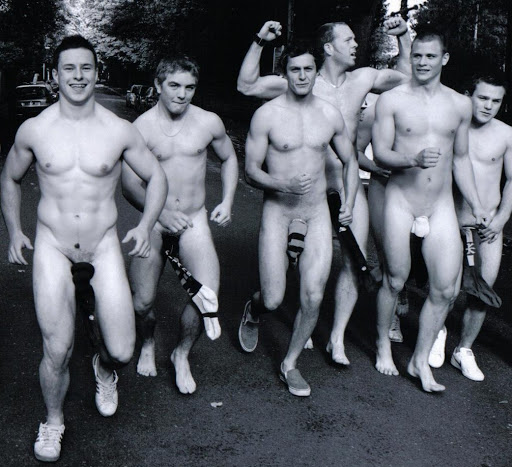
First of all, is there a sport out there more homoerotic than rugby?  For me, well maybe baseball and/or lacrosse, but rugby, I think is still at the top.  My roommate in college played for our local rugby team, and he used to tell me about some of the traditions (such as ZULU, which was running around the pitch (field) naked after scoring your first try (points) and I used to have the camera of the pics of his ZULU, but I think he took it with him when he went home.  He was a sexy mofo, and I would have loved to have been there for that.)
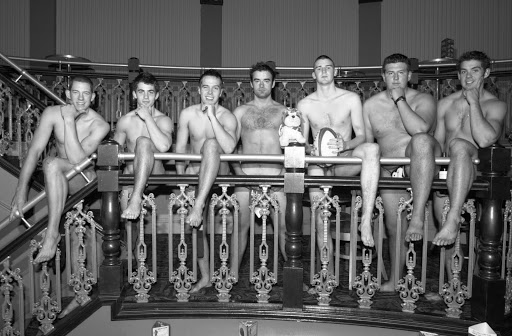
Anyway, memories aside, I have to tell you guys about SHU Rugby.  SHU Rugby has been doing a nude fundraising calendar since 2001, and they have gotten me hot and bothered since then.  The guys at SHU Rugby were kind enough to let me use some of their pictures and to promote their Calendars and DVDs.  If you click on the link for SHU Rugby, you can purchase Calendars, Making of DVDs, and Photo CDs.  They are quite reasonably priced to ranging from £4.00-£7.00 + shipping and handling.  I know once you seen some of these pictures you will want one for yourself.  And if you scroll all the way to the bottom of the post and click “more” there is a little exclusive for you guys.
I know this sounds like an advertisement, and basically it is, but I am not getting anything out of this.  The proceeds from the calendars and DVDs go to the club development fund which pays for training equipment, new kit, referee fees, coach, travel etc.  It also helps them to subsidize club fees so that they don’t lose players because a player can’t afford to come and play for them, and it also helps towards the fees for the coaching team.  It seems to be a great fundraiser for SHU Rugby and these pics are certainly “raising” something for me, and I hope for you too.  Enjoy the pics below and go help out SHU Rugby.
Click “more” below for the exclusive.

Here is the exclusive that I mentioned before.  This picture is a preview for their upcoming 2012 calendar.  I was told that this picture has not been released to anyone yet, so you will see it here first.  WOW!  My first exclusive (Actually, this picture was on my other blog first, but for those who did not see it there, this will be your first look).  Enjoy…


October Is GLBT History Month: Week 3

Matthew Mitcham
Olympic Diver
b. March 2, 1988
image“Being ‘out’ for me means being just as I am with nothing to be ashamed about and no reasons to hide.”

Australian diver Matthew Mitcham is one of the few openly gay Olympic athletes. At the 2008 Summer Olympics in Beijing, Mitcham won a gold medal after executing the highest-scoring dive in Olympic history.
Mitcham grew up in Brisbane, Queensland, Australia. He competed as a trampoline gymnast before being discovered by a diving coach. By the time he was 14, he was a national junior champion in diving. A few years later, he won medals in the World Junior Diving Championships.
In 2006, after battling anxiety and depression, Mitcham decided to retire from diving. The following year, he returned to diving and began training for the Olympics.
In Beijing, Mitcham won an Olympic gold medal in the 10-meter platform dive. It was the first time in over 80 years that an Australian male diver struck Olympic gold. After his triumph, he leaped into the stands to hug and kiss his partner, Lachlan Fletcher.
Mitcham was the first out Australian to compete in the Olympics. There were only 11 openly gay athletes out of a total of over 11,000 competitors in Beijing.
Mitcham was chosen 2008 Sports Performer of the Year by the Australian public. The same year, Australia GQ named him Sportsman of the Year. After accepting the GQ award, Mitcham joked, “Oh, my God, I’m a homo and I just won the sports award!”
Mitcham competed in the 2010 Gay Games in Cologne. He is studying at Sydney University and training for the 2012 Summer Olympics in London.
“I look at the last 20 years as a long, winding path of lessons and some hardship,” Mitcham said in 2008. “I hope I do have more lessons to learn. I look forward to that.”
Jamie Nabozny
Youth Activist
b. October 14, 1975
image “Kids are becoming a lot stronger, and with my case I hope they realize that they’re not alone.”
Jamie Nabozny was the first student to successfully sue a school district for its failure to protect a student from anti-gay harassment. His 1995 lawsuit helped pioneer the Safe Schools Movement for GLBT students.
Nabozny was emotionally bullied and physically abused as a high school student in Ashland, Wisconsin, after he revealed his sexual orientation. Classmates urinated on him, simulated raping him and beat him to the point that he needed surgery. Although he and his parents reported the bullying repeatedly, Nabozny was told that, because he was openly gay, he should expect such behavior.
“I was numb most of the time, and I had to be numb to make it through,” Nabozny said. He left the school, moved to Minnesota with his family, and passed the GED exam.
His lawsuit against the school was initially dismissed, but the Nabozny family appealed. The appellate court, basing its ruling on the Equal Protection Clause of the Constitution, allowed the lawsuit to go forward. A jury then found the school liable for Nabozny’s injuries; the school district eventually agreed to a nearly $1 million settlement.
Nabozny’s story is featured in a documentary film and teaching kit produced by the Southern Poverty Law Center. “Bullied: A Student, a School and a Case that Made History,” and its accompanying materials have been distributed to schools nationwide.
Nabozny has submitted written testimony to Congress and has lobbied lawmakers about school safety for GLBT youth. He was honored for his pioneering efforts by Equality Forum, which recognized him with its 1997 National Role Model Award.
Nabozny lives in Minneapolis. He travels the country speaking to diverse audiences about his experience and the importance of safe schools.
Cynthia Nixon
Actress  
b. April 9, 1966

image “I never felt like there was an unconscious part of me that woke up or came out of the closet. I met this woman and I fell in love with her.”
Cynthia Nixon is a television, film and Broadway actress best known for her role as Miranda on “Sex and the City.” She is one of only 15 performers to receive a Tony, an Emmy and a Grammy Award.
Nixon is a native New Yorker, the only child of Walter Nixon, a radio journalist, and Anne Kroll, an actress and a researcher on the television series “To Tell the Truth.” Cynthia’s first television appearance was at age 9 as an imposter on the show.
At age 12, Nixon began her acting career with a role in an ABC Afterschool Special. Her feature film debut came soon after in “Little Darlings” (1980), followed by her first role on Broadway in “The Philadelphia Story.”
Nixon graduated from Hunter College High School and attended Barnard College. As a freshman, she made theatrical history acting in two Broadway plays at the same time, “The Real Thing” and “Hurlyburly.”
A working actress since the 1980’s, Nixon received a Best Supporting Actress Emmy Award in 2004 for “Sex and the City.” In 2006, she was honored with a Tony Award for Best Leading Actress in “The Rabbit Hole.” In 2008, Nixon received a second Emmy Award for Outstanding Guest Actress on “Law & Order: Special Victims Unit.”
In 2008, “Sex and the City” became a movie franchise. Nixon and her television co-stars reprised their roles in the film and a 2010 sequel, “Sex and the City 2.” The original film grossed over $415 million worldwide, making it one of the most successful R-rated comedies.
Nixon is engaged to Christine Marinoni. The couple plans to tie the knot in Manhattan when  same-sex marriage becomes legal in New York State. “We want to get married right here in New York City, where we live, where our kids live,” Nixon says. She and Marinoni share parenting responsibilities for Nixon’s two children from a previous relationship.
In 2009, Nixon shared a Grammy Award for Best Spoken Word Album for reading Al Gore’s “An Inconvenient Truth.” In 2010, Nixon received the Vito Russo GLAAD Media Award for promoting equal rights for the gay community.
Nixon is a breast cancer survivor and a spokeswoman for Susan G. Komen for the Cure.
Catherine Opie
Photographer
b. April 14, 1961
image “Let’s push the boundaries a little bit here about what you guys think normal is.”
For over a decade, photographer Catherine Opie has used the power of her lens to create visibility for queer subcultures existing on society’s fringes. Her raw and honest photographs challenge viewers to reevaluate notions of sexuality and societal norms. Her groundbreaking work has adorned gallery walls worldwide, including The Guggenheim in New York and The Photographer’s Gallery in London.
At the age of 9, Opie decided to become a social documentary photographer after studying the work of Lewis Hine. Inspired by Hine’s use of photography as a means to effect social change around child labor, Opie pursued her  passion for documenting the world with her camera. At 18, she left her home in Sandusky, Ohio, to study at the San Francisco Art Institute where she received a BFA in 1985. She earned an MFA from California Institute of the Arts three years later.
In 1995, Opie’s career gained momentum after her provocative portraits of gay fringe groups appeared at the Whitney Biennial, one of the world’s leading art shows. Images of pierced, tattooed and leather-clad members of Opie’s inner circle were presented to the public in a bold and unapologetic fashion. “Looking at her pictures can be uncomfortable,” observed The New York Times, “not because of their confrontational content but because they reveal as much about the beholder as the beheld.”
In addition to documenting sexual minority communities, Opie photographs landscapes and architecture. In her exhibit “Freeways” (1994-95) she explores the intricacies of Los Angeles’s highway system. In “Mini-malls” (1997-98), she reveals the rich ethnic diversity of Southern California’s shopping centers. Combining both landscape and portraiture in her series “Domestic,” Opie traveled nationwide photographing lesbian couples living together.
Opie is a professor of photography at UCLA. She has received various awards, including the Washington University Freud Fellowship in 1999 and the Larry Aldrich Award in 2004. In 2006, she was awarded the prestigious United States Artist Fellowship.
In an exhibit catalog interview, Opie reflects, “I have represented this country and this culture. And I’m glad that there is a queer, out, dyke artist that’s being called an American photographer.”
Sunil Babu Pant
Nepalese Politician
b.  June 28, 1972
image “People in general do not wish to discriminate against their fellow neighbors.”
Sunil Babu Pant is the first openly gay politician in Nepal. His 2008 election to the national legislature followed years of activism on behalf of the Nepalese GLBT community.
Trained as a computer engineer, Pant received a scholarship to study in Belarus. It was there that he first heard the word “homosexual” and identified as a gay man. It was also where he was first exposed to entrenched homophobia, inspiring him to fight for equality in his home country.
In 2002, Pant founded the Blue Diamond Society. The group consists of more than 20 organizations and 120,000 members representing the interests of the country’s GLBT and HIV/AIDS communities. Leaders and members of the society have continued their advocacy in the face of threats of arrest and violence.
The Blue Diamond Society was party to a 2007 case that led Nepal’s highest court to declare that GLBT individuals were “natural persons” who deserve protection and civil rights. The court also ordered the establishment of a commission to study same-sex marriage as well as the addition of a third gender option on official government documents.
Pant was elected to Nepal’s Constituent Assembly as a member of Nepal’s Communist Party United. His legislative goals include equal justice and economic rights. He serves on a committee charged with rewriting Nepal’s constitution. In spite of his many accomplishments, Pant insists that his work is far from complete: “With our progress, however, is the awareness that so many more need to be served.”
In 2005, Pant and the Blue Diamond Society were awarded the Utopia Award, Asia’s leading GLBT honor. In 2007, the International Gay and Lesbian Human Rights Commission bestowed the group with its Felippa de Souza Award.
Pant, who lives in Nepal’s capital city, Kathmandu, recently founded Pink Mountain, a company that offers GLBT-geared travel packages to Nepal.
Annise Parker
Mayor of Houston
b. May 17, 1956
image “The voters of Houston have opened the door to history. I know what this means to many of us who never thought we could achieve high office.”
In 2009, when Annise Parker was elected, Houston became the largest city in the nation with an openly gay mayor. Houston is the fourth most populous city in the United States.
Annise Parker was born and raised in Houston. Her mother was a bookkeeper, and her father worked for the Red Cross. Annise received a National Merit Scholarship to Rice University, where she earned a bachelor’s degree in anthropology and sociology.  
After graduation, Parker began a 20-year career as a software analyst in the oil and gas industry. In 1997, she won a seat on the Houston City Council, making her Houston’s first out elected official. In 2003, Parker was elected city controller. She served two additional terms before being elected mayor.
Parker’s mayoral triumph didn’t come without a fight and controversy. Conservative groups criticized Parker for her “gay agenda” and distributed fliers featuring Parker and her partner, asking the question, “Is this the image Houston wants to portray?” Parker campaigned with her partner, Kathy Hubbard, and their three children.
Despite the attacks, Parker won the election in a city that denies its employees domestic partner benefits, and in a state where gay marriage and civil unions are constitutionally banned.
Parker was recognized as Council Member of the Year by the Houston Police Officers Union. In 2008, Houston Woman Magazine named her one of Houston’s 50 Most Influential Women. 
John A. Pérez
Speaker of the California Assembly
b. September 28, 1969
image “Yes I’m gay, and I’m a politician. It’s a descriptor. I don’t think it’s a definer.”
John A. Pérez is the openly gay speaker of the California Assembly. He is the first GLBT person of color to hold such a position and only the third out leader of a legislative body in United States history. 
Pérez was born in working-class Los Angeles, the son of Felipe, a Mexican immigrant who was disabled from a workplace accident, and Vera, who directed a community clinic. At age 14, Pérez became politically active, motivated by government cuts in disability payments to his father and in government subsidies to his mother’s clinic.
After graduating from the University of California, Berkeley, Pérez spent several years as a labor organizer in Southern California. He served as political director for the United Food and Commercial Workers in Orange County.
Before he held an elective office, Pérez was actively engaged in public service. He was integral in founding California’s statewide GLBT organization, now called Equality California. Presidents Bill Clinton and George W. Bush appointed him to the President’s Advisory Council on HIV and AIDS.  Pérez was a gubernatorial appointee to a panel charged with reforming California’s initiative system and a mayoral appointee to the Los Angeles Community Redevelopment Agency.
Pérez was elected to the California Assembly in 2008, winning 85 percent of the vote in his Los Angeles district. Two years later, he was selected as speaker by members of the Democratic Party and formally elected by the Assembly. Assemblywoman Fiona Ma said, “He’s someone who sends a signal to the nation that being gay is no longer a barrier to greatness.”
Pérez is a fan of classical music, art museums and the Los Angeles Dodgers.


Monday Night Football

Lowres-132 tumblr_lagh34zzeB1qcbnafo1_500
I will readily admit it, my biggest fault is that I love gossip.  I especially love gossip about someone that I don’t like.  I know that it is wrong, but I think that is why I love history so much.  History in reality is just the gossip that survived the test of time.  Two of the best pieces of gossip I have heard in the last week have been about athletes.  One is the Duke Fuck List, which I might do a post on for Wednesday (it sort of depends on my mood).  However, the gossip I want to discuss to day is about the NFL and particularly, Brett Farve—the slimy, drug, alcohol, and sex addicted, son-of-a-bitch who won’t seem to fucking retire.  Yeah, I don’t particularly like him, in fact I much prefer the football pics above.  Those of you who know much about me personally may be a little surprised at this, but all the people I know who have had encounters with this man have nothing good to say about him.
Now it seems that he was harassing a female sidelines reporter for the Jets named Jenn Sterger.  For those who don’t know (or forget, I for one didn’t really know or care before this) who Jenn Sterger is: she is formerly buxom Florida State Cowgirl who gained internet notoriety for being a buxom Florida State fan who parlayed that popularity into a full-time career. She did Maxim shoots. Playboy shoots. She wrote a “Confessions of a Cowgirl” column for Sports Illustrated. Then, in 2008, Ms. Sterger joined the Jets as an in-house sideline reporter. It was during that fateful time that her and Mr. Favre’s paths began to cross. Sort of.

Last winter, close to the Super Bowl, Ms. Sterger and Deadspin were discussing a possible collaboration on the proposed “Deadspin Swimsuit Project,” which turned into a conversation about the whole “athlete dong photo” phenomenon. She claimed that she’s been on the receiving end of several of those types of cell phone interactions by drunk men, some of whom were professional athletes. They later had a phone conversation about who some of the more well-known dong-shot senders were. favre01 One person, she claimed, who was very into cell phone-donging her was none other than Brett Favre. Now, at one point in his career, this news wouldn’t be too surprising. Favre’s time in Green Bay is littered with stories about his boozing and carousing. But gray-haired Favre? Oh yeah, she said. Sterger said that Favre first began to call her early in the season and leave strange, friendly messages on her voicemail. She played me one of these voicemails over the phone. It was Brett turning on the Mississippi simpleton charm on his way to practice giving Jenn a friendly good ol’ boy hello to a pretty lady. It was odd, but nothing incriminating. Then the phone calls from Brett started to turn weird.
Sterger claimed she spurned Favre’s advances because he was married, but also because she was working for the Jets at the time she didn’t think it was the best idea to start a torrid affair with the team’s highest profile player. Plus, if she went forward with how aggressive he was and how skeeved out she was to some of her superiors, she suspected she might lose her job. The interactions were flirty and strange but she didn’t think there wasn’t anything that made her too uncomfortable. But then, one night, Sterger received a picture on her phone which was so shocking that she just tossed it across the room. It was his dick. favre02 Brett Favre’s dick. And it happened multiple times. In fact, Sterger claims that, in one of the photos Favre allegedly sent her, he’s masturbating — while wearing a pair of Crocs. In another photo, Favre is holding his penis while wearing the wristwatch he wore during his first teary-eyed retirement press conference.
There is more to the story as covered by Deadspin, but I think you get the just of the details.  If you would like to see the Deadspin video which has the voicemails and texts, click here (penis photos at 2:08 mark but I also put them above).  If you don’t want to watch the evidence, here is a breakdown of the reasons I believe it is Farve, besides the fact that he is a slimy sonofabitch. Yes, there’s a possibility that the person communicating with Sterger was not actually Brett Favre, but rather someone trying very hard to appear to be him. But let’s look at the evidence: For an individual to put forth the effort to 1.) acquire a cellphone with a Mississippi area code where Farve lives; 2.) take some voice lessons because not only does it sound like Farve, but the person has an authentic South Mississippi accent (a true southern knows his variations in southern accents); and 3.) implicate Jets handlers and perhaps other people, all within a very short period of time and for no discernible reason other than to mess with Sterger, well, that’s some very aggressive role-playing. Sterger believed it to be him. Others believed it to be him. We’ve seen far too many supposedly family-oriented and upstanding professional athletes whose off-field behavior contradicts their well-manicured public persona. If Sterger is right, Brett Favre really is like a kid out there.  He also has a rather smallish dick (technically averaged size, but considering all the stories I had heard about him flashing it around Mississippi while he was in college, you’d think it would be big enough to brag about).
If you don’t know who the hell I have been talking about in this post, here is Brett Farve:
imageimageimage


U.S. Open Tennis

imageimageimage

I am sitting here doing some work and watching Andy Roddick show his ass at the U.S. Open (and not in the way I would like for him to show his ass either).  Roddick is not having a good game, so he has been bitching and griping at the officials for their calls.

imageimage
imageimage
image
imageimage
image

Anyway, since I have had several serious posts lately, I thought I would do a spontaneous post with some tennis eye candy.  I hope you enjoy it.  From either of my blogs, you might be able to tell that I am a sports fan.  Hot guys in skimpy and/or tight uniforms…YUM!

imageimage
imageimage
imageimage
image
 imageimage
image
image
image

Is There Any Sport More Homoerotic Than Rugby?

My roommate in college used to play rugby.  It is a rough and tumble sport with men in short shorts and “rugby” shirts.  After the games, the guys would generally get drunk and/or high, which eventually led to them getting naked at various points.  Every time my roommate told me about the traditions that were associated with rugby, they tended to included nudity.  I hope I get the terminology right here, if not, let me know.  I am doing this by memory.  There seemed to be a lot of hazing of new team members.  First of all, when a player scored his first try, he would strip naked, right there and then and run around the field.  Another tradition was the elephant walk, to show team unity.  As I understood it, all the guys would be naked and reach through the guy in front’s leg to grab their dick and then walk around the room.  Do any of you have any stories of sports hazing?

55290481 552905745529058455290609 552905775529058755290588

So to go along with this post, I thought I would give a little history of rugby for those who might not be as familiar with the sport.  William Webb Ellis is credited with inventing rugby in 1823 by picking up the ball while playing football at Rugby School and running with it. The claim is disputed but there is little doubt that rugby developed at public schools out of a large-scale, few-rules, mauling scrum game. Definition of the code began in 1863 when the Football Association was formed and outlawed handling and hacking. Richmond, Blackheath, and some London clubs stayed with the handling code and in 1871 the Rugby Football Union was formed. As in soccer, the balance moved in favor of northern clubs and there were accusations of professionalism. In 1895 St Helens, Wigan, and a number of northern clubs formed a breakaway union, which became the Rugby Football League in 1922. The number of players was reduced from fifteen to thirteen and scrums restricted to produce a fast handling game.

ab1 ab2 ab3 ab4 ab5 ab6 ab7 ab8 ab9 ab10 ab11 ab12 ab13 ab15

The two codes, amateur and professional, treated each other with disdain for many years. But the advent of television after the Second World War led to a gradual thaw. Rugby union introduced a league system, with promotion and relegation, expenses became ever more substantial, and the ban on players returning after playing rugby league was lifted in 1995. Full professionalism followed, together with substantial restructuring of competitions.


The Photography of the Argentine Marcos López

While doing a little research about sensuality and sports, I came across an article in Dissidence (The Hispanic Journal of Theory and Criticism) entitled “Homosocialism ↔ Homoeroticism in the Photography of Marcos López” by David Williams Foster.  Here is an excerpt from that article:

…One of the most homosocial spaces in modern society is the locker room, which is closely associated with other athletic and gymnasium spaces like the shower, the steam room, the jacuzzi, the massage room, and the infirmary. The bath house/sauna was, before AIDS, one of the great meeting places for gay men, and the fancy gym is, for today’s guppy, one major site for same-sex cruising (American university sports centers are notorious in this regard).  The homoerotic dimensions of sports has long been maintained, and it is difficult to forget that the original Olympics were performed in the nude; homoerotic overtones have also long been associated with European soccer, and Bazán recalls the 1995 controversy surrounding the Argentine national team. The sociologist Juan José Sebreli first broached the subject in print in a book from 1981, Fútbol y masas, but develops it as a major theme in his 1998 La era del fútbol .
In López’s image—titled El vestuarioimage ,—one is particularly struck by the fact that none of the seven men (athletes and trainers) whose faces can be seen (there is an eighth man stretched out on a massage table, his face hidden by one of the other players) looks anywhere else but directly at the camera: no one peeks out of the closet here at the body of another man… Moreover, all of the men visible are hypermasculine, confident in their pose before the camera, with marked secondary sexual characteristics well in evidence, such as hairy chest and legs, heavy beard, mustaches, muscular torso and legs, with appropriate tertiary accoutrements such as athletic wear, soccer ball, the ankle bandage and what appears to be a tube or container of ointment that are metonymies of strenuous physical activity. The file of identical lockers against the back wall iconicizes the continuity between these men where the sameness of their macho presence guarantees the easy circulation of the norms of homosociality without any trace of the discrepancy from these norms that would signal the contramasculine, the effeminate, the threat of homosexuality. True, one of the men, to the left of the image, somewhat older than the others, is fleshier than one associates with a sustained athletic life, while, in the right-hand background there is a frankly paunchy individual with long hair (he is, nevertheless, properly uniformed for athletic play). But these are, if they are discordant notes, minor ones that only serve to affirm the overall conventional hypermasculinity of the men we see in the foreground.  In short, this is a world of men and for men, and if resolute homosociality were ever to segue into homoeroticism, it is not likely to include any sign of the feminine. It is precisely the homoerotic undertones of the hypermasculine universe of soccer that both Bazán and Sebreli speak of, and, while Archetti underscores the way in which soccer—like many all-male sports—transculturally serve to assimilate young men to the codes of masculine homosociality, there is no way of categorically specifying when the frisson of the homoerotic will occur.
imageOne of López’s most outrageous compositions is Tomando sol en la terraza,  which was used for the invitation and publicity for the exhibit for the early 2005 show of his work at the White Box….Yet, by contrast, the [image] more readily evoke[s] the homoerotic, which is located here in the display of the partially naked male body. Indeed, the lack of an explicit homosocial context would indicate, precisely, that sunbathing  is not routine masculine behavior.  And although the image of the partially naked male body is legitimated in certain contexts, such as that of the athletic locker room, it does not customarily involve the privileged exposure of the penis.
Tomando sol is constructed around the common occurrence of sunbathing, which in an apartment-dwelling metropolis like Buenos Aires often means stretching out on a towel on the rooftop of one’s high-rise building. Certainly, the majority of sunbathers are women, and sports and other physically active undertakings are the most appropriate way for the male body to gain whatever are considered the beneficial aspects of direct exposure to the sun;
concomitantly, to lie inert in the sun is a female/womanlike activity. True, López’s male sunbather is surrounded by the details of a masculine world: various bottles of beer and a bottle opener, along with a half-consumed glass of brew. There is an ashtray with the butts of two consumed cigarettes, a carton of Marlboros (unquestionably a real man’s tobacco of choice), and there is a stack of magazines at hand, the top one of which appears to be a sports magazine, as its cover carries a routine soccer image. One rather whimsical detail is the garden hose (often laughingly referred to as a penis substitute), which runs alongside the reclining man and loops its way around one of the beer bottles, as though it were a sunning serpent; its two tones of green partially match the colors of the blanket on which the man lies sunning.
The model here is, in all regards, one of López’s by-now familiar hypermasculine bodies: trim and muscular, with firm and hairy legs and a nicely matted chest; his strong facial characteristics are manly in every regard: in sum, a man’s man. What is jarring, however, is the way he is dressed and what that dress leaves exposed. Nude sunbathing on a private rooftop may be preferred by some men, although heterosexual men are less likely than women (or homosexual men) to worry about tan lines: indeed, the tan line on a naked male body might be viewed by some as sexy, since it frames the now exposed but usually concealed genitals or buttocks. But the covering of the lower regions of the body means wearing a swimsuit; even underwear might be permissible. However, López’s model is swathed in athletic bandages from his midriff to halfway down his thighs, something like an improvised locker-room version of surfing shorts, although tighter and neutral in color, as opposed to the often colorful and baggy original. Moreover, the athletic bandage around the model’s middle picks up on the more reasonable presence of the wrapping around both his ankles and instep, such as one might find on an athlete’s foot to prevent or remedy a sprain from action in sports.
But what is specifically transgressive about Tomando sol is the way in which the model’s penis is exposed. The athletic bandage is wrapped around the image man’s waist, buttocks, and upper thighs in such a way that, although some minor glimpses of skin are allowed, his genitals are exposed, with his penis (notably uncircumcised from the point of view of a North American viewer) resting on the edge of a strip of the bandage. One does not normally sunbathe the penis without the rest of the lower body being exposed, and, aside from the medical inadvisability of such exposure, one is unaware of any known fetish of the sunbathed (or sunburned) penis. López is known for his over-the-top whimsicalness, and it is amply evident in this composition, with its showcasing of the model’s respectably sized penis and the echoes of the strongly masculine phallus in the beer bottles, the cigarettes, and the garden hose. The contemplation of the male body required by this composition, one that underscores the phallic, disrupts the heterosexist homosocial convention whereby the male body is masculine (a condition of the appropriate of the homosocial pact), but it is not erotic: the genitals are assumed to be there, and with acceptable potency, but they can never be the
object of confirming scrutiny. Whenever the male body is the occasion for the spectacular gaze, as the female body routinely is, it is placed at the disposal of a homoerotic interest that is inadmissible within the manly homosocial pact.

For the full article, check out http://www.dissidences.org/MarcosLopez.html.
Excerpt from:
Foster, David William. “Homosocialism ↔ Homoeroticism in the Photography of Marcos López”. Dissidences. On line. Internet: 30/08/05 (http://www.dissidences/MarcosLopez.html)


Bullfighting

Bullfighting seems to be the most masculine of sports.  However, it is also highly erotic in a barbaric sort of way.  Bullfighters themselves exude sex.  A few years ago in 2001, Patricia Nell Warren wrote The Wild Man, a book about a gay bullfighter who was deeply closeted during the reign of Generalissimo Francisco
Franco.  I became fascinated with the sensuality and machismo of bullfighters.image Warren, best known for The Front Runner, the ground-breaking novel about a gay athlete, created another gay sports figure in The Wild Man. With his overweening machismo, the complex hero, a closeted matador at the end of Franco’s rule in Spain, is never entirely sympathetic but always fascinating. He is aware of the political and social changes of the 1960s but must face the conflict between the demands of his aristocratic family and the traditions of his sport, on the one hand, and his growing love for an idealistic young peasant on the other. Warren’s overly romantic style sometimes threatens to turn this into a romance novel. The depiction of gay life under a right-wing dictatorship and the start of the ecological movement in Spain are often more absorbing than the love stories. In spite of stylistic flaws, Warren tells an absorbing story, and his characters transcend stereotypes in a setting that will be exotic to most American readers
image Called the corrida de toros in Spanish, the bullfight takes place in a large outdoor arena known as the plaza de toros. The object is for one of the bullfighters (toreros)-the matador-to kill a wild bull, or toro, with a sword.
A modern bullfight consists of three stylized parts (tercios). When the bull enters the ring, toreros wave capes to prod it to charge; then the picadors administer pic (lance) thrusts, which tire the animal and cause him to lower his head; in the second part, the banderilleros image come out and, while on the run, plant banderillas (short barbed sticks) on the withers of the bull; these often spur him into making livelier charges. In the final segment the matador-almost always a man, although some women have entered the sport in recent decades, amid controversy-holds the muleta, a small cloth cape, in one hand, and a sword in the other. Daring passes at the bull work to dominate the animal until it stands with feet square on the ground and head hung low; the matador must then approach the bull from the front and kill him by thrusting his sword between the shoulder blades and into the heart. A matador’s performance requires great skill and courage, and successful matadors reap immense awards in money and adulation. Fighting bulls are bred and selected for spirit and strength.
image The Minoans of Bronze Age Crete practiced bull leaping as part of religious ritual, and later Greeks and Romans also had rites that involved the slaughter of bulls. The Moors, who fought bulls from their horses and killed them with javelins, probably introduced the sport to Spain (c.11th cent.). Originally the central figure in the Spanish bullfight was the mounted torero; Francisco Romero is generally credited with being the first (c.1726) to fight on foot. Bullfighting is also popular in the Latin American countries of Mexico, Peru, Colombia, Venezuela, and Ecuador, and in S France. The Portuguese practice a style of fighting from horseback in which the bull is not killed in the ring. Critics contend that bullfighting is an inhumane spectacle of animal torture; aficionados respond that it is a complex ritual central to Spanish culture.

imageimage

Ancient Sports

Sports seem to have existed from the beginning of time. The original sports were established as a way to train soldiers. Some sports like bull jumping were purely for pleasure and the beauty and sensuality of the sport. Most of them served as entertainment. The winners basked in the glory of their victory. A great athlete was at the height of sexual desire from men and women.
Bull Jumping
imageBull-jumping is thought to have been a key ritual in the religion of the Minoan civilization on Bronze Age Crete. image As in the case of other Mediterranean civilizations, the bull was the subject of veneration and worship. Representation of the Bull at the palace of Knossos is a widespread symbol in the art and decoration of this archaeological site.
The assumption, widely debated by scholars, is that the iconography represents a ritual sport and/or performance in which human athletes literally vaulted over bulls as part of a ceremonial rite.
Gladiators
imageimage Gladiatorial combats usually took place in amphitheaters. They probably were introduced from Etruria and originally were funeral games. Gladitorial combats, which took place in the Colosseum and in hundreds of other amphitheaters throughout the Roman world, reached their height in the 1st and 2d cent. A.D.
image The gladiators were paired off to fight each other, usually to the number of about 100 couples, although in the imperial shows there were sometimes as many as 5,000 pairs. There were various types of gladiators, armed and armored differently. Thus a heavily armored man, a Mirmillo or Samnite, might be opposed to a Retiarius, who fought almost naked, with a net and a trident as his only weapons. He also image might be pitted against a Thracian, who fought with a dagger and a small round shield. Often gladiators were made to fight wild beasts. A defeated gladiator was usually killed by the victor unless the people expressed their desire that he be spared.
At first, gladiators were invariably slaves or prisoners, including Christians. They normally underwent rigid training, and some gained immense popularity. Later, impoverished freedmen also sought a living as gladiators, and finally even members of the ruling classes took part in gladiatorial combats on an amateur basis. Some gladiators, led by Spartacus, took part in the third of the Servile Wars (73 B.C.-71 B.C.). Constantine I forbade gladiatorial games, but they nonetheless continued until A.D. 405.
image
Olympic Sports
image
image Although records cannot verify games earlier than 776 B.C., the contests in Homer’s Iliad indicate a much earlier competitive tradition. Held in honor of Zeus in the city of Olympia for four days every fourth summer, the Olympic games were the oldest and most prestigious of four great ancient Greek athletic festivals, which also included the Pythian games at Delphi, the Isthmian at Corinth, and the Nemean at Argos (the Panathenaea at Athens was also important). image The Olympics reached their height in the 5th-4th cent. B.C.; thereafter they became more and more professionalized until, in the Roman period, they provoked much censure. They were eventually discontinued by Emperor Theodosius I of Rome, who condemned them as a pagan spectacle, at the end of the 4th cent. A.D.
Among the Greeks, the games were nationalistic in spirit; states were said to image have been prouder of Olympic victories than of battles won. Women, foreigners, slaves, and dishonored persons were forbidden to compete. Contestants were required to train faithfully for 10 months before the games, had to remain 30 days under the eyes of officials in Elis, who had charge of the games, and had to take an oath that they had fulfilled the training requirements before participating. At first, the Olympic games were confined to running, but over timimage e new events were added: the long run (720 B.C.), when the loincloth was abandoned and athletes began competing naked; the pentathlon, which combined running, the long jump, wrestling, and discus and spear throwing (708 B.C.); boxing (688 B.C.); chariot racing (680 B.C.); the pankration (648 B.C.), involving boxing and wrestling contests for boys (632 B.C.); and the foot race with armor (580 B.C.).
Greek women, forbidden not only to participate in but also to watch the Olympic games, held games of their own, called the Heraea. Those were also held every four years but had fewer events than the Olympics. image Known to have been conducted as early as the 6th cent. B.C., the Heraea games were discontinued about the time the Romans conquered Greece. Winning was of prime importance in both male and female festivals. The winners of the Olympics (and of the Heraea) were crowned with chaplets of wild olive, and in their home city-states male champions were also awarded numerous honors, valuable gifts, and privileges.

imageEach of these sports had an erotic element to them, whether it was the sensuality of the acrobatic movements of the bull-jumpers, the raw sexuality of the brutality and athleticism of the gladiator, or the nudity the ancient Olympians who competed for the glory of victory.
image In ancient times, it was believed that athletes literally exuded sexuality. image After sports, athletes would bathe in olive oil and then scrape that oil off their bodies to remove the sweat. As the oil and sweat was being scraped from their bodies, it would be collected in small bottles to be sold as a sexual enhancer. Now for some, this might sound utterly disgusting. I find it highly erotic. Mostly, it was used by women to enhance sexual pleasure, but could you imagine using it as a lube for masturbation. I mean, OMG, the smell of a musty athlete, mixed with the olive oil against your own skin, and then the ultimate smell once you cum and the sweat and oil is mixed with your cum. Now that would be an aphrodisiac.


Homoeroticism in Sports

image
Gay men and sports is generally considered an oxymoron. They don’t appear to go together most of the time. Many gay men hate sports. I personally never got a great deal of pleasure playing sports. image I still don’t enjoy playing many sports; racquetball is one of the few exceptions. I have never been a great athlete, and I never particularly liked a great deal of exercise. In recent years that has changed. I enjoy going for a walk, and I enjoy working out and lifting weights. Once you get past the soreness, you really do get an endorphin high. Blood flows better through your body (this is good because of many reasons, LOL); you have more energy; and being in better shape is always a plus.
With all that said, I may not have liked playing sports, I do love watching sports, especially college sports. I can’t wait for football season to start, then I will look forward to basketball and then baseball. image I don’t take much of an interest in professional sports, though I have pulled for the New Orleans Saints and the Carolina Panthers for years. The NFL just doesn’t hold the same interest as college football. The NBA and MLB don’t do it for me either, even though when I was younger, and he was quite popular, I was a huge fan of Jose Canseco. Now on the other hand, I am a big pro tennis fan. Andy Roddick rocks, LOL.
As I was doing a little research for an upcoming post about gladiators and other sports figures as a symbol of ultimate homoerotica, I came across this article:

imageThe author of this article contends that homoeroticism is completely unintentional. On that point, I do not disagree. However, the author’s contention that we should not look for homoeroticism in sports only because it is unintentional is a ludicrous argument. If we can’t have fun watching men slap each other on the ass, hug, kiss, or the myriad of other homoerotic activities that athletes engage in, then it takes too much of the fun away from watching sports. At least for me. Athletes often have fantastic bodies and are in great physical shape, they are just fun to watch. image A “tight end” in a football uniform, the legs and arms of a basketball player, the ass of a baseball player in those tight pants, the beautiful physique of lacrosse players (one of my particular favorites). All of these show why sports are so fun to watch. I think the reason so many gay men do not like to watch sports is because they do not fully understand the game. My suggestion is this, give it a chance, watch a few games, and you will figure out the basic rules. Most of all, enjoy the beauty of the male athlete.
image So in the coming week, I plan to do a few posts on the joys of male athleticism. The sensuality and eroticism of bull jumping, gladiatorial fights, bull fighting, greco-roman wrestling and a few more modern less gruesome sporting activities, that I hope will get your blood flowing in all the right places.


The Ancient Olympics: A History Lesson

ancient-olympics When I took my first history class in college, I did a research project on the Ancient Olympics. I had always been fascinated with the thought of athletes competing in the nude, but I also was in by the Summer Olympics that year, which were being held in Atlanta. My family and I actually went to the Olympics that year since it was close by and had a great time. I was thinking today about doing another history post and I was thinking about all the conversation we have been having about circumcision, and the idea of the Ancient Olympics came to me.

b_39k2701retocuhedbb_39k2038retouchedb

One of the things I learned during that research project on the Ancient Olympics is that men were not allowed to compete if they were kynodesmecircumcised, which meant that during that time Greek Jews were not allowed to compete in the Ancient Olympics. I also learned that in order to protect their penis during wrestling matches and other contact sports, the men would tie a string around the tip of their foreskin enclosing their glans, thus keeping them safe. The kynodesme was tied tightly around the part of the foreskin that extended beyond the glans. The kynodesme could then either be attached to a waist band to expose the scrotum, or tied to the base of the penis so that the penis appeared to curl upwards.

hugh-plummer-02-13 article-0-0909EC69000005DC-218_468x637

The ancient Olympics were rather different from the modern Games. There were fewer events, and only free men who spoke Greek could compete, instead of athletes from any country. Also, the games were always held at Olympia instead of moving around to different sites every time.

3-sport-nude-lubo-spirko 30s_french_soldiers_wrestling_nude
Like our Olympics, though, winning athletes were heroes who put their home towns on the map. One young Athenian nobleman defended his political reputation by mentioning how he entered seven chariots in the Olympic chariot-race. This high number of entries made both the aristocrat and Athens look very wealthy and powerful.
6a00d83451b90769e20133eca5dbe4970b-400wi

There are numerous myths about how the Olympics began. One myth says that the guardians of the infant god Zeus held the first footrace, or that Zeus himself started the Games to celebrate his victory over his father Cronus for control of the world. Another tradition states that after the Greek hero Pelops won a chariot race against King Oenomaus to marry Oenomaus’s daughter Hippodamia, he established the Games.

Patrick sindre skoglund[2]

Athletic games also were an important part of many religious festivals from early on in ancient Greek culture. In the Iliad, the famous warrior Achilles holds games as part of the funeral services for his best friend Patroclus. The events in them include a chariot race, a footrace, a discus match, boxing and wrestling.

yik Braeden Baade (6)

The footrace was the sole event for the first 13 Olympiads. Over time, the Greeks added longer footraces, and separate events. The pentathlon and wrestling events were the first new sports to be added, in the 18th Olympiad.
milo-of-kroton
Click on any of the event names to see a description of a particular sport:

olive-wreath-ancient-olympicsThe victorious olive branch. The Ancient Olympic Games didn’t have any medals or prizes. Winners of the competitions won olive wreaths, branches, as well as woolen ribbons. The victors returned home as heroes – and got showered with gifts by their fellow citizens.
Here are two videos the History Channel did about the Ancient Olympics. Too bad, they have them wearing modesty pouches.

By the way, for those interested, here is an explanation of women’s role in the Ancient Olympics:
Married women were banned at the Ancient Olympics on the penalty of death. The laws dictated that any adult married woman caught entering the Olympic grounds would be hurled to her death from a cliff! Maidens, however, could watch (probably to encourage gettin’ it on later). But this didn’t mean that the women were left out: they had their own games, which took place during Heraea, a festival worshipping the goddess Hera. The sport? Running – on a track that is 1/6th shorter than the length of a man’s track on the account that a woman’s stride is 1/6th shorter than that of a man’s! The female victors at the Heraea Games actually got better prizes: in addition to olive wreaths, they also got meat from an ox slaughtered for the patron deity on behalf of all participants! Overall, young girls in Ancient Greece weren’t encouraged to be athletes – with a notable exception of Spartan girls. The Spartans believed that athletic women would breed strong warriors, so they trained girls alongside boys in sports. In Sparta, girls also competed in the nude or wearing skimpy outfits, and boys were allowed to watch.
Another side note, Spartan marriage rituals are quite fascinating, if any one is interested I will do a straight post about Spartan sexuality and the marriage rituals. It will have some about gay sex, these were the Spartans after all.