

A Morality Crackdown
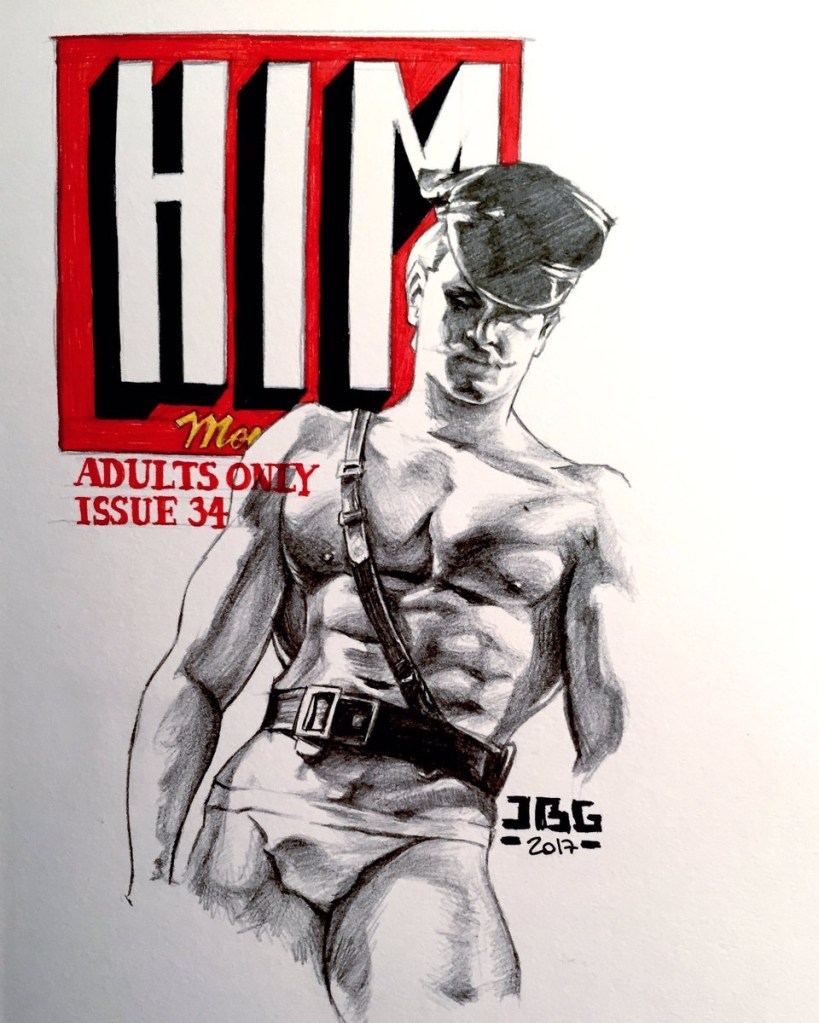
Museums with a particular specialty, such as the one that I work for which has a mission to preserve our university’s history, use eBay on a regular basis for acquisitions. We have alumni who have searches set up to acquire items for the museum, and we also consistently search eBay for new acquisitions. Sometimes, it is the only way to get certain items. We also use various brick and mortar auction houses for acquiring art and objects related to the museum’s mission.
Recently, eBay has shifted company policy in ways that will make acquisitions of gay material, especially erotica difficult. While this will not affect our collecting abilities, it does hinder other museums who are collecting items that may be considered on the fringes of society. About twenty years ago, the historian Vi Johnson won an eBay auction for a numbered first edition of “Sex Life in England Illustrated,” by Iwan Bloch, an early sexologist. Johnson recalled that, afterward, she was chatting to the buyer she had bid against thinking she’s made a new friend she could talk to about finding erotica. However, the other bidder thought she was collection for the same reason he was. The rival bidder was a buyer for right wing groups intent on buying and destroying erotica. Johnson was horrified as any true historian would be. So, Johnson dedicated herself to preserving the histories of sexuality and making them accessible. “I swore that if I could find it, grab it, steal it, buy it, borrow it, beg it, I was going to save it,” she said.
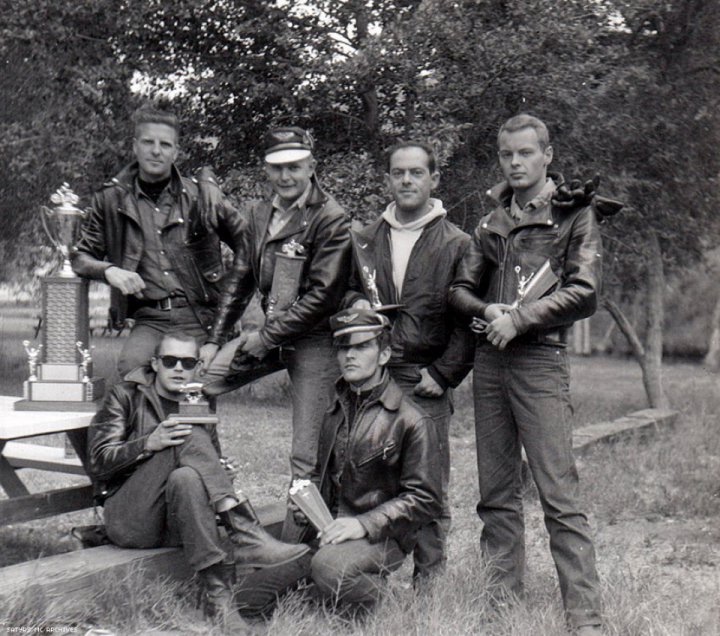
Johnson and her wife, Jill Carter, now count some forty thousand books and artifacts in their queer-focused Carter/Johnson Leather Library and Collection, located in Newburgh, a suburb of Evansville, Indiana. Early acquisitions came through friends and friends of friends within the BDSM scene, but, for years, Johnson has depended heavily on eBay to learn what’s available and for acquisitions. (We do the same thing with material about our university). The collection comprises thousands of books, magazines, posters, art, club and event pins, newspapers, event programs and ephemera showing leather, fetish, S/M erotic history. The collection has spilled over from Johnson and Carter’s single-level brick home into a second house. Johnson recently set up a “Scholar’s Room” in the new house to welcome researchers who desire to study the archive.
When in May, eBay banned the sale of “sexually oriented materials”—including magazines, movies, and video games—and closed its “Adults Only” category to new listings in the United States, they largely ended the collecting of material through eBay for museums like Johnson and Carter’s. There are a few explicit exemptions to the new eBay policy, including Playboy, Penthouse, the gay art zine Butt, and the satirical, women-run erotica magazine On Our Backs. “Nude art listings that do not contain sexually suggestive poses or sexual acts are allowed,” the policy states. Materials falling afoul of such distinctions—which could presumably include anything from reproductions of Michelangelo’s “The Expulsion from Paradise” to back copies of Black Inches—are, apparently, now outside the bounds of acceptable behavior on eBay.
The ban appears to be related to the House’s Fight Online Sex Trafficking Act and the Senate’s Stop Enabling Sex Trafficking Act, known together as fosta–sesta, an effort by victim’s-rights advocates and right-wing activists to crack down on sex work. One feature of the legislative package was to make Web sites liable for hosted content that might “promote or facilitate the prostitution of another person.” After the former twice impeached president signed fosta–sesta into law, in 2018, Craigslist shut down its personals listings, Tumblr banned sexual content, Facebook prohibited the formation of groups organized around sexual encounters, and Instagram ramped up its policing of user content, especially that which includes any hint of human nudity. Also of possible relevance: eBay recently began using the Dutch fintech company Adyen for electronic payment services, which refuses to participate in the sale of adult materials. Similar concerns by payout providers were reportedly at the center of the recent decision by OnlyFans to ban sexual content—a move they reversed after considerable outcry led by the sex workers who, in large part, helped the company build a valuation of some one billion dollars.
In researching his book “Bound Together: Leather, Sex, Archives, and Contemporary Art,” Andy Campbell, an associate professor of critical studies at the Roski School of Art and Design, used both eBay and the Johnson/Carter Library, in addition to other archives around the country. “Bound Together” argues that queer archives are particularly precarious, as they often lack institutional support structures, and their content is at odds with community guidelines. Yet, by making queer culture accessible, they also increase the likelihood of that more positive erasure: assimilation.
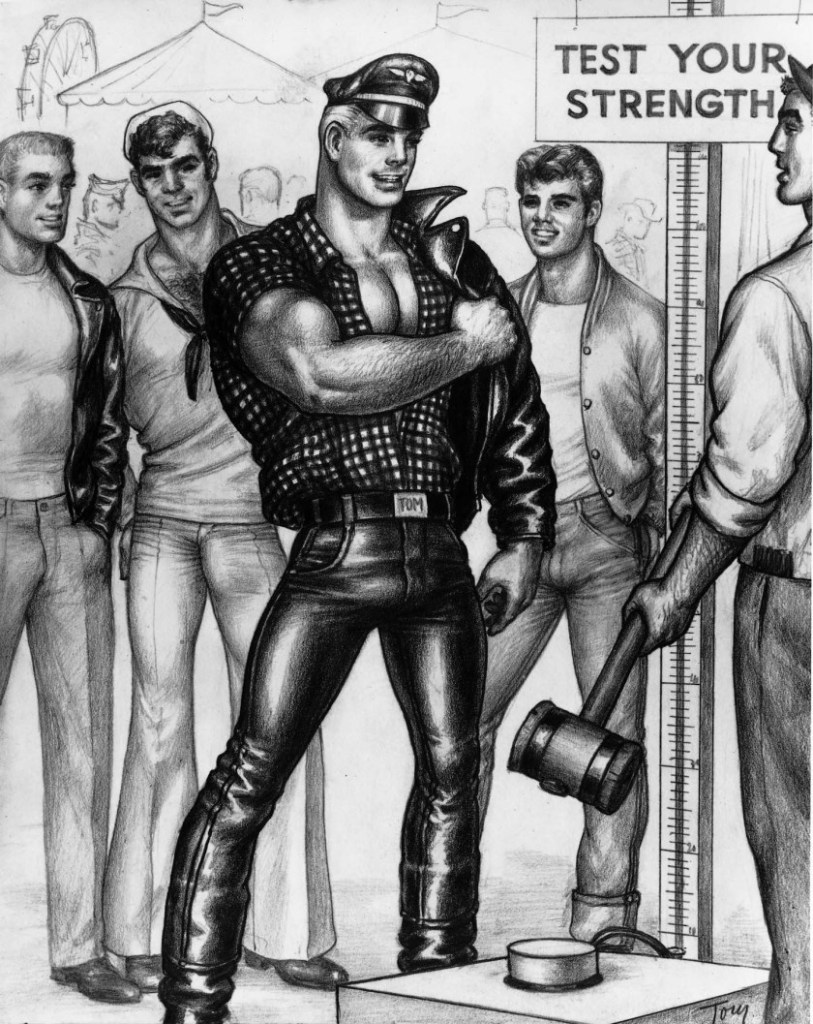
As marginalized communities become more assimilated into the mainstream, Johnson’s archive, the Leather Archive and Museum in Chicago, the Tom of Finland Foundation, the GLBT Historical Society, and those like them stand as “proof of who did it, what was done, and who was there.” But no one knows how much more of this history remains to be discovered and preserved. So much of the history of marginalized communities has been lost or destroyed. It is one of the reasons that I am a major proponent of oral histories, because we can talk to the people who were part of the LGBTQ+ community, the leather community, or the many other communities that are often deemed perverse. We can get their stories. Sadly, because of the AIDS pandemic, too many of those stories have been lost, and because of that, the material they left behind is even more crucial to collect and preserve.

Feeling Off

We may all have days when we just feel off kilter. Especially if you have a true mental health day like I did yesterday, you can become overwhelmed by feelings of depression and anxiety, and your emotions can be all over the place. I know that some people take a “mental health day” as a way of saying, I just don’t want to be at work and then taking a sick day. I probably should have taken a real mental health day yesterday, but since I’d taken a sick day for a migraine on Monday, I felt like I should be at work yesterday. Anyway, yesterday was an off day. I didn’t feel like myself, and I found it hard to even fake. I mostly sat in my office all day and tried not to fall asleep. I made it through the day, though, and by last night, I was feeling some better. I’m not sure what caused my sudden attack of depression and anxiety, but it was hard to do anything, including eating. I rarely lose my appetite over anything. Hopefully, today will be a better day.

Invictus
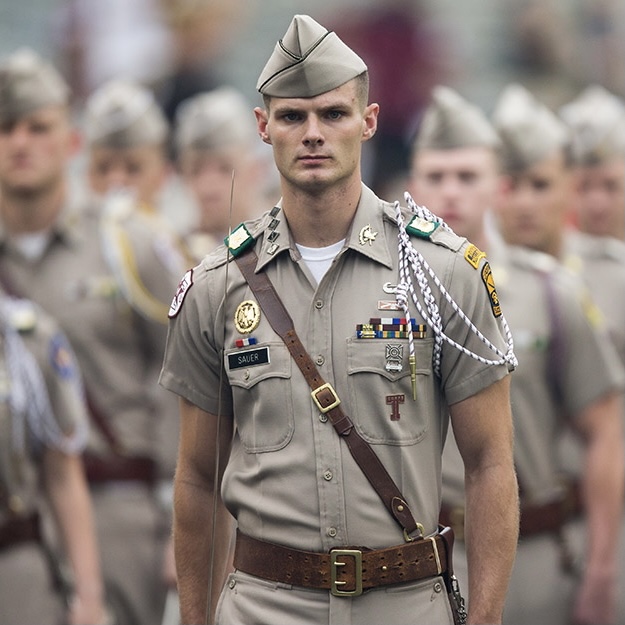
(Not from my university, but another Senior Military College)
Invictus
By William Ernest Henley
Out of the night that covers me,
Black as the Pit from pole to pole,
I thank whatever gods may be
For my unconquerable soul.
In the fell clutch of circumstance
I have not winced nor cried aloud,
Under the bludgeonings of chance
My head is bloody, but unbowed.
Beyond this place of wrath and tears
Looms but the horror of the shade,
And yet the menace of the years
Finds, and shall find me, unafraid.
It matters not how strait the gate,
How charged with punishments the scroll,
I am the master of my fate:
I am the captain of my soul.
About the Poem
Latin for “unconquered,” the poem “Invictus” is a deeply descriptive and motivational work filled with vivid imagery. William Ernest Henley wrote this poem about stoicism, courage and refusing to accept defeat while enduring a severely testing time in hospital. He had contracted tuberculosis of the bone in his youth, and the lower part of one of his legs was amputated in his twenties. At one point, it was feared he might lose his other leg. He instead chose to travel to Edinburgh in August 1873 to enlist the services of the distinguished English surgeon Joseph Lister, who was able to save Henley’s remaining leg after multiple surgical interventions on the foot. While recovering in the infirmary, he was moved to write the verses that became the poem “Invictus.” The poem is most known for its themes of willpower and strength in the face of adversity. It evokes Victorian stoicism—the “stiff upper lip” of self-discipline and fortitude in adversity—much of which is drawn from the horrible fate assigned to many amputees of the day i.e., gangrene and death.
Written in 1875, but not published until thirteen years later, ‘Invictus’ was an immediately popular poem. Its uplifting and inspirational qualities saw it frequently appear in poetry anthologies, and it was often memorized and recited in schools up until the 1960s. With four stanzas and sixteen lines, each containing eight syllables, the poem has a rather uncomplicated structure. Each stanza takes considerable note of Henley’s perseverance and fearlessness throughout his early life and over twenty months under Lister’s care. In the second stanza, Henley refers to the strength that helped him through a childhood defined by his struggles with tuberculosis when he says, “I have not winced nor cried aloud.” In the fourth stanza, Henley alludes to the fact that each individual’s destiny is under the jurisdiction of themselves, not at the mercy of the obstacles they face, nor other worldly powers.
Those who have taken time to analyze “Invictus” have also taken notice of religious themes, or the lack thereof, that exists in this piece. There is agreement that much of the dark descriptions in the opening lines refer to Hell. Later, the fourth stanza of the poem alludes to a phrase from the King James Bible, which says in Matthew 7:14, “Because strait is the gate, and narrow is the way, which leadeth unto life, and few there be that find it.” Notice how the first verse adopts a humanist position. Reference to a higher power amid suffering is vague—whatever gods may be—while the focus is on his ‘unconquerable soul.’ The famous line ‘My head is bloody, but unbowed’ suggests a noble bravery in the face of adversity, while the even more frequently quoted final two lines affirm the power of individuals to shape their own destiny, to accept responsibility and to choose how they will go forward in life. Despite Henley’s evocative telling of perseverance and determination, worry was on his mind; in a letter to a close companion, Henley later confided, “I am afeard my marching days are over” when asked about the condition of his leg.
I chose this poem because I was thinking of the freshmen cadets (technically they are not yet cadets as that comes later in the semester after they have “earned” the honor of being a cadet) at the military college where I work. You can hear them training in the early morning hours just after dawn. The orders being yelled, the loud responses, and such that goes along with their first week here. It is a brutal week meant to introduce them to life as a cadet and the military lifestyle. It is also done to test their fortitude. In years past, it was even more brutal than it is today. All too often we see the new cadets on crutches or hobbling along from some overexerted injury. Some of the new cadets are homesick and a little lost. Some knew what to expect, while others didn’t think it would be so difficult. The perseverance is supposed to be part of the process. One of the most amazing aspects of the cadet experience, is they often come in as scrawny teenagers (some are a bit more fit, but not all), and by the end of the semester or sometimes it takes both semesters, they are at their peak fitness of their lives. The transformation is truly awe-inspiring.
On a side note, I am enjoying the students being back and seeing them around campus and the town. Last year, we barely saw them. In the Fall, students were quarantined to campus, and we were still mostly working from home. Then in the Spring, they were largely quarantined to their dorms, apart from some training, but even that was severely limited. Now, life has come back to our little town and our campus. Being a military college, you don’t always see the typical shirtless college guys throwing a Frisbee or tossing a football on the quad. Mostly the cadets are in their uniforms and the civilian students are fewer in number (and often not as fit). For one of the first times the other day, I saw a group out running, many of them shirtless. It was a sight to behold, but as the semester is beginning, they will be back in their uniforms full-time and that won’t be a sight we will often see.
About the Poet
William Ernest Henley (1849 – 1903) was an English editor, poet, and playwright. Diagnosed as a child with tuberculosis of the bone, the disease plagued him throughout his life and caused the amputation of a leg when he was not yet twenty. A big, burly man with a gregarious disposition and a keen eye for literary talent, William was well liked and much admired for his own body of work. One of his closest friends was Robert Louis Stevenson, who used William as the inspiration for his Treasure Island character, Long John Silver. This poem, in turn, has inspired thousands around the world.

Weekend Recap

My heart goes out to those who are suffering from the aftermath of Hurricane Ida. Hurricanes can be so devastating, and the loss of electricity at this time of year for those in the hurricane’s path can be deadly. With a lack of air conditioning, the heat and the humidity can be overwhelming in a hurricane’s aftermath, not to mention the massive number of bugs that are pushed ashore from storms like these. In the days after Katrina, the love bugs were so numerous that you couldn’t always see more than twenty feet in front of you. The love bugs are the harmless ones. The mosquitoes and gnats and all the other creepy crawlies will be everywhere. They are mostly a nuisance, the devastation that comes from wind, flooding, and tornadoes is much worse. So, the people in the path of Hurricane Ida are in my prayers.
I had a really bad migraine day yesterday. I’m hoping to wake up this morning with less pain than yesterday. It was one of the worst migraines I’ve had in years. At times, the pain brought tears to my eyes. Thankfully, I go for my next Botox treatment on Thursday. I’m hoping I will see improvement because I think the last treatment has worn off. I’m not looking forward to the procedure, but I am looking forward to the effects of it. I really hope it helps. Migraines with the addition of the trigeminal neuralgia pain can be overwhelming at times, and I need some relief.
I had short periods when I was able to be slightly productive. I made the brown sugar pecan pound cake I spoke of the other day. I made one on Saturday, but it did not turn out as well as I expected. Putting the pecans on top as the recipe called for, caused me to mistakenly believe it was completely done (the toothpick did come out clean). As it cooled, I realized that it was not done in the middle, so yesterday, when I had a short time with tolerable pain, I made another one. It turned out much better partly because I cooked it longer, but also because I mixed all of the pecans in the batter. It’s almost too sweet for my tastes, but it was good. I wouldn’t have made another yesterday, except that I’d promised my friend and neighbor that I’d give her half the cake when it was made. I was embarrassed and wouldn’t give her part of the failed cake. I didn’t want to admit defeat, so I made another one.
It wasn’t the greatest of weekends, but I hope the week will be better. Work should not be too bad this week (fingers crossed/knock on wood). I’m off work Thursday for my Botox treatment, and I’m taking a vacation day Friday so I can be refreshed and have plenty of time to get ready for the Pride Ball in Burlington that night. Sunday will be the annual Vermont Pride Parade down Church Street in Burlington. It most likely won’t be a big parade. They never are. They only last about 20-30 minutes, but they are fun. So, I have that to look forward to this weekend.

Sixteen Years Ago…

It shall be as a sign to you on your hand and as a memorial between your eyes, that the Lord’s law may be in your mouth; for with a strong hand the Lord has brought you out of Egypt.
— Exodus 13:9
The verse above is one of the many memorials in the Bible. This one marks Passover when the Angel of Death struck Egypt but spared the Hebrews. We have a lot of memorials in our lives. Today is one of those days I will never forget. Sixteen years ago, I was living in southern Mississippi. On this day in 2005, tragedy struck the Gulf Coast of Mississippi and the area in and around New Orleans, Louisiana. It was the day a devastating hurricane named Katrina hit. Nearly 2000 people died, and the numbers are still questionable because 135 people remain categorized as missing in Louisiana.
It is a day that lives vividly in my mind. At the time, I was living with a friend of mine. I had moved in with her about a year before because her husband was moving to Florida and did not want her living there alone as she finished graduate school. The rent was much more affordable than the apartment I was living in before, so I moved. What I did not know at the time was that just as I was moving my stuff, her husband decided he wanted a divorce along with moving away. After that, several other tragedies struck my friend, and she began to spiral into alcoholism. I was sort of caught up in all of it, trying to keep her from self-destructing. I was unsuccessful, and the events of this day sixteen years ago tipped her over the edge.
When I woke up on August 29, 2005, my friend decided we were going to brunch. At the time, we did not realize just how bad the hurricane brewing in the Gulf of Mexico would be. In the years I lived in the South, I lived through numerous hurricanes, and never once had I been forced to evacuate. So, we went to brunch, where she proceeded to drink way too much. I drove her home, where she subsequently passed out in her bedroom, and I began to watch the Weather Channel with greater apprehension as it became more apparent just how devastating this hurricane was expected to be. I tried to wake her but to no avail.
Finally, she woke from her drunken stupor, realized just how much jeopardy we were in, and we made the decision to evacuate. Not many people in our town were evacuating because we were about an hour from the Gulf Coast. However, it was a good thing we did. I wanted to go east into Alabama to stay with my parents, where I believed we would be safest (and I would have been correct), but she wanted to drive west to try to get out of the way of the storm. Most hurricanes do turn to the east as a matter of course once they make landfall. So, we got in my car and drove west. The first hotel we found was in Tyler, Texas, which was roughly six hours and 400 miles away. We checked into the hotel and watched the news.
Sadly, it was Fox News because it was the only news channel on the cable system in Tyler. We watched as the levees broke in New Orleans. The major news channels mostly covered New Orleans and did not tell us much about what was going on in Mississippi. While fewer people died in Mississippi than in New Orleans, two entire towns in Mississippi, Bay St. Louis and Waveland, were destroyed. All of the other Mississippi Gulf Coast towns suffered significant damage as well. We stayed in Tyler for nearly a week before it was deemed safe to return to Mississippi.
When we reached Vicksburg, Mississippi, we ran into someone from Oak Grove, the town we lived in, and asked how things were there. We found out that it was pretty devastated. While some areas were spared significant damage, others faced major damage, and electricity, cell service, and water had still not yet been restored to major parts of Mississippi south of Interstate-20. The woman we talked to did have news of the street where we lived. She said that the house at the 90-degree curve in the street was covered in trees. We lived in that house. We prayed she was wrong, but when we arrived back at the house, we found that nearly every tree in our yard and the neighbor’s yard had fallen on our house. More than a dozen pine trees lay on top of the house, and a few the wind had picked up, and they looked like Katrina threw them into the house like a javelin. Water soaked the house, and everything was damp.
The house was essentially unlivable. My parents drove from Alabama the next day with some of my dad’s friends, a few trailers, chainsaws, and gallons of gasoline to get my stuff out of the house. We had to cut away our way through the trees to be able to move things out. Luckily, I did not have a lot of stuff in the house. What I did have was my furniture and a lot of books and clothing. The books and clothing were largely destroyed by damp and mildew by then. The heat was unbearable. We got back home in Alabama and rented a storage room to store all my possessions. The storage facility owners refused to charge us because they knew I was a refugee from Katrina. In the next week or so, I was able to get a room in the dorms at my college, so I had a place to stay. A lot of people fled to our town. The population where I lived tripled in size overnight. At twenty-seven years old, I had little choice but to move into the dorms. I had not lived in a dorm since I’d been a sophomore in undergrad.
I largely recovered and found a new apartment for the next semester. My friend, however, continued to spiral out of control. Her drinking got worse, and she became self-destructive. She was able to repair the house and sell it, but her mental health continued to suffer greatly. She ended up moving back to Florida with her parents. I lost contact with her because she became somewhat abusive to her friends as she began drinking more and more. It was an unfortunate situation, and she could not understand that she needed help. While Katrina turned my world upside down for a few months, I was able to turn things back around and get on with my life. She was unable to do so. A few years ago, I think I saw her in the Atlanta airport as I was traveling back to Alabama from Vermont. She did not see me, and I was in a hurry to catch my plane. I was unable to ask how she was doing, but she did not look good.
I can’t help but think about the turmoil caused by Katrina for me and the thousands of others because of the devastation of Hurricane Katrina sixteen years ago. I realize this is not my usual Sunday post, but I wrote this to say that we can make it through, even though things can sometimes look bleak and insurmountable. I have had some great sadness in my life, but I have survived. I have had chronic pain, but I am surviving. No matter what we are going through, we need to remember that God is with us. God will take care of us if we just let Him.


Authors
Recent Comments
noisilycool3bc985058… on Pic of the Day Joe on Pic of the Day noisilycool3bc985058… on Pic of the Day iameverywhere1 on Pic of the Day noisilycool3bc985058… on Pic of the Day Top Posts & Pages




Amazon Associate

As an Amazon Associate I earn from qualifying purchases. So, if you click on a link that takes you to Amazon.com, I may earn a commission.
Trust me, it isn’t much, but every little bit helps.

 Joe
Joe


 The Closet Professor