Category Archives: Religion

Thanksgiving 


May you be made strong with all the strength that comes from his glorious power, and may you be prepared to endure everything with patience, while joyfully giving thanks to the Father, who has enabled you to share in the inheritance of the saints in the light. He has rescued us from the power of darkness and transferred us into the kingdom of his beloved Son, in whom we have redemption, the forgiveness of sins.  –Colossians 1:11-14

In 1621, the Plymouth colonists and Wampanoag Indians shared an autumn harvest feast that is acknowledged today as one of the first Thanksgiving celebrations in the colonies. For more than two centuries, days of thanksgiving were celebrated by individual colonies and states. It wasn’t until 1863, in the midst of the Civil War, that President Abraham Lincoln proclaimed a national Thanksgiving Day to be held each November.

Thanksgiving Day has become an annual national holiday celebrated in Canada and the United States. It was originally celebrated as a day of giving thanks for the blessing of the harvest and of the preceding year. Thanksgiving is celebrated on the second Monday of October in Canada and on the fourth Thursday of November in the United States. Several other places around the world observe similar celebrations. Thanksgiving has historical roots in religious and cultural traditions, and the day originally began as a celebration of a bountiful harvest. Today, however, as agriculture is no longer the main occupation of most Americans and Canadians, it has become a holiday reminding us of what we should be thankful for. Today, it is also largely a secular holiday, but its origins come from thanking God for the harvest.

I know that I have a lot to be thankful for, especially this year. I am thankful for the readers of this blog who offered tremendous amounts of love and support when I thought my world was crashing down on me. I think of each of you as true friends in my life. I may not know you personally, though there are a fair number who I do know well, I am extremely thankful and I do thank God for bringing you into my life. I am thankful for the love and support of my family and friends. I am also thankful for my new life. Though at times my faith may have wavered some, for the most part, I knew God had a plan for me. I just had to trust Him.  

My trust and faith were rewarded with a new life, a new job, and new friends. I am thankful for the love and support that I was given during those hard months after I lost my job. I would name those who helped and how why helped, but I know I would forget someone, and it wouldn’t be fair. Some of you gave advice, some helped financially, others gave their friendship. I know that I did not get to where I am right now without a tremendous amount of help and I want to say, Thank You. I am so grateful for all that you did.

My faith is also stronger because of what I have been through. I put my whole faith in God and allowed him to guide me on the path He chose for me. For the first time in my life, I honestly feel like I am on the right path. It has been a long journey and one in which I got lost many times, but for the first time this path feels right. I am excited to be on this journey. It’s nowhere near finished, but it is just beginning. 

In the above passage from the Bible, Paul is saying a prayer for the the Colossians. Paul wrote, “May you be made strong with all the strength that comes from his glorious power, and may you be prepared to endure everything with patience.” In the trials of this year, I let God’s power carry me through and give me strength. I did my best to remain patient and let His will be done. I remember one day after church when I was speaking with my minister and I explained that something good would come along, and he said that he admired the way I was handling things because I was handling them better than he had in the same situation. I told him that I had faith that God would point me in the right direction. I knew that my faith would bring me through.

Now I am joyfully giving thanks to God, who has enabled me to share in His glory. I am thankful that God rescued me from the power of darkness, which I think in my situation was depression and doubt. However, my faith showed me the light. We should be thankful for all that God does for us, large or small. He has given us redemption, and He forgives us of our sins. This reminds me of the 23rd Psalm:


A Good Samaritan 


But wanting to justify himself, he asked Jesus, “And who is my neighbor?” Jesus replied, “A man was going down from Jerusalem to Jericho, and fell into the hands of robbers, who stripped him, beat him, and went away, leaving him half dead. Now by chance a priest was going down that road; and when he saw him, he passed by on the other side. So likewise a Levite, when he came to the place and saw him, passed by on the other side. But a Samaritan while traveling came near him; and when he saw him, he was moved with pity. He went to him and bandaged his wounds, having poured oil and wine on them. Then he put him on his own animal, brought him to an inn, and took care of him. The next day he took out two denarii, gave them to the innkeeper, and said, ‘Take care of him; and when I come back, I will repay you whatever more you spend.’ Which of these three, do you think, was a neighbor to the man who fell into the hands of the robbers?” He said, “The one who showed him mercy.” Jesus said to him, “Go and do likewise.”  Luke 10:29-37 (NRSV)

I think everyone is aware of the Parable of the Good Samaritan. It’s one of the most beloved parables in the Bible. Sadly though, there aren’t enough real Good Samaritans in life. I want to share a story of on particular Good Samaritan. I read this story and cried. She came from such an unlikely place, but she was an angel, a Godsend, and a Good Samaritan to those who needed her, especially when so many others passed them by.

Ruth Coker Burks, the cemetery angel

It’s hard to convince people these days that one lonely person can budge the vast stone wheel of apathy. The truth, though, is the same as it ever was: One pair of willing hands might inspire thousands or millions to push. That’s the way the world is changed: hand by hand.

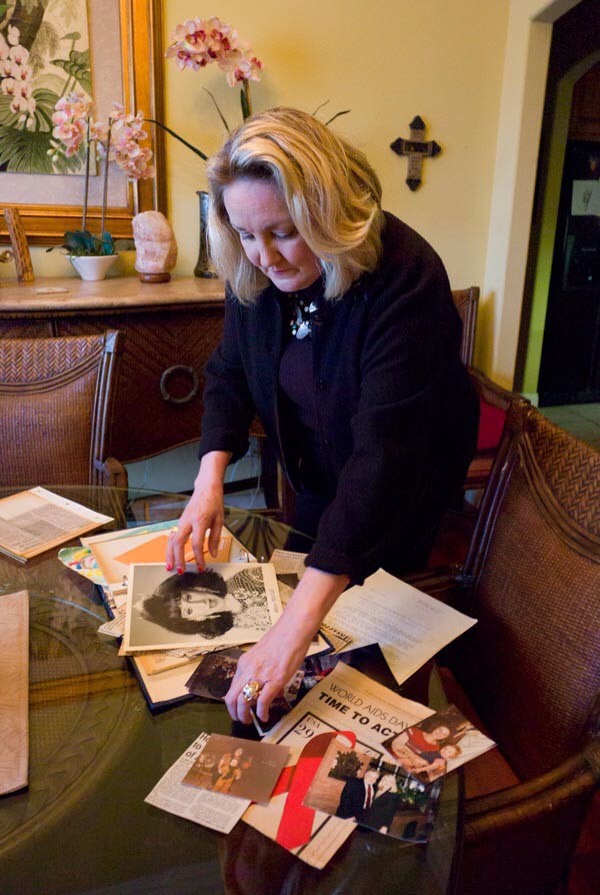
One person who found the courage to push the wheel is Ruth Coker Burks. Now a grandmother living a quiet life in Rogers, in the mid-1980s Burks took it as a calling to care for people with AIDS at the dawn of the epidemic, when survival from diagnosis to death was sometimes measured in weeks. For about a decade, between 1984 and the mid-1990s and before better HIV drugs and more enlightened medical care for AIDS patients effectively rendered her obsolete, Burks cared for hundreds of dying people, many of them gay men who had been abandoned by their families. She had no medical training, but she took them to their appointments, picked up their medications, helped them fill out forms for assistance, and talked them through their despair. Sometimes she paid for their cremations. She buried over three dozen of them with her own two hands, after their families refused to claim their bodies. For many of those people, she is now the only person who knows the location of their graves.

So much of the history of AIDS in America died with the people who lived it. What is left has often been shoved into the cabinet of Times Best Forgotten. Here, though, is a story from those days. It’s a story about what courage can do.

The red door

It started in 1984, in a hospital hallway.

Burks, now 55, was 25 and a young mother when she went to University Hospital in Little Rock to help care for a friend who had cancer. Her friend eventually went through five surgeries, Burks said, so she spent a lot of time that year parked in hospitals. That’s where she was the day she noticed the door, one with “a big, red bag” over it. It was a patient’s room. “I would watch the nurses draw straws to see who would go in and check on him. It’d be: ‘Best two out of three,’ and then they’d say, ‘Can we draw again?’ ”

She knew what it probably was, even though it was early enough in the epidemic for the disease to be called GRID — gay-related immune deficiency — instead of AIDS (acquired immune deficiency syndrome). She had a gay cousin in Hawaii and had asked him about the stories of a gay plague after seeing a report on the news. He’d told her, “That’s just the leather guys in San Francisco. It’s not us. Don’t worry.” Still, in her concern for him, she’d read everything she could find about the disease over the previous months, hoping he was right.
Whether because of curiosity or — as she believes today — some higher power moving her, Burks eventually disregarded the warnings on the red door and snuck into the room. In the bed was a skeletal young man, wasted to less than 100 pounds. He told her he wanted to see his mother before he died.

“I walked out and [the nurses] said, ‘You didn’t go in that room, did you?’ ” Burks recalled. “I said, ‘Well, yeah. He wants his mother.’ They laughed. They said, ‘Honey, his mother’s not coming. He’s been here six weeks. Nobody’s coming. Nobody’s been here, and nobody’s coming.’ ”

Unwilling to take no for an answer, Burks wrangled a number for the young man’s mother out of one of the nurses, then called. She was only able to speak for a moment before the woman on the line hung up on her.

“I called her back,” Burks said. “I said, ‘If you hang up on me again, I will put your son’s obituary in your hometown newspaper and I will list his cause of death.’ Then I had her attention.”

Her son was a sinner, the woman told Burks. She didn’t know what was wrong with him and didn’t care. She wouldn’t come, as he was already dead to her as far as she was concerned. She said she wouldn’t even claim his body when he died. It was a hymn Burks would hear again and again over the next decade: sure judgment and yawning hellfire, abandonment on a platter of scripture. Burks estimates she worked with more than a thousand people dying of AIDS over the course of the years. Of those, she said, only a handful of families didn’t turn their backs on their loved ones. Whether that was because of religious conviction or fear of the virus, Burks still doesn’t know.

Burks hung up the phone, trying to decide what she should tell the dying man. “I didn’t know what to tell him other than, ‘Your mom’s not coming. She won’t even answer the phone,’ ” she said. There was nothing to tell him but the truth.

“I went back in his room,” she said, “and when I walked in, he said, ‘Oh, momma. I knew you’d come,’ and then he lifted his hand. And what was I going to do? What was I going to do? So I took his hand. I said, ‘I’m here, honey. I’m here.’ ”

Burks said it was probably the first time he’d been touched by a person not wearing two pairs of gloves since he arrived at the hospital. She pulled a chair to his bedside, and talked to him, and held his hand. She bathed his face with a cloth, and told him she was there. “I stayed with him for 13 hours while he took his last breath on earth,” she said.

She hasn’t talked much about that day until recently. People always ask her why she wasn’t afraid. “I have no idea,” she said. “The thought of being afraid never occurred to me until after I was already deep into the AIDS crisis. I just asked God, ‘If this is what you want me to do, just please don’t let me or my daughter get it.’ And He didn’t.”

‘Someday, all of this is going to be yours’

Ruth Coker Burks’ family came to Garland County in 1826. She was born in Hot Springs, and was a childhood friend of Bill Clinton’s. While Clinton was in the White House, she said, they wrote back and forth, with Burks filling him in on all the hometown gossip from time to time.
Since at least the late 1880s, Burks’ kin have been buried in Files Cemetery, a half-acre of red dirt on top of a hill above Central Avenue in Hot Springs. Drivers using Files Road as a cut-through to avoid the traffic on Central zip past the graveyard without even seeing it. If you stand in the right spot among the old, mossy tombstones in the winter, you can see a sliver of Lake Hamilton, glimmering like a cut sapphire through a gap in the trees.

When Burks was a girl, she said, her mother got in a final, epic row with Burks’ uncle. To make sure he and his branch of the family tree would never lie in the same dirt as the rest of them, Burks said, her mother quietly bought every available grave space in the cemetery: 262 plots. They visited the cemetery most Sundays after church when she was young, Burks said, and her mother would often sarcastically remark on her holdings, looking out over the cemetery and telling her daughter: “Someday, all of this is going to be yours.”

“I always wondered what I was going to do with a cemetery,” she said. “Who knew there’d come a time when people didn’t want to bury their children?”

Files Cemetery is where Burks buried the ashes of the man she’d seen die, after a second call to his mother confirmed she wanted nothing to do with him, even in death. “No one wanted him,” she said, “and I told him in those long 13 hours that I would take him to my beautiful little cemetery, where my daddy and grandparents were buried, and they would watch out over him.”

Burks had to contract with a funeral home in Pine Bluff for the cremation. It was the closest funeral home she could find that would even touch the body. She said she paid for the cremation out of her savings.

The ashes were returned to her in a cardboard box. She went to a friend at Dryden Pottery in Hot Springs, who gave her a chipped cookie jar for an urn. Then she went to Files Cemetery and used a pair of posthole diggers to excavate a hole in the middle of her father’s grave.

“I knew that Daddy would love that about me,” she said, “and I knew that I would be able to find him if I ever needed to find him.” She put the urn in the hole and covered it over. She prayed over the grave, and it was done.

Over the next few years, as she became one of the go-to people in the state when it came to caring for those dying with AIDS, Burks would bury over 40 people in chipped cookie jars in Files Cemetery. Most of them were gay men whose families would not even claim their ashes.

“My daughter would go with me,” Burks said. “She had a little spade, and I had posthole diggers. I’d dig the hole, and she would help me. I’d bury them and we’d have a do-it-yourself funeral. I couldn’t get a priest or a preacher. No one would even say anything over their graves.”

She believes the number was 43, but she isn’t sure. Somewhere in her attic, in a box, among the dozens of yellowed day planners she calls her Books of the Dead, filled with the appointments, setbacks and medications of people 30 years gone, there is a list of names.

Burks said she always made a last effort to reach out to families before she put the urns in the ground. “I tried every time,” she said. “They hung up on me. They cussed me out. They prayed like I was a demon on the phone and they had to get me off — prayed while they were on the phone. Just crazy. Just ridiculous.”

She learned to say the funerals herself, after being rebuffed by preachers and priests too many times. Even so, she said she never doubted what she was doing. “It never made me question my faith at all,” she said. “I knew that what I was doing was right, and I knew that I was doing what God asked me. It wasn’t a voice from the sky. I knew deep in my soul.”

Elephant

After she cared for the dying man at University Hospital, people started calling, asking for her help. “They just started coming,” she said. “Word got out that there was this kind of wacko woman in Hot Springs who wasn’t afraid. They would tell them, ‘Just go to her. Don’t come to me. Here’s the name and number. Go.’… I was their hospice. Their gay friends were their hospice. Their companions were their hospice.”

Before long, she was getting referrals from rural hospitals all over the state. Financing her work through donations and sometimes her own pocket, she’d take patients to their appointments, help them get assistance when they could no longer work, help them get their medicines, and try to cheer them up when the depression was dark as a pit. She said many pharmacies wouldn’t handle prescriptions for AIDS drugs like AZT, and there was fear among even those who would. Somewhere, she said, she has a large coffee can full of 30 year-old pens. Once pharmacy clerks learned she was working with AIDS patients, she said, many of them would insist she keep the pen after signing a check. “They didn’t want it in their building,” she said. “They would come out with a can of Lysol and spray me out the door.”

She’d soon stockpiled what she called an “underground pharmacy” in her house. “I didn’t have any narcotics, but I had AZT, I had antibiotics,” she said. “People would die and leave me all of their medicines. I kept it because somebody else might not have any.”

Burks said the financial help they gave patients — from burial expenses to medications to rent for those unable to work — couldn’t have happened without the support of the gay clubs around the state, particularly Little Rock’s Discovery. “They would twirl up a drag show on Saturday night and here’d come the money,” she said. “That’s how we’d buy medicine, that’s how we’d pay rent. If it hadn’t been for the drag queens, I don’t know what we would have done.”

Norman Jones is the owner of Discovery. Opened in 1979, the club once served a primarily gay clientele, though now the crowd is often mixed. He’s old enough to remember the fear of the early days of the epidemic. In 1988, Jones helped found the charity group Helping People with AIDS, with which Burks worked. The group is still around, helping those with the disease. “She worked with us for several years there,” Jones said. “She went out and did home visits, and she’d work determining who would qualify for the money.”

Jones said that as AIDS moved into Arkansas, he and the club’s employees decided to do something to help. “The impersonators and the bartenders that worked at the club and I decided that we’d start doing once-a-year benefits to start a fund called Helping People with AIDS,” he said. “We started raising money every year and we still do so today, over 25 years later.” Jones said the money generated by the fund, as well as a percentage of the club’s sales, have helped the AIDS Foundation and other groups assisting those with the disease.

After AIDS came to Arkansas, Jones said, he started to see the changes almost immediately. Even a rumor that someone had HIV could make their friends shun them. “We had so many people who were affected by it when it first hit that it was like, wham!” he said. “It was like you were being thrown up against a brick wall. Everyone said, ‘Don’t touch them. Don’t talk to them.’ ” Even something as slight as losing a few pounds was enough to make people afraid to associate with a person, Jones said. The fear was rampant. “It made everyone feel aware that something was happening out there,” he said. “We didn’t know what was happening, but there was a fear of it.”

Burks’ stories from that time border on nightmarish, with her watching one person after another waste away before her eyes. She would sometimes go to three funerals a day in the early years, including the funerals of many people she’d befriended while fighting the disease. Many of her memories seem to have blurred together into a kind of terrible shade. Others are told with perfect, minute clarity.

There was the man whose family insisted he be baptized in a creek in October, three days before he died, to wash away the sin of being gay; whose mother pressed a spoonful of oatmeal to his lips pleading, “Roger, eat. Please eat, Roger. Please, please, please” until Burks gently took the spoon and bowl from her; who died at 6-foot-6 and 75 pounds; whose aunts came to his parents’ house after the funeral in plastic suits and yellow gloves to double-bag his clothes and scrub everything, even the ceiling fan, with bleach.

She recalled the odd sensation of sitting with dying people while they filled out their own death certificate, because Burks knew she wouldn’t be able to call on their families for the required information. “We’d sit and fill it out together,” she said. “Can you imagine filling out your death certificate before you die? But I didn’t have that information. I wouldn’t have their mother’s maiden name or this, that or the other. So I’d get a pizza and we’d have pizza and fill out the death certificate.”

She remembered the Little Rock man who “had so much fluid on his lungs that he couldn’t breathe. He couldn’t talk, and he would gag when he was trying to talk. His mother, we had called and called and called. … He wanted to talk to his mother and wanted me to try again. I got the answering machine, and I just handed the phone to him. He cried and gagged. It was excruciating listening to him ask his mother if she’d come to the hospital. She never came. The day before the funeral, she called and asked if she could come to the funeral. He’s buried in [Files] cemetery.”

She recalled the mother who called Burks up and demanded to know how much longer it would be before her son died. ” ‘I just want to know, when is he going to die?’ ” Burks recalled the woman asking. “‘We have to get on with our lives, and he’s holding up our lives. We can’t go on with our lives until he dies. He’s ruined our lives, and we don’t want people up here to know [he has AIDS], so how long do you think he’s going to stay here?’ Like it was a punishment to her.

Billy, however, is the one who hit her hardest, and the one she remembers most clearly of all. He was one of the youngest she ever cared for, a female impersonator in his early 20s. He was beautiful, she said, perfect and fine-boned. She still has one of Billy’s dresses in her closet up in Rogers: a tiny, flame-red designer number, intricate as an orchid. It was Billy’s mother, she said, who called up to ask how much longer it would be before they could get on with their lives.

As Billy’s health declined, Burks accompanied him to the mall in Little Rock to quit his job at a store there. Afterward, she said, he wept, Burks holding the frail young man as shoppers streamed around them. “He broke down just sobbing in the middle of the mall,” she said. “I just stood there and held him until he quit sobbing. People were looking and pointing and all that, but I couldn’t care less.”

Once, a few weeks before Billy died — he weighed only 55 pounds, the lightest she ever saw, light as a feather, so light that she was able to lift his body from the bed with just her forearms — Burks had taken Billy to an appointment in Little Rock. Afterward, they were driving around aimlessly, trying to get his spirits up. She often felt like crying in those days, she said, but she couldn’t let herself. She had to be strong for them.

“He was so depressed. It was horrible,” she said. “We were driving by the zoo, and somebody was riding an elephant. He goes: ‘You know, I’ve never ridden an elephant.’ I said: ‘Well, we’ll fix that.’ ” And she turned the car around. Somewhere, in the boxes that hold all her terrible memories, there’s a picture of the two of them up on the back of the elephant, Ruth Coker Burks in her heels and dress, Billy with a rare smile.

Two or more

When it was too much, she said, she’d go fishing. And it wasn’t all terrible. While Burks got to see the worst of people, she said, she was also privileged to see people at their best, caring for their partners and friends with selflessness, dignity and grace. She said that’s why she’s been so happy to see gay marriage legalized all over the country.

“I watched these men take care of their companions, and watch them die,” she said. “I’ve seen them go in and hold them up in the shower. They would hold them while I washed them. They would carry them back to the bed. We would dry them off and put lotion on them. They did that until the very end, knowing that they were going to be that person before long. Now, you tell me that’s not love and devotion? I don’t know a lot of straight people that would do that.”

Sometimes, she would listen to the confessions of the dying. “Whatever they wanted to tell their God, I would help them tell their God,” she said. “I figured, if the religious people weren’t going to do it, someone has to. If God wanted me to do this, then surely I can say: Yes, you’re going to heaven. … The Bible says that if you’re two or more, and you ask God for forgiveness, He will forgive you. There were two of us, so that was the best I could do.”

In all the years she worked with AIDS patients, she said, she never wore gloves unless the patients had broken skin. It was touching them, she believes, that kept those she cared for alive longer than others. By the 1990s, experts in the field were beginning to take note.

“My [HIV] patients lived two years longer than the national average,” Burks said. “They would send people from all over the world to the National Institutes of Health, they would send them to the CDC, and they would send them to me. They sent them to me so they could see what I was doing that helped them live. I think it was because I loved them. They were like my children, even though I was burying people my age.”

Burks helped care for Raymond Harwood, a Hot Springs resident who died in 1994 at age 42. His father, Jim Harwood, said Burks met Raymond through an outreach program sponsored by the local Catholic Church. Jim recalled Burks as a very caring person. “She was absolutely sweet,” Harwood said. “One of the kindest, sweetest people I’ve ever known.”

God, Harwood said, has a hand in everything, so He had a hand in bringing Burks into their lives. Harwood said he was surprised to hear from Burks that some parents abandoned their children when they were diagnosed with AIDS.

“I wasn’t brought up that way,” Harwood said. “Are you going to desert your son? I don’t care what he did. He could have gone out and murdered people. He’s still your son. You may not like what he does, but you love him.”

Back to God

Ruth Coker Burks had a stroke five years ago, early enough in her life that she can’t help but believe that the stress of the bad old days had something to do with it. After the stroke, she had to relearn everything: to talk, to feed herself, to read and write. It’s probably a miracle she’s not buried in Files Cemetery herself.

After better drugs, education, understanding and treatment made her work obsolete, she moved to Florida for several years, where she worked as a funeral director and a fishing guide. When Bill Clinton was elected president, she served as a White House consultant on AIDS education.

A few years ago, she moved to Rogers to be closer to her grandchildren. In 2013, she went to bat for three foster children who were removed from the elementary school at nearby Pea Ridge after administrators heard that one of them might be HIV positive. Burks said she couldn’t believe she was still dealing with the same, knee-jerk fears in the 21st century.

The work she and others did in the 1980s and 1990s has mostly been forgotten, partly because so many of those she knew back then have died. She’s not the only one who did that work, but she’s one of the few who survived. And so she has become the keeper of memory.

She was surprised in recent months when a producer with the oral history project StoryCorps reached out to her, asking her to tell her story on tape. Part of that interview was eventually broadcast on National Public Radio. She talked to the BBC this week, and other requests for interviews keep coming. She honestly seems a little shocked that anyone cares after all these years.

She talks of those days like an old soldier, tears only touching her eyes when she speaks of Billy, or her father’s grave, or how she sometimes wonders if her choice to help AIDS patients as a young woman, and the ostracism that brought, may have kept her from being everything she could have been. Still, she clearly sees those years as the time when she had a mission, maybe even one ordained by a higher power. Too, she said, she loved and believes she was loved by the people whose lives she touched — every one. Even as they were dying, they showed her what bravery is, and brought joy into her life. “They were good days,” she said, “because I was blessed with handing these people back to God.”

She hasn’t been back to Files Cemetery since her stroke. While she made sure it was kept up back when she lived in Hot Springs, it appeared to have been let go a bit when the reporter visited in late December, some of the tombstones pushed over and broken, the snag of a dead oak left to rot among the graves. Even without knowing the story of the place, it might have been downright spooky if not for the constant stream of traffic cruising by at 10 miles an hour over the speed limit.

Before she’s gone, she said, she’d like to see a memorial erected in the cemetery. Something to tell people the story. A plaque. A stone. A listing of the names of the unremembered dead that lie there.

“Someday,” she said, “I’d love to get a monument that says: This is what happened. In 1984, it started. They just kept coming and coming. And they knew they would be remembered, loved and taken care of, and that someone would say a kind word over them when they died.”


Comfort in Times of Tragedy


Therefore comfort each other and edify one another, just as you also are doing. — 1 Thessalonians 5:11

My thoughts and prayers are with those in Paris. Such a senseless tragedy is shocking but becomes more and more frequent in here terror filled times. When a nation faces tragedy, how can it cope? And how do we work through the grief individually when we suddenly lose a loved one? There is hope for the future. You can find comfort and assurance!

We all desire to have a secure, predictable and peaceful world. But when tragedy strikes, we awaken to new realities. The terrorist attacks in Paris on Friday night no doubt shocked all of us. We suddenly realize our world’s—and our own—vulnerability. The Paris attacks killed 129, wounded 352, with 99 people in critical condition.

Most of us have lost loved ones at some time in our lives, whether through tragic accidents, disease or violence. How can we cope with such loss? Those who have lost loved ones need comforting. They need hope and reassurance. As Scripture says: “Therefore comfort each other and edify one another, just as you also are doing” (1 Thessalonians 5:11). If you know someone who needs reassurance, give comfort. Let that person know you care. Give a hug or place a phone call. Provide help as you are able. When a loved one hurts, we suffer with that loved one. The Apostle Paul wrote that “there should be no schism in the body, but that the members should have the same care for one another. And if one member suffers, all the members suffer with it; or if one member is honored, all the members rejoice with it.” (1 Corinthians 12:25-26).

We can identify with those who suffer because we, most likely, have also suffered at one time or another in our own lives. We can empathize with their pain and with their loss. You can help others by giving comfort in times of tragedy. Our tears can demonstrate a deep concern for our friends and the victims of tragedy. God is the Father of mercies and God of all comfort. When we share our sorrow with our Father in Heaven, He gives comfort. Several of the Psalms express King David’s sorrow as he shared his intimate feelings in prayer. You, too, can pray using the Psalms. David cried out in prayer to his God: “Hear my prayer, O Lord, and give ear to my cry; do not be silent at my tears; for I am a stranger with You, a sojourner, as all my fathers were” (Psalm 39:12). God answers prayer. David begins the very next Psalm exclaiming, “I waited patiently for the Lord; and He inclined to me, and heard my cry” (Psalm 40:1). God will hear our cry as well. Notice this encouraging promise: “Those who sow in tears shall reap in joy. He who continually goes forth weeping, bearing seed for sowing, shall doubtless come again with rejoicing, bringing his sheaves with him” (Psalm 126:5-6).

When we are honest with our feelings, and share them with God in Heaven, He promises to comfort us. Some of us struggle with the problem of evil in the world. We do not understand how an all-powerful God, who is love, can allow such evil in the world. God’s long-term plan of salvation takes this into account. There is a real devil who is out to destroy all humanity, and he uses human instruments to perpetrate death and destruction. Satan the Devil is out to thwart God’s plan. But he has failed—and will yet utterly fail.

How do you cope with tragedies? Pray with your whole heart. Scripture shows us that we are saved by His life: “For if when we were enemies we were reconciled to God through the death of His Son, much more, having been reconciled, we shall be saved by His life” (Romans 5:10). We need to seek our Savior with all our heart. In emphasizing the Ten Commandments, the Apostle Paul wrote: “Love does no harm to a neighbor; therefore love is the fulfillment of the law. And do this, knowing the time, that now it is high time to awake out of sleep; for now our salvation is nearer than when we first believed” (Romans 13:10-11).

We need to give comfort to others in time of tragedy. We should contribute to their physical, spiritual and emotional needs. We ought to pray for the victims and their families, because we know our prayers can make a difference. “Confess your trespasses to one another, and pray for one another, that you may be healed. The effective, fervent prayer of a righteous man avails much” (James 5:16). Are you praying for the victims of terrorist attacks and other tragedies?

Not only do we comfort others and pray for others, but we ourselves can find comfort and assurance from our Father in Heaven who is called “the Father of mercies and God of all comfort” (2 Corinthians 1:3). Paul reminds us that we can take comfort in Scripture, and that we should give this comfort to others. The truth of the Bible can bring comfort in times of tragedy. We all need this inspiring, hope-filled truth.


A Beautiful Life

image

Let us do good unto all men, especially unto them who are of the household of faithGalatians 6:10

A Beautiful Life

Each day I’ll do a golden deed,
By helping those who are in need;
My life on earth is but a span,
And so I’ll do the best I can.

Life’s evening sun is sinking low,
A few more days and I must go.
To meet the deeds that I have done.
Where there will be no setting sun.

To be a child of God each day,
My light must shine a-long the way;
I’ll sing His praise while ages roll
And strive to help some troubled soul.

Life’s evening sun is sinking low,
A few more days and I must go.
To meet the deeds that I have done.
Where there will be no setting sun.

The only life that will endure,
Is the one that’s kind and good and pure;
And so for God I’ll take my stand,
Each day I’ll lend a helping hand.

Life’s evening sun is sinking low,
A few more days and I must go.
To meet the deeds that I have done.
Where there will be no setting sun.

“A Beautiful Life” is a song which encourages us to do good unto others in order that we might be an influence for righteousness in this world. The text was written and the tune (Life’s Evening Sun) was composed both by William M. Golden (1878-1934). The song is dated 1918, but little information about its background is available. Perhaps Golden’s best known song is “Where the Soul Never Dies,” beginning, “To Canaan’s land I’m on my way.”

While I have sung this song many times in church, my most vivid memories are of my mother playing it on the piano. It was one of the songs that she loved to use to proactive playing the piano. I knew the tune long before I knew the words; however, this is one of the most beautiful songs when sung A Capella. When it is sung, the base begins “Each day I’ll do,” followed by the higher voices singing “A golden deed.” Each line alternates between the two and when done right it’s an amazingly beautiful song.

The song suggests several things that we can do to be a good influence on others. According to stanza 1, we must do our work for the Lord every day. Christianity is a religion that must be practiced daily and affect our daily lives. Therefore, daily we should be concerned about those who are in need. The reason that this is so important is that our lives are limited so we must do good while we have the time.

According to stanza 2, we must let our lights shine. God wants us to be His spiritual children. However, as His children, He wants us to let our lights so shine that men may see our good works and glorify Him. One way to do this is to sing His praise that we might teach and admonish others.

According to stanza 3, we must be kind to others. Our lives are more than just our physical existence, and to have an enduring quality they must be influenced by Christ. A life that is truly influenced by Christ will be characterized by kindness. Such a life will also not be ashamed to take a stand for God so that it can be a help to others.

The chorus re-emphasizes the need to be doing these things because of the brevity of life. God has eternal life planned for His people in heaven. However, to be made fit for such a wonderful dwelling place, we must strive while we journey here on this earth to have “A Beautiful Life.”


Fight the Good Fight, Finish the Race

image

Fight the good fight of faith, lay hold on eternal life, whereunto thou art also called, and hast professed a good profession before many witnesses. — 1 Timothy 6:12

I have fought the good fight, I have finished the race, I have kept the faith. — 2 Timothy 4:7

Yes, there will be challenges to your faith; there will be times when you will be tempted to give up and quit. But what great glory it will bring to God if you keep fighting the fight and running the race! And what a great reward will await you at the finish line!

We know that God will meet our needs if we go to Him and ask Him in faith. Yet in this world, we face circumstances that can cause us to falter in our faith. The economy and employment situation, impending wars, discrimination, and the daily life and family issues we face can cause us to quit the fight. But it is in these precise times that we must fight the good fight of faith!

The Bible says in First Timothy 6:12 that we are to fight the good fight of faith. These are the times when we must stand our ground and not quit—even if it looks like we’re going down for the count. Don’t quit! God will cause us to be victorious if we will believe His Word and not give up. It’s one thing if you quit a fight in the natural. But when we embark upon this spiritual fight and we quit in the middle of it, the consequences can be extremely sobering; whether or not we stay in the fight could mean life or death.

So stay in the fight of faith! Yes, you may lose a round or two in the fight of faith. You may falter and the devil may take you by surprise, but just because you lose a few rounds doesn’t mean you lose the whole fight. You may come away from that first round or two with a black eye and a bloody nose, so to speak, until you learn how to stand on the Word for your victory. But just because there are setbacks, doesn’t meant that you’ve lost the fight.

If you will put your trust in the God, you will be ready for the next round. There are too many Christians who are falling for the devil’s lies. They are following false teachers who call themselves Christians yet they preach hate and not God’s love. It is the greatest problem in Christianity today. Churches are losing the faithful because they are not following the word of God. The churches who are gaining membership are doing so by feeding on the fear, selfishness, and hate that exists in people’s hearts.

Not only is that a problem, but when things go bad in our lives, we think that God is punishing us or ignoring us. Instead of pressing on in faith, they begin to say, “Well, I guess I might as well give up! God isn’t going to answer me this time.” And we quit and lay our faith down, and that’s as far as we ever go. We never take another step or make another advance to gain the territory God has already promised us.

I don’t believe in quitting! I don’t think God believes in quitting, either! In reading the Word of God, you’ll see that the people God used were those who refused to quit! They weren’t people who were necessarily any braver, wiser, or smarter than we are. They were just people with a tenacity and determination of faith who wouldn’t take “no” for an answer! There is an old saying, “Quitters never win, and winners never quit!”

Don’t be satisfied with second best in life! But on the other hand, don’t be upset with yourself if you lose a round or two, because condemnation is the devil’s way to try to get you down. Losing a round or two in a fight does not mean you’ll lose the whole fight! Make up your mind: “I am determined to follow God’s plan for my life. I will not turn aside from following Jesus no matter what!” And if you’re out there in the midst of the fight when the last bell rings, and you’ve been faithful to what God has told you to do, you’re going to be wearing a victor’s crown.

Life might be a journey of ups and down, but as 2 Timothy 4:7 says, “I have fought the good fight, I have finished the race, I have kept the faith.” While that was a final goodbye to Timothy from Paul, it is something we should all strive to be able to say at the end of our lives. I will continue to fight the good fight. I will finish the race. I will keep the faith. Don’t let anyone discourage you from your goals. Continue to fight, run the race, and keep the faith, for in the end, if you do those things, you will be rewarded in this life and the next.


The Fall of the Leaf

image

For everything there is a season, and a time for every matter under heaven:
a time to be born, and a time to die;
a time to plant, and a time to pluck up what is planted;
a time to kill, and a time to heal;
a time to break down, and a time to build up;
a time to weep, and a time to laugh;
a time to mourn, and a time to dance;
a time to throw away stones, and a time to gather stones together;
a time to embrace, and a time to refrain from embracing;
a time to seek, and a time to lose;
a time to keep, and a time to throw away;
a time to tear, and a time to sew;
a time to keep silence, and a time to speak;
a time to love, and a time to hate;
a time for war, and a time for peace.

Ecclesiastes 3:1-8

The Fall of the Leaf
By H. Macmillan, D. D.

At no period of the year are the sunsets so varied and beautiful as in autumn. The many-colored woods of the year’s eventide correspond to the many-colored clouds of the sunset sky; and as the heavens burst into their brightest hues, and exhibit their loveliest transfigurations when the daylight is fading into the gloom of night, so the year unfolds its richest tints and its fairest charms when it is about to sink into the darkness and desolation of winter. The beauty of the autumnal tints is commonly supposed to be confined to the fading foliage of the trees. This is indeed the most obvious feature of the season — that which appeals to every eye, and reads its lesson to every heart. But nature here, as everywhere else, loves to reproduce in her smallest things the peculiarities of her greatest. It was a beautiful myth, created by the glowing imagination of the Greek poets, that the great god Pan, the impersonation of nature, wedded the nymph Echo; so that every note which he blew from his pipe of reeds awakened a harmonious response in her tender bosom. Most truly does this bright fancy represent the real design of nature, according to which we hear on every hand some curious reverberation of some familiar sound, and see all things delighting to wear each other’s robes. The fading frees pipe their many-colored music aloft on the calm blue October air — for the chromatic scale is the harmonious counterpart of the musical — and the lowly plants that grow beneath their shadow dance to the music. The weeds by the wayside are gifted with a beauty in the decline of life equal to that of the proudest oaks and beeches. Each season partakes to some extent of the characteristics of all the other seasons, and shares in all the varied beauties of the year. Thus we find an autumn in each spring in the death of the primroses and lilies, and a harvest in each summer in the ripe hay-fields; and every one has noticed that the sky of September possesses much of the fickleness of spring in the rapid change of its clouds and the variableness of its weather. Very strikingly is this mutual repetition by the seasons of each other’s characteristic features seen in the resemblance between the tints of the woods in spring and in autumn. The first leaves of the oak expand from the bud in a pale tender crimson; the young leaves of the maple tree, and all the leaves that appear on a maple stump, are of a remarkable copper color; the immature foliage of the hazel and alder is marked by a dark purple tinge, singularly rich and velvety-looking. Not more varied is the tinting of the autumnal woods than that of the spring woods. And it may be remarked that the color into which any tree fades in autumn is the same as it wears when it bursts the cerements of spring, and unfolds to the sunny air. Its birth is a prophecy of its death, and its death of its birth. Nature’s cradles have not more of beginning in them than of ending; and nature’s graves have not more of ending in them than of beginning. No one can take a walk in the melancholy woodland in the calm October days without being deeply impressed by the thought of the great waste of beauty and creative skill seen in the faded leaves which rustle beneath his feet. Take up and examine one of these leaves attentively, and you are astonished at, the wealth of ingenuity displayed in it. It is a miracle of design, elaborately formed and richly colored — in reality more precious than any jewel; and yet it is dropped off the bough as if it had no value, and rots away unheeded in the depths of the forest. Myriads of similar gems are heaped beneath the leafless trees, to moulder away in the rains of November. It saddens us to think of this continual lavish production and careless discarding of forms of beauty and wonder, which we see everywhere throughout nature. Could not the foliage be so contrived as to remain permanently on the trees, and only suffer such a periodical change as the evergreen ivy undergoes? Must the web of nature’s fairest embroidery be taken down every year, and every year woven back again to its old completeness and beauty? Is nature waiting for some great compensation, as Penelope of old waited for her absent husband, when she unravelled each evening the work of each day, and thus deluded her eager lovers with vain promises? Yes! she weaves and unweaves her web of loveliness each season — not in order to mock us with delusive hopes, but to wean us from all false loves, and teach us to wait and prepare for the true love of our souls, which is found, not in the passing things of earth, but in the abiding realities of heaven. This is the secret of all her lavish wastefulness. For this she perpetually sacrifices and perpetually renews her beauty; for this she counts all her most precious things but as dross. By the pathos of her autumn loveliness she is appealing to all that is deepest and truest in our spiritual nature; and through her fading flowers and her withering grass, and all her fleeting glories, she is speaking to us words of eternal life, whereby our souls may be enriched and beautified for ever.

http://biblehub.com/sermons/auth/macmillan/the_fall_of_the_leaf.htm


The Fruit of the Spirit


By contrast, the fruit of the Spirit is love, joy, peace, patience, kindness, generosity, faithfulness, gentleness, and self-control. There is no law against such things. And those who belong to Christ Jesus have crucified the flesh with its passions and desires. If we live by the Spirit, let us also be guided by the Spirit. Let us not become conceited, competing against one another, envying one another.

Galatians 5:22–26

It never ceases to amaze me how the Christian community has endured in spite of the differences in biblical interpretations and analyses. In some cases, the only thing Christians have in common with each other is Christ. The rituals and dogmas among Christians are extraordinarily different. There are poisonous snake handlers, horse and buggy riders, and Voodoo Christians. There are those who believe that dancing will doom you to hell and those who dance during their services. Some fill their church with music, while others like the churches of Christ forbid any musical instruments in their church. My list could go on and on and on! 

Galatians 5:22-26 binds our “fractured” Christian Community into “one” through the nine manifestations (fruits) of the spirit. That includes mainstream Christians as well as the snake handling Christians. Even those Christians who have never heard of the “fruits of the spirit” have felt the spirit in their heart and soul and most certainly witnessed them in Jesus Christ.

These manifestations are available to all of our brothers and sisters in Christ, just for the taking: 

LOVE: Without love, humanity would not exist. There could be no human interaction. You would have no feelings for friends, family, or those you hold close to you. Love is so much more than a romantic relationship. Love resonates throughout our life. Love is what makes us human. 

JOY: Don’t mistake happiness for joy. They are not the same. There is a vast difference between joy and happiness. Happiness is based on short-term events or “things” — a new car, a kiss, an awesome gift. Joy comes from God and is born from within. Happiness is the Easter Bunny. Joy is the risen Christ. 

PEACE: This is not the peace that comes at the end of a battle. It is the peace of the Lord. This is a peace that comes from within, and is always with you. It is enduring peace of mind, contentment, and serenity. 
FORBEARANCE: Forbearance means to tolerate even when you get less than you think you deserve; to be patient, and deal with difficult circumstances with gentleness and calmness. 

KINDNESS: Kindness is a smile rather than a frown, a word of encouragement and comfort, or a warm, sincere, much-needed hug. I know it is a billboard cliché, but kindness truly can come from asking yourself, “What would Jesus do?” 

GOODNESS: Generosity is being mindful of those who have less than you — doing good things from the goodness of your heart, not for the tax break or the glory. Goodness is fed from the inner qualities of virtue, excellence of character, and attitude. 

FAITHFULNESS: Faith is knowing that God always does what is best for you, not necessarily what you ask for. Don’t lose faith when doubts creep into your heart. Doubt is a powerful component of faith. 

GENTLENESS: Do not confuse gentleness with weakness. Gentleness requires great strength. Gentleness enables a person to patiently endure insults and injuries received at the hand of others. It allows us to keep cool when others explode. Gentle people do not seek revenge; they leave that in God’s hands. 

SELF-CONTROL: We all know what our self-control failures are: material possessions, promiscuity, anger, alcohol, drugs, etc. Our “head” knows when our human desires are not right for us — and, as a result, there is a tug of war between our head and our desires. And sometimes it is a major tug of war. We must always be vigilant to keep our self-control.

The creator of Star Trek, Gene Roddenberry, once said, “If man is to survive, he will have learned to take a delight in the essential differences between men and between cultures. He will learn that differences in ideas and attitudes are a delight, part of life’s exciting variety, not something to fear.”


Boasting About Tomorrow 


Come now, you who say, “Today or tomorrow we will go into such and such a town and spend a year there and trade and make a profit”-yet you do not know what tomorrow will bring. What is your life?

For you are a mist that appears for a little time and then vanishes. Instead you ought to say, “If the Lord wills, we will live and do this or that.” As it is, you boast in your arrogance. All such boasting is evil. So whoever knows the right thing to do and fails to do it, for him it is sin.  James 4:13-17

There is so much depth to these five verses. In the big picture, do we include God in all of our plans? Do we include him in our career or educational plans? Do we pray about the path He wants us to take? When we make plans and exclude God, no matter what the plans are, it is as if we are boasting in our own abilities.

Verses 13 and 14 refer to making future plans for prosperity without consulting God. Even if the plans are honorable and righteous, God may have other ideas. Our lives are but a blink of God’s eye, “a mist that appears for a little time and then vanishes.” God wants us to consult with Him for all plans.  

At the first of last week, I boasted about how far I’d get each day on my journey to Vermont. However, God had other plans. I had not planned on hitting something in the road, puncturing my fuel tank, and being stranded in Knoxville for a few days, but that’s what happened. It actually only delayed my arrival by one day, but I was fortunate on two fronts. First, I was fortunate that I was not hirt in the accident and that no severe damage was done to my car. Second, it apparently rained most of the day yesterday in Vermont and it would have been miserable trying to move things into the apartment. In most things, we can find a silver lining, if we try.

I plan ahead. If I do not have the next step or two thought out before I get to them, I feel behind and unorganized. Of course, just because we plan doesn’t mean things will actually go as planned. God decides what will and will not happen. Ever since I gave Him full rights to my life, I cannot seem to plan anything too far in advance. He is the ultimate schedule shifter. James notes, “you do not know what tomorrow will bring.” I have to remind myself of this. Life throws sudden changes at you. Yes, I still plan ahead to the best of my ability, but I now make flexible plans instead of rigid ones. This is one way I submit my life to God, by giving Him free reign to jumble my schedule. In the end, I trust God has a better idea of what I should do with my life than I do since He sees the entire picture.

I remind myself that God has a plan for me in my prayers. I begin by asking God to forgive me of my sins, then I ask Him to guide me down the path He has chosen for me before asking Him to bless my family and friends. I pray for guidance down the path God has chosen for me, because I know it is not an easy path. In Matthew 7:13-14, Jesus says, “Enter by the narrow gate. For the gate is wide and the way is easy that leads to destruction, and those who enter by it are many. For the gate is narrow and the way is hard that leads to life, and those who find it are few.”

I’ve learned to use verse 15 in all planning. “If the Lord wills, we will live and do this or that.” There is so much each of us wants to do with what time we have left in our lives, right? Personally, I would love to travel to Europe again, write a book, get in better shape, and be healthier. With each thing I want do to, I pray about it and say, “Lord, if it is Your will that I do this, then I will do it.”

Psalm 37:4 states: Delight yourself in the LORD, and he will give you the desires of your heart. This is a Scripture of hope. We think, “I love the Lord and so He will give me whatever my heart desires.” That sounds great and all, but what about this: if we love the Lord and become very close and intimate with Him, very soon His desires become the desire of our hearts. Ask the Lord if your desire is His will and you may find that His will truly becomes your desire.

Verses 16-17 remind us that boasting in our arrogance is evil, and goes on to say that if we know the right thing to do and fail to do it, we are sinning. If the Lord places something upon your heart, and you do something else instead, verse 17 tells us that it is sin. In 2 Corinthians 1:12, Paul writes, “For our boast is this, the testimony of our conscience, that we behaved in the world with simplicity and godly sincerity, not by earthly wisdom but by the grace of God, and supremely so toward you.”

Boast in the Lord and proclaim to everyone: “My God has blessed me abundantly, and He directs my path.” In Matthew 5:6, Jesus said: “Blessed are those who hunger and thirst for righteousness, for they will be filled.” There is satisfaction in doing God’s will. To actually do good is filling food. The more we eat the keener our appetite becomes. Dissatisfaction is a sure sign that we are not eagerly doing the will of God. It is a symptom of spiritual immaturity. The only way to discover the point of Christ’s teaching is to practice it. The only way to godly contentment is to hunger and thirst after righteousness.


Trust in the Lord

image

Trust in the Lord with all your heart, and do not rely on your own insight.
In all your ways acknowledge him, and he will make straight your paths.


Proverbs 3:5-6

Yesterday, I was talking to a friend of mine, and we were discussing something that he has been wrestling with for years. He said that once he decided that it was inevitable at some point in the future that he didn’t wrestle with it in his mind anymore. I have often wrestled with the same issue. I am not here to discuss the issue at hand, that’s not what this is about. When he said he decided that it was inevitable and would one day happen, I told him that I knew he was wrong. I told him that I’d worried and contemplated on the same thing for many years. I came to a very different decision than my friend. I told him that once I put my faith in God, once I trusted God with all my heart, and once I quit relying on my own fears and worries, I think about that issue much less. It doesn’t mean that the voice in my head that tells me things contrary to God is completely silent now, but it does mean that my faith can shut that voice up.

The point is that if we acknowledge God as our guide, then he will not guide us wrong. We have to put our full faith and trust in God, and He will protect us and show us the way. If we rely on our own insights, then we will get lost. God is our compass, but if we don’t use Him and trust Him, then we will lose our way. We also must understand that each of us matters to God. I believe that we are important to God no matter how we see our relationship with Him. As 1 John 4:8 says, “God is love,” and in verse 12, we are told, “If we love one another, God lives in us, and His love is perfected in us.” If God lives in us, then we are significant to God. He not only will not forsake us, but He will love us, guide us, and protect us.


The Way Out

image

No testing has overtaken you that is not common to everyone. God is faithful, and he will not let you be tested beyond your strength, but with the testing he will also provide the way out so that you may be able to endure it.

Corinthians 10:13

For the past six year, I have felt like I was in quicksand and slowly being pulled under. The harder I tried to escape, the more deeply mired I became. I was dying both in mind and body. I became complacent over the past six years. Six years ago, I had been looking for a college teaching job because I had two choices: find a good job and finish my dissertation or move home and finish my dissertation. I couldn’t financially sustain my life as it was. The problem was that six years ago, we were right in the middle of the Great Recession. Every job I applied for had their search cancelled because of lack of funding. Without a good job that would also allow me to research and write, I could no longer financially support myself and have any hopes of finishing my dissertation. So I moved home with my parents. I continued working on my dissertation and believed that I was making progress and I continued to look for a job. Neither worked out as planned. My dissertation advisor, who I was thrown to when my previous advisors all left for other universities, hated my dissertation topic and did not believe in me. By the time I finally got a new advisor, I was so discouraged that I just couldn’t bring myself to finish.

I also knew that I had to get out of my parents’ house so when the chance to teach at a small private school in Alabama came my way, I took it. That’s when I really got bogged down in he quicksand that has been Alabama. I became complacent here. I got even more discouraged over further rejection letters as I continued to look for other employment. I got discouraged to the point of barely even looking for other jobs. Then that door was slammed in my face as a coach was hired to replace me. A coach that my former colleagues describe as having the personality and teaching ability of a door knob.

The last five years, I have had one thing that sustained me and kept me from completely being consumed by the mire of Alabama. It was this blog. Not only did it give me a creative outlet but it brought into my life some truly wonderful people, some that will be lifelong friends. They have helped me through the rough times. Four years ago, one of those friends sent me two articles from the New York Times’ Sunday Magazine about homosexuality and religion. Those articles began a personal study on the churches of Christ and homosexuality which became a week long set of blog posts. In turn, it led me to write my Sunday devotionals/bible studies.

I have always said that these Sunday posts were my own personal bible studies but that I posted them for those who wanted to study with me. My faith has grown stronger because of these bible studies. I never lost my faith in God, but I had lost my faith in Christians. The more I studied, the more I came to understand the true depths of God’s love. Homosexuality cannot be a sin because love cannot be a sin. Love is not exclusive to opposite sex couples, but to all people regardless of gender. I also came to realize that those people who preach hate are not Christians at all because they do not follow God. God is the God of John 3:16, “For God so loved the world that he gave his only Son, so that everyone who believes in him may not perish but may have eternal life.”

When I lost my job four months ago, I never let my faith waiver. I knew that God would provide. For the last nine months, he has provided a wonderful man in my life. I know that my boyfriend was a gift from God. He has been there for me and encouraged me. God brings people into our lives when we need them most. He brought some very special blog friends into my life, some who provided great encouragement and advice when I needed it most. You have provided prayers when I needed them, and you have proven without a shadow of a doubt that prayers do work. I found a dream job, I am getting out of Alabama, my headaches have improved, and Miss E came through her surgery very well and continues to improve.

I believe that God has guided me and provided for me, especially in the last four months. I believe that He guided me to the job announcement for this job. It was not a job site I’d ever known about but was led to it and I saw this announcement. I knew immediately that it was a job I had to apply for. I labored over the application to make sure that it was absolutely perfect. I firmly believe that God sent me certain signs of encouragement along the way. While interviewing for another job, the woman interviewing me was very interested in the same experience that I’d relied on for the Vermont job. At the time, I thought that if she was intrigued by this experience, even if it had nothing to do with the job she was interviewing me for, that it must mean that it was a very strong part of my resume. I hoped that it would shine through with the people in Vermont. Apparently, it did. Also, Vermont kept popping up everywhere. My boss where I’d volunteered over the summer (I’d told her about the job when I applied), handed me a Vermont quarter one morning. Later that afternoon, I was called for the telephone interview. The next week, while also volunteering, I picked up a quarter off a cart that I was moving. Guess what, it too was a Vermont quarter. That day when I got home, I had a message on my answering machine inviting me up for an interview. God works in mysterious ways. And it could have just been coincidence, but I will always believe it was God telling me, “Be patient, I’ve got you covered on this one.”

James 1:2-8 states, “My brothers and sisters, whenever you face trials of any kind, consider it nothing but joy, because you know that the testing of your faith produces endurance; and let endurance have its full effect, so that you may be mature and complete, lacking in nothing. If any of you is lacking in wisdom, ask God, who gives to all generously and ungrudgingly, and it will be given you. But ask in faith, never doubting, for the one who doubts is like a wave of the sea, driven and tossed by the wind; for the doubter, being double-minded and unstable in every way, must not expect to receive anything from the Lord.” When I lost my job, I was devastated but realized that that when I “face trials of any kind, consider it nothing but joy.” I realized that losing that job was a blessing. When I asked for wisdom about interview techniques, I received perfect advice from an amazing friend.

Having this understanding about what trials can accomplish enables us to have a joyful attitude toward such trials. To truly turn trials into triumph, we must let patience do it’s work. Too often, we want to get our trials or difficulties over with quickly, but there are times when the best course is to bear up under the trial patiently. Instead of grumbling and complaining, patiently endure the trial, doing good despite the trial. When we experience rejection of any kind, we must show patience and let our own good work and righteousness speak for us. When patience has the opportunity to work, it produces maturity. In James 1:4, the word “perfect” does not mean that we must be sinless; Romans 3:23 states that “for all have sinned and fall short of the glory of God,” instead perfect means “completeness, wholeness, and maturity.”

We should remember that Philippians 4:13 says, “I can do all things through Him who strengthens me.” The chorus of the hymn “He Lives” says, “He walks with me and talks with me along life’s narrow way.” Life may have its difficulties and sometimes they may seem like it is more than we can handle, but we must keep our faith, we must pray to God, and we must remember that God is with us every step of the way.

I’m going to close with a poem that was much beloved by my grandmother:

Footprints In The Sand
by Mary Stevenson

One night I had a dream.
I dreamed I was walking along the beach
with the Lord..

Across the sky flashed scenes from my life..
For each scene, I noticed two sets of
footprints in the sand,
one belonging to me, and the other to the Lord..

When the last scene of my life flashed before me,
I looked back at the footprints in the sand.
I noticed that many times along the path of my life
there was only one set of footprints.
I also noticed that it happened at the very lowest
and saddest times in my life.

This really bothered me
and I questioned the Lord about it:
“Lord, you said that once I decided to follow you,
you’d walk with me all the way.
But I have noticed that during the most
troublesome times in my life
there is only one set of footprints.
I don’t understand why
when I need you most you would leave me.”

The Lord replied:
“My precious child, I love you and would
never leave you.
During your times of trial and suffering,
when you see only one set of footprints, it was then
that I carried you.”

These last six years, God has tested me, but not so much that I could not bear it. There was a reason for His tests, and I know that I am a better Christian for this journey. He has strengthened me. I have triumphed over adversity, and he has provided me with a way out of the quicksand that was slowly killing me as it drug me under. There is still a lot to do as my time in Alabama grows shorter, but God arrived with the rope to pull me out of the quicksand just when I needed him most.